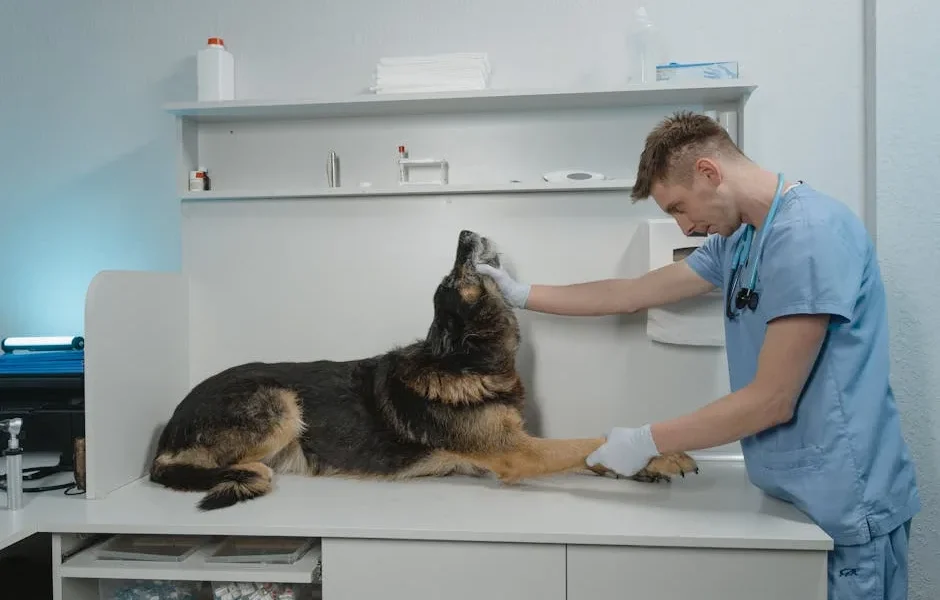
- Dogs who get yearly wellness exams live an average of 2.5 years longer than dogs who only visit when sick
- Regular check-ups can find serious diseases 2-3 years before you see any symptoms
- Preventive care saves pet owners $1,500-3,000 each year compared to emergency treatment costs
- 80% of dogs over age 3 have dental disease you can’t see that can hurt vital organs if not treated
- Senior dogs should have check-ups every 6 months because they age quickly
I’ll be honest with you. After 15 years as a vet, I’ve had too many sad conversations to count. They start with “I wish we’d caught this sooner.”
These moments happen when an owner learns their dog has advanced kidney disease. Or a massive tumor. Or a severe dental infection. They often ask: “But he seemed fine. Why didn’t I notice?”
That’s exactly Why Your Dog’s Routine Check-Up Is More Critical Than You Think: A Vet’s Perspective matters so much.
Dogs are very good at hiding discomfort and illness. They hide it until problems become severe. Your vet’s trained eye and diagnostic tools catch what you can’t see.
Let’s talk about the questions I hear most often about routine vet care. And why these appointments deserve a permanent spot on your calendar.
How Often Does My Healthy Dog Really Need a Check-Up?
Here’s the short answer: at least once a year for adult dogs under seven. Every six months for senior dogs.
Let me explain why this isn’t just a random recommendation.
Dogs age much faster than we do. They age roughly five to seven human years for every calendar year. It depends on their size.
Think about how much can change in your own health over five years. Now squeeze that into twelve months for your dog.
Kidney function can decline. Heart murmurs can develop. Tumors can grow. Arthritis can progress from mild to severe.
According to the Banfield Pet Hospital State of Pet Health Report from 2023, dogs who get annual wellness exams live an average of 2.5 years longer. That’s compared to dogs who only visit vets when sick.
That’s not a small difference. That’s potentially hundreds of extra walks, belly rubs, and moments together.
For senior dogs, twice-yearly visits become essential. Senior dogs are typically seven years and older for most breeds. Earlier for giant breeds.
Disease happens fast when each month represents several “human months” of aging. I’ve seen cancers go from undetectable to stage three in six months.
Consistent wellness monitoring gives us the best chance at early intervention.
What Exactly Happens During a Wellness Exam That I Can’t Check at Home?
This is probably the most common misconception. People think a routine exam is just us “looking your dog over” and chatting.
In reality, a thorough wellness exam checks every body system. Many of these you simply can’t check without training and tools.
Let me walk you through what’s actually happening:
The Things You Can’t See or Feel
We’re feeling internal organs. We check the size, shape, and position of kidneys, liver, spleen, and intestines.
I’ve found enlarged spleens (sometimes indicating tumors). I’ve found kidney problems and abdominal masses that owners had no idea existed. These dogs showed zero symptoms at home.
We’re listening to heart sounds with a stethoscope. We detect murmurs or irregular rhythms.
Heart disease often progresses silently. It can progress until a dog suddenly collapses or develops congestive heart failure. Catching a grade 2 murmur early means we can monitor it. We can potentially start treatment before crisis hits.
We’re checking lymph nodes throughout the body. Under the jaw, in front of the shoulders, behind the knees.
Enlarged lymph nodes can indicate infections, immune issues, or lymphoma. You’d likely never notice subtle swelling until nodes became massive.
The Subtle Signs of Pain and Discomfort
Dogs hide pain incredibly well. It’s evolutionary survival instinct.
During an exam, we’re manipulating joints. We press on the spine. We extend limbs. We watch for subtle flinches, muscle tension, or reluctance.
We’re trained to spot the tiny reactions. These indicate arthritis, hip dysplasia, or back pain.
Dental evaluation is another big one. I’d bet money that 80% of dogs over three have some level of gum disease. Because that’s exactly what the American Veterinary Dental College reports.
Owners often don’t realize their dog’s breath shouldn’t smell like rotting fish. Or that receded gums and tartar buildup are causing chronic pain.
Dental disease doesn’t just affect the mouth. Bacteria from infected gums enter the bloodstream. They can damage heart valves, liver, and kidneys.
Baseline Laboratory Values
Annual or twice-yearly blood work establishes your dog’s normal. Every dog is slightly different.
When we know what’s normal for your specific dog, we can detect subtle changes. We can spot them years before they’d cause symptoms.
A kidney value that’s technically “within normal range” but has increased 30% from last year tells me something. It tells me we need to watch closely. We may need to intervene early.
Routine fecal testing and heartworm screening catch parasites. According to the Companion Animal Parasite Council, they find parasites in 15-20% of seemingly healthy dogs.
These aren’t always visible in stool. But they’re quietly causing damage. They’re potentially spreading to humans in your household.
Are Routine Check-Ups Just a Money Grab by Veterinarians?
I get it. Veterinary care is expensive. I wish it weren’t.
This question frustrates many of us in the field. We genuinely see the preventable tragedies that result from delayed care.
Here’s the financial reality: preventive care saves money. Significant money.
Industry data shows that preventive care saves owners an average of $1,500-3,000 annually. That’s compared to emergency treatment costs for conditions caught late.
A routine exam with blood work might cost $200-400. Treating advanced kidney disease with hospitalization, fluids, and medications? Easily $3,000-5,000. And that’s if it’s treatable at that stage.
I treated a Labrador last year whose owner had skipped check-ups for four years. They wanted to “save money.” By the time they brought him in for lethargy, he had stage 4 kidney disease.
The emotional devastation aside, they spent over $6,000 in two weeks. They paid for hospitalization and treatments. We still lost him.
Annual exams with screening blood work would have cost maybe $1,200 total over those four years. We could have managed early kidney changes with diet and supplements.
Many practices now offer wellness plans. These are monthly subscription programs. They bundle routine care at a discount.
They typically include exams, vaccines, parasite prevention, and screening tests. This makes regular care more budget-friendly.
Look, veterinary medicine is a business, yes. But most of us chose this career because we love animals. Not because we’re getting rich (we’re definitely not).
We recommend check-ups because we’ve seen what happens without them. Those cases haunt us.
What Should I Expect at Different Life Stages?
Your dog’s needs change dramatically as they age. Wellness exams adapt accordingly.
Puppies (0-1 Year)
Multiple visits during the first year focus on vaccination series. We also check parasite control, growth monitoring, and early detection of birth defects.
We’re watching for heart murmurs that might indicate defects. We check bite alignment. We monitor joint development in large breeds. We discuss spay/neuter timing.
Behavioral assessment is huge. Catching and addressing fear or aggression early prevents lifelong problems.
Consider reading about addressing behavioral issues early.
Adults (1-7 Years)
Annual exams maintain baseline health data. We’re monitoring weight.
56% of US dogs are overweight or obese, according to 2024 data from the Association for Pet Obesity Prevention.
We check dental health and organ function. This is when we catch early diabetes, thyroid issues, heart murmurs, and skin conditions.
Weight management discussions are critical. Excess weight increases risks for arthritis, diabetes, and cancer.
Many owners don’t notice gradual 5-10% weight increases. These significantly impact health.
Seniors (7+ Years)
Twice-yearly exams become essential. We’re screening more aggressively for cancer, kidney disease, liver disease, and arthritis. Also cognitive dysfunction and vision/hearing loss.
Blood pressure checks become important. We discuss pain management, mobility support, and quality of life.
Advanced screening like comprehensive blood panels and urinalysis help us catch problems early. Early is when treatment options are better.
Breed-specific concerns also factor in. Flat-faced breeds (bulldogs, pugs) need airway and heat tolerance monitoring. Large and giant breeds get careful bone and joint evaluations. Breeds prone to bloat need dietary and lifestyle counseling.
What Questions Should I Ask at Every Visit?
You’re not just a passive participant in your dog’s healthcare. You’re a partner.
Come prepared with observations and questions. Here are the ones I love when clients ask:
- “Based on today’s exam, what should I watch for at home before our next visit?”
- “Are there any trends in my dog’s weight or lab values I should know about?”
- “What’s the most important health concern for dogs of this age/breed?”
- “Is my dog’s current diet still appropriate? Should anything change?”
- “Can you show me how to check [teeth/lumps/body condition] at home?”
- “What signs of pain should I look for, specifically in my dog?”
Don’t be embarrassed to ask about things that seem minor. That small lump might be nothing. Or it might be a mast cell tumor that needs immediate removal.
That occasional cough could be kennel cough residue. Or it could be early heart disease.
We’d rather investigate ten things that turn out fine than miss the one that matters.
If you’re moving to a new area and need to establish care, check out tips for finding a good veterinarian.
How Can I Make the Most of Our Appointments?
Preparation helps everyone get maximum value from the visit.
Keep notes between appointments. When did that limp start? How often does the vomiting happen? Has water intake increased?
These details help us tell the difference between urgent concerns and minor issues.
Bring a fresh stool sample to annual exams if possible. This saves a separate trip. It ensures parasite screening happens.
Maintain records. Whether you use digital health tracking apps or a simple notebook, keep information accessible.
Having vaccination dates, medication histories, and past problems is invaluable. Especially in emergencies.
Be honest about compliance. If you can’t afford the recommended treatment, tell us. If you can’t give pills twice daily, tell us.
We can often find alternatives. If your dog won’t eat the prescription diet, speak up. We can problem-solve together rather than you giving up entirely.
Ask for clarification if you don’t understand something. Medical jargon is confusing. We want you to understand your dog’s health status and care plan.
What About Costs and Wellness Plans?
Financial concerns are real and valid. Here’s what’s happening to make routine care more accessible:
Wellness plans have exploded in popularity since 2023. These monthly subscription programs typically cost $30-60/month. It depends on dog size and age.
They bundle routine care. Exams, vaccines, screening tests, parasite prevention, dental cleanings. All at a significant discount compared to paying per visit.
They spread costs throughout the year. Rather than hitting you with big bills once or twice annually.
Pet insurance that includes wellness coverage is another option. Though read the fine print carefully about coverage limits and exclusions.
Many clinics offer low-cost wellness clinics for basic services. While these don’t replace comprehensive care with your regular vet, they’re better than nothing. They work for vaccination updates and basic screening.
Nonprofit organizations and veterinary schools often provide reduced-cost services for qualifying families.
The key is finding a veterinary practice that’s willing to work with your budget. Find one that will discuss priorities.
A good vet will help you focus on the most critical preventive measures. Even if you can’t afford everything at once.
Final Thoughts
After years of practicing veterinary medicine, I can tell you something important. Routine wellness exams are where we make the biggest difference in dogs’ lives.
It’s not the dramatic emergency surgeries (though those matter too). It’s the quiet victories. Catching kidney disease at stage 1 instead of stage 4. Removing a small tumor before it spreads. Managing arthritis pain before a dog loses quality of life.
These appointments might seem routine to you. But they’re anything but routine in their impact on your dog’s health and lifespan.
The research backs this up overwhelmingly. Dogs who receive consistent preventive care live longer, healthier lives.
Don’t wait for symptoms to appear. By then, we’re often managing disease rather than preventing it.
Schedule that wellness exam you’ve been putting off. If your dog is senior and hasn’t had a check-up in six months, make the call today. If you’re not sure when your dog last saw a vet, it’s time.
Your future self will thank you. And more importantly, your dog will thank you for making preventive care the priority it deserves to be.
And if you need guidance on preparing for medical procedures when we do find something requiring treatment, we’re here to help every step of the way.
Sources & Further Reading
- American Veterinary Medical Association (AVMA) — Comprehensive guidelines on preventive care for pets including exam frequency recommendations
- Banfield Pet Hospital State of Pet Health Report 2023 — Large-scale research on the impact of preventive care on pet longevity and health outcomes
- American Animal Hospital Association (AAHA) — Evidence-based wellness and senior care guidelines for veterinary practices
- Association for Pet Obesity Prevention — Statistics and resources on pet obesity prevalence and health impacts
- Companion Animal Parasite Council — Parasite prevalence data and screening recommendations for dogs