
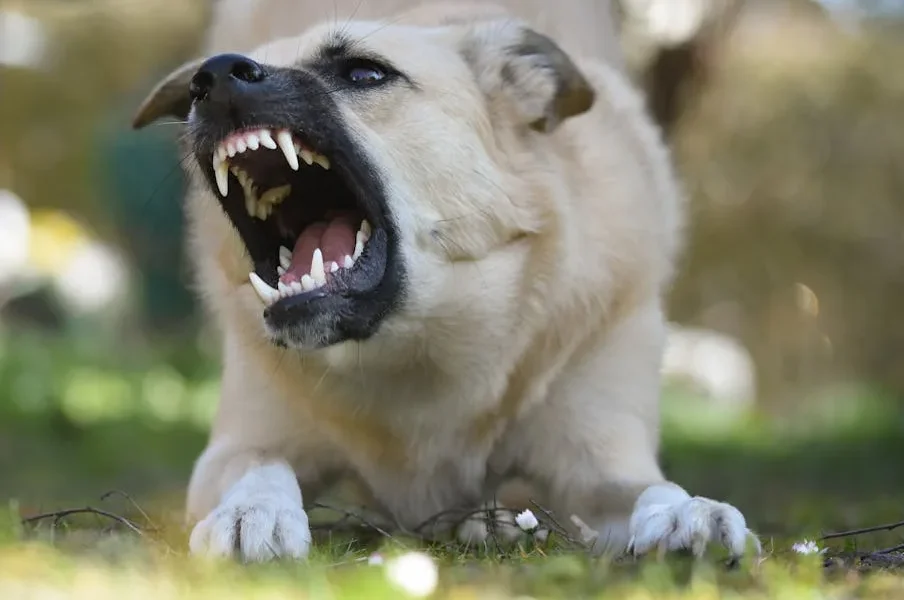
- About 20% of dogs have food aggression. It comes from fear or anxiety—not “dominance.” This means you need help from a veterinary behavior expert for safe treatment.
- Health problems like low thyroid or pain can cause food guarding. Your dog should always get a vet exam before you try to change the behavior.
- Special training methods work in 70% of cases within 4-8 weeks. But serious cases need help from a professional. Don’t try to fix them yourself.
I’ll never forget when a client came to our clinic crying. Her seven-year-old daughter had a bandage on her arm. Their golden retriever had bitten the child. The girl got too close to his food bowl. “He’s never done anything like this before,” the mom said through tears.
That’s when we talked about How to Stop Food Aggression in Dogs: Veterinary Behavioral Solutions. This problem is more common than most pet owners think. It needs fast action based on science.
Food aggression has a medical name: resource guarding. It’s not about your dog trying to be “alpha.” Your dog isn’t challenging your authority.
Veterinary behavior experts don’t use old dominance ideas anymore. Now we know this behavior comes from anxiety and fear. It’s your dog’s instinct to protect valuable things.
Understanding the Scope: How Common Is Food Aggression?
Research shows about 20% of dogs show some food aggression. That’s one in five dogs.
But here’s what makes this more complex: food aggression is different in every dog. Not all cases look the same.
Vets who study behavior put resource guarding into three levels:
Mild Food Aggression
Dogs at this level might get stiff when someone comes near at mealtime. They eat faster if they sense someone close. Or they stand between their bowl and possible “threats.”
Many owners don’t see these small signs as problems. Not until they get worse.
Moderate Food Aggression
This level shows clearer warning signs. The dog growls, curls its lip, shows teeth, or stares hard.
The dog is clearly saying it’s uncomfortable. It’s willing to do more if needed. These dogs are telling us they’re afraid. We need to listen.
Severe Food Aggression
This means snapping, lunging, or actually biting. These cases are really dangerous to family members. They’re especially dangerous to children.
They need professional help right away. This isn’t something you can learn to fix from YouTube videos.
Why Does Food Aggression Develop?
Dogs don’t just wake up one day and decide to guard their food. This behavior starts for specific reasons.
Understanding the “why” is important for treatment that works.
Dogs from backgrounds where food was scarce show more food aggression. This includes strays, hoarding situations, or crowded shelters. When you’ve had to fight for every meal or gone hungry, guarding food becomes survival.
But here’s the surprise: even dogs from great breeding programs with perfect homes can develop food aggression. Sometimes it’s genetic. Sometimes it’s one scary experience during an important growth period.
And here’s what worries me as a vet: puppies who guard resources as young as 8-12 weeks old are three times more likely to develop serious aggression later. This is if the problem isn’t fixed early.
Early help isn’t just useful. It can save lives.
The Medical Component You Can’t Skip
Before we talk about behavior training, let’s discuss something critical. Many dog trainers miss this: medical causes.
At our clinic, we’ve seen food aggression caused or made worse by:
- Hypothyroidism—low thyroid hormone can make dogs more irritable and aggressive
- Chronic pain—arthritis, dental disease, or stomach problems make dogs more defensive
- Cognitive dysfunction—older dogs with dementia may become confused and reactive
- Brain problems—brain tumors or other conditions that affect behavior
This is why the first step should always be a complete vet exam. We need to rule out physical causes first. We can’t just assume this is only behavioral.
I’ve seen cases where treating a thyroid problem fixed the aggression completely. A dog trainer can’t diagnose that.
Are you seeing other changes along with food aggression? Things like tiredness, weight changes, drinking more water, or confusion? Schedule that vet wellness exam right away.
Veterinary Behavioral Solutions That Actually Work
Now for the good news: about 70% of food aggression cases get much better within 4-8 weeks. This is when you use proper vet behavior methods.
But “proper” is the key word here.
Desensitization and Counter-Conditioning: The Gold Standard
These two methods are the foundation of treatment based on evidence.
Desensitization means slowly exposing your dog to the trigger. The trigger is people near their food. You do this at a level that doesn’t cause aggression.
Counter-conditioning means changing the emotional response. You change it from “threat!” to “good things happen when people come near my bowl.”
The hand-feeding method works in 85% of mild-to-moderate cases. Here’s the basic plan:
Week 1-2: Stop bowl feeding completely. Feed every meal by hand, piece by piece. This teaches your dog that your hands equal food, not taking food away.
It’s tedious. I won’t lie. But it works.
Week 2-3: Start putting food in the bowl while your dog watches. Add small amounts while they eat. You’re not taking anything away. You’re only adding.
The message: human presence near the bowl means more food, not less.
Week 3-4: Start walking toward the bowl during meals. Toss in high-value treats before walking away. Use small pieces of chicken, cheese, or freeze-dried liver.
Again, you’re only adding value. Never removing.
Week 4+: Slowly get closer and stay near the bowl longer. Always pair your presence with something wonderful.
Environmental Management: The Unsung Hero
While working through behavior training, safety comes first. This means:
- Feed your dog in a separate room with a closed door
- Create a “no kids, no other pets” zone during mealtimes
- Use baby gates to make clear boundaries
- Never let anyone “test” the dog’s aggression (seriously, don’t)
In homes with multiple pets, dogs should be fed in separate spaces. Not just separate bowls in the same room.
The stress of nearby competition can ruin all your training work.
What NOT to Do: Debunking Dangerous Methods
Let me be very honest about techniques that still exist on the internet. Some “training methods” for food aggression aren’t just bad. They’re dangerous. They can make aggression worse.
Never take the bowl away over and over to “show dominance.” This proves your dog’s worst fears right. Humans DO steal food.
You’re actually training your dog that they were right to guard in the first place. The American Veterinary Society of Animal Behavior’s 2021 statement clearly says not to do this.
Never do “alpha rolls” or physical corrections. Forcing a food-aggressive dog onto their back or using punishment creates fear. It can trigger defensive aggression.
You might stop the warning signs like growling. This creates a dog that bites “without warning.” That’s actually more dangerous.
Never push the dog past their limit “to work through it.” This is called flooding. While it sometimes works in humans with phobias, it usually makes dogs worse.
We want gradual desensitization, not trauma.
When Professional Help Becomes Non-Negotiable
Some cases need more than plans you can do at home. You need a board-certified veterinary behaviorist (DACVB) when:
- Your dog has already bitten someone
- Children are in the home and your dog shows moderate-to-severe food aggression
- The aggression is getting worse despite consistent training
- Your dog guards multiple things (toys, furniture, spaces) in addition to food
- You feel unsafe or overwhelmed
Veterinary behaviorists can do things regular trainers cannot. They can prescribe medication when needed. They can do thorough medical workups. They can design programs that use medicine to help behavior training.
New vet anxiety medications from 2024-2025 have given us new tools. These help severe cases where behavior training alone isn’t enough.
Telemedicine has been a game-changer. Many board-certified veterinary behaviorists now offer remote help. They coach owners through methods via video.
This has made specialized help easier to get than ever. Check the American College of Veterinary Behaviorists directory. You can find specialists who offer virtual appointments.
The Medication Question
Will medications help? Sometimes, yes.
Anti-anxiety medications like fluoxetine (Prozac) or trazodone can reduce baseline anxiety. This makes dogs more open to behavior training.
Think of it like this: if your dog’s anxiety is at a 9 out of 10 all the time, training might only bring it to a 7. But if medication brings baseline anxiety to a 5, training can bring it to a 2 or 3. That’s a manageable level.
Some owners ask about neutering or spaying. While hormones can affect some types of aggression, food guarding isn’t hormone-driven.
Neutering won’t fix food aggression. Though it’s still recommended for other health and behavior reasons.
Prevention: The Best Medicine
Can we prevent food aggression from starting in the first place? Often, yes.
For puppies, positive feeding experiences during socialization windows (8-16 weeks) are crucial. This means:
- Hand-feed portions of meals during the first few months
- Sometimes add treats to the puppy’s bowl while they eat
- Have different family members feed the puppy
- Never tease, disturb, or startle puppies during meals
Teach young dogs that human presence near food bowls means good things. Not threats. This builds a foundation of trust.
It’s much easier to prevent resource guarding than to fix it later.
The Gut-Brain Connection: An Emerging Consideration
Here’s something fascinating. It’s become popular in vet behavior circles since 2024. It’s the role of the gut-brain connection in dog anxiety and aggression.
Some vet behaviorists now look at digestive health in aggression treatment plans.
The theory? An unhealthy gut may contribute to anxiety and stress responses. This could include resource guarding behaviors.
Research is still emerging. But I’ve seen cases where fixing stomach issues alongside behavior training seemed to speed up improvement.
Does your food-aggressive dog also have chronic digestive issues? Mention this connection to your vet. A therapeutic diet consultation might be worth exploring.
Long-Term Outlook and Management
Let’s set realistic expectations. Most dogs show big improvement with consistent behavior training.
But “improvement” doesn’t always mean “cured.” Some dogs will always need environmental management. This includes separate feeding areas, supervision during meals, and ongoing training reinforcement.
And that’s okay. Management isn’t failure. It’s responsible dog ownership.
Which dogs do best? Those caught early. Those whose owners commit to consistent methods. And those without other aggression issues.
Mild cases addressed quickly often resolve completely. Severe cases, especially those with a bite history, need long-term management and realistic expectations.
Real-World Success Stories
Remember that golden retriever from the beginning of this article? First, we ruled out medical causes with bloodwork and a physical exam. Then we used a structured desensitization program.
The family worked with a vet behaviorist through telemedicine. The dog was fed in a separate room during training. The seven-year-old was taught never to go near during mealtimes. Period.
Within six weeks, that dog went from snapping at close approaches to accepting human presence near his bowl. Eventually he even welcomed it.
The family still keeps boundaries. No child near the bowl unsupervised. But the fear that kept everyone on edge? Gone.
That’s the power of proper vet behavioral help combined with committed owners.
Final Thoughts
Food aggression isn’t about dominance or stubbornness. Your dog isn’t being “bad.”
It’s a fear-based behavior. It responds to systematic, science-based help.
The vet behavioral solutions we’ve discussed work in most cases. These include desensitization, counter-conditioning, environmental management, and when necessary, medication-assisted methods.
But they require patience, consistency, and sometimes professional guidance.
Trying to force, punish, or “dominate” a food-aggressive dog doesn’t just fail. It makes things worse. It puts people at risk.
If your dog is showing food aggression at any level, start with a vet exam. This rules out medical causes.
For mild cases, you may be able to use hand-feeding and desensitization at home. But if you have any doubt about safety, get help. If children are involved, get help. If your dog’s aggression is moderate to severe, get help.
Don’t hesitate to talk to a board-certified veterinary behaviorist. This isn’t a “wait and see” situation.
Early help saves relationships. It prevents bites. In some cases, it saves dogs’ lives.
Your dog is asking for help in the only way they know how. Through their behavior. Let’s make sure they get the right kind of help.
Sources & Further Reading
- American Veterinary Society of Animal Behavior (AVSAB) — Position statements on aggression, resource guarding, and force-free training methods
- American College of Veterinary Behaviorists — Find board-certified specialists and access evidence-based information on canine aggression
- American Veterinary Medical Association (AVMA) — Pet owner resources on canine behavior problems and treatment options
- Fear Free Pets — Resources on fear-free handling techniques and managing aggressive behaviors safely
- Certification Council for Professional Dog Trainers — Directory for finding qualified, certified trainers for aggression cases