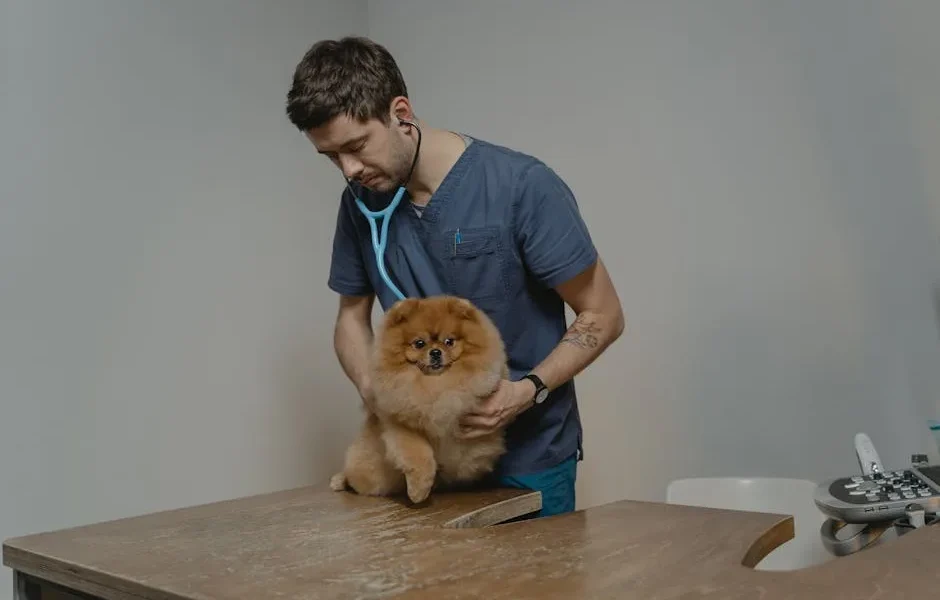
- Wellness exams find hidden health problems in about 1 in 7 healthy-looking pets. They often catch issues before symptoms show up.
- Pets age 5-7 times faster than humans. Yearly checkups are key for catching age-related diseases early. Early treatment works best.
- Finding problems early can save thousands of dollars. Treating early-stage disease costs 60-80% less than treating advanced conditions.
- Baseline health values from wellness visits help us spot small changes. These changes can signal serious problems developing.
I’ll never forget Bailey, a Labrador who came in on a sunny Tuesday. Her owner called it “just a routine checkup.” Bailey was eight years old. She still chased tennis balls like a puppy. She ate well. She showed zero signs of illness.
Her owner almost cancelled the appointment. Everything seemed normal. But during my exam, I felt her abdomen. I found something that shouldn’t be there. It was a small, firm mass near her spleen.
This is exactly why annual wellness exams matter. They’re your pet’s best defense against hidden health issues. Even when your pet seems fine.
Bailey’s story ended well. We caught that mass early. We removed it before it ruptured or spread. But here’s the thing: if her owner had skipped that appointment, Bailey would have seemed fine for months. By the time symptoms showed up, we’d be having a very different conversation.
The Silent Progression Nobody Sees
I’ve worked in emergency care for fifteen years. I’ve seen the other side of this story too many times.
The cat rushed in at midnight because she suddenly can’t walk. It turns out she’s had heart disease for years. Now she’s thrown a blood clot.
The dog collapsing in the backyard. We discover he’s in kidney failure. His kidneys have probably been declining for two years. Nobody knew.
Here’s what most pet owners don’t realize: pets are masters at hiding illness. It’s evolutionary. In the wild, showing weakness gets you eaten. Or abandoned by the pack.
So they compensate. They adapt. They push through until they absolutely can’t anymore. By the time you notice something’s wrong, we’re often looking at advanced disease.
The numbers tell the story. About 50% of dogs and cats over age 10 have kidney disease. Nobody knows about it. Kidney disease doesn’t show obvious symptoms until 75% of kidney function is gone.
Think about that. Your pet can lose three-quarters of their kidney function. They’ll still act completely normal at home.
What We’re Actually Looking For
What happens during those twenty to thirty minutes when I’m examining your pet? I’m not just checking boxes on a form. I’m building a story. I compare this year to last year. I look for changes that don’t belong.
I start at the nose and work backward. I check their eyes for early cataracts. I look for changes in pressure that might mean glaucoma. I check for color changes in the whites. These can signal liver problems or anemia.
I look in their ears for infections. But also for polyps and masses. And for chronic inflammation that suggests allergies.
The mouth tells me more than you’d think. By age three, about 80% of pets already have dental disease starting. But I’m not just looking at tartar.
I check for oral tumors. I note whether gums are pale (anemia). Or bright red (infection). Or have that weird brick-red color that sometimes shows up with kidney disease. I feel under the tongue for masses. I check that the salivary glands aren’t swollen.
The Hands-On Detective Work
Then comes the palpation. This is where I channel my inner detective. I run my hands over every inch of your pet’s body.
I’m feeling lymph nodes. Are they bigger than last year? There are lymph nodes under the jaw. In front of the shoulders. Behind the knees. And in other places most owners don’t know exist.
Enlarged lymph nodes can be the first sign of lymphoma. It’s one of the most common cancers we see.
I check the abdomen carefully. I feel the liver, spleen, kidneys, and bladder. Is the liver edge sharp or rounded? Can I feel the kidneys? If so, are they smooth or irregular? Is there anything in the abdomen that shouldn’t be there? Like Bailey’s splenic mass?
I listen to the heart and lungs. Not just for obvious murmurs or crackles. But for subtle changes in rhythm. Or quality changes that might indicate early disease.
Your pet’s weight? That’s not just a number for the record. I compare it to last year. And the year before.
A two-pound weight loss in a 10-pound cat is like you losing 30 pounds without trying. That’s not normal. Even if Fluffy still seems fine. Weight gain patterns tell me about thyroid function. About early diabetes. Or whether that “senior slowdown” might actually be arthritis.
The Power of Bloodwork Baselines
Here’s where wellness exams become really powerful. When I recommend annual bloodwork for your pet, I’m not trying to pad the bill. I’m trying to establish a baseline. A picture of what “normal” looks like for your specific pet.
Take kidney values, for example. The “normal” range for blood urea nitrogen (BUN) might be 10-30 mg/dL. Your dog’s BUN has been 12 for the past three years. Suddenly it’s 28. That’s still technically “normal.” But it’s a significant change. It warrants investigation.
Without those previous years’ values, I’d have no idea that 28 represents more than a doubling from baseline.
I’ve caught early diabetes this way. I watch glucose values creep up year after year. Before they cross into diabetic territory. We start dietary management. We increase exercise. Some of those pets never need insulin.
That’s the power of trending data over time.
The Age Factor Nobody Wants to Think About
Let’s talk about something uncomfortable. Your pet is aging way faster than you are. A year in your life is a relatively small increment. A year in your dog’s life? That’s equivalent to five to seven human years. It depends on size and breed.
Imagine if you only saw your doctor once every seven years. Think about what could develop in that time. Hypertension. Diabetes. Cancer. Heart disease.
Now you understand why annual exams are the minimum. Not a luxury. For senior pets (generally over age 7-8), current guidelines recommend twice-yearly wellness visits.
The disease patterns change as pets age too. That senior exam isn’t the same as the young adult checkup. I’m specifically screening for cognitive dysfunction. Yes, pets get dementia.
I’m being more aggressive about checking for arthritis. Dogs and cats don’t limp politely to let us know their joints hurt. They just gradually do less. Sleep more. And we chalk it up to “getting older.”
Breed-Specific Surveillance
Some pets need even more targeted screening. It’s based on their breed. Golden Retrievers have horrifyingly high cancer rates. Up to 60% will develop cancer in their lifetime. For them, I’m extra vigilant about lumps and bumps. I often recommend more frequent imaging as they age.
Cavalier King Charles Spaniels? I listen extra carefully to that heart. They’re predisposed to mitral valve disease. Persians and other flat-faced cats? I assess breathing patterns. I check for early signs of respiratory issues. These are common in brachycephalic breeds.
German Shepherds get additional attention paid to their hips and spine. Maine Coons need cardiac screening for hypertrophic cardiomyopathy.
This isn’t breed discrimination. It’s using decades of veterinary data to practice better medicine.
The Real-World Cost Equation
I get it. Wellness exams cost money. In my area, a comprehensive wellness exam with bloodwork runs $200-400. It depends on the pet’s age. And what testing is appropriate. That’s not pocket change for most families. Especially if you’ve got multiple pets.
But let me show you the math from the emergency side. That’s where I’ve spent most of my career.
Early-stage dental disease that we catch during a wellness exam? Treatment typically runs $300-500. Advanced periodontal disease that’s been festering for years? You’re looking at $1,500-3,000. That’s for extensive extractions and treatment of jaw bone infection. I’ve seen cases exceed $5,000 when infection spreads systemically.
Early kidney disease managed with diet and medications? Maybe $50-100 per month in ongoing costs. Those pets can live comfortably for years. Kidney disease that shows up as an emergency with your pet in crisis? The initial hospitalization alone often runs $2,000-5,000. And the long-term prognosis is much worse.
The pattern repeats across virtually every disease category. Early detection and intervention is almost always dramatically less expensive. Less expensive than treating advanced disease in crisis. Not to mention less traumatic for everyone involved. Especially your pet.
If you’re concerned about managing costs, explore pet insurance options or wellness plans. They can make preventive care much more affordable.
What to Watch Between Visits
Annual wellness exams are crucial. But they’re not magic shields. You’re with your pet every single day. You’re the early warning system.
I tell my clients to watch for subtle changes. They might seem minor. But they might warrant bringing the next wellness exam forward.
Changes in water consumption matter. Drinking noticeably more or less than usual can indicate problems. Kidney disease. Diabetes. Or hormonal disorders.
Alterations in appetite or weight deserve attention. Even if gradual. Behavior changes matter too. Is your social butterfly suddenly hiding? Is your calm senior suddenly restless at night? These can be pain signals. Or signs of cognitive dysfunction.
Litterbox or urination changes in cats are huge red flags. More frequent urination. Straining. Or accidents outside the box. These can indicate anything from diabetes to urinary obstruction to kidney disease. Don’t wait for the annual exam if you notice these changes.
Maintaining detailed health records for your pet helps tremendously. When you can tell me “his water consumption increased about three weeks ago” versus “I think maybe he’s drinking more?” that specificity helps me. I can narrow down the diagnostic possibilities much faster.
The Exam Your Pet Actually Enjoys?
I know plenty of pets dread vet visits. And plenty of owners too. The good news? The veterinary profession has gotten better at reducing stress during examinations. The fear-free movement has changed how many of us practice. It makes a real difference.
More practices now use pheromone diffusers in exam rooms. Non-slip mats on tables. And gentle handling techniques specifically designed to reduce anxiety. We’re more likely to let dogs stay on the floor if they’re more comfortable. Or to conduct cat exams in their carriers. Rather than wrestling them onto a cold table.
Some practices have separate cat and dog entrances and waiting areas. This reduces stress.
If your pet is particularly anxious, talk to your vet ahead of time. Sometimes pre-visit anti-anxiety medications can transform the experience. Some practices offer “happy visits.” Pets come in just for treats and attention. This builds positive associations before the actual exam.
What If You Find Something?
Here’s the part that worries people. What if the wellness exam does turn up something wrong? Won’t you wish you hadn’t known?
After spending years in emergency medicine, I can tell you with absolute certainty: you want to know. You always want to know earlier rather than later. More options. Better outcomes. And yes—usually lower costs.
Finding a heart murmur during a wellness exam means we can do an echocardiogram. We determine the severity. We start management before your pet goes into heart failure. Finding it when your pet is in respiratory distress in my ER at midnight? We’re starting from crisis management. The prognosis is immediately worse.
Detecting early kidney disease means dietary changes and medications. These can slow progression for literally years. Detecting it when your pet stops eating and is vomiting? We’re already in advanced failure. We’re talking about intensive hospitalization. And a much shorter timeline.
Even with cancer, early detection matters enormously. The difference between catching a mast cell tumor when it’s small versus after it’s metastasized? That’s often the difference between years of quality life and weeks or months.
Not all masses we find are cancerous, of course. But the ones that are have much better outcomes when caught early.
And honestly? Sometimes we find things that are completely manageable. Or even curable. I’ve found thyroid tumors in cats that were easily treated with radioiodine therapy. Those cats lived normal lifespans. I’ve detected early diabetes that responded so well to diet and exercise that insulin wasn’t needed for years.
These are wins that only happen because someone brought their “healthy” pet in for a routine exam.
The Changing Landscape of Preventive Care
Veterinary medicine has come incredibly far in the past decade. Preventive care is benefiting. We’re seeing more integration of technology. Some practices now use AI-assisted tools. These help interpret X-rays. And identify subtle abnormalities that might be missed.
Telemedicine follow-ups for wellness exam results are becoming more common. This makes it easier to discuss findings. Without another in-person visit.
The screening recommendations themselves have evolved. We’re now more aware of cognitive dysfunction in senior pets. We have better tools to assess it. Pain assessment has improved dramatically. We’re catching arthritis earlier. And managing it more effectively.
Nutritional counseling has become more sophisticated. We have better understanding of therapeutic diets for specific conditions.
For certain breeds and health concerns, we’re getting more precise about screening protocols. Brachycephalic breeds get more respiratory assessment. Large breed dogs get more orthopedic attention. Cats get more focused kidney and thyroid screening as they age.
The Question I Hear Most Often
“Dr. Webb, my pet really does seem perfectly fine. Are you sure this is necessary?”
Yes. I’m sure. And I say that having examined thousands of “perfectly fine” pets over the years.
Here’s what I’ve learned: the pets who seem perfectly fine include the ones with early kidney disease. With developing heart conditions. With growing tumors. With progressing dental disease. And emerging endocrine disorders. They seem fine because pets are remarkably good at compensation. Until they can’t compensate anymore.
Bailey, that Lab I mentioned at the start? She seemed perfectly fine too. Her owner came in skeptical. She questioned whether she really needed the appointment. She left grateful that she didn’t cancel. Because we found something that would have eventually killed her dog. While there was still time to do something about it.
That’s the thing about hidden health issues. They’re hidden until they’re not. And by the time they’re not hidden anymore, you’re often in my ER. Dealing with a crisis. Instead of in your regular vet’s office dealing with early intervention.
Final Thoughts
The wellness exam isn’t just about finding disease. Though that’s certainly important. It’s about partnership. You and your veterinarian working together. To give your pet the longest, healthiest life possible.
It’s about establishing baselines. Tracking trends. And catching problems while they’re still whispers instead of screams. It’s about using the fact that veterinary medicine has become incredibly sophisticated. To practice truly preventive care. Not just reactive medicine.
If it’s been more than a year since your pet’s last wellness exam, make that appointment. If your pet is over seven or eight years old, ask your vet about twice-yearly visits. Do they make sense for their specific situation?
Bring a list of any changes you’ve noticed. Even ones that seem minor. And if finances are a concern, have that conversation with your vet. Most of us would rather work with you on a payment plan. Or prioritize the most essential components. Than have you skip preventive care entirely.
Your pet can’t tell you when something’s wrong. That wellness exam is their voice. Don’t let them go unheard.
Sources & Further Reading
- American Animal Hospital Association (AAHA) Preventive Care Guidelines — Comprehensive guidelines on wellness examination protocols and screening recommendations for dogs and cats
- American Veterinary Medical Association (AVMA) Pet Care Resources — Evidence-based information on pet aging, preventive care, and health screening
- American Association of Feline Practitioners (AAFP) Feline Wellness Guidelines — Specific wellness care recommendations and life stage guidelines for cats
- American Veterinary Dental College — Statistics and information on dental disease prevalence and progression in pets
- Veterinary Cancer Society — Cancer statistics, early detection information, and breed-specific cancer risks in companion animals