
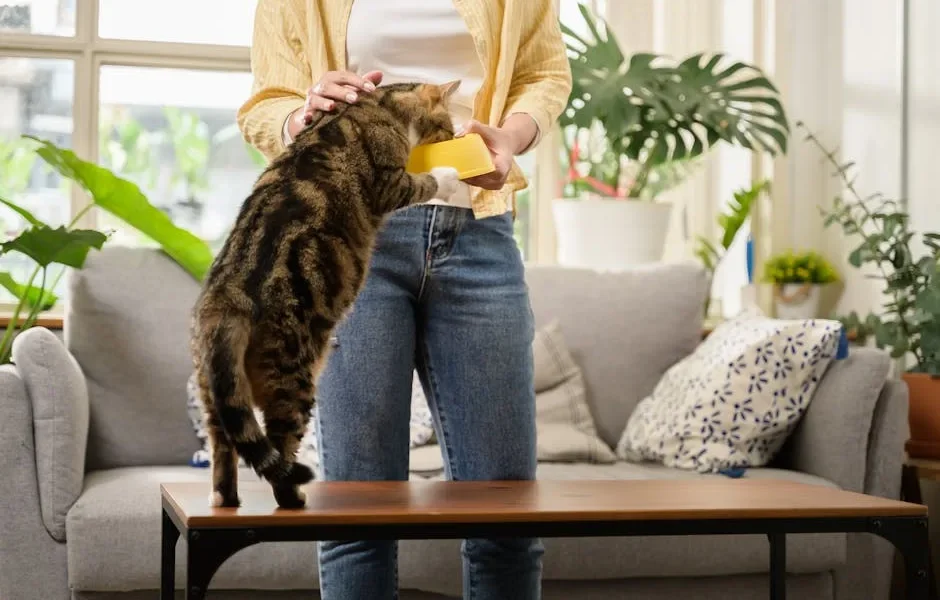
- Cats can learn to come when called. Use food rewards and practice every day. It usually takes 2-4 weeks with daily training.
- Keep training sessions short (2-5 minutes). Cats don’t focus for long. Always use the same word and tone.
- Never call your cat for bad things like nail trims or medicine. This will ruin their training forever.
I’ll never forget when Maria called me one evening. She was our clinic receptionist. Her cat Oliver ran out the front door while she was bringing in groceries. She watched his orange tail disappear into the neighbor’s hedges.
She tried everything. She called “Oliver! OLIVER!” She shook treat bags. Nothing worked. After twenty minutes, he finally came back. But he came back on his own terms.
The next morning she asked me: “Can I actually train a cat to come when called? Or is it impossible?”
Here’s what I told her. Yes, you can train your cat to come when called. But cats aren’t small dogs. They learn differently. They respond to different things.
That doesn’t mean they can’t be trained. It just means we need to work with how cats think.
Why Your Cat Actually Can Learn Recall (Science Backs This Up)
Let’s talk about the science first. A 2019 study proved something important. Researchers at Sophia University in Japan found that cats know their own names.
Cats responded differently to their names compared to other words. They even responded when strangers called them.
So yes, cats know their names. They just don’t always care.
The key difference is motivation. Dogs respond to praise and attention. Cats respond to “What’s in it for me?” And for cats, the answer is almost always food.
The Foundation: Building Positive Associations
Before you start training, choose your recall word. This is important. Many people mess this up.
Don’t use your cat’s name for everything. Think about it. Do you say “Fluffy, get off the counter!” or “Fluffy, stop scratching that!” or “FLUFFY, NO!”?
If you do this, your cat’s name means something bad. Not something good.
Use a different word instead. Try “here” or “come” or “treat time.” The word doesn’t matter. But it needs to be consistent. Use it ONLY for recall training. Always the same word. Always the same tone.
Use a high-pitched, upbeat tone. This works best.
Start in a quiet room. I usually tell people to begin in the bathroom or a small bedroom. There are fewer distractions there.
Get a high-value treat. This means the good stuff. Not regular kibble. Use freeze-dried chicken, tuna flakes, or squeeze-up treats. Use whatever makes your cat excited.
The Initial Training Protocol
Here’s what I told Maria to do:
Stand two or three feet away from your cat. Say your recall word once. Use that upbeat, high-pitched tone. Then immediately give the treat.
Don’t wait for them to come. Don’t wait for anything. Just say the word, then give the treat. You’re creating a connection between the sound and the reward.
Do this 5-7 times in a row. That’s it. Your training session is done. It should take about three minutes.
Cats have short attention spans. We’re talking 2-5 minutes maximum. Then they stop paying attention. Work with that.
Repeat this 2-3 times daily for three or four days. Same word. Same tone. Same immediate reward.
By day four or five, your cat will probably react when they hear the word. That’s when you know it’s working.
Adding Distance and Movement
Once your cat reacts to the recall word, add a little distance. Move five feet away. Say the word.
When they move toward you—even one step—say “yes!” Then reward them immediately when they reach you.
You can also use a clicker. Clicker training isn’t required. But research shows it speeds up learning by 30-40%. The click marks the exact moment they do the right thing.
If you don’t have a clicker, just say “yes.” This works almost as well.
Slowly increase the distance over the next week or two. Try six feet, then ten feet, then across the room. Then try calling from another room.
If your cat stops coming reliably, you’ve moved too fast. Go back to the previous distance. Practice there for a few more days.
Common Mistakes That Sabotage Your Training
This is where most people make mistakes. I see it all the time.
The biggest mistake? Calling your cat for something unpleasant. Never use your recall word for nail trims, medications, baths, or vet carriers. Not even once.
You’ll undo weeks of training instantly.
If you need them for something they dislike, go get them yourself. Your recall word must always mean something positive. Always. 100% of the time.
Second mistake: inconsistency. Your partner uses a different word. You sometimes say “come here, buddy” instead of your chosen word. You practice for a week, then forget about it for two weeks.
Cats need consistency. Daily practice—even just one or two quick sessions—works better than occasional long sessions.
Third mistake: overusing the recall word. Don’t just randomly call your cat throughout the day. Every time you say that word, be prepared to reward them.
Otherwise you’re teaching them the word means nothing.
Troubleshooting Specific Challenges
What if your cat comes halfway, then stops? This usually means the reward isn’t good enough. Or they’re not convinced it’s worth the effort.
Upgrade your treats. Make them stinkier and tastier. Also try training right before mealtimes when they’re hungry.
Older cats can absolutely learn recall. It just might take longer. Maria’s neighbor trained her 12-year-old cat successfully. It just took six weeks instead of three.
Patience matters more than age. Senior cats might also need better treats. Their sense of smell can get weaker with age.
Multi-cat households are tricky. If one cat always beats the others to you, train them separately at first. Then gradually work with multiple cats.
Some trainers suggest using different recall words for different cats. But I think that’s too complicated for most people.
Practical Applications Beyond Party Tricks
This training matters for real reasons. Remember Maria’s escape artist? After four weeks of training, Oliver now comes reliably when called. She can get him inside quickly if he slips out again.
We also recommend recall training as part of preparing your pet for vet visits.
A cat who comes when called has less stress during emergencies. You can call them out from under the bed instead of dragging them out. You can redirect them during fights with other pets. You can find them quickly when they’re hiding.
Some clients with harness-trained cats use recall as a safety measure outside. It’s not perfect. A squirrel or bird might override training. But it adds an extra layer of security.
Maintaining the Behavior Long-Term
Once your cat reliably comes when called, you might wonder about rewards. Do you need to give them every single time?
Short answer: mostly yes. But you can start varying it.
Use what experts call a “variable reward schedule.” Sometimes they get the premium treat. Sometimes a regular treat. Sometimes just pets and praise.
Most cats prefer food, though.
This unpredictability actually strengthens the behavior. They never know when the really good reward is coming.
Keep practicing regularly even after they’ve learned it. A quick recall session every few days maintains the behavior. It keeps the association strong.
And remember—always make coming when called a positive experience.
Final Thoughts
Training a cat to come when called isn’t about control. It’s about communication. It’s about building a relationship based on positive experiences.
Will your cat come sprinting like a Golden Retriever? Maybe not. But with patience, consistency, and really good treats, most cats will learn reliable recall within a month.
Maria’s cat Oliver certainly did. Now she has peace of mind. She knows she can call him back in an emergency.
The investment of 5-10 minutes daily for a few weeks pays off for your cat’s entire life.
Start today with just one short session. Choose your word. Grab some irresistible treats. Build that first positive association.
If you’re preparing for situations where recall really matters—like your cat’s upcoming vet appointments—this training will make everything smoother. It will be less stressful for both of you.
Your cat is absolutely capable of learning. You just need to speak their language: food, consistency, and patience.
Sources & Further Reading
- Cornell Feline Health Center — Comprehensive, evidence-based resources on cat behavior, training guidelines, and feline health from Cornell University’s veterinary college
- International Cat Care — Evidence-based cat training advice from a global feline welfare charity dedicated to improving cat health and wellbeing
- ASPCA Cat Behavior and Training — Practical guidance on cat behavior issues and positive reinforcement training methods from the American Society for the Prevention of Cruelty to Animals
- American Association of Feline Practitioners — Professional veterinary guidelines on feline behavior and training from the leading organization of cat-focused veterinarians