
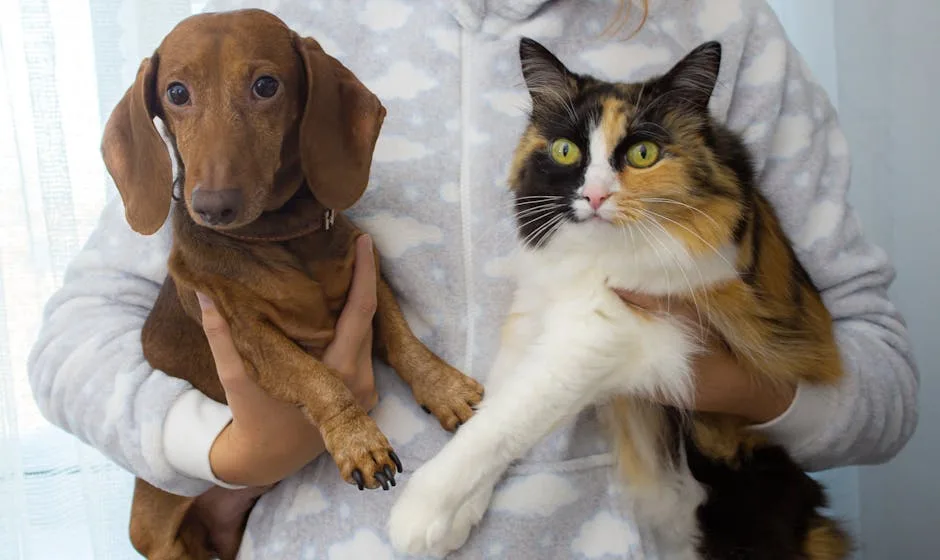
- Finding chronic disease early can give your pet 2-5 more years of quality life. It can also cut treatment costs by 40-60% compared to finding it late
- Small changes like drinking more water, losing a little weight, or being less active are often the first warning signs. You won’t see dramatic symptoms right away
- Cats are very good at hiding illness. Watch for less grooming, litter box changes, and not wanting to jump. These are not just normal aging
- Senior pets (7+ years for cats and large dogs, 5+ for giant breeds) need full wellness checks every 6-12 months. This includes blood work and urine tests
I’ll never forget the cat who taught me my most important lesson about chronic disease. “Mr. Whiskers” came in because his owner noticed he’d stopped jumping onto the kitchen counter. He had done this daily for twelve years.
She almost didn’t bring him in. “I figured he was just getting old,” she said.
It turned out Mr. Whiskers had advanced kidney disease and severe arthritis. We got him comfortable and managed both conditions. But I often wonder how much earlier we could have helped if we’d caught those first small changes.
Learning how to recognize early warning signs of chronic disease in dogs and cats isn’t about becoming a paranoid pet parent. It’s about knowing what’s normal for your pet. It’s about catching small changes before they become big problems.
After fifteen years in emergency and critical care, I can tell you something important. The pets who do best aren’t always the ones who get the most aggressive treatment. They’re the ones whose owners noticed something was off early enough to make a real difference.
1. Changes in Water Intake and Urination Patterns
Increased thirst and urination are among the earliest warning signs for several major chronic diseases.
Kidney disease affects about 1 in 3 cats over age 10. It affects 1 in 10 dogs over age 15. Diabetes occurs in roughly 1 in 300 dogs and 1 in 230 cats. Obesity dramatically increases the risk. Both conditions usually start with increased water drinking before other symptoms appear.
Here’s what to watch for:
Your dog suddenly drains the water bowl twice as fast. Your cat who never bothered with the water fountain now spends time there. Your housetrained pet has accidents in the house. The litter box is soaked through more quickly than usual.
Some owners tell me they only realized something was wrong when they started refilling water bowls constantly. Or they found wet litter clumps the size of softballs.
The challenge? Many people don’t know how much their pet normally drinks.
Start paying attention now. A general rule: dogs typically drink about an ounce of water per pound of body weight daily. Cats drink much less (around 3.5-4.5 ounces per 5 pounds).
If you suspect an increase, measure it. Put a measured amount of water in the bowl. Check what remains 24 hours later. Write it down before your vet visit. It’s incredibly helpful information.
2. Unexplained Weight Changes (Loss or Gain)
Weight loss despite normal or increased appetite is a red flag I take seriously.
Hyperthyroidism affects about 10% of senior cats. It causes this exact pattern. Your cat eats like a teenager but keeps getting thinner. Cancer, diabetes, and advanced kidney disease can look similar.
Weight gain in middle-aged pets isn’t just about looks. Obesity increases diabetes risk by 2-4 times. It also contributes to arthritis getting worse.
The problem is that weight changes happen gradually. You see your pet every day. You don’t notice the five-pound loss that shocks your neighbor who hasn’t visited in three months.
This is why I tell owners to weigh their pets regularly.
If you have a small dog or cat, step on your home scale holding them. Then weigh yourself alone. Subtract the difference. Do this monthly and write it down.
For larger dogs, many vet clinics and pet stores have walk-on scales you can use for free.
What counts as significant? A 10% change in body weight needs a vet visit. For a 10-pound cat, that’s just one pound. You might not even see it through a fluffy coat.
Trust the numbers more than your eyes. And if your pet is losing weight despite eating well, don’t wait to “see if it continues.” That’s exactly when we want to investigate.
3. Behavioral and Activity Level Shifts
Lethargy and exercise intolerance are easy to dismiss as “just getting older.” But they’re often the first whisper of heart disease, anemia, arthritis, or metabolic disorders.
Heart disease affects about 10% of all dogs and 15% of cats seen by vets. Many cases go undetected until they’re advanced.
The early signs aren’t dramatic fainting spells. They’re your previously energetic dog who now needs a break halfway through your regular walk. Or your cat who used to greet you at the door but now can’t be bothered to get up.
Cats are masters of hiding pain. They’ll simply rearrange their lives to avoid painful movements. They won’t limp obviously.
Arthritis affects about 40% of cats. But it’s massively underdiagnosed because feline pain signals are subtle.
Watch for these signs in cats:
Decreased grooming (especially the back end—it hurts to twist around). Reluctance to jump onto surfaces they used to reach easily. Sleeping in different spots that don’t require climbing stairs.
In dogs, the signs might be more obvious. Stiffness after rest. Difficulty with stairs. Reluctance to play.
But I’ve also seen dogs with significant heart disease whose only symptom was “slowing down a bit” on walks.
That’s why any persistent change in your pet’s normal activity level or enthusiasm deserves investigation, not rationalization.
4. Respiratory Changes: Coughing, Rapid Breathing, or Effort
A persistent cough in dogs often signals heart disease or chronic bronchitis. Watch especially for that nighttime or early morning “honking” cough.
In cats, respiratory symptoms are more concerning. Cats rarely cough from minor issues.
Watch for increased breathing rate at rest. Count breaths for 15 seconds and multiply by four. Normal is under 30 breaths per minute for most pets. Open-mouth breathing in cats is concerning. Any labored breathing pattern can indicate heart disease, lung problems, or even anemia from chronic kidney disease.
Here’s what I tell owners: breathing shouldn’t be something you notice.
If you’re watching TV and suddenly become aware of your pet’s breathing pattern, that’s worth noting.
Cats with heart disease or asthma might have normal breathing 90% of the time. But they show increased effort after mild activity or stress.
Dogs with early heart failure might develop that soft cough. Owners describe it as “like something’s stuck in his throat” or “trying to clear something.”
Don’t wait for a breathing crisis to investigate chronic coughing. If your dog has been coughing for more than a week, get it checked out. Even if it’s mild and occasional.
And if you’re considering allergy medications because you think it’s just seasonal allergies, have your vet examine your pet first. Rule out heart or other chronic conditions.
5. Dental Disease and Bad Breath
I’m putting this on the list because dental disease is very common. It affects over 80% of dogs and 70% of cats by age 3.
Chronic gum disease is directly linked to heart, kidney, and liver disease. This happens through bacterial spread.
Bad breath isn’t normal or cute. It’s often the first sign of significant oral problems.
Other warning signs include:
Difficulty eating (especially dropping food or eating on one side). Pawing at the mouth. Bleeding from the gums. Visible tartar buildup.
The mouth-body connection is real. Bacteria from infected gums enter the bloodstream every time your pet chews. These bacteria can potentially reach heart valves or filter through kidneys already working overtime.
I’ve diagnosed early kidney disease during dental cleanings more times than I can count. The bloodwork required for anesthesia revealed elevated values the owner didn’t know about.
Regular dental care isn’t optional if you’re serious about preventing chronic disease.
Annual dental exams matter. Professional cleanings when indicated matter. Home dental care matters.
If you’re curious about why this is so critical, check out why regular cleanings save lives. The information applies equally to dogs.
6. Gastrointestinal Signs: Vomiting, Diarrhea, or Appetite Changes
Occasional vomiting—especially in cats—can be normal. Chronic or recurring digestive issues are not.
Vomiting more than once or twice monthly is a problem. So is intermittent diarrhea. Decreased appetite or increased appetite without weight gain all suggest underlying chronic disease.
These symptoms can indicate inflammatory bowel disease, chronic pancreatitis, kidney disease, liver disease, or cancer.
Appetite changes are particularly important.
A dog or cat who suddenly becomes picky about food they previously loved. A pet who acts hungry but walks away after a few bites. Or conversely, a pet with a suddenly ravenous appetite. All of these warrant investigation.
If you’re thinking about switching your pet’s food because they seem uninterested, have them examined first. Sometimes the problem isn’t the food.
Keep a log if your pet has recurring digestive issues. Note dates, what they ate, and symptom severity.
Patterns matter. Vomiting every Monday might point to stress or eating something they shouldn’t (hello, weekend table scraps). Random episodes could indicate something more concerning.
Your vet needs this timeline to make accurate assessments.
7. Lumps, Bumps, and Skin Changes
Cancer is the leading cause of death in dogs over age 10. It’s responsible for nearly 50% of deaths in senior dogs. It’s also a major cause of death in cats.
Not every lump is cancer. Lipomas (benign fatty tumors) are extremely common. But every new lump deserves evaluation.
I use the “two-week rule”: any lump present for two weeks needs to be checked. Any lump that’s changing in size should be aspirated or biopsied.
Beyond lumps, watch for these signs:
Non-healing sores. Changes in existing skin lesions (especially darkening, growth, or bleeding). Persistent wounds that don’t heal within a normal timeframe. Unexplained swelling anywhere on the body.
Oral masses are particularly aggressive in both dogs and cats. But they often go unnoticed until advanced. This is because owners simply don’t look in their pet’s mouth regularly.
Get in the habit of doing a monthly “body check” while petting your animal.
Run your hands systematically over their entire body. Check the head, neck, chest, legs, belly, and back. You’ll learn what’s normal for your pet. You’ll quickly identify new findings.
Take photos of any concerning lesions with a ruler or coin for scale. Monitoring changes over time is as important as the initial discovery.
8. Litter Box and Elimination Changes
For cat owners, litter box behavior is a goldmine of health information.
Watch for these signs:
Urinating outside the box. Straining to urinate (which owners often mistake for constipation). Increased urination frequency. Blood in urine. Changes in stool consistency.
All of these signal potential chronic disease. Chronic bladder inflammation, kidney disease, diabetes, arthritis (making it painful to climb into the box), and cognitive dysfunction can all show up as litter box problems.
Dogs showing house-training regression need evaluation. So do dogs straining to defecate or producing very small or very large amounts of urine.
I particularly worry about male cats showing any difficulty urinating. This can rapidly progress to a life-threatening urinary blockage. That’s true emergency territory.
Never assume litter box problems are purely behavioral without ruling out medical causes first.
I’ve seen too many cats treated for “behavior issues” who actually had painful bladder disease or early kidney failure. Medical workup comes first. Behavior modification comes second.
9. Changes in Vocalization and Interaction
Excessive vocalization—especially at night—in senior cats often indicates problems. It can mean hyperthyroidism, high blood pressure, cognitive dysfunction, or pain.
Dogs who suddenly become clingy, restless, or withdrawn might be experiencing discomfort or early cognitive decline.
Pets who hide more than usual or seek isolation are often in pain or feeling unwell. This is pure instinct from their wild ancestry. Showing weakness could make them vulnerable.
Cognitive dysfunction syndrome (essentially dementia) affects a significant percentage of senior pets. But it’s underdiagnosed. Owners attribute symptoms to normal aging.
Signs include:
Disorientation. Altered sleep-wake cycles. Indoor accidents. Decreased interaction with family. Purposeless pacing or vocalization.
While not all cognitive changes are preventable, early recognition helps. It allows for management strategies and appropriate changes to their environment.
Social and personality changes deserve attention.
The friendly dog who becomes irritable. The confident cat who starts hiding. The independent pet who becomes anxiously attached. All these shifts can reflect underlying disease affecting their comfort or mental state.
Pain changes behavior. So does metabolic disease, neurological problems, and sensory decline.
What Screening Tests Actually Catch These Diseases Early
Knowing warning signs is half the battle. The other half is proactive screening.
I recommend comprehensive wellness bloodwork starting at age 7. This is for cats and large-breed dogs. Start at age 5 for giant breeds. Then do it annually or semi-annually depending on findings and risk factors.
This should include:
A complete blood count (CBC). Comprehensive chemistry panel. Thyroid testing (especially for cats over 7). Urinalysis.
The urinalysis is crucial and often skipped. It can reveal kidney disease, diabetes, and bladder issues before symptoms appear.
For specific diseases: SDMA testing (now standard on most chemistry panels) detects kidney disease earlier than traditional kidney values.
Blood pressure screening catches high blood pressure. This is common in senior cats with kidney disease or hyperthyroidism.
For at-risk breeds, additional screening might include genetic tests or specialized imaging. Your vet can guide you based on your pet’s breed, lifestyle, and family history.
Cost concerns are valid. Baseline senior screening typically runs $200-400. This depends on location and what’s included.
But consider this: early detection reduces treatment costs by 40-60% compared to late-stage diagnosis. You’re managing rather than crisis-treating.
Plus, you can learn more about what pet insurance reimburses for these wellness screens. Many policies now cover annual screening as part of preventive care packages.
Final Thoughts
The pets who live the longest, healthiest lives aren’t necessarily the lucky ones who never get sick.
They’re the ones whose owners paid attention early.
Every single warning sign on this list is something I’ve seen overlooked or rationalized away. Usually with “I thought it was just normal aging.”
Sometimes it is. But often, it’s not.
Trust your instincts. You know your pet better than anyone else. If something feels off, it probably is.
Start today:
Weigh your pet and write it down. Schedule that overdue wellness exam. Look in your pet’s mouth. Watch how they move.
The goal isn’t to live in fear of every small change. The goal is to be informed and observant enough to catch problems while they’re still manageable.
Make sure your pet’s records are complete and accessible. Having baseline information is invaluable when changes occur.
Early recognition doesn’t guarantee we can fix everything. But it almost always means more time and better quality of life.
And isn’t that what we all want for our pets?
Sources & Further Reading
- American Veterinary Medical Association (AVMA) — Comprehensive pet care resources and disease information for pet owners
- Cornell Feline Health Center — Research-based information on feline chronic diseases including kidney disease and arthritis
- Banfield Pet Hospital State of Pet Health Report — Annual data on pet disease prevalence including diabetes and dental disease statistics
- American Animal Hospital Association (AAHA) — Evidence-based pet owner resources and wellness care guidelines
- International Cat Care — Evidence-based feline health information with focus on recognizing subtle signs of illness in cats