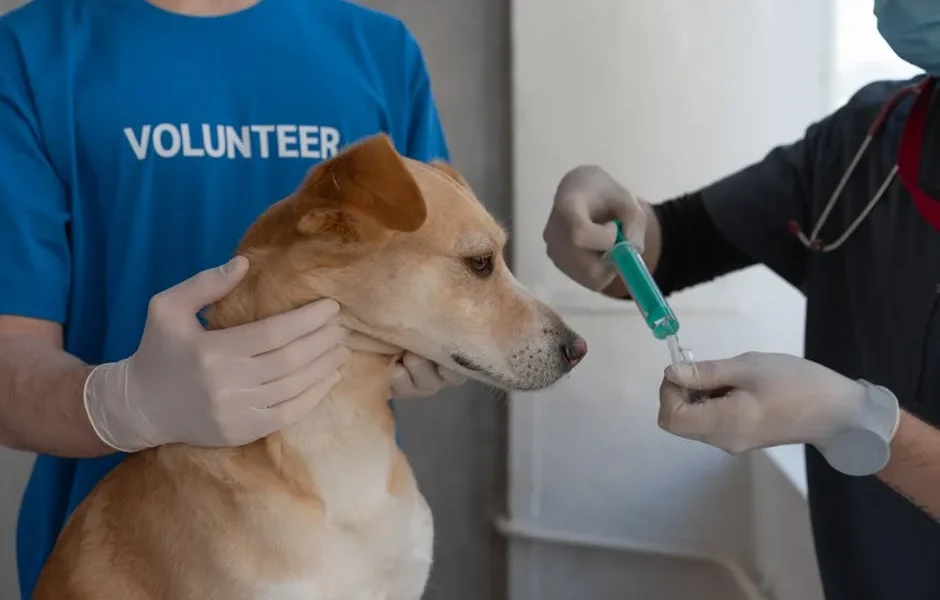
- Pet insurance uses reimbursement, not upfront payment. You pay the full vet bill first. Then you wait 2-4 weeks to get your money back.
- Sign up when your pet is young and healthy. Pre-existing conditions cause 90% of claim denials. Most insurers won’t cover pets once symptoms show up.
- Look at waiting periods, annual limits, and breed exclusions. Don’t just compare monthly prices. The fine print decides if you’re covered during emergencies.
I’ll be honest with you. I’ve worked in veterinary medicine for twenty years. The conversations I dread most aren’t about difficult diagnoses. They’re about pet owners facing impossible money decisions. This happens because they didn’t understand their insurance coverage.
Choosing the right pet insurance: what your vet wishes you knew before emergencies strike could save you from heartbreaking choices. Maybe your dog swallows a sock. Or your cat develops diabetes. But here’s what keeps me up at night: only 4.4% of U.S. pet owners have pet insurance. And many who do have it discover their policy won’t cover what they thought it would.
Last month, a client brought in their Labrador. He ate a corn cob. Surgery? $4,200. They had insurance—or so they thought. Turns out they were still in the 14-day waiting period for illness coverage. They paid out of pocket.
The Real Cost of “I’ll Deal With It Later”
Let’s talk numbers. They’re sobering.
A basic emergency vet visit runs $800-$1,500. That’s before you’ve done anything beyond an exam and diagnostics. Complex surgeries? We’re looking at $5,000-$10,000 or more. I’ve seen cancer treatments exceed $15,000.
Diagnostic testing alone can easily hit $600-$1,200. That’s for comprehensive bloodwork and imaging.
And yet, pet insurance remains rare in this country. Our adoption rate is 4.4%. Compare that to the UK’s 25% or more. Why the gap?
Partly, it’s misunderstanding how pet insurance actually works. It’s not like your health insurance. You won’t flash a card and walk out. You pay everything upfront. Everything.
Then you file a claim. You wait 2-4 weeks for reimbursement. Some insurers have cut this to 5-7 days with AI processing in 2024. But still—if you don’t have $3,000 sitting around, you’ll need a credit option like CareCredit. This is true regardless of your insurance status.
The Waiting Period Trap
Here’s what catches people off guard. That 14-day waiting period for illnesses isn’t a suggestion.
Your puppy develops vomiting and diarrhea on day 10 of coverage? You’re paying out of pocket.
Orthopedic conditions carry even longer waits. Cruciate ligament tears and hip dysplasia often have 6-month waiting periods.
This is why timing matters so much. Enroll when your pet is healthy. Those waiting periods become irrelevant background noise. Wait until symptoms appear? Congratulations. You’ve just created a pre-existing condition. It will haunt every future claim.
Pre-Existing Conditions: The 90% Problem
Want to know the leading cause of claim denials? Pre-existing conditions account for approximately 90% of rejected claims.
And insurers define these broadly. Any condition showing symptoms counts. Even subtle ones noted in your pet’s medical records. Even symptoms before coverage begins.
Your dog limped once six months ago during a hike? If they develop a cruciate tear now, the insurer might argue evidence existed before enrollment. They’ll say orthopedic issues showed up earlier.
Your cat sneezed a few times before you got insurance? That upper respiratory issue probably won’t be covered.
I’ve watched clients fight these denials. Some win. Most don’t.
The lesson? Get coverage before anything appears in your pet’s medical history. Even something seemingly minor.
What “Curable” Actually Means
Some policies make exceptions. Pre-existing conditions that are “curable” might be covered. But only if they’re symptom-free for 180 days.
Sounds generous, right? Except chronic conditions are never considered cured. Allergies, diabetes, heart disease—pre-existing forever.
That ear infection that resolved with antibiotics? Potentially curable. The seasonal allergies requiring ongoing medication? Pre-existing forever.
Decoding the Fine Print That Actually Matters
Monthly premium comparisons are where most people start and stop their research. That’s backwards.
The premium tells you almost nothing. It doesn’t tell you if you’ll be covered when your German Shepherd needs emergency bloat surgery at 2 AM.
Annual Limits vs. Per-Incident Limits vs. Lifetime Limits
This confuses everyone. Let’s break it down with a real scenario.
Your dog needs ACL surgery on one leg. That’s $4,000. Then they tear the other ACL eight months later. Another $4,000.
Per-incident limit policy ($5,000 per incident): Both surgeries covered up to the limit. You’re golden.
Annual limit policy ($5,000 per year): First surgery covered. Second surgery? You’re paying most of it. You’ve nearly exhausted your annual limit.
Lifetime limit policy ($50,000 lifetime): Both covered. But that limit is now $42,000. It drops with every future claim for your pet’s entire life.
Unlimited annual coverage costs more monthly. But it eliminates the anxiety of watching your coverage evaporate with each claim.
The Reimbursement Percentage Game
Most policies offer 70%, 80%, or 90% reimbursement. This kicks in after you meet your deductible. Seems straightforward.
Until you realize something. Some insurers calculate their reimbursement based on their “usual and customary” fees. Not your actual vet bill.
Your vet charges $3,000 for a procedure. Your policy covers 90%. But the insurer decides the “usual” fee is $2,000. You’re getting 90% of $2,000. That’s $1,800, not 90% of $3,000, which is $2,700.
That’s a $900 difference. It catches people completely off guard.
Ask explicitly: “Do you reimburse based on actual vet bills or usual and customary fees?”
Breed-Specific Considerations Nobody Mentions
Your Golden Retriever and your mixed breed rescue don’t face the same insurance landscape.
More than 30 commonly owned breeds face problems. Either higher premiums or specific condition exclusions. This is based on genetic predispositions.
Bulldogs, French Bulldogs, Pugs? Brachycephalic syndrome might be excluded. That’s the respiratory issues inherent to their facial structure. Or it might carry massive premiums.
German Shepherds and Labrador Retrievers? Hip dysplasia coverage varies wildly between providers. Some exclude it. Others cover it unless there’s evidence of joint issues before enrollment.
Before you enroll, search “[your breed] + pet insurance exclusions.” You might discover something. The exact condition your breed is prone to won’t be covered.
In that case, you’re better off putting your premium money into a dedicated savings account. Save for that inevitable breed-specific problem.
The Senior Pet Premium Spike
Here’s what nobody tells you. You’re insuring your bouncy two-year-old Lab. But premiums can increase 15-20% annually. This happens once your pet hits 8-10 years old.
Some of my clients have watched their $45 monthly premium become $150 by age 12. Right when they need coverage most.
Worse, many providers stop accepting new senior pets entirely. If you’re shopping for coverage for your 9-year-old cat, your options have already narrowed considerably.
Wellness Coverage: Usually Not Worth It
Only 25-30% of pet insurance policies include routine care. And honestly? The math rarely works in your favor.
Wellness plans cover things like annual exams, vaccinations, dental cleanings, and heartworm prevention. But they’re essentially prepayment plans, not insurance.
Run the numbers. Wellness coverage adds $25/month. That’s $300/year. Your routine care costs $280/year. You’re losing money.
These plans make sense only in specific cases. Maybe you’re terrible at budgeting for predictable expenses. Or your pet needs frequent wellness visits for a managed chronic condition.
Focus your insurance dollars on accident and illness coverage. That’s the unpredictable, budget-destroying emergencies. Budget separately for the predictable routine stuff.
What’s Changed in 2024: Actually Good News
The pet insurance landscape has improved recently.
AI-powered claims processing has cut reimbursement times. It used to be 3-4 weeks. Now it’s as little as 5-7 days with major providers. That’s significant when you’re floating thousands on a credit card.
Telehealth integration is now standard with most policies. You get 24/7 virtual vet consultations at no additional cost. I’m cautiously optimistic about this. It won’t replace emergency veterinary care. But it can prevent unnecessary ER visits for non-emergencies at 11 PM.
New transparency regulations are helping. States like California and New York now require clearer disclosure. Insurers must explain exclusions and reimbursement calculations. It’s harder for them to hide the details that matter in impenetrable policy language.
The Premium Increase Reality
Fair warning: premiums have jumped 23-30% from 2022-2024. This is across the board.
Inflation hit veterinary medicine hard. Equipment costs went up. Medications cost more. Staffing shortages drove up wages. Those costs flow directly to insurance premiums.
If you’ve been on the fence, understand this. Waiting likely means paying more for the same coverage.
Alternatives Worth Considering
Pet insurance isn’t the only option. For some pet owners, it’s not the best one.
A dedicated high-yield savings account gives you control. Deposit what would be your premium. That’s $50-80/month. You get complete control and no claim denials. After three years, you’ve got $1,800-$2,880 saved.
The risk? A major emergency in year one wipes you out.
But for financially disciplined people with multiple pets, self-insurance can work. Especially if you spread that risk across several animals.
Wellness plans offered directly by veterinary clinics are different from insurance. They bundle routine care at a discount. We offer one at our practice. It’s transparent prepayment for services you’ll definitely use. No claims. No reimbursement delays. No coverage denials.
Credit options like CareCredit and ScratchPay have emerged as crucial safety nets. They’re not insurance. But they can buy you time with 6-12 months interest-free financing. I’ve seen them save pets’ lives when owners needed to spread costs over time.
The Questions You Actually Need to Ask
Before you sign up for anything, get clear answers to these specific questions:
- Do you reimburse based on actual vet bills or “usual and customary” fees?
- What exactly constitutes a pre-existing condition in your policy? Can conditions ever be removed from that list?
- Are there breed-specific exclusions for my pet?
- How do premiums increase with age? Is there a cap?
- What’s your average reimbursement turnaround time?
- Do you require treatment at specific veterinary networks? Or can I use any licensed vet?
- What’s the policy on bilateral conditions? If my dog tears one ACL, is the other leg automatically excluded?
If a representative can’t or won’t answer these directly, find a different insurer.
A Vet’s Real-World Recommendation
After watching hundreds of insurance claims play out over two decades, here’s my honest take.
Pet insurance works best for certain people. People who would struggle to produce $3,000-$5,000 on short notice. And who enroll their pets young and healthy.
It’s less about whether insurance “pays for itself.” It often doesn’t, mathematically. It’s more about risk tolerance.
Would an unexpected $8,000 surgery bill devastate your finances? Would it force you to make decisions based on cost rather than your pet’s best interest? Then insurance is worth it for the peace of mind alone.
But maybe you’ve got solid emergency savings and financial flexibility. You might come out ahead self-insuring. This is especially true with mixed-breed pets. They statistically face fewer genetic conditions than purebreds.
The absolute worst approach? Waiting until your pet shows symptoms. Then scrambling for coverage. By then, you’ve locked in exclusions that will follow your pet forever.
Final Thoughts
Choosing the right pet insurance isn’t about finding the cheapest monthly premium. It’s not about the policy with the slickest marketing.
It’s about understanding what you’re actually buying. You need to understand this before you’re standing in an emergency room at midnight. Before you’re trying to decode policy language through tears.
The pets I’ve been able to help without financial constraints? Those are the ones with owners who planned ahead. They understood their coverage. They enrolled before anything appeared in the medical records.
Start by getting quotes from three different providers for your specific pet. Age, breed, location all matter. Read the full policy documents, not just the summary. Ask the hard questions about reimbursement calculations and exclusions.
And if you decide insurance isn’t right for you, commit to building that emergency fund immediately. Your pet’s life may depend on decisions you make today. Long before any emergency strikes.
Need help reviewing your current pet’s health status or discussing your specific situation? Schedule a wellness visit and let’s talk through your options before you need them.
Sources & Further Reading
- American Veterinary Medical Association — Comprehensive overview of pet insurance basics and considerations
- North American Pet Health Insurance Association — Annual industry statistics and adoption rates
- Consumer Reports — Independent evaluation of pet insurance value and policy comparisons
- American Kennel Club — Breed-specific insurance considerations and genetic health conditions
