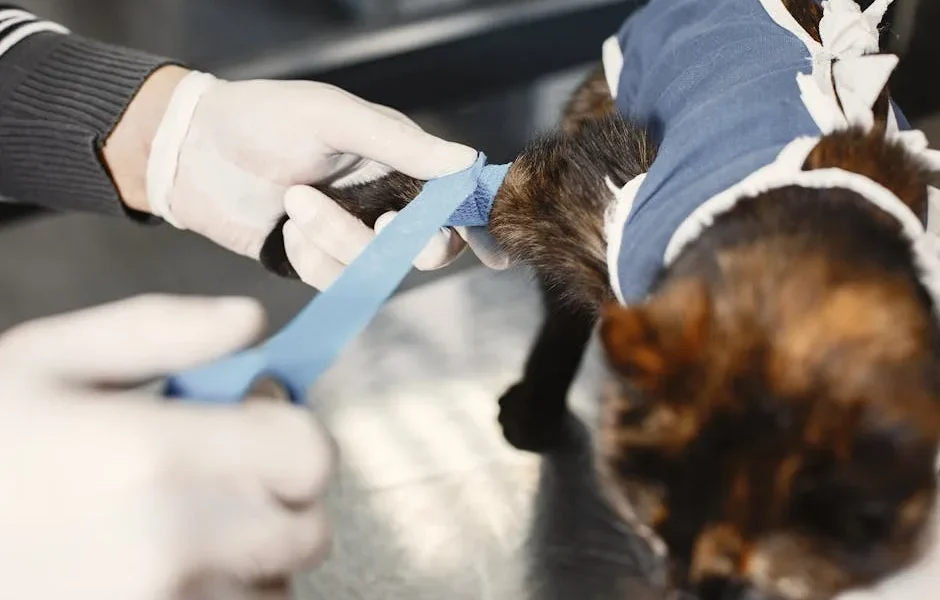
- Specialist vets train for 3-4 extra years after vet school. They are experts in complex conditions your regular vet may not see often.
- Your cat may need a specialist if the diagnosis is unclear, treatment isn’t working, the condition is rare, or advanced procedures are needed.
- The best care combines your primary vet with a specialist. They work together, not replace each other.
- Board certification (like DACVIM or DACVO) shows a vet has met high standards. Feline-specific training means they understand cats’ unique medical needs.
- Specialist care costs more at first. But it can save money over time by giving accurate diagnosis and effective treatment faster.
I’ll be honest with you.
A few years back, my cat started having stomach problems over and over. I wasn’t sure if I should ask about seeing a specialist.
Would my regular vet think I didn’t trust her? Was I overreacting?
It turns out, she was relieved when I brought it up. She’d already been thinking about the referral herself.
That experience taught me something important. What Every Cat Owner Should Know About Choosing a Specialist Vet: When General Care Isn’t Enough isn’t just about credentials and costs.
It’s about understanding when your cat’s health problem has grown beyond what even the best general vet can handle. And knowing how to make that transition without guilt or confusion.
Let’s walk through the questions cat owners actually ask when facing this decision.
How Do I Know When My Cat Actually Needs a Specialist?
This is the big question, isn’t it?
Your regular vet is very capable. They handle vaccinations, infections, and minor injuries with expertise.
But certain situations call for someone different. Someone who spent years of extra training on a specific body system or disease type.
Watch for these red flags:
- Your cat isn’t responding to treatment after trying different medications or approaches multiple times
- The diagnosis remains unclear despite initial testing—you still don’t know what’s actually wrong
- Your vet mentions something rare or complex like heart disease, cancer, or immune problems
- Advanced procedures are needed that require specialized equipment (CT scans, endoscopy, complex surgery)
- Your cat has multiple conditions that interact in complicated ways
- Symptoms are severe or life-threatening despite emergency treatment
Here’s something important: about 10-15% of pet cases get referred to specialists.
If your vet suggests it, they’re not admitting defeat. They’re being responsible.
Would you want your family doctor performing your heart surgery? Of course not. Same principle applies here.
Common reasons cats get referred include chronic kidney disease, cancer diagnosis and treatment, heart murmurs or heart failure, chronic vomiting or diarrhea, complex dental issues, and sudden blindness or other eye problems.
If your cat’s dealing with any of these, a specialist conversation is worth having.
What Do All Those Letters After a Specialist’s Name Actually Mean?
The alphabet soup of veterinary credentials can be confusing. Let me break it down in plain English.
First, every vet has DVM (Doctor of Veterinary Medicine) or VMD (basically the same thing). That’s baseline—four years of vet school after college.
But specialists? They’ve done 3-4 additional years of intensive training in their chosen field. Usually through a residency program.
Then they take hard board certification exams. These exams are given by specialty colleges recognized by the American Board of Veterinary Specialties.
The credentials tell you what they specialize in:
- DACVIM (Diplomate, American College of Veterinary Internal Medicine) — internal medicine, often with sub-specialties like heart, cancer, or brain/nerve problems
- DACVO (Diplomate, American College of Veterinary Ophthalmologists) — eye specialists
- DACVS (Diplomate, American College of Veterinary Surgeons) — surgical specialists
- DACVD (Diplomate, American College of Veterinary Dermatology) — skin conditions
- DACVECC (Diplomate, American College of Veterinary Emergency and Critical Care) — emergency medicine
For cat owners specifically, look for ABVP (Feline Practice). This shows board certification specifically in feline medicine.
Some practices also list vets with the “Feline Practitioner” designation from the Academy of Feline Medicine. This shows cat-focused continuing education.
Why does this matter?
Because only vets with these recognized certifications can legally call themselves specialists. It’s not just marketing—it’s a guarantee of documented expertise.
When you’re dealing with a complicated health issue, that training gap between general practice and specialty care becomes critical.
Won’t My Regular Vet Be Offended If I Ask About a Specialist?
Short answer: No.
And if they are, that’s a red flag about your vet, not about you.
Here’s what actually happens in good veterinary practices: most specialist referrals come from the primary vet themselves.
They recognize when a case would benefit from additional expertise. In fact, many vets are relieved when clients are open to specialist care. It means they can provide the best possible outcome for their patient.
Think of it this way.
Your general practice vet sees dozens of conditions regularly. They’re excellent at diagnosis and treat most successfully.
But a veterinary heart specialist? They might see 20-30 heart cases every single day.
That pattern recognition and depth of experience with one specific system is impossible to replicate in general practice.
Good vets know this. They welcome collaboration.
The ideal model—and what you should expect—is collaborative care.
Your regular vet continues handling wellness visits, vaccinations, minor issues, and coordinates overall health. The specialist manages the specific complex condition.
They communicate with each other about your cat’s care. You’re not choosing one or the other. You’re building a team.
If you’re worried about the conversation, try this approach: “Dr. Smith, I really value your care for Fluffy. I’m wondering if this situation might benefit from a specialist consultation? What do you think?”
Most vets will appreciate your trust in their judgment about whether referral is appropriate.
For more guidance on evaluating both general vets and specialists, check out choosing the right veterinarian for preventive care and evaluating veterinary specialists.
What Should I Expect Cost-Wise for Specialist Care?
Let’s talk money. This is often the biggest concern—and understandably so.
Specialist veterinary care costs more. That’s just the reality.
Initial consultations typically run $150-$500. Compare that to $50-$150 for general practice visits.
But the consultation is just the beginning.
Diagnostic procedures, treatments, and follow-up care can add anywhere from $1,000 to $10,000+ depending on what your cat needs.
Why so expensive? Several reasons:
- Advanced equipment (CT scanners, specialized ultrasound machines, surgical tools) costs millions to buy and maintain
- Specialists earn higher salaries due to their additional training
- Support staff at specialty practices often have advanced training
- Cases are typically more complex, requiring more time and resources
But here’s an important counter-point:
Specialist care can actually save money long-term.
Getting an accurate diagnosis and effective treatment plan from the start often costs less than months of trial-and-error.
For example, if your cat has chronic vomiting, your general vet might try several medications over weeks. That’s $200-400 in visits and meds.
A specialist might run an endoscopy ($800-1,200) that immediately identifies inflammatory bowel disease. This leads to targeted treatment that actually works.
You spend more upfront but resolve the issue faster. With less suffering for your cat.
About pet insurance: most comprehensive policies cover specialist care if it’s medically necessary.
However, pre-existing conditions are typically excluded. Exam fees may not be covered. You’ll need to verify your specific policy details before proceeding.
Always get a written estimate from the specialist. Submit it to your insurance company for pre-approval when possible.
Payment plans and options like CareCredit are available at most specialty practices.
Don’t let cost prevent you from at least having the consultation. Many specialists can offer different treatment options at different price points once they understand your constraints.
To understand how specialist costs compare to other types of veterinary care, see our cost comparison guide and information about diagnostic testing costs.
Should I Choose a Feline-Only Specialist or a General Animal Specialist?
This is a great question that many cat owners don’t even know to ask.
Both types of specialists have completed rigorous training and board certification.
The difference lies in their daily focus and case load.
Feline-only specialists (or practices that see mostly cats) offer some distinct advantages:
- Cat-specific disease knowledge: Many conditions present differently in cats than dogs. Feline specialists understand these differences intimately.
- Reduced stress: No barking dogs in the waiting room. Cat-specific handling techniques. Feline-friendly facility design with hiding spots and vertical space.
- Medication expertise: Cats process drugs differently than other species. Specialists focused on cats know exactly which medications work—and which are dangerous.
- Behavioral understanding: Recognizing when a symptom indicates illness versus stress in cats requires specific expertise.
That said, general animal specialists (who see both cats and dogs) also provide excellent care.
This is especially true in fields where anatomy and disease processes are similar across species.
A veterinary eye specialist, for example, deals with eye structures that work similarly whether in a cat or dog.
In big cities, you might have access to both options. In rural or less populated areas, you may only have general animal specialists available.
And that’s perfectly fine. Board certification matters more than whether they see cats exclusively.
If you have a choice, consider your cat’s temperament.
Is your cat particularly stressed by dogs? Then a feline-only practice might be worth traveling further for.
Does your cat have a heart condition that’s relatively similar across species? A general heart specialist nearby might be the practical choice.
What Questions Should I Ask When Choosing a Specialist?
You’re not just accepting whoever your vet refers you to blindly. Though your vet’s recommendation carries significant weight.
You should feel comfortable asking questions.
Here’s what to ask during your initial contact or first visit:
About their experience:
- “How many cases like my cat’s condition do you see monthly?”
- “What’s your success rate with this particular treatment?”
- “Are you board certified, and in what specialty?”
About the facility:
- “What diagnostic equipment do you have on-site?” (CT, MRI, specialized ultrasound, etc.)
- “Do you have 24-hour monitoring for critical patients?”
- “What happens if there’s an emergency outside your regular hours?”
About communication and coordination:
- “How will you communicate with my primary vet?”
- “Will I receive copies of all records and test results?”
- “Who do I contact with questions after the appointment?”
- “What’s the expected timeline for diagnosis and treatment?”
About costs:
- “Can you provide a written estimate before we proceed?”
- “What payment plans are available?”
- “Which parts of this care will require follow-up with you versus can be done with my regular vet?”
Don’t be shy about these questions.
Reputable specialists expect them. They appreciate informed clients who are active participants in their cat’s care.
For guidance on managing ongoing conditions that might require specialist input, read about chronic illness management.
What If the Nearest Specialist Is Hours Away?
Geographic limitations create real challenges for many cat owners.
Not everyone lives near a major city with multiple specialty practices.
If you’re facing significant travel distance, here are your options:
Telemedicine consultations:
This is expanding rapidly as of 2024-2025.
Some specialists offer “curbside consults.” They review your cat’s records, test results, and imaging remotely. Then they advise your primary vet on treatment without requiring your cat to travel.
While they can’t perform procedures remotely, they can guide diagnosis and treatment planning.
Mobile specialty services:
In some areas, specialists travel to general practices or even homes with portable equipment.
This is more common for certain specialties like cardiology (portable heart ultrasound) than others.
Strategic travel planning:
For serious conditions, traveling 2-3 hours for an initial consultation with a specialist might be worth it.
This gets you an accurate diagnosis and treatment plan. Follow-up care can often be coordinated with your local vet.
Many owners make this trip once or twice rather than repeatedly.
Academic veterinary hospitals:
University veterinary teaching hospitals often serve as regional referral centers.
While they might be far from you, they offer cutting-edge care. They also have research participation opportunities that can reduce costs.
Is it worth traveling for specialty care?
That depends on your cat’s condition.
For cancer diagnosis and treatment planning, complex surgery, or conditions where diagnosis has been hard to figure out—absolutely.
For ongoing management of a chronic condition already diagnosed, you might be able to work with your local vet using remote specialist guidance.
Understanding what level of care your cat needs helps with this decision. Learn more about finding quality 24-hour care in your area.
Final Thoughts
Choosing specialist veterinary care for your cat isn’t about abandoning your regular vet.
It’s not about admitting something went wrong.
It’s about recognizing that modern veterinary medicine has evolved into specialized fields—just like human medicine.
Sometimes the best thing you can do for your cat is access that deeper expertise.
The decision often comes down to this: Is my cat getting better with current treatment, or are we stuck?
If you’re stuck—if the diagnosis remains unclear, if treatments aren’t working, if your vet suggests it—then exploring specialist care is the next logical step.
Trust your instincts. If something tells you your cat needs more, advocate for that.
The collaboration between your primary vet and a specialist creates a powerful team. A team focused entirely on your cat’s wellbeing.
Take that first step of asking the question. Get the referral. Make the consultation appointment.
Your cat’s health is worth that investment. And you’ll have peace of mind knowing you’ve explored every option available.
Sources & Further Reading
- American Veterinary Medical Association — Official standards for veterinary specialists, specialist directory, and information about board certification requirements
- American Board of Veterinary Specialties — Recognition and oversight of veterinary specialty colleges, credential verification, and specialty definitions
- American Association of Feline Practitioners — Feline-specific veterinary standards, practitioner finder tool, and cat health resources for owners
- Cornell University Veterinary Specialists — Example of academic specialty center with comprehensive client education resources about specialty care
- VCA Specialty Hospitals — Client education materials about when to seek specialty veterinary care and what to expect
