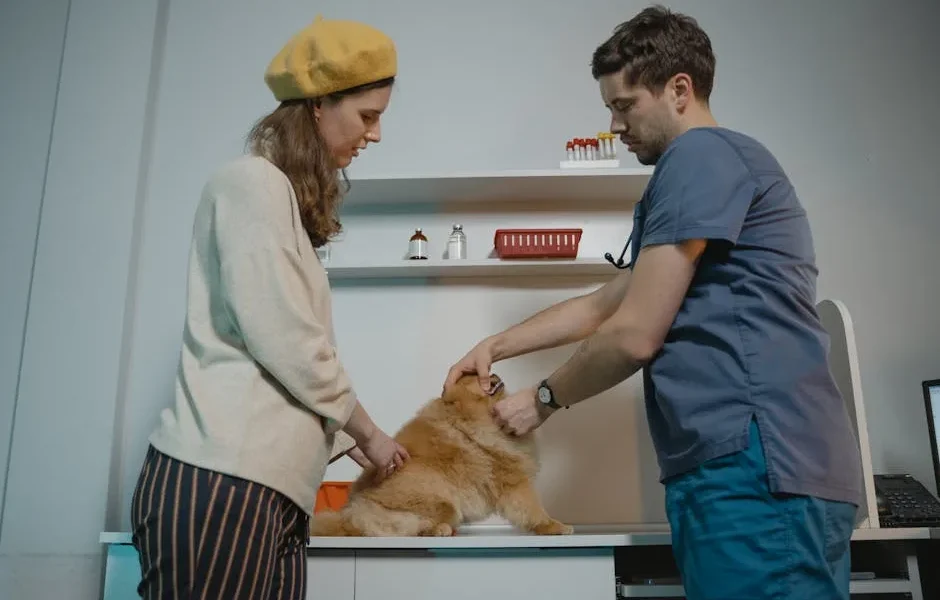
- Board certification matters. Specialists with ACVIM, ACVS, or other recognized credentials have completed 3-5 years of advanced training. They have also passed rigorous exams beyond veterinary school.
- Check credentials through specialty college directories. Ask about success rates for your pet’s specific condition. Get detailed cost estimates upfront.
- Not every complex case requires a specialist. But conditions like cancer, advanced orthopedic issues, and chronic diseases often benefit from specialized expertise. Success rates are 15-25% higher than general practice.
Three years ago, my neighbor’s Golden Retriever, Max, started limping. It happened after his morning walk. Nothing dramatic—just a slight favoring of his back leg. It wouldn’t go away.
Their regular vet examined Max. He took some X-rays. He suggested it might be a torn cruciate ligament. “We can do the surgery here,” the vet offered. “Or I can refer you to an orthopedic specialist about 40 minutes away.”
My neighbor faced a dilemma. Thousands of pet owners encounter this every year. How to evaluate veterinary specialists: Choosing the Right Expert for Your Pet’s Condition becomes critical. This happens when your regular vet recommends specialized care. But the decision isn’t always straightforward.
Do you really need a specialist? How do you know if they’re qualified? And how much is this going to cost?
Max’s story ended well. They chose the specialist. He was running again within three months. But the process taught them something important. (And me, since I heard about every step.) Finding the right veterinary specialist involves more than just accepting the first referral.
Understanding When Your Pet Actually Needs a Specialist
Your regular veterinarian is like your family doctor. They’re excellent for wellness care. They handle common illnesses and straightforward problems. But some pet health issues require advanced expertise. Just as you’d see a cardiologist for a heart condition.
The American Veterinary Medical Association recognizes 22 specialty organizations. These cover approximately 42 distinct areas. We’re talking internal medicine, surgery, oncology, cardiology, dermatology, ophthalmology. The list goes on.
About 15-20% of pet owners will need specialist consultation at some point. This happens during their pet’s lifetime.
So when should you make that call?
Generally, these situations need a specialist:
– Your pet has been diagnosed with cancer
– Your pet needs complex surgery
– Your pet has a chronic condition that isn’t responding to standard treatment
– Your pet has a mysterious illness that’s stumped your regular vet
If you’re dealing with sudden behavioral changes, they might indicate neurological issues. Check out what your dog’s behavior might reveal about their health first.
Your primary vet is usually the best judge. They know when referral makes sense. They know their limitations. Good vets don’t let ego get in the way of your pet’s wellbeing.
Trust that recommendation. But also trust your gut if something feels off.
The Board Certification Question: Why It Matters
Here’s something that surprised me. I learned this when I started working in veterinary medicine. Not every “specialist” is actually board-certified.
Some vets develop an interest in, say, dermatology. They gradually see more skin cases than other conditions. They might call themselves a dermatology specialist. But that’s completely different from a board-certified veterinary dermatologist.
Board certification requires intense additional training. We’re talking 3-5 years beyond veterinary school.
That includes:
– Internships
– Residencies at university hospitals or specialty practices
– Treating hundreds of complex cases
– Conducting research
– Passing rigorous examinations
Organizations like the American College of Veterinary Internal Medicine (ACVIM) give these exams. So does the American College of Veterinary Surgeons (ACVS).
The difference shows up in outcomes. Studies published in veterinary surgery journals prove this. Board-certified specialists achieve success rates of 85-90% for complex procedures. General practitioners attempting the same surgeries achieve 60-70%.
That 20-25% difference could mean everything for your pet.
Only about 10-12% of licensed veterinarians in the U.S. hold board certification. It’s an elite credential. It represents serious expertise.
How to Verify Credentials
Don’t just take someone’s word for it. You can easily verify board certification. Check specialty college websites.
Look for these credentials after the veterinarian’s name:
- Diplomate, ACVIM – Internal medicine specialist
- Diplomate, ACVS – Surgical specialist
- Diplomate, ACVD – Dermatology specialist
- Diplomate, ACVO – Ophthalmology specialist
Each specialty organization maintains an online directory. Takes about 30 seconds to confirm.
New AVMA guidelines from 2024 actually require clearer disclosure. They require this in advertising. But it’s still worth double-checking yourself.
Evaluating the Facility and Approach
Credentials matter. But they’re not everything.
I’ve seen brilliant specialists who couldn’t explain a diagnosis in plain English. I’ve watched pet owners leave consultations more confused than when they arrived.
When you visit a specialty practice, look around. Do they have advanced diagnostic equipment? This includes digital radiography, ultrasound, CT or MRI capabilities.
For certain conditions, access to this technology isn’t optional. If your dog needs advanced diagnostic testing, the facility should have better capabilities. Better than what your regular vet offers.
Multi-specialty veterinary hospitals have been a game-changer. So have “centers of excellence.” This has been happening since 2023. These facilities house multiple specialists under one roof. Your dog can see a cardiologist and an oncologist without driving to two different cities.
That integrated approach often leads to better care coordination.
Questions to Ask During Your Consultation
Don’t be shy about interviewing your specialist. You’re making important decisions. They affect your pet’s life and your financial situation.
Here’s what to ask:
- How many cases like my pet’s have you treated in the past year?
- What’s your success rate for this specific condition or procedure?
- What are all the treatment options—not just your recommendation?
- What’s the typical recovery timeline? What complications should I watch for?
- Can you provide a detailed cost estimate? Include all potential procedures.
- How will you communicate with my primary vet throughout treatment?
That last question is crucial. Specialty care shouldn’t exist in a vacuum. Your regular vet needs to stay in the loop. This is especially true for ongoing conditions. They require long-term management.
The Financial Reality of Specialty Care
Let’s talk about the elephant in the room—cost.
Initial specialist consultations typically run $150-$500. That’s before any diagnostics or treatment. Depending on what your pet needs, total costs can range from $500 to well over $5,000.
I wish I could tell you there’s a simple way around this. But specialty care is expensive. It requires expensive equipment. It requires extensive training. It often requires more time per patient.
However, you have options for managing these costs.
First, check your pet insurance policy. Many plans cover specialist visits and treatments. You may need a referral from your primary vet first. Call before the appointment. Understand what’s covered. Find out whether pre-authorization is required.
If you’re considering insurance, understanding costs helps. Understanding the typical costs of diagnostic procedures can help you choose the right plan.
Many specialty practices offer payment plans. They work through third-party financing companies. Some have relationships with nonprofit organizations. These organizations help with veterinary costs for qualifying pet owners.
Ask about these options upfront. Most specialists understand that financial constraints are real. They want to work with you.
When Geography Complicates Things
If you live in a rural area, accessing specialty care can be challenging. You might be looking at a 50-150 mile drive. That’s what it takes to reach a board-certified specialist.
This creates real dilemmas. Especially when multiple visits are required.
University veterinary teaching hospitals often provide excellent specialty care. They charge lower costs than private specialty practices. But wait times can be longer. Sometimes 6-8 weeks for non-emergency appointments.
For urgent situations, you’ll need to know something. You need to know where 24-hour emergency specialty care is available.
Here’s something interesting. Telemedicine consultations with veterinary specialists increased 300% between 2020-2024.
For $50-$200, you can often get a remote second opinion. Or diagnostic guidance. A virtual consultation can’t replace hands-on examination for many conditions. But it’s valuable for reviewing diagnostics. For discussing treatment options. Or determining whether an in-person specialist visit is truly necessary.
Mobile specialty services are also expanding. Oncologists and cardiologists bring advanced care directly to local vet clinics. Or even homes. These services launched in multiple states in 2024-2025. They are gradually improving access in underserved areas.
Red Flags and Warning Signs
Not every specialist maintains the same standards. Not every specialty practice does either.
Watch for these warning signs:
Vague credentials. If someone calls themselves a specialist but can’t point to board certification, that’s a problem. “I have a special interest in cardiology” isn’t the same. It’s not the same as being a board-certified cardiologist.
Pressure tactics. Good specialists present options. They help you make informed decisions. They don’t push you toward the most expensive treatment. They don’t make you feel guilty for asking about costs or alternatives.
Poor communication with your primary vet. If the specialist doesn’t want to coordinate with your regular veterinarian, that’s concerning. If they seem dismissive of their care, that’s concerning. Quality specialists respect the veterinary team.
Unwillingness to discuss success rates or complications. Every procedure carries risks. A specialist who won’t discuss them honestly is raising red flags. One who gets defensive when you ask about their experience is raising red flags.
Outdated equipment or facilities that seem poorly maintained. Specialty care requires investment in technology. It requires cleanliness standards that exceed typical veterinary clinics.
The Second Opinion Scenario
Sometimes you need a second specialist opinion. That’s completely appropriate.
This is especially true for cancer diagnoses. For surgical recommendations. Or when you’re facing a decision about euthanasia.
You don’t need permission from the first specialist. You don’t need it to seek another opinion. You do need to request medical records. All specialists should provide these. Usually for a small copying fee.
Having complete records prevents duplicate testing. It helps the second specialist give you truly valuable input.
I’ve seen second opinions save lives. I’ve seen them confirm difficult truths. Either way, they provide peace of mind. This happens when you’re making high-stakes decisions about your pet’s health.
Working With Your Primary Vet Through the Process
Your regular veterinarian remains an essential part of your pet’s care team. This is true even when specialists are involved.
They know your pet’s complete history. They’re more accessible for questions and follow-up. They’ll likely be handling ongoing medication management or monitoring.
Keep them informed throughout the specialist care process. Share diagnosis updates. Share treatment plans and medication changes.
This coordination is especially important if your pet sees multiple specialists. Or has conditions requiring long-term management.
Most specialists send detailed reports back to referring veterinarians. But don’t assume communication is happening. Follow up with both your regular vet and specialist. Make sure everyone’s on the same page.
If you’re searching for a primary care veterinarian who communicates well, our guide helps. Our guide on choosing the right veterinarian covers what to look for.
Emergency Versus Scheduled Specialty Care
Not all specialist visits are planned.
Emergency specialty hospitals operate 24/7. They handle critical situations. Severe trauma. Sudden collapse. Difficulty breathing. Suspected bloat. Or other life-threatening conditions that occur outside regular veterinary hours.
These facilities typically staff board-certified emergency and critical care specialists. They work alongside surgeons and internal medicine specialists. Sometimes other specialty services too.
They’re expensive. Emergency visits start around $200-300 just to walk in the door. But they save lives.
Know where your nearest emergency specialty hospital is located. Know this before you need it. Program the number into your phone.
When crisis strikes at 2 AM, you don’t want to be frantically googling directions.
The Future of Specialty Veterinary Care
AI-assisted diagnostic tools are starting to help. They help general practitioners determine when specialist referral is truly necessary.
Pilot programs launched in 2025. They suggest these tools could reduce inappropriate referrals by 20-30%. This saves pet owners money. It reduces specialist wait times for complex cases. Cases that truly require advanced expertise.
Technology is also improving access. Tele-triage services help owners and general practitioners make better decisions. Better decisions about urgent care. Some specialists now offer virtual follow-ups. This happens after initial in-person consultations. It reduces the need for multiple long drives.
Despite these advances, nothing replaces something important. Nothing replaces the hands-on expertise of a well-trained specialist examining your pet.
The relationship between technology and expertise will keep evolving. But board certification and clinical experience will remain the gold standard.
Final Thoughts
Choosing the right veterinary specialist for your pet comes down to several things. Verifiable credentials. Relevant experience. Clear communication. And appropriate facilities.
Board certification through recognized colleges like ACVIM or ACVS isn’t just alphabet soup. It isn’t just letters after a name. It represents years of advanced training and proven expertise.
Don’t hesitate to verify credentials. Ask detailed questions about success rates and costs. Seek second opinions when facing major decisions.
The specialist who’s right for your pet will welcome your questions. They will work collaboratively with your primary veterinarian.
Start by having an honest conversation with your regular vet. Talk about whether specialist care is truly necessary for your pet’s condition.
If referral makes sense, ask for their recommendation. But also do your own research. Verify credentials through specialty college directories. Read reviews. Call practices to ask questions before committing to an appointment.
Your pet depends on you to be their advocate. Taking time to evaluate specialists thoroughly is important. It’s one of the most important ways you can advocate for their health and wellbeing.
Sources & Further Reading
- American Veterinary Medical Association — Official information on veterinary specialty certification, recognized specialty organizations, and credentialing requirements
- American College of Veterinary Internal Medicine — Board certification directory, specialist finder, and resources for pet owners seeking internal medicine specialists
- American College of Veterinary Surgeons — Verification of board-certified surgical specialists, surgical procedure information, and veterinary surgery research publications
- American Animal Hospital Association — Standards and guidelines for specialty veterinary care and hospital accreditation
