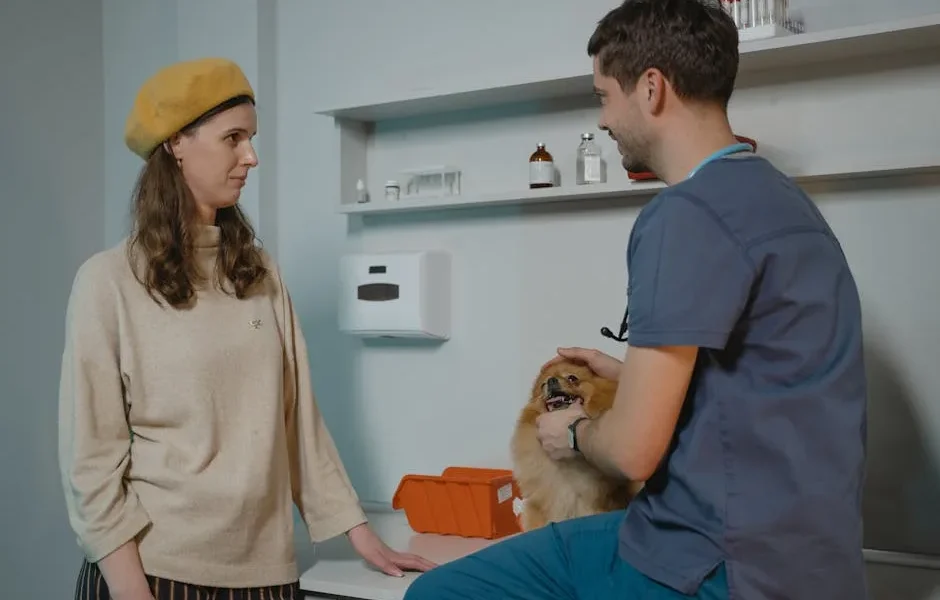
- Choosing the right veterinarian for long-term care means looking at credentials, how they communicate, and their approach to preventive care. Don’t just pick based on convenience or cost.
- AAHA accreditation, Fear Free certification, and ongoing education show higher standards of care. These can improve early disease detection by up to 35%.
- Consistency matters. Seeing the same veterinarian regularly creates better health outcomes than switching practices often.
- Modern preventive care should include wellness plans, appropriate diagnostic technology, and clear communication about your pet’s changing needs throughout their life.
I’ll admit it—after fifteen years in emergency medicine, I’ve seen what happens when pets don’t have good primary care. Pets arrive in crisis with conditions that should’ve been caught months earlier during routine visits.
Sometimes it’s because the owner skipped appointments. But often? It’s because they never found a veterinarian they trusted enough to maintain that crucial preventive care relationship.
Understanding how to choose the right veterinarian for your pet’s long-term preventive care needs isn’t just about finding someone who’ll give annual vaccines. It’s about establishing a partnership that’ll span your pet’s entire life. From puppy or kitten exams through their senior years.
With veterinarian shortages making it harder to find accepting practices, choosing wisely matters more than ever.
Here’s what actually matters when you’re making this decision.
Why Your Choice of Veterinarian Shapes Your Pet’s Entire Health Journey
Let me be blunt: preventive care is where the magic happens. Not in my emergency room.
The statistics tell a sobering story. Only about 50-60% of pet owners maintain annual wellness exams. Yet pets with regular preventive care have 30-40% lower lifetime healthcare costs.
That’s not just about money. It’s about catching kidney disease before it becomes a crisis. It’s about identifying heart murmurs before heart failure develops. It’s about maintaining quality of life instead of just managing emergencies.
But here’s what most pet owners don’t realize: not all preventive care is created equal.
A vet who rushes through a ten-minute exam isn’t providing the same value as one who performs comprehensive wellness screenings. Research shows that pets seeing the same veterinarian consistently have 35% better early disease detection rates. That’s compared to those who switch frequently or use drop-in clinics.
Your choice sets the foundation. Choose well, and you’re investing in years of healthy life. Choose poorly—or not at all—and you’ll likely meet someone like me when things go sideways.
Step 1: Verify Credentials, Accreditation, and Continuing Education Commitment
Start with the basics that actually differentiate quality practices from mediocre ones.
All veterinarians must be licensed, sure. But AAHA accreditation is voluntary. Only 15-20% of practices pursue it.
Why does this matter? AAHA-accredited practices must meet over 900 standards. These cover everything from pain management protocols to equipment maintenance to medical record keeping. They’re evaluated every three years.
This isn’t just bureaucratic box-checking. It’s a commitment to maintaining higher standards than legally required.
Look for these credentials and certifications:
- AAHA accreditation for the practice itself
- Fear Free or Low Stress Handling certification—practices with these report 25% higher client retention and better health outcomes
- Continuing education participation—ask how many CE hours the veterinarians complete annually (many states require 20-30 hours, but dedicated vets often complete 40-60+)
- Special interests or additional training in areas relevant to your pet (geriatric care, specific breed issues, integrative medicine)
Don’t be shy about asking. A practice proud of its standards will happily discuss their certifications and training.
One that gets defensive? Red flag.
How to Check a Veterinarian’s Background
Your state veterinary board website lets you verify licenses. You can also check for disciplinary actions.
The AAHA website has a “find an accredited practice” tool. Fear Free publishes a searchable directory of certified professionals.
Use these resources before even scheduling a visit.
Step 2: Evaluate Their Preventive Care Philosophy and Protocols
Here’s where it gets interesting. Two veterinarians can have identical credentials but completely different approaches to preventive care.
Some practices still operate on the traditional “annual exam and vaccines” model. Others have embraced comprehensive wellness programs. These include life-stage-specific protocols, breed risk assessments, and proactive screening for common conditions.
Research shows that breed-specific and life-stage preventive care plans can detect issues 6-12 months earlier than generic wellness exams.
During your initial consultation, ask:
- “What does a typical wellness visit include for a [young/adult/senior] [breed] like mine?”
- “How do your recommendations change as my pet ages?”
- “What screening tests do you recommend and why?”
- “How do you stay current on preventive care guidelines?”
The best preventive care veterinarians think proactively. They’re discussing dental disease prevention at puppy visits. Not just treating it when your dog’s teeth fall out at age seven.
They’re recommending baseline blood work before your pet shows symptoms. This creates comparison points for later life.
They’re tailoring vaccine protocols to your pet’s actual lifestyle and risk factors. Not just following a rigid schedule because “that’s how we’ve always done it.”
You want someone who partners with you in keeping your pet healthy. Not someone who just responds when problems arise.
Step 3: Assess Communication Style and Accessibility
I cannot overstate this: the best-credentialed veterinarian in the world is useless if you can’t communicate effectively with them.
Preventive care requires ongoing dialogue. You need to feel comfortable asking questions, expressing concerns, and understanding recommendations.
Your veterinarian needs to explain things in terms you understand without being condescending.
This relationship spans years—potentially 10-15+ years for your pet’s lifetime.
Pay attention during your first visit to these communication factors:
- Do they listen? Really listen, not just wait for you to stop talking?
- Do they explain their reasoning? “Your cat needs blood work” is very different from “I’m recommending blood work because kidney disease is common in cats over seven, and early detection can add years to their life”
- Do they welcome your questions? Some vets get impatient with involved pet owners. You want one who appreciates your engagement.
- How do they handle differing opinions? If you have concerns about a recommendation, do they discuss alternatives or become rigid?
Beyond the exam room, consider practical accessibility.
What are their communication options between visits? Email portal? Text reminders? How quickly do they typically return calls?
Do they offer telemedicine consultations for minor concerns? About 45% of practices now offer some virtual options. This is incredibly valuable for preventive care check-ins.
The Multi-Pet Household Consideration
If you have multiple pets—especially different species—ensure your veterinarian is genuinely comfortable treating all of them.
Some vets prefer dogs. Some excel with cats. Some handle exotics.
A veterinarian who specializes in feline care might be perfect for your cats but less ideal for your dog.
Having one trusted vet who knows your entire pet family’s history can be invaluable.
Step 4: Examine On-Site Technology and Diagnostic Capabilities
Modern preventive care requires modern tools.
Your vet doesn’t need every specialty diagnostic machine. That’s what referral hospitals are for.
But certain equipment should be available in-house for effective preventive medicine:
- Digital radiography (X-rays)—for screening senior pets and evaluating non-emergency concerns
- In-house laboratory capabilities—at minimum, CBC (complete blood count) and chemistry panels should be runnable same-day
- Digital dental radiography—essential for proper dental care (most dental disease happens below the gum line, invisible without X-rays)
- Ultrasound—either on-site or readily available through visiting specialists
Some practices are now implementing AI-assisted diagnostic tools. These can detect subtle changes in bloodwork trends or identify abnormalities on X-rays that human eyes might miss.
While not essential, these technologies represent a practice committed to staying current.
Ask what gets sent to outside laboratories versus handled in-house. There’s nothing wrong with using reference labs for specialized tests. But if they’re sending out routine blood work that should be available immediately, that’s a limitation.
Step 5: Understand the Practice Structure and Stability
The veterinary landscape has changed dramatically. Corporate consolidation accelerated in 2024. Large corporations now own significant percentages of veterinary practices.
This isn’t automatically good or bad, but it matters.
Ask about ownership structure. Some corporate-owned practices maintain excellent care with stable staffing and good resources. Others experience high turnover, pressure to upsell services, and loss of individualized care.
Independent practices might offer more personalized attention. But they potentially have fewer resources for complex cases.
More importantly, investigate staff stability. High turnover is a major red flag.
Preventive care benefits enormously from continuity. The same veterinarian seeing your pet year after year. The same technicians who remember your pet’s quirks and fears.
If the practice churns through staff every six months, you lose that crucial continuity.
How do you assess this during a first visit? Notice how staff interact with each other. Ask how long the veterinarians and senior technicians have been with the practice.
A receptionist can usually tell you without it being awkward.
Step 6: Evaluate Cost Transparency and Payment Options
Let’s talk about money because it matters and pretending otherwise helps no one.
Preventive care visits average $200-$400 annually. That’s significantly less than emergency visits at $800-$1,500+.
But costs vary widely between practices. Lack of transparency causes problems.
The right veterinarian for long-term preventive care will:
- Provide clear estimates before procedures—not surprise bills afterward
- Explain what’s essential versus optional—helping you prioritize if budget is a concern
- Offer wellness plans or payment options—many practices now offer monthly subscription wellness plans ($30-$80/month) that include all routine preventive care
- Work with pet insurance—some policies now cover preventive care, and your vet should be willing to provide necessary documentation
- Discuss costs proactively—not make you feel guilty for asking
Beware practices that push expensive add-ons without clear medical reasoning. Also beware practices that seem suspiciously cheap. They’re either cutting corners on care quality or making it up elsewhere.
For context on what various diagnostics should cost, see our guide on diagnostic testing costs and insurance coverage.
Step 7: Confirm Emergency and After-Hours Support
Even with excellent preventive care, emergencies happen. Your primary care veterinarian should have clear protocols for after-hours crises.
Some larger practices offer their own emergency services. Many refer to dedicated emergency hospitals (like the one where I work).
The key is clarity. What number do you call after hours? Where should you go? Does your vet communicate with the emergency facility about your pet’s history?
A practice with established relationships with quality emergency providers shows they’ve thoughtfully considered your pet’s complete care needs.
If they seem vague or dismissive about after-hours care, that’s concerning.
Your preventive care veterinarian should provide guidance on what constitutes an emergency versus what can wait until morning.
For more information, check out our article on finding quality emergency veterinary care.
Red Flags to Watch For During Your Evaluation
Now that we’ve covered what to look for, let’s discuss warning signs. These suggest you should keep searching:
- Dismissive attitude toward your concerns—if they minimize what you’re observing about your pet’s health or behavior, they won’t be a good long-term partner
- Inability to explain recommendations—”because that’s our protocol” without medical reasoning suggests cookbook medicine rather than individualized care
- Obvious uncleanliness—the practice should smell clean (some animal odor is normal, but overwhelming smell suggests sanitation issues)
- Staff who seem stressed, unhappy, or communicate poorly—this indicates management problems that affect care quality
- Pressure to make immediate decisions—good vets give you time to consider recommendations for non-urgent matters
- Defensiveness about credentials or protocols—confidence welcomes questions; insecurity deflects them
- Inconsistent information—if the vet says one thing and the technician says another, there’s a communication problem
- Reluctance to provide referrals—good general practitioners know when specialist input is valuable
Trust your gut. If something feels off during your initial visit, it probably is.
You’re not being picky—you’re being responsible.
Common Mistakes Pet Owners Make When Choosing a Veterinarian
Even well-intentioned pet owners sometimes prioritize the wrong factors. Here are mistakes I’ve seen repeatedly:
Mistake #1: Choosing Based Solely on Convenience or Price
The closest veterinarian or the cheapest one isn’t necessarily the right one.
Yes, convenience matters. You’re more likely to keep appointments if the practice isn’t an hour away.
But traveling an extra ten minutes for significantly better care is often worth it.
Similarly, the cheapest option might save money initially. But it could cost more long-term if they miss problems that become expensive emergencies.
Mistake #2: Not Meeting the Veterinarian Before an Emergency
Don’t wait until your pet is sick to establish care.
Schedule a wellness visit or even just a “meet and greet” to evaluate the practice. Do this when emotions aren’t running high and you can assess objectively.
Many practices offer free initial consultations or facility tours.
Mistake #3: Staying with a Mediocre Vet Out of Loyalty or Guilt
I’ve met pet owners who knew their veterinarian wasn’t providing great care but felt bad about leaving.
Your loyalty should be to your pet’s health. Not to a professional relationship that isn’t serving you well.
It’s okay to change veterinarians if you’re not getting what you need. Request medical records and move on without guilt.
Mistake #4: Ignoring Your Own Communication Needs
Some pet owners want detailed explanations of every finding. Others prefer bottom-line recommendations.
Some want frequent updates. Others don’t want to be bothered unless it’s important.
Neither approach is wrong. But your veterinarian’s communication style needs to match your preferences.
Don’t assume you should adapt to their style. Find someone who naturally communicates the way you need.
Mistake #5: Not Asking About Chronic Condition Management
If your pet develops a chronic condition later in life, your preventive care vet becomes even more critical.
Ask during your initial evaluation how they handle ongoing conditions. Things like diabetes, kidney disease, or arthritis.
Some general practitioners excel at this. Others quickly refer to specialists. Neither is wrong, but you should know their approach.
For more on this topic, see our article on partnering with your vet for chronic illness management.
Tips for Making the Most of Your First Veterinary Visit
Once you’ve narrowed down your choices, these strategies help you evaluate during that crucial first appointment:
- Bring a written list of questions—you’ll forget things in the moment
- Observe how your pet responds—some pets are nervous everywhere, but extreme fear responses might indicate the environment isn’t low-stress enough
- Notice how staff interact with your pet—are they patient? Gentle? Do they take time to help your pet feel comfortable?
- Ask about their preventive care recommendations for your pet specifically—generic answers suggest one-size-fits-all medicine
- Request a tour if possible—seeing the treatment area, surgery suite, and hospitalization area gives insight into standards and cleanliness
- Pay attention to wait times—some wait is normal, but regularly running hours behind suggests scheduling problems
- Evaluate the checkout process—are costs clearly explained? Is the staff friendly and helpful with questions about bills or insurance?
After your visit, reflect honestly. Would you feel comfortable calling them with concerns? Did you feel heard and respected?
Could you see yourself building a decade-long relationship with this practice? These subjective factors matter just as much as credentials.
Questions to Ask During Your Initial Consultation
Don’t be afraid to interview your potential veterinarian. These questions reveal a lot about their practice philosophy:
- “What’s your approach to preventive care as pets age?”
- “How do you handle cases that exceed your expertise?”
- “What’s your typical availability for appointments?”
- “How do you handle after-hours emergencies?”
- “What’s your philosophy on pain management?”
- “Do you offer any wellness plans or package pricing for preventive care?”
- “How often do you recommend wellness visits for [life stage]
Medical disclaimer: This article is for educational purposes only and does not substitute professional veterinary advice, diagnosis, or treatment. Always consult a licensed veterinarian about your pet's health.