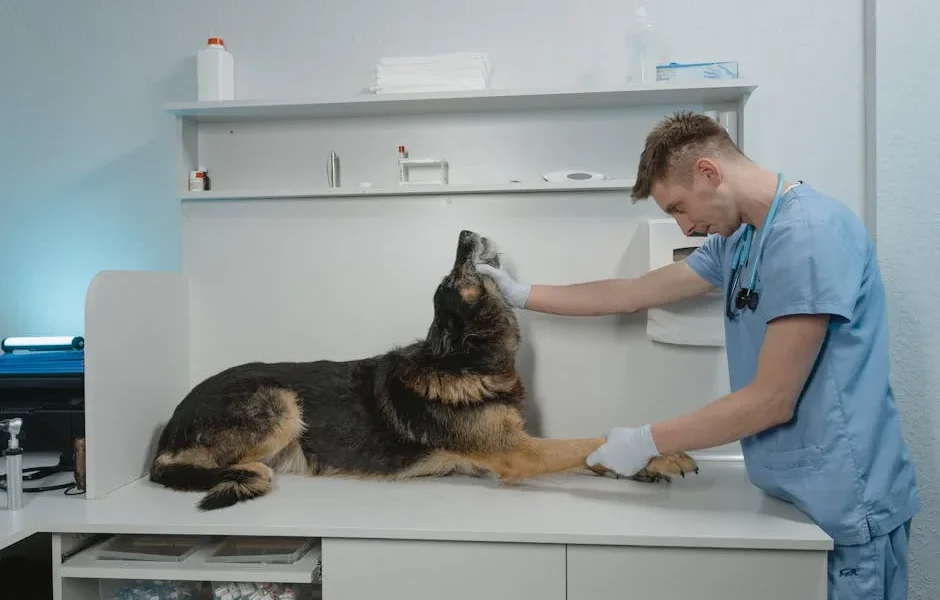
- Emergency vet visits cost $150-$300 just for the exam. That’s before treatment. Urgent care costs $75-$150. Primary care costs $50-$100. But only 43% of “emergencies” actually need emergency care.
- Urgent care clinics are growing fast. They offer extended hours and testing at about half the cost of emergency hospitals.
- Knowing which care your pet needs can save you thousands of dollars. Most conditions have clear signs that show which type of care is right.
Last Tuesday at 9 PM, my neighbor rushed her dog to the emergency vet. He had eaten a chicken bone. Four hours and $2,800 later, the dog was fine.
The vet said it could have waited until the next morning. The dog could have gone to urgent care instead.
This happens all the time. It breaks my heart. That financial stress could have been avoided with better information about Emergency Vet vs Urgent Care vs Primary Care Clinic: 2025 Cost & Service Comparison.
The veterinary world has changed a lot. We now have three different types of care. Each serves different needs. Each has very different prices.
Here’s what nobody tells you: Choosing the right care isn’t just about your pet’s symptoms. It’s about understanding what each place can do. It’s about knowing when they’re open. It’s about knowing if your situation really needs those services.
Let’s break down what separates these three types of vet care. Then you can make smart decisions when your pet needs help.
1. Operating Hours and Availability: When Each Type of Clinic Is Open
Emergency veterinary hospitals are open 24 hours a day. They’re open 365 days a year. That’s what makes them emergency hospitals.
It can be 3 AM on Christmas morning. It can be a regular Tuesday afternoon. The doors are open. The staff is ready.
This costs more. They need multiple shifts of vets and technicians. They need support staff around the clock.
Urgent care veterinary clinics have extended hours. Think evenings until 10 PM or midnight. They’re open on weekends. But they close overnight.
Most urgent care facilities open early (7-8 AM). They stay open late (10 PM to midnight). They’re open seven days a week. Some close for a few hours at night.
The hours vary by location. But they’re not truly 24/7.
Primary care clinics are your regular vet’s office. They stick to business hours. Monday through Friday, 8 AM to 6 PM is common. Maybe they have Saturday morning hours.
Some practices now stay open until 7 PM on weekdays. But if your pet has a problem at 9 PM on Wednesday, your regular vet isn’t available.
This is where knowing your options matters. You need to tell the difference between “this needs attention tonight” and “this can wait until tomorrow morning.”
2. Cost Comparison: What You’ll Actually Pay in 2025
Here’s where things get real.
Emergency vet exam fees are $150-$300. That’s just to walk through the door. Nobody has touched your pet yet. They haven’t run a single test.
Add diagnostics, treatment, and medications. You’re easily looking at $800-$3,000 for moderately serious conditions.
Critical cases need surgery or intensive care. Those cost $3,000-$10,000 or more.
Urgent care facilities charge $75-$150 for the initial exam. That’s about half the emergency rate.
Total visit costs for common urgent issues run $500-$1,500. This includes things like mild poisoning, minor wounds, or acute vomiting.
That’s still a lot of money. But it’s much less than emergency prices.
The cost savings come from streamlined operations. They treat less critical cases. These cases don’t need intensive monitoring or specialized equipment.
Primary care clinic visits cost $50-$100 for routine appointments.
Even sick visits usually total $150-$400 including treatment. This covers things like ear infections, skin problems, or digestive upset.
The difference is huge. A skin infection at your regular vet might cost $200. The same issue at an emergency hospital at 2 AM could run $600-$800.
Pet insurance data from 2024 shows something important. Understanding the right care levels saves pet owners an average of $1,200 per year.
3. Staffing and Expertise: Who’s Actually Treating Your Pet
Emergency veterinary hospitals have board-certified specialists. These are vets who did extra years of training beyond vet school.
We’re talking about emergency and critical care specialists. Board-certified surgeons. Internal medicine specialists. Critical care technicians.
These facilities have more staff per patient. They handle life-threatening cases that need constant monitoring.
Urgent care clinics have experienced general practice vets. They’re the same quality of doctors you’d find at good primary care clinics.
They can diagnose and treat many conditions. This includes toxin ingestion, lacerations, and allergic reactions.
The difference from emergency hospitals isn’t the doctors’ skill for urgent cases. It’s that they don’t have specialists for critical care. They can’t monitor pets 24 hours.
Primary care vets are your pet’s family doctor. They’re great at preventive care. They manage chronic diseases. They do routine procedures. They diagnose new health issues.
Many have decades of experience. They’ve seen just about everything.
What they usually lack is advanced life-support equipment. They can’t monitor overnight.
For semi-urgent issues during business hours, your primary vet can often handle it. And they already know your pet’s medical history. That’s valuable.
If you’re managing ongoing health concerns, partnering with your primary vet for long-term care creates continuity. That really benefits your pet.
4. Equipment and Diagnostic Capabilities
Emergency hospitals have critical care equipment.
They have ventilators. Advanced monitoring systems. In-house labs that give results in 15-30 minutes. Ultrasound machines. CT scans in some locations.
They have full surgical suites. Intensive care units with oxygen cages. Blood transfusion capabilities.
This equipment supports the sickest patients. These patients need immediate, aggressive care.
Urgent care facilities have solid diagnostic tools.
They have digital X-rays. In-house blood analyzers for common tests. Oxygen supplementation. They can do minor surgery for wound repair. They can give IV fluids.
They can diagnose pneumonia, broken bones, bladder infections, and toxin ingestion.
What they typically can’t do is major surgery. They don’t have advanced imaging like CT scans. They can’t provide intensive overnight monitoring.
For most truly urgent (but not critical) conditions, their equipment is perfectly fine.
Primary care clinics vary more. Modern practices have digital X-rays. They send blood work to labs. Results come back in 12-24 hours.
Some have in-house analyzers for faster results on common tests. They do routine surgeries like spays and neuters.
The diagnostic testing options and costs at primary care clinics are usually the most economical. This works when you can schedule appointments ahead of time.
5. Wait Times: What to Expect When You Arrive
Emergency veterinary hospitals use a triage system.
Critical cases go immediately to the back. These are animals who can’t breathe. Animals who are unconscious. Animals bleeding severely.
Less critical cases wait.
During peak times (evenings, weekends, holidays), you might wait 2-4 hours or longer. This happens if multiple critical cases arrive.
It’s frustrating. But it’s how emergency medicine works. Lives get saved because of triage. Your limping dog might wait while a hit-by-car patient gets immediate attention.
Urgent care clinics typically see patients in 30-60 minutes.
They don’t take the most critical cases. So the flow is steadier.
Some take appointments. Others do walk-ins. Many use both systems.
The wait is usually reasonable. They’re not getting slammed with life-or-death emergencies that disrupt the schedule.
Primary care clinics work by appointment. Wait times are minimal. Usually 5-15 minutes past your scheduled time.
The predictability is wonderful when you can plan ahead.
Sometimes they have emergency slots for established patients. But availability varies.
This is why finding quality 24-hour veterinary care in your area before you need it is so important. You want to know your options ahead of time.
6. Common Conditions: Which Facility Handles What
Emergency hospitals are appropriate for:
Difficulty breathing. Unconsciousness or collapse. Suspected poisoning with severe symptoms. Major trauma (hit by car, severe dog attacks).
Bloat in large-breed dogs. Seizures lasting more than 5 minutes. Severe bleeding that won’t stop. Inability to urinate (especially male cats).
Extreme pain. Heatstroke. Severe allergic reactions with facial swelling and breathing difficulty.
Urgent care clinics handle:
Mild to moderate poisoning. Lacerations requiring stitches. Limping or suspected broken bones. Vomiting/diarrhea with dehydration.
Eye injuries. Ear infections with severe pain. Urinary issues without complete blockage. Mild allergic reactions.
Foreign body concerns (ate something they shouldn’t). Sudden lameness. Persistent coughing.
Basically, conditions that need attention today or tonight. But they’re not immediately life-threatening.
Primary care appointments are right for:
Skin infections and hot spots. Ear infections (mild to moderate). Routine vomiting or diarrhea without dehydration. Weight loss.
Lumps and bumps that need evaluation. Chronic coughing. Behavioral changes. Preventive care and vaccinations.
Dental disease. Arthritis management. Follow-up for chronic conditions.
These are issues that need care. But they can safely wait for a scheduled appointment.
Sometimes behavioral changes indicate health problems that need a primary care visit.
7. Insurance Coverage and Reimbursement Differences
Pet insurance typically covers all three types of care. But the reimbursement structure matters.
Most policies have an annual deductible. Often $250-$500. This applies no matter where you seek care.
After you meet that deductible, the insurance reimburses a percentage. Typically 70-90% of covered expenses.
Here’s something interesting from 2024. Several major pet insurance companies changed their policies.
They started offering lower deductibles for urgent care visits. Or higher reimbursement rates. This is compared to emergency visits.
The goal is to encourage appropriate care level selection.
If you go to urgent care when that’s right, you might have a $100 deductible instead of $250. Or 90% reimbursement instead of 80%.
Emergency visits are fully covered (after deductible) for genuine emergencies.
But what if you take your pet to the ER for something minor? Something that could have waited? Some insurers now have a “non-emergency ER visit” clause. This reduces reimbursement.
Read your policy carefully.
Primary care visits are covered. But wellness plans are usually separate add-ons. These cover preventive care like vaccines and annual exams.
8. Decision Framework: How to Choose the Right Care Level
Ask yourself three questions.
First: Is this immediately life-threatening?
Can’t breathe? Won’t wake up? Severe bleeding? Obviously critical trauma?
That’s emergency. No question. No hesitation. Go now.
Second: Does this need attention within the next few hours but isn’t critical?
Your pet is uncomfortable but stable? Functioning okay but something is definitely wrong?
That’s likely urgent care if it’s after hours. Or possibly a same-day primary care appointment if your vet has availability.
Third: Can this safely wait 12-24 hours for your regular vet?
Your pet is eating and drinking? Moving around? Acting relatively normal despite some symptoms?
That’s probably a primary care appointment.
When in doubt, call. Many emergency hospitals and urgent care facilities now offer phone triage.
Describe the symptoms. They’ll advise whether you should come in.
The 2025 expansion of veterinary telemedicine helps too. It’s now available in 23 states.
You can sometimes connect with a vet virtually first. They can’t prescribe controlled substances without seeing your pet. They can’t make definitive diagnoses without examining your pet.
But they can help you determine urgency level.
It’s a game-changer for anxious pet owners. You’re wondering if a symptom requires immediate attention. This helps.
9. Geographic Availability and Access
Urban and suburban areas typically have all three options.
Most cities have at least one 24-hour emergency hospital. Several urgent care clinics. Numerous primary care practices.
The challenge is knowing where they are before you need them. Researching at 10 PM when your dog is vomiting is not ideal.
Rural areas face tougher choices.
Emergency hospitals might be 60-90 minutes away. Urgent care is hit-or-miss. Some rural communities have them. Many don’t.
Your primary care vet might be the only easily accessible option. After-hours emergencies require long drives.
This is where having a plan matters enormously.
The growth of urgent care clinics is helping. They grew 47% between 2022-2024 according to Mars Veterinary Health.
They’re gradually filling gaps. Many are opening in suburban areas. These are between city emergency hospitals and rural communities.
But availability still varies a lot by region. Know your options before an emergency happens.
10. Continuity of Care and Medical Records
Here’s something that doesn’t get discussed enough. Medical record transfer between facilities.
When you visit an emergency hospital or urgent care clinic, they treat your pet. Then they send records to your primary vet afterward.
But there’s often a delay. Days or even weeks sometimes.
Emergency hospitals typically give you discharge instructions. They give you copies of records directly.
They’ll fax or email records to your primary vet. But follow-up is your responsibility.
Your regular vet needs to see those records. This maintains continuity of care. It’s on you to make sure your primary vet receives the information. And to schedule any recommended follow-up.
Urgent care clinics generally communicate better with primary care practices. They operate in the same “non-critical” space.
Many urgent care facilities actively encourage follow-up. They want you to see your regular vet within 24-48 hours.
Some veterinary networks now share electronic medical records. This works across emergency, urgent care, and primary facilities under the same ownership.
That’s the gold standard. But it’s not universal yet.
Final Thoughts
The three-tiered veterinary care system exists to match resources with needs. It’s actually a good thing for pet owners once you understand it.
Emergency hospitals save lives. But they cost much more.
Urgent care fills the crucial gap. It’s between “this can wait” and “this is critical.”
Your primary vet remains your pet’s medical home. For everything routine. For many semi-urgent issues during business hours.
The key is matching your pet’s condition to the right facility.
Here’s what I recommend:
Right now, before anything happens, do some research. Save contact information for all three facility types in your area.
Know where the nearest 24-hour emergency hospital is. Find out if urgent care exists nearby. Learn their hours.
Talk to your primary veterinarian about their after-hours recommendations.
Build an emergency fund. Even $1,000-$2,000 set aside for unexpected vet costs provides enormous peace of mind.
Consider pet insurance if your budget is tight.
And when something happens, take a breath. Assess using the decision framework above. Choose the care level that matches the situation.
Your pet—and your wallet—will benefit from that informed choice.
Sources & Further Reading
- American Veterinary Medical Association — Professional organization providing veterinary cost data, practice standards, and pet care resources
- Veterinary Emergency and Critical Care Society — Specialty organization offering emergency care guidelines, standards, and veterinary professional resources
- ASPCA Pet Care Resources — Comprehensive pet emergency information, statistics on veterinary care utilization, and pet health guidance
- Trupanion Pet Insurance — Pet insurance provider offering claims data analysis and veterinary cost comparisons across care types
- American Animal Hospital Association — Veterinary practice accreditation body providing care standards and best practices for animal hospitals
