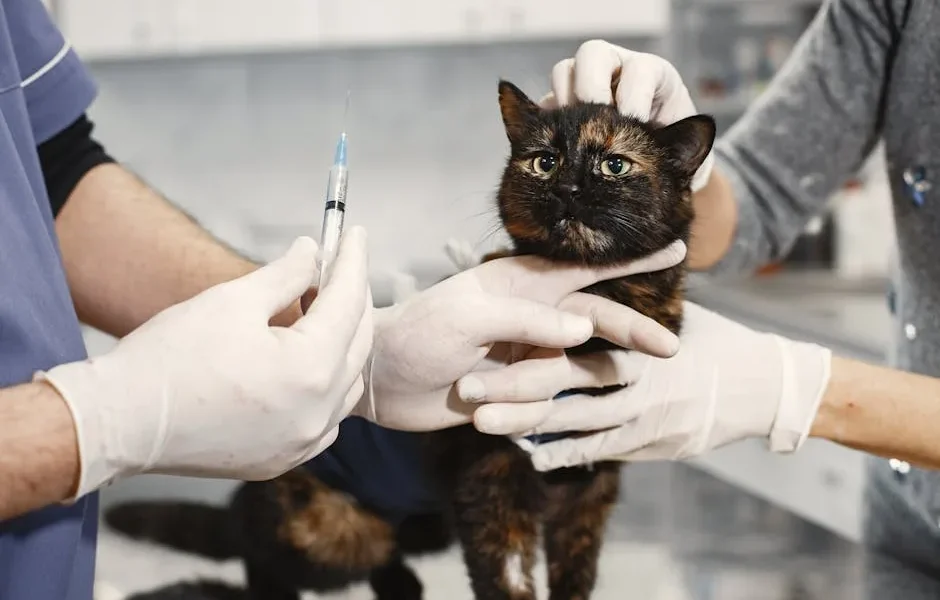
- Annual preventive care costs $200-$600 for dogs and $150-$450 for cats. A single emergency visit averages $1,000-$3,000 before treatment even starts
- Common preventable emergencies cost much more than prevention. Parvovirus treatment is $1,500-$8,000. Heartworm disease treatment is $1,000-$1,800. Prevention costs far less
- Pets with consistent preventive care live 1.5-2 years longer. They also have 30-40% lower lifetime healthcare costs than pets who only get sick visits
I’ll be honest with you. In my years as a veterinarian, the hardest conversations aren’t about difficult diagnoses. They aren’t about complex treatments either.
They’re the ones where I look at a pet owner across the exam table. I’m explaining that their dog’s $4,000 parvovirus treatment could have been prevented. It would have taken just a $25 vaccine. Or that the cat who needs $2,500 in dental surgery could have avoided it with annual cleanings.
Understanding Why Your Pet’s Preventive Care Costs Less Than Emergency Treatment: A Vet’s Financial Breakdown isn’t just about numbers on a bill. It’s about the real difference between two choices.
One choice: spending a few hundred dollars a year on wellness visits. The other choice: facing thousands in emergency costs you weren’t prepared for. Let me break down the actual math. Once you see it, the choice becomes pretty clear.
1. The Baseline Cost Comparison: Prevention vs. Emergency
Let’s start with the basics. According to the American Veterinary Medical Association, annual preventive care typically costs $200-$600 for dogs. For cats, it’s $150-$450.
This includes your wellness exams. It includes core vaccines. It includes parasite prevention and basic bloodwork. Spread that across 12 months. You’re looking at about $17-$50 per month.
Now compare that to a single emergency visit. Before we even diagnose or treat anything, just walking through our emergency clinic doors costs money. The average is $1,000-$3,000.
That’s for the exam. That’s for diagnostic tests. That’s for initial stabilization. If your pet needs surgery? Or hospitalization? Or intensive treatment? You’re easily looking at $5,000-$10,000 or more.
The math is stark, isn’t it? One emergency can cost you what 5-10 years of preventive care would have.
And here’s the thing. Many of those emergencies are completely preventable with routine care. We’re not talking about freak accidents. We’re talking about conditions that develop slowly and predictably when pets don’t receive regular checkups.
What Preventive Care Actually Includes
Your annual preventive care package covers several things. Wellness exams (usually twice yearly for senior pets). Core vaccinations. Heartworm and flea/tick prevention. Fecal testing. Age-appropriate bloodwork.
Some practices now offer comprehensive blood work screening. This can catch diseases years before symptoms appear.
2. Dental Disease: The $1,500 Difference Between Cleaning and Crisis
Want to see preventive care savings in action? Let’s talk about teeth.
Routine dental cleanings typically cost $300-$800. The cost depends on your pet’s size and your location. Yeah, I know that seems like a lot for “just cleaning teeth.” But consider what happens when we skip them.
By age three, about 80% of dogs show signs of dental disease. So do 70% of cats. This comes from the Veterinary Oral Health Council.
Left untreated, that progresses to advanced periodontal disease. This requires extractions. It requires antibiotics. Sometimes it requires treatment for infections that have spread to other organs. Total cost? $1,500-$3,000 or more.
I’ve seen dogs lose half their teeth. Why? Because owners thought dental cleanings were “optional.” I’ve treated cats with jaw abscesses so severe they couldn’t eat.
Every single one of those cases could have been prevented. Or at least minimized with regular dental care. The financial difference is real. But honestly, watching a pet in that kind of pain is the part that really gets me.
3. Heartworm Prevention: Spending $15/Month to Avoid a $1,800 Nightmare
Monthly heartworm prevention costs about $60-$180 annually. That’s $5-$15 per month.
Treatment for heartworm disease? $1,000-$1,800 for dogs. And here’s the kicker: it’s only 95% successful. Prevention is nearly 100% effective.
For cats, there’s no approved treatment at all. We can only provide supportive care. We hope their immune system can handle it.
The American Heartworm Society has documented thousands of cases. Pet owners thought they could skip prevention. They said “we don’t see many mosquitoes.” Or “my pet doesn’t go outside much.”
Heartworms only need one mosquito bite. Just one. And once your pet tests positive, you’re facing months of restricted activity. Multiple injections. Significant risk of complications during treatment.
I’ve had clients tell me they couldn’t afford the $12 monthly prevention. Then they had to make a heartbreaking decision. Could they afford the $1,500 treatment? It’s a decision no one should have to face.
4. Early Disease Detection: The Chronic Condition Cost Multiplier
Here’s where preventive care really shows its value. Annual bloodwork costs $100-$300. The cost depends on the panel.
That might seem unnecessary when your pet looks healthy. But early detection of conditions can literally save you thousands. It can extend your pet’s life by years.
Conditions like kidney disease. Diabetes. Thyroid problems.
Take kidney disease as an example. Caught early through routine bloodwork, we can manage it with diet changes. We can manage it with medications costing $50-$150 monthly. This can potentially extend your pet’s quality life by 2-3 years.
Miss it until symptoms appear? You’re looking at end-stage kidney disease. This requires hospitalization at $2,000-$5,000 or more. Your pet will have a much shorter lifespan.
Banfield Pet Hospital’s State of Pet Health reports analyze millions of patient records. They show that pets receiving consistent preventive care live on average 1.5-2 years longer. That’s compared to those receiving only sick visits.
Can you put a price on those extra years with your companion? But even from a purely financial standpoint, preventive monitoring costs a fraction of crisis management.
The Compounding Effect of Skipped Care
Missing just one year of preventive care doesn’t mean you save that $400. It means you’re increasing your risk of much higher costs down the line.
Senior pet emergency visits (age 7+) cost 40-60% more than emergencies in younger pets. This is largely due to complications from undiagnosed chronic conditions. These conditions could have been caught earlier.
5. The Top Preventable Emergencies That Drain Bank Accounts
Let me walk you through the most common emergencies we see. They’re also the most expensive. Preventive care would have avoided them.
These aren’t rare occurrences. We see them weekly in emergency veterinary medicine.
Parvovirus: Treatment costs $1,500-$8,000. It requires hospitalization. It has only a 70-90% survival rate even with aggressive treatment. The vaccine? About $25 as part of your puppy series.
I’ve watched puppies die from parvo. Their owners sobbed. They wished they’d known about the vaccine. It’s absolutely devastating.
Tick-borne diseases: Treatment runs $500-$3,000. This depends on severity and complications. Monthly prevention costs about $10-$15. Lyme disease, ehrlichiosis, and anaplasmosis can cause long-term organ damage. This happens even after treatment.
Gastrointestinal foreign bodies: Surgery to remove objects pets swallow costs $2,000-$7,000. Not all foreign body ingestions are preventable. But many happen in pets with underlying conditions. Conditions like anxiety or pica.
These could have been identified during regular wellness visits. Understanding your pet’s behavior through preventive consultations helps. This includes behavioral assessments. These can prevent these emergencies.
6. Pet Insurance and Preventive Care: Understanding the Real Math
Here’s a question I get constantly. “If I have pet insurance, does preventive care still matter financially?”
The answer is a resounding yes. Most pet insurance policies don’t cover preventive care. They cover accidents and illnesses. You’ll still pay out of pocket for vaccines. For wellness exams. For routine screenings.
But here’s the thing. Pets with documented preventive care history have 30-40% lower lifetime healthcare costs. They have higher insurance acceptance rates. This comes from the North American Pet Health Insurance Association.
Insurance companies recognize that well-maintained pets have fewer claims. Some insurers even offer premium discounts. This is for pets with up-to-date preventive care.
Plus, understanding how pet insurance payment structures work helps. You realize that preventing claims in the first place is often more cost-effective. It’s better than paying deductibles and co-pays for treatment.
Even with insurance, you’re typically responsible for 10-20% of costs. Twenty percent of a $5,000 emergency is still $1,000 out of your pocket.
7. Payment Strategies That Make Prevention Affordable
I know what you’re thinking. “This all sounds great, but what if I genuinely can’t afford $400-$600 upfront for annual care?”
Fair question. Let’s talk about strategies that actually work for real budgets.
Wellness plans from major veterinary chains allow you to spread preventive costs. Banfield, VCA, BluePearl offer these. You can make 12 monthly payments of $30-$80. You pay the same total amount. But it’s manageable when it’s not all at once.
Some practices offer similar in-house plans. Ask your vet about options.
CareCredit and similar healthcare financing options offer 6-12 month interest-free periods. This is for preventive care.
Low-cost vaccination clinics provide basic vaccines and exams at reduced rates. Shelters or humane societies often run these. Usually $50-$100 for what would cost $150-$250 at a full-service hospital.
They’re not a replacement for your regular vet. But they’re better than nothing when budgets are extremely tight.
Prioritizing When Money Is Really Tight
If you absolutely must prioritize, here’s what matters most. Core vaccines (rabies, distemper combo). Annual exam. Heartworm prevention. Flea/tick control.
These four things prevent the most expensive emergencies. Senior pets should keep annual bloodwork on the priority list.
Vaccination schedules can be tailored to your pet’s specific risk factors and your budget.
8. What Vets Wish You Knew About the Long Game
Here’s my insider perspective after years in this field. We veterinarians don’t push preventive care because we’re trying to upsell you.
We push it because we’re tired of delivering bad news. We’re tired of talking to owners who are blindsided by preventable conditions. Conditions they can’t afford to treat.
The emotional toll of having to euthanize a young dog with treatable parvo? The family can’t afford the $3,000 hospitalization. That stays with you.
Watching a cat suffer through heartworm disease because the owner thought prevention was too expensive? It’s heartbreaking for everyone involved.
We also see the flip side. The 14-year-old dog who’s had annual exams their whole life. Who’s had bloodwork their whole life. Their early-stage kidney disease was caught two years ago. They’re still hiking with their owner because we caught it in time.
Those are the cases that remind us why we became veterinarians. And financially, that family has spent maybe $6,000 total over the dog’s lifetime. That’s on preventive care plus early treatment. Compare that to the $10,000+ they’d be spending on crisis care if they’d waited.
9. The Lifespan Connection: What Your Money Actually Buys
Let’s talk about what you’re really purchasing with preventive care. Yes, you’re avoiding expensive emergencies. But you’re also buying time. Quality time with your pet.
Banfield’s comprehensive data analysis showed something important. Pets receiving consistent preventive care live 1.5-2 years longer. That’s compared to those receiving only sick visits.
Think about that. If your dog’s expected lifespan is 12 years, proper preventive care could give you until they’re 13.5-14. That’s two more summers. Two more holidays. Two more years of companionship.
For cat owners, we’re talking about potentially reaching 16-17 years instead of 14-15.
From a purely financial perspective, those extra years come at a fraction of the cost. The cost of treating end-stage diseases, that is.
But honestly? The financial argument pales in comparison to the value of those additional years. I can’t count the number of clients who’ve told me they’d pay anything for just one more year with their pet.
Preventive care gives you the best shot at getting it.
Weight Management as Prevention
One aspect of preventive care we haven’t touched on yet: maintaining a healthy weight.
Obesity-related conditions add thousands to lifetime healthcare costs. Conditions like diabetes. Arthritis. Heart disease.
Proper portion control and weight management gets addressed during preventive visits. This can prevent these expensive chronic conditions from developing.
10. The 2025-2026 Landscape: New Options Making Prevention Easier
The veterinary world is evolving. Some recent developments are making preventive care more accessible.
Telehealth integration means many practices now offer virtual wellness checks. These cost $40-$75. These can supplement (not replace) your in-person annual exam. But they allow for more frequent monitoring at lower cost.
AI diagnostic tools are being implemented in 2025-2026. They’re improving early disease detection rates during routine exams by 15-20%.
Your vet can now catch subtle changes. Changes in bloodwork patterns. Changes in physical exam findings. Things that might have been missed before. This means even better prevention of expensive conditions.
Here’s something important to note though. Veterinary care costs increased 10-12% from 2023-2024. This was due to inflation.
However, emergency visits rose faster than preventive care costs. This widened the financial gap even further. This trend is expected to continue. It makes the preventive care value proposition even stronger.
Final Thoughts
Look, I get it. Spending money on care when your pet seems perfectly healthy feels counterintuitive.
But after seeing thousands of cases over my career, the pattern is undeniable. Preventive care is the single best financial decision you can make for your pet’s health.
The numbers don’t lie. $200-$600 annually versus $1,000-$10,000+ for preventable emergencies.
Here’s what I want you to do. Schedule your pet’s wellness exam if it’s been more than a year. Ask your vet about wellness plans or payment options if budget is a concern.
And if your pet has any health concerns, don’t wait. Early intervention is almost always cheaper than late-stage treatment.
Need help finding qualified care? Check out our guide on evaluating emergency vet credentials. This way you know where to go if prevention isn’t enough.
Your future self (and your bank account) will thank you. For investing in prevention now rather than paying for emergencies later.
Sources & Further Reading
- American Veterinary Medical Association — Comprehensive pet care cost guidelines and veterinary financial benchmarking data
- American Heartworm Society — Evidence-based data on heartworm prevention efficacy and treatment costs, including regional prevalence maps
- North American Pet Health Insurance Association — Industry statistics on pet insurance claims, coverage patterns, and preventive care impact on lifetime costs
- Banfield Pet Hospital State of Pet Health Report — Longitudinal analysis of millions of pet health records showing preventive care outcomes and lifespan data
- American Animal Hospital Association — Evidence-based preventive care guidelines and standards for veterinary excellence
