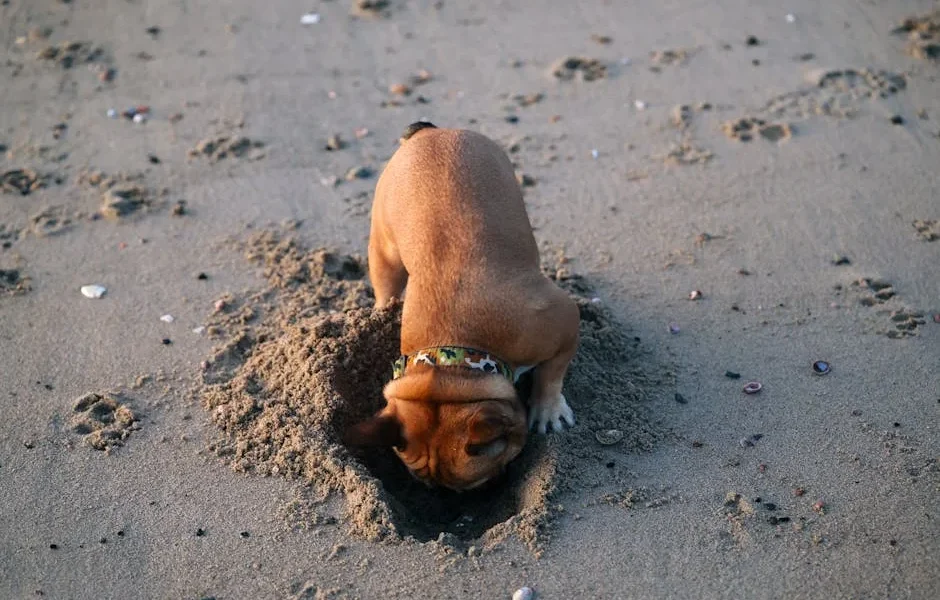
- Digging is natural for dogs. About 85% of digging comes from six main causes: boredom, anxiety, staying cool or warm, prey drive, making a den, or seeking attention.
- Good exercise and fun activities can reduce problem digging by 60-70%. Dogs need 60+ minutes of daily physical and mental activity.
- Punishment fails more than 80% of the time. Positive rewards and fixing the real problem work much better long-term.
Look, I’ve seen it happen countless times. You step into your backyard and find another crater where your lawn used to be.
Your dog sits nearby, covered in dirt and proud. Their tail wags like they’ve just done something amazing.
And honestly? From their perspective, they kind of have.
But when you’re trying to figure out how to stop your dog from digging: veterinary behavioral solutions offer the best approach. These methods are humane. They actually address why your dog is digging up your yard.
I’ll be honest. Last summer I watched a terrier dig a hole three feet deep in under twenty minutes. I gained a whole new respect for how powerful this instinct can be.
Punishment doesn’t work. Yelling doesn’t work.
What does work? Understanding the science behind the behavior. Then using targeted solutions.
Let’s dig into this. Pun absolutely intended.
1. Identify the Root Cause Through Veterinary Assessment
Before you can solve the digging problem, you need to know what’s driving it.
This isn’t just about watching when your dog digs. It’s about understanding the medical and behavioral factors at play.
About 85% of digging behavior comes from six main causes:
- Boredom and excess energy
- Anxiety or stress
- Temperature regulation
- Prey drive
- Den-building instinct
- Attention-seeking behavior
Here’s where veterinary expertise becomes crucial.
Sometimes what looks like simple boredom is actually separation anxiety. This affects 20-40% of dogs seen by veterinary behaviorists.
Dogs with anxiety often dig near doors, windows, or fence lines. They’re literally trying to escape or reach you.
Compulsive digging can indicate underlying health issues. These include skin allergies causing paw irritation, cognitive dysfunction in senior dogs, or even obsessive-compulsive disorder.
Schedule a veterinary consultation to rule out medical causes first.
Your vet can assess whether your dog’s digging relates to pain, discomfort, or neurological issues. They’ll help you tell the difference between normal instinctive behavior and pathological compulsions.
If your dog is showing other behavioral changes, sudden aggression or behavioral shifts might need additional investigation.
2. Implement Breed-Specific Exercise and Enrichment Protocols
Not all dogs are created equal when it comes to digging drive.
Terriers, huskies, dachshunds, and beagles were literally bred over centuries to dig. It’s hardwired into their DNA.
A bored terrier with insufficient mental stimulation isn’t being naughty. They’re doing exactly what their genetics tell them to do.
Research shows that environmental enrichment can reduce problematic digging by 60-70%.
But here’s the catch: “exercise” doesn’t just mean a walk around the block.
Dogs left alone for more than 6-8 hours daily show three times higher rates of destructive behaviors. This includes digging.
Working breeds and high-energy dogs need 60+ minutes of vigorous daily exercise. They also need substantial mental stimulation.
Think puzzle toys, training sessions, scent work, or agility activities.
Create a breed-appropriate enrichment plan.
Northern breeds like Huskies and Malamutes may need jobs to do. Try pulling activities, advanced obedience training, or extended hiking.
Terriers benefit from activities that channel their prey drive and digging instincts constructively.
Herding breeds need mental challenges that engage their problem-solving abilities.
A tired dog with a satisfied brain is significantly less likely to redecorate your landscaping.
3. Address Temperature Regulation and Environmental Comfort
Ever noticed your dog digs more in summer? That’s not coincidence.
Dogs dig to access cooler soil layers. Underground temperatures can be 55-65°F while surface temperatures reach 85°F or higher.
This thermoregulation behavior peaks during hot months. It’s completely natural.
Instead of fighting this instinct, work with it.
Provide alternative cooling options:
- Shaded areas throughout your yard
- Elevated cooling beds
- Access to air-conditioned indoor spaces during peak heat
- Always fresh water
Some dogs benefit from small wading pools or cooling mats placed in their favorite outdoor spots.
When dogs have adequate ways to regulate their body temperature, the compulsion to dig cooling holes diminishes significantly.
Veterinary behaviorists also recommend adjusting your dog’s outdoor time during extreme weather.
Exercise during cooler morning or evening hours rather than midday heat.
If your dog absolutely must be outside during warm periods, ensure they have multiple shaded resting areas.
Sometimes the simplest environmental modifications create the biggest behavioral changes.
4. Create a Designated Digging Zone (Yes, Really)
This might sound counterintuitive. But giving your dog permission to dig—in a specific approved location—often works better than trying to suppress the behavior entirely.
Think of it as harm reduction for your landscaping.
Set up a digging pit in a designated corner of your yard.
A simple sandbox works perfectly. Make it 4×4 feet and 12-18 inches deep. Fill it with sand or loose soil.
Bury toys, treats, or favorite items slightly beneath the surface. This makes discovery rewarding.
When you catch your dog digging elsewhere, redirect them to the approved zone without punishment.
Reward enthusiastically when they dig in the right spot.
This approach acknowledges the reality: some dogs need to dig.
Terriers can excavate holes 2-3 feet deep in under thirty minutes when motivated. That’s not a behavior quirk you’ll eliminate through prohibition.
By channeling that instinct into an acceptable outlet, you satisfy their genetic drive. You also protect the rest of your yard.
Most dogs learn the distinction within 2-4 weeks of consistent positive reinforcement.
5. Apply Positive Reinforcement Training Techniques
Here’s what doesn’t work: yelling, punishment, filling holes with water, or any other aversive technique.
Punishment-based corrections for digging show 80%+ failure rates. They often increase anxiety-driven digging.
Dogs don’t understand why you’re upset about the hole. They just learn that you’re unpredictable and scary.
This can worsen anxiety-related behaviors.
Instead, use positive reinforcement to reward desired behaviors.
Catch your dog not digging and reward them.
Redirect digging attempts to appropriate activities. Reward heavily when they comply.
Create incompatible behaviors. A dog playing fetch can’t simultaneously excavate your flower bed.
Train a solid “leave it” or recall command. This allows you to interrupt digging attempts before they gain momentum.
Consistency matters enormously here.
Everyone in your household needs to follow the same protocols. Mixed messages confuse dogs and undermine training efforts.
If your dog digs for attention, ensure they’re receiving adequate positive attention throughout the day for good behavior.
Attention-seeking digging often indicates dogs aren’t getting enough quality interaction with their humans during non-destructive times.
6. Manage Prey Drive and Environmental Triggers
Sometimes your dog isn’t digging randomly. They’re hunting.
Dogs with strong prey drive dig to reach rodents, insects, or underground critters they can smell or hear.
If you’ve got moles, gophers, or ground-nesting insects, your dog knows about them long before you do.
Address the underlying wildlife issue humanely.
Consider professional pest control that’s safe for pets. Or use deterrents that make your yard less attractive to burrowing animals.
Remove obvious attractants like fallen fruit, accessible compost, or bird feeders that draw rodents.
Some owners find success with underground barriers or fencing. These prevent dogs from accessing specific areas where prey animals frequent.
You can also redirect prey drive into appropriate outlets.
Scent work training, barn hunt activities, or even hiding treats around the yard for structured “hunting” games satisfy that instinct without destroying your landscaping.
These activities engage the same neural pathways that drive prey-motivated digging. But they give you control over when and where they occur.
7. Recognize When Professional Veterinary Behavioral Help Is Needed
Some digging cases require expertise beyond basic training.
If your dog’s digging is compulsive, it’s time to consult a veterinary behaviorist. Compulsive means repetitive, seemingly purposeless, and difficult to interrupt.
Other signs you need professional help:
- The digging causes self-injury
- It persists despite consistent home interventions
- It occurs alongside other concerning behaviors
Certified veterinary behaviorists (DACVB) specialize in complex behavioral issues.
They can diagnose conditions like canine compulsive disorder. They properly assess anxiety disorders.
They develop comprehensive treatment plans. These may include behavioral modification, environmental management, and when appropriate, pharmacological support.
Recent research shows anti-anxiety medications can help. When prescribed and monitored by veterinary professionals, they can support behavioral modification for pathological digging that doesn’t respond to training alone.
Don’t wait until the problem becomes severe. Early intervention produces better outcomes.
If you’ve been working on the digging problem for 4-6 weeks without improvement, professional assessment is warranted.
If the behavior is escalating, seek help.
Many pet insurance plans now cover behavioral consultations. This makes specialized care more accessible.
When choosing any veterinary professional, knowing how to verify credentials ensures you’re working with qualified experts.
8. Address Separation Anxiety and Stress-Related Digging
Digging near doors, windows, or gates often signals separation anxiety rather than simple boredom.
These dogs aren’t trying to escape for adventure. They’re panicking about being away from you.
This requires a fundamentally different approach than addressing prey-drive or boredom-related digging.
Separation anxiety treatment focuses on gradual desensitization. It also focuses on reducing your dog’s overall stress levels.
Start with very brief absences. Try 30 seconds to 2 minutes.
Slowly increase duration as your dog remains calm.
Create positive associations with your departure. Use special treats, puzzle toys, or favorite activities that only happen when you leave.
Some dogs benefit from calming aids. Try species-appropriate pheromone diffusers, anxiety wraps, or white noise machines.
Veterinary behaviorists may recommend anti-anxiety medications for severe cases.
This is particularly true when anxiety prevents dogs from learning alternative behaviors.
These aren’t “quick fixes.” They’re tools that reduce panic enough for behavioral modification to work.
Combined with systematic desensitization, medications prescribed by your veterinarian can help anxious dogs. They can learn that your absence isn’t catastrophic.
The goal is always to support your dog’s emotional wellbeing, not just stop the digging.
9. Modify Your Environment to Reduce Digging Opportunities
Sometimes the simplest solution is making digging physically harder or less rewarding.
Strategic environmental modifications can dramatically reduce problematic digging. You won’t need constant supervision.
Place decorative rocks, pavers, or chicken wire in frequent digging spots. Bury the chicken wire just beneath soil surface.
Many dogs dislike digging through these barriers. They eventually give up.
For dogs who dig along fence lines, install an L-footer. This is fencing material bent 90 degrees and buried along the fence base.
Dogs often dig along fences trying to reach neighborhood dogs or wildlife.
Plant dense, prickly groundcover in vulnerable areas. Most dogs avoid digging through thorny vegetation.
Increase visual barriers if your dog digs because they’re overstimulated by things they see beyond the fence.
Solid fencing, privacy slats, or strategically placed shrubs can reduce reactivity to passersby.
Ensure your yard offers genuine enrichment. Provide interesting smells, varying textures, and safe chewing options.
A boring yard practically invites a bored dog to create their own entertainment.
Think of environmental modification as making good choices easy and unwanted behaviors harder.
Final Thoughts
Here’s the truth about stopping your dog from digging: there’s rarely a single magic solution.
The most effective approach combines several things:
- Understanding why your dog digs
- Addressing their physical and mental needs
- Implementing veterinary behavioral solutions tailored to your specific situation
Your dog might be a terrier following centuries of genetic programming.
They might be an anxious pup seeking comfort.
Or they might simply be an under-stimulated companion looking for something to do.
The answer lies in working with their nature rather than against it.
Start by ruling out medical causes with your veterinarian.
Then honestly assess whether your dog’s daily routine provides adequate exercise, mental stimulation, and emotional security.
Implement environmental modifications. Create acceptable outlets for natural behaviors. Use positive reinforcement consistently.
If you’re not seeing improvement within 4-6 weeks, seek help.
If the digging seems compulsive or anxiety-driven, don’t hesitate to consult a veterinary behaviorist.
Your dog isn’t being defiant. They’re communicating a need.
Once you understand what they’re trying to tell you, you can finally address the digging behavior at its source.
And remember, finding the right veterinary support makes all the difference in successfully managing behavioral challenges.
Sources & Further Reading
- American Veterinary Society of Animal Behavior (AVSAB) — Evidence-based position statements and guidelines on canine behavior modification and training approaches
- American College of Veterinary Behaviorists (DACVB) — Board-certified specialists in veterinary behavioral medicine and directory of qualified behaviorists
- American Kennel Club: Why Dogs Dig — Breed-specific information on digging behaviors and instincts
- Journal of Veterinary Behavior — Peer-reviewed research on canine behavioral science and evidence-based interventions
- American Veterinary Medical Association: Dog Behavior Problems — Comprehensive veterinary guidance on common behavioral issues
