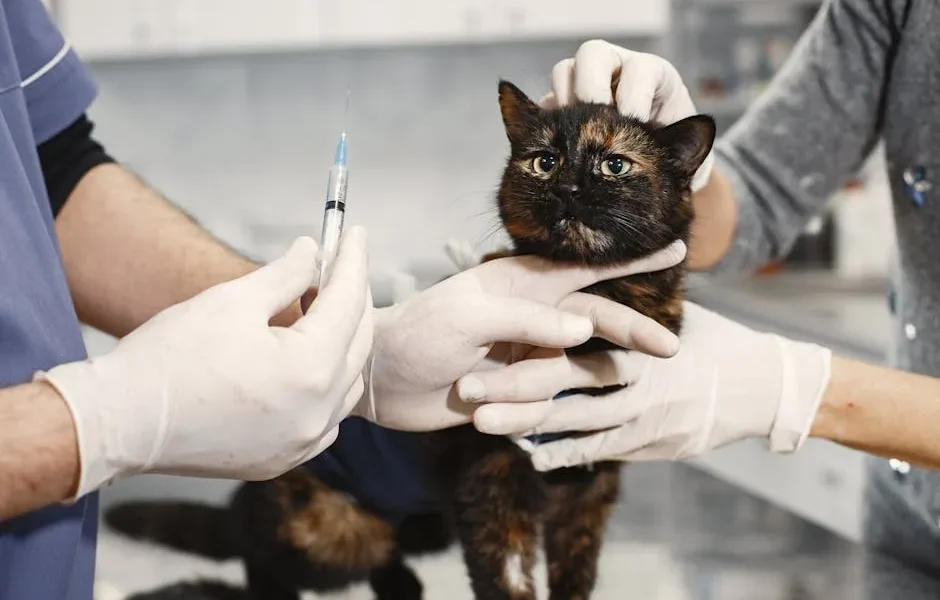
- Board-certified feline specialists train for 3-4 extra years after vet school. This makes them experts at finding complex health problems that regular vets might miss.
- Cats with ongoing health issues do better with specialists. Their survival rates improve by 25-35%. Specialists also often cost less overall because they find problems faster.
- Only 300-400 board-certified feline specialists work in North America. There are over 100,000 general vets. Knowing when to see a specialist could save your cat’s life.
Maria’s 9-year-old tabby cat, Winston, started drinking too much water. He was losing weight even though he ate a lot. Her regular vet ran tests. They said it was diabetes. They told her to give Winston insulin at home. They said to come back in two weeks.
But Winston kept getting worse. Three months went by. The vet changed his insulin dose many times. The vet bills kept growing. Winston used to be playful. Now he was tired all the time. Finally, Maria’s vet suggested something new. She should take Winston to a board-certified feline internal medicine specialist.
Why finding a board-certified feline internal medicine specialist could save your cat’s life isn’t about fancy equipment. It’s not about spending more money. It’s about finding someone who focuses only on cats’ internal health problems. These problems can be tricky to figure out.
The specialist saw Winston for one appointment. They found what months of treatment had missed. Winston’s diabetes was caused by chronic pancreatitis. This condition is very hard to diagnose. The treatment changed completely. Within weeks, Winston was doing much better.
What Actually Makes a Feline Specialist Different?
Your regular vet is great. They really are. They do many things. They give puppy shots. They do senior wellness exams. They handle emergencies. They clean teeth.
But here’s what many cat owners don’t know. Regular vets go to vet school for four years. Board-certified specialists do something more. They train for 3-4 extra years. This training focuses only on internal medicine.
These extra years are intense. Residents handle hundreds of complex cases. They work under supervision. They do original research. They publish papers. They take hard exams. The American College of Veterinary Internal Medicine (ACVIM) gives these exams.
What’s the difference? Your regular vet might see a complicated kidney disease case every few months. A specialist sees many cases every single week.
There’s also a rarity factor. Only about 300-400 board-certified feline internal medicine specialists work in North America. There are over 100,000 general practice vets. These specialists are the top experts in feline medicine. They spend their whole careers studying conditions that regular vets might only see a few times.
The Diagnostic Advantage Nobody Talks About
Studies show something important. Specialists correctly diagnose rare or complex conditions 40-60% more often than general vets. This doesn’t mean your regular vet is bad. It’s about experience and pattern recognition.
When you’ve done 500 ultrasound-guided liver biopsies, you notice things. Someone who’s done 20 might miss them.
Take inflammatory bowel disease. It looks like many other conditions. Food allergies look similar. So does intestinal lymphoma. So does pancreatitis. A general vet might try different diets one at a time. They might treat symptoms. A specialist knows exactly which tests to do first. They can read lab work with deeper understanding. They’ve seen these patterns many times.
When Your Cat Needs More Than Routine Care
When should you ask for a specialist referral? Here’s what matters most: symptoms that won’t go away despite treatment.
Has your cat been on medication for weeks without getting better? Or is your cat getting worse? That’s your signal.
Watch for these signs. Weight loss even though your cat eats well. Vomiting or diarrhea that won’t stop. Progressive weakness. Behavior changes that blood work can’t explain. Diabetes that won’t stabilize. Kidney disease that’s getting worse too fast. These situations need a specialist.
Timing matters a lot. Cats seen by specialists within 2-4 weeks of symptoms do much better. They do better than cats referred after months of failed treatments. Every week spent trying different approaches without the right expertise can cause problems. It can mean permanent organ damage. It can mean the disease gets worse.
I understand the hesitation. Asking for a referral can feel awkward. You might feel like you’re questioning your vet’s abilities. You’re not. Good vets welcome specialist consultations. They want the best outcomes for their patients. If your vet gets defensive about a referral request when your cat isn’t improving, that tells you something important.
The Conditions That Absolutely Need Specialist Eyes
Some diagnoses need a specialist from the start. Complicated diabetes with recurring ketoacidosis. Hyperthyroidism with heart problems. Suspected lymphoma that needs staging and chemotherapy planning. Multi-organ disease affecting kidneys, liver, and pancreas. Rare metabolic disorders.
Chronic kidney disease deserves special mention. It’s very common in older cats. But managing it gets complicated fast. Specialists managing feline kidney disease get better results. They achieve 25-35% improved survival rates at two-year follow-ups. This is compared to general practice alone. That’s months or even years of quality time with your cat.
The Money Question Everyone’s Thinking About
Let’s talk about cost. Money matters. A specialist consultation usually costs $200-400. A general practice appointment costs $75-150. That’s a big difference.
But here’s the surprising part. Specialists often reduce overall treatment costs by 20-30%. How? Through faster, accurate diagnosis. Through targeted treatment plans.
Instead of trying five different medications over four months, the specialist identifies the real problem right away. Each of those five medications needs follow-up appointments. Each needs blood work. The specialist implements the right treatment from day one.
Think about Winston’s story. Maria spent nearly $1,200 over three months. She bought insulin, syringes, and glucose monitoring supplies. She paid for repeated vet visits. They were trying to stabilize diabetes that wasn’t the real problem. The specialist visit cost $325. But the correct diagnosis meant appropriate treatment that actually worked. No more throwing money at symptoms while the real condition got worse.
Most specialty practices offer payment plans. Many accept CareCredit. Many pet insurance policies cover specialist referrals. Sometimes they cover at the same percentage as general practice. Sometimes it’s slightly less. The financial investment in getting the right diagnosis early almost always beats the alternative. The alternative is repeated treatments that don’t work. It’s progressive disease. It’s eventually emergency intervention when your cat crashes.
Finding and Working With a Specialist
The ACVIM website has a searchable directory. You can find board-certified specialists there. You can filter by location and subspecialty. Look for “Diplomate, ACVIM (Small Animal Internal Medicine)” with a focus on feline medicine.
Some specialists work only with cats. Others split their time between cats and dogs.
What happens at that first appointment? Expect thoroughness. Specialists usually schedule 60-90 minute initial consultations. They’ll review every detail of your cat’s history. They’ll examine your cat completely. They often recommend diagnostics your regular vet couldn’t do in-house.
These might include ultrasound-guided biopsies. Endoscopy. Specialized blood panels. Advanced imaging interpretation.
Here’s what surprised me most. Specialists don’t want to steal your regular vet’s patients. They work on a collaborative care model. They diagnose. They develop the treatment plan. They maybe start therapy. Then they send your cat back to your regular vet for ongoing management and monitoring. They remain available for questions. They adjust protocols as needed.
The Telemedicine Revolution
Can’t reach a specialist in person? Telemedicine consultations have exploded since 2024. Many specialists now offer virtual consultations. Your general vet presents the case. They share diagnostics. They get expert input. Your cat never leaves your local clinic.
It’s not right for every situation. But for complex diagnostic puzzles or treatment plan adjustments, it works very well.
This development particularly helps rural cat owners. You might be 3-4 hours from the nearest specialty practice. The specialist reviews imaging, lab work, and history remotely. Then they provide detailed recommendations to your local vet.
The Hard Truth About Specialist Shortages
Cat ownership has surged since the pandemic. But residency positions remain limited. Getting specialist appointments can take weeks or even months in some regions. This shortage makes early referral even more critical.
Don’t wait until your cat is in crisis to seek that appointment. By then, you’re competing for emergency slots with other critical cases.
If you’re on a waiting list, ask your regular vet to contact the specialty practice directly. Vet-to-vet communication often speeds up scheduling. This is especially true if your vet can clearly explain why the case needs urgent specialist attention.
Questions That Empower You as a Cat Owner
When your cat isn’t responding to treatment, ask your vet directly: “Would a specialist consultation be helpful here?” Good vets appreciate clients who advocate for their pets.
If your vet says no, ask what would trigger a referral. Ask about specific benchmarks. Then hold them to those markers.
Ask about your vet’s experience with your cat’s specific condition. “How many cases like this do you typically see per year?” This isn’t confrontational. It’s information gathering. If the answer is “not many,” that’s valuable data.
And here’s one people forget: “If this were your cat, what would you do?” That question often cuts through everything. It gets you honest guidance.
Final Thoughts
Winston’s doing beautifully now. It’s been two years since his diagnosis. His pancreatitis is managed. His secondary diabetes is stable. He’s back to ambushing Maria’s feet from behind the couch.
But Maria says those three months haunt her. She watched him decline while trying treatments that couldn’t work. “I wish I’d known to ask for a specialist sooner,” she told me recently. “I thought I had to wait for my vet to suggest it.”
You don’t have to wait. Your cat might have a complex condition that isn’t improving. You might have been cycling through treatments without success. Your instincts might scream that something’s being missed. Ask about specialist referral.
The 300-400 board-certified feline internal medicine specialists across North America exist for these situations. Your cat’s life might depend on whether you find one.
Start by searching the ACVIM directory. Have an honest conversation with your current vet. Remember: seeking specialized expertise isn’t giving up on your regular vet. It’s giving your cat every possible advantage.
Sources & Further Reading
- American College of Veterinary Internal Medicine (ACVIM) — Official credentialing organization for veterinary internal medicine specialists; includes specialist directory and certification requirements
- American Association of Feline Practitioners — Professional organization dedicated to feline medicine with resources on specialist care and when to seek referrals
- Cornell University College of Veterinary Medicine — Leading veterinary teaching hospital with extensive feline specialty care information and research
- American Veterinary Medical Association (AVMA) — Overview of specialty veterinary care and understanding different veterinary credentials
- Veterinary Information Network — Peer-reviewed veterinary health information for pet owners on complex feline conditions
