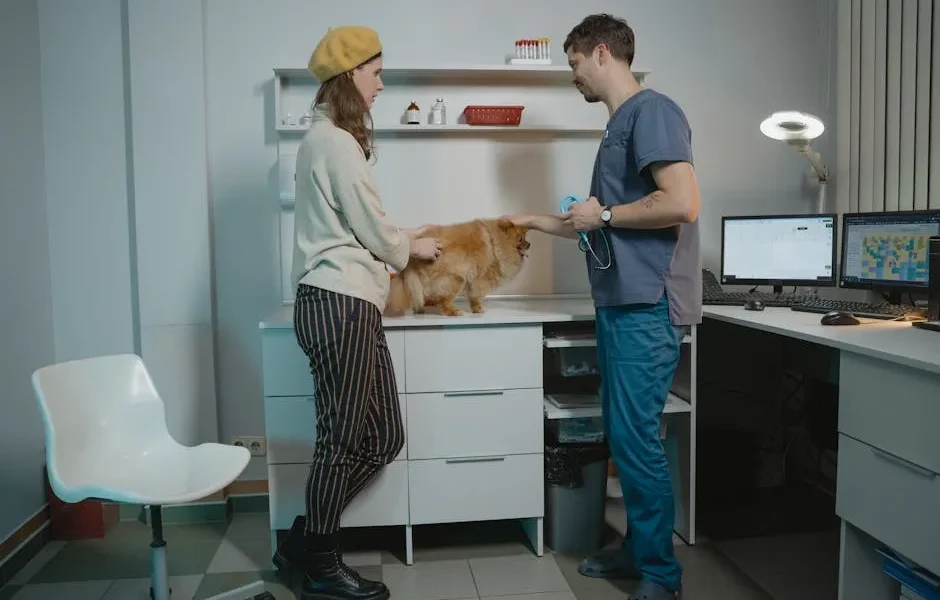
- You have a legal right to get your pet’s complete medical records. You can usually get them within 15-30 days of asking your vet.
- A complete medical history includes vaccination records, lab results, surgical notes, diagnostic imaging, medication history, and detailed treatment notes. These can be critical in emergencies.
- Knowing how to request and read your pet’s medical records can reduce emergency treatment time by 30-40%. It also helps prevent dangerous drug interactions.
Last spring, my neighbor Sarah rushed her golden retriever, Max, to an emergency vet at 2 a.m. He’d been vomiting for hours. She was terrified.
The emergency vet asked about Max’s medication history. Sarah froze. Was it Apoquel or Atopica he’d been taking for allergies? What dose? When did it start?
She couldn’t remember. Her regular vet’s office wouldn’t open for another six hours. That uncertainty delayed treatment. It added an extra $300 in diagnostic tests to rule out drug interactions.
The whole situation could’ve been avoided. She just needed to know how to request and understand your pet’s complete medical history in 2025. I now make sure every client understands this before they leave our clinic.
Here’s the thing: your pet can’t speak up about their medical past. That job falls entirely on you. And honestly? Most of us aren’t prepared for it.
Why Your Pet’s Medical History Matters More Than You Think
Think about the last time you visited a new doctor. They probably handed you a clipboard with forms. The forms asked about every surgery, allergy, and prescription you’ve ever had.
Your pet deserves that same continuity of care. But they’re relying on you to provide it.
Having accessible medical records isn’t just about being organized. It’s about potentially saving your pet’s life.
Studies show that having complete medical records available can reduce emergency treatment time by 30-40%. That’s not a small difference when every minute counts.
Plus, about 42% of pet owners now use multiple veterinary providers. This includes emergency clinics, specialists, and primary care vets. Without consolidated records, critical information falls through the cracks.
I’ve seen it happen. A dog comes in for orthopedic surgery. The specialist doesn’t know about the heart murmur documented six months ago at the primary vet. That’s a problem.
Your Legal Right to Records (Yes, Really)
Here’s something many pet owners don’t realize: you have a legal right to your pet’s medical records.
Under veterinary medical board regulations in most U.S. states, you can request and obtain copies of complete medical records. You can typically get them within 15-30 days.
Veterinary practices are generally required to maintain these records for 3-7 years. This depends on state law. California, for instance, requires a minimum of five years.
This means even if you’re tracking down old records from a previous vet, there’s a good chance they’re still available.
Now, about those fees. Approximately 65% of veterinary practices charge administrative fees for copying records. These range from $0 to $50. Digital records are typically cheaper or free.
Don’t let a reasonable fee deter you. These documents are worth every penny. But if cost is genuinely prohibitive, ask about payment plans or explain your situation. Most clinics will work with you.
How to Actually Request Your Pet’s Records
The process is simpler than you’d think. But there’s a right way to do it.
Start by calling your vet’s office. Ask about their specific procedure. Some clinics have online portals now. About 78% of U.S. practices use electronic medical record systems as of 2024. Others require written requests.
When you make your request, be specific. Ask for the complete medical record, not just vaccination records.
You want:
- All examination notes and SOAP notes (that’s Subjective, Objective, Assessment, Plan—the standard format vets use)
- Vaccination history with dates and product names
- Laboratory results (bloodwork, urinalysis, fecal tests)
- Diagnostic imaging reports and actual images if possible (X-rays, ultrasounds)
- Surgical records and anesthesia reports
- Prescription history with dosages
- Weight history over time
- Any correspondence with specialists or other vets
A written request helps. You can email or send a letter stating: “I am requesting a complete copy of all medical records for [Pet’s Name], including all examination notes, laboratory results, imaging, surgical reports, and prescription history. Please let me know your preferred format for delivery and any associated fees.”
Most practices will have records ready within a week. Though legally they have up to 15-30 days depending on your state.
Making Sense of the Medical Jargon
So you’ve got the records. Now what?
That stack of papers (or PDF) probably looks like it’s written in another language. Because, well, it kind of is.
Let’s break down what you’re looking at. The SOAP notes are the backbone of each visit.
“Subjective” is what you told the vet. Max is limping, Fluffy won’t eat.
“Objective” is what the vet observed and measured. Temperature 102.5°F, heart rate 140 bpm.
“Assessment” is the diagnosis or working theory.
“Plan” outlines the treatment.
Lab results can be intimidating. You’ll see abbreviations like CBC (Complete Blood Count) or Chem Panel.
If you want to dive deeper into understanding those numbers, check out our guide on how to decode your pet’s veterinary lab results.
But at a basic level, look for anything flagged as “high” or “low.” Those are the values outside normal range.
Medication names are another hurdle. Vets often use brand names, generic names, and abbreviations interchangeably.
If you see something like “Carprofen 75mg PO BID,” that’s the generic name for Rimadyl. It means 75 milligrams, given by mouth (PO), twice daily (BID).
Don’t be shy about asking your vet for a medication list in plain English.
Weight Matters More Than You Realize
Pay special attention to your pet’s weight history in those records. Trends matter.
A dog who’s gradually gained 15 pounds over two years tells a different story than one who dropped five pounds in a month.
Weight changes can signal everything from thyroid issues to diabetes to cancer.
Our article on why your pet’s weight matters explains this in more detail. But suffice it to say: those numbers aren’t just about aesthetics.
Creating Your Own Emergency File
Once you have those records, don’t just file them away and forget them.
Create an emergency-ready summary. I recommend a one-page document (physical and digital) that includes:
- Current medications and doses
- Known allergies (medications, foods, environmental)
- Chronic conditions
- Most recent vaccination dates
- Emergency contact info for your primary vet and nearest 24-hour clinic
- Your pet’s microchip number
Keep a copy in your car. Keep one in your phone. Give one to anyone who might need to take your pet to the vet in your absence.
When evaluating where to go in an emergency, understanding emergency vet credentials can help you choose the right facility ahead of time.
Some pet owners create a USB drive with their pet’s complete medical history. Old school? Maybe. But it works when technology fails or you’re in a rural area with spotty internet.
The Digital Revolution in Pet Records
Things are changing fast in veterinary medicine.
Major EMR providers launched or expanded pet owner portals in 2024. These let you access records, test results, and vaccination histories directly online.
If your vet offers a patient portal, sign up. Today.
There’s also the Veterinary Information Exchange network that launched in 2024. It allows participating clinics across state lines to securely share records with your consent.
If you’re moving or traveling frequently, ask if your vet participates.
Some microchip registries now allow linking to cloud-based medical record summaries. Though adoption is still under 20%. It’s worth checking if your pet’s microchip registry offers this feature.
AI tools are even entering the picture. Several platforms introduced AI medical record summarization in 2025. These translate complex vet-speak into plain language for pet owners.
Technology isn’t replacing good veterinary care. But it’s making records more accessible than ever.
Red Flags to Watch For
Here’s something uncomfortable: research indicates that 15-20% of veterinary medical records contain at least one error or omission that could affect future treatment decisions.
That’s not necessarily malpractice. Medical records are created by humans in busy environments. But it means you need to review yours.
Look for:
- Discrepancies in medication names or doses
- Missing dates or gaps in care
- Conflicting information between visits
- Test results mentioned in notes but not included in the file
- Procedures you don’t remember being performed
If you spot something that seems off, bring it up with your vet. It might be a simple clerical error that needs correcting.
Special Situations: Specialists, Travel, and Insurance
When you’re referred to a specialist, records transfer becomes crucial.
Your primary vet should send records ahead of your appointment. But don’t assume it happened. Confirm with both offices.
Specialists need specific information. If you’re seeing a board-certified specialist for a complex condition, complete records can mean the difference between starting fresh or building on existing knowledge.
Learn more about finding the right veterinary specialist for your situation.
Traveling? Some states require proof of rabies vaccination within specific timeframes. Hawaii has particularly strict requirements.
International travel often requires health certificates based on your pet’s medical history. Start gathering documentation weeks before departure.
And if you have pet insurance, complete medical records are your best friend. Insurance companies often request records when processing claims.
Understanding how pet insurance payment structures work can help you know what documentation you’ll need for reimbursement.
Vaccination Records Aren’t One-Size-Fits-All
Speaking of vaccines, your pet’s vaccination history is a critical part of their medical record.
But not every pet needs every vaccine on the same schedule. We discuss this in depth in our article about why vaccination schedules vary.
Your records should show not just what vaccines were given. They should also show the reasoning behind the schedule. This is especially true if your vet recommended a different protocol than standard.
What If Your Old Vet Won’t Cooperate?
Most vets are happy to provide records. But occasionally, you hit a roadblock.
Maybe the practice went out of business. Maybe there’s a billing dispute. Maybe the staff is just unresponsive.
Start with a certified letter clearly stating your legal right to records under state law. Reference your state’s veterinary medical board regulations specifically. Set a reasonable deadline (15 days is fair).
If that doesn’t work, contact your state’s veterinary medical board and file a formal complaint. They take record requests seriously.
If the practice truly closed and you can’t locate records, you’ll need to rebuild what you can. Contact any specialists your pet saw. They often keep their own records.
Check with laboratory companies if you know where bloodwork was sent. Your pet’s microchip registry might have some vaccination information.
It’s not ideal, but you can piece together a partial history.
Building a Complete Picture Over Time
Medical records aren’t static. Every visit adds to your pet’s story.
Make it a habit to request updated records annually. Or after any major event (surgery, hospitalization, diagnosis of chronic disease).
For pets with chronic conditions or behavioral issues like those addressed in our behavioral solutions guide, detailed records become even more important.
Treatment adjustments, medication trials, response to therapy—all of that history informs better care going forward.
I also recommend keeping a personal log at home. Note changes in behavior, appetite, energy level, bathroom habits.
When something seems off but you can’t quite put your finger on it, those notes help. At your next vet visit, you can say “Starting three weeks ago, I noticed…”
That specificity is incredibly valuable and becomes part of the medical record.
Final Thoughts
Your pet’s medical history is more than paperwork. It’s a lifeline.
I think back to my neighbor Sarah and Max. They fumbled through that emergency room visit without basic information. She learned the hard way. You don’t have to.
Taking an hour to request, organize, and understand your pet’s complete medical records could save hours of stress. It could potentially save your pet’s life when it matters most.
The 30-40% reduction in emergency treatment time isn’t just a statistic. It’s real minutes when your companion needs help.
Don’t wait for an emergency. Call your vet’s office this week and request those records. Set up that patient portal if available.
Create your one-page emergency summary. Put it in your phone, your car, your wallet.
Share it with your pet sitter and the family member who watches Fluffy when you travel. And if you’re switching vets, moving, or seeing a specialist soon, get ahead of the records transfer process.
Your future self—and more importantly, your pet—will thank you for it.
Sources & Further Reading
- American Veterinary Medical Association — Comprehensive guidelines on veterinary medical records management and pet owner rights
- American Animal Hospital Association — Medical records standards and best practices for veterinary practices
- FDA Center for Veterinary Medicine — Pet health records information and owner resources
- Centers for Disease Control and Prevention — Pet healthcare documentation and veterinary visit guidelines
