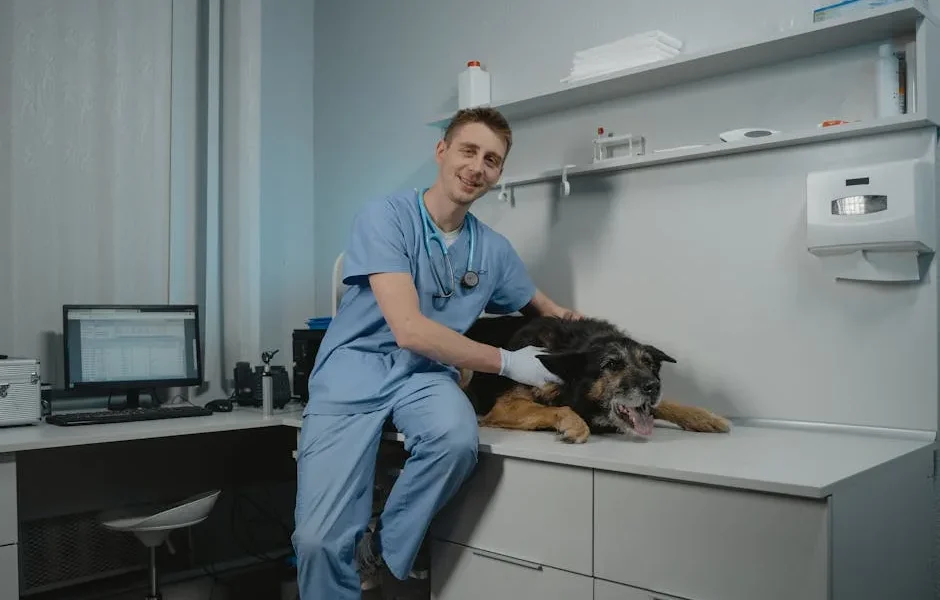
- Board-certified veterinary specialists train for 3-4 extra years after vet school. They pass hard specialty exams. They’re not just “experienced” vets.
- The AVMA recognizes 42 different veterinary specialties. About 5,000 board-certified specialists work across the US. That compares to 120,000+ general vets.
- Asking for a specialist referral strengthens your relationship with your primary vet. It doesn’t damage it. Most vets welcome the help for complex cases.
- First specialist visits typically cost $200-$500. But diagnostic accuracy improves 30-40% for complex conditions.
I’ll never forget when my colleague told me about Max. He was a seven-year-old Golden Retriever who’d been losing weight. But he was always hungry.
His regular vet ran the usual tests. Thyroid panel. Diabetes screening. Everything. All the tests came back normal. But Max kept losing weight.
Three months passed. His owner was frustrated. Then she finally asked the question that changed everything: “Should we see a specialist?”
That referral to a board-certified internal medicine specialist revealed something important. General tests had missed it. Max had a rare pancreatic insufficiency. He needed specific enzyme supplements.
Within two weeks of starting treatment, Max was gaining weight again. His owner told me later she wished she’d known how to find a board-certified veterinary specialist when your dog needs advanced care months earlier. By then, Max had lost nearly 20% of his body weight.
The thing is, most pet owners don’t know these specialists exist. Not until they’re in crisis mode. And honestly? That’s completely understandable.
The veterinary specialty world can feel like a secret club. One with an unlisted phone number.
When Your Regular Vet Isn’t Enough (And Why That’s Okay)
Here’s something I wish more pet owners understood: your general practice veterinarian is incredibly skilled. But they’re also generalists.
Think of them like your family doctor. They’re brilliant at managing wellness care. They handle routine illnesses and common conditions well. But sometimes your dog needs specialized expertise.
Just like your family doctor refers you to a cardiologist for a heart murmur.
About 10-15% of pet cases eventually require specialist referral. The most common reasons? Emergency situations. Cancer diagnoses. Complex surgeries. Mysterious conditions that don’t respond to standard treatment.
What makes a board-certified specialist different isn’t just experience. It’s formalized, intensive training.
After graduating from veterinary school (which is already four years), these veterinarians do more training. They complete another 3-4 years of residency training in their chosen specialty.
They work exclusively with complex cases in that field. They publish research. Then they sit for grueling examinations.
These exams are administered by organizations. Like the American College of Veterinary Internal Medicine. Or the American College of Veterinary Surgeons.
The American Veterinary Medical Association recognizes 22 veterinary specialty organizations. They cover 42 distinct specialties.
Cardiology. Oncology. Neurology. Dermatology. Ophthalmology. Dentistry. Emergency and critical care. Surgery. Even exotic animal medicine and veterinary nutrition.
The Search: Finding the Right Specialist for Your Dog
When Max’s owner asked where to start looking, I gave her advice. The same advice I give all our clients: start with your regular veterinarian.
Seriously.
Most general practitioners have established relationships with specialists. They know specialists they trust. They refer to them regularly. They know who’s excellent with nervous dogs. Who communicates clearly with clients. And who’s worth the drive.
But what if you want to do your own research? Or what if you need to find a specialist before your regular vet can see you? It happens.
The AVMA Veterinary Specialist Directory
Your most reliable starting point is the AVMA’s online specialist search tool. You can filter by specialty type and location. This finds board-certified veterinarians near you.
The directory shows their credentials. It shows specialty college affiliations (like DACVIM for internal medicine or DACVS for surgery). And practice information.
Here’s the catch: we’ve got approximately 5,000 board-certified specialists. They’re spread across the entire United States.
Most are concentrated in urban areas and university teaching hospitals. If you’re in a rural area, you might be looking at a significant drive. Or exploring telemedicine options.
University Teaching Hospitals
Veterinary teaching hospitals affiliated with universities are specialist goldmines. Schools like Cornell, UC Davis, Texas A&M, and University of Pennsylvania have entire departments. They’re staffed by board-certified specialists.
The advantage? You’re getting cutting-edge expertise. And access to advanced diagnostic equipment.
The potential downside? These facilities can book out weeks or months. That’s for non-emergency cases.
Specialty and Emergency Hospitals
Over the past few years, we’ve seen an explosion of 24/7 specialty emergency hospitals. Particularly in suburban areas.
These facilities combine emergency services with immediate specialist access. So if your dog has a nighttime crisis, you’re not just getting emergency stabilization. You’re potentially getting a board-certified criticalist or surgeon right there.
The Digital Revolution
Since 2023, veterinary telemedicine has opened new doors. Board-certified specialists can now provide remote consultations. In 45+ states where regulations permit.
This doesn’t replace hands-on examination for many conditions. But for second opinions? Treatment plan reviews? Certain follow-ups? It’s a game-changer.
Especially for pet owners who live hours from the nearest specialist.
Will My Regular Vet Be Upset?
Let me address the elephant in the exam room. So many clients whisper this concern to me. They’re worried they’ll hurt their veterinarian’s feelings by asking for a referral.
Here’s the truth from someone who makes referrals regularly: good veterinarians welcome specialist involvement.
We want the best possible outcome for your dog. We’re not ego-driven enough to think we know everything about every condition.
When I refer a patient to a board-certified oncologist or cardiologist, I’m bringing in a team member. One with deeper expertise in that specific area.
In fact, many conditions essentially require specialist care for optimal outcomes. If your dog is diagnosed with a brain tumor, heart failure, or needs orthopedic surgery? Your general vet will likely recommend a specialist before you even ask.
Red flags should go up if your vet seems defensive about specialist referrals. That’s not normal. It’s not in your dog’s best interest.
What to Expect: The Referral Process
Once you’ve identified a specialist, here’s typically how it unfolds.
Your general veterinarian sends over your dog’s complete medical records. Exam notes. Lab results. Imaging. Treatment history.
This record transfer is crucial. Specialists need the full picture before your appointment.
The initial consultation usually runs $200-$500. That’s significantly higher than a general practice exam. But you’re paying for that specialized expertise. And typically a longer, more detailed evaluation.
The specialist will examine your dog. Review all previous diagnostics. And may recommend additional testing.
This is where costs can escalate quickly. Honestly, it’s worth having a frank conversation up front.
Advanced imaging like CT scans or MRIs can run $1,500-$3,000. Specialized procedures? Much more.
Understanding your pet insurance coverage beforehand can prevent financial shock later.
Questions to Ask Your Specialist
Don’t be intimidated by credentials. These are questions you have every right to ask:
- How many cases like my dog’s have you treated?
- What are the treatment options? What outcomes do you typically see with each?
- What’s the cost range for diagnosis and treatment?
- How will you communicate with my regular veterinarian?
- Who handles after-hours emergencies?
- Are there clinical trials or newer treatments we should consider?
That last question matters more than you might think. Board-certified specialists are often involved in research. They may have access to cutting-edge treatments not yet widely available.
The Collaborative Care Model
Here’s what I love about modern veterinary medicine: we’re moving toward truly integrated care.
More practices now use shared digital record systems. Your specialist and general vet can both access treatment plans and updates in real-time.
Your role? You’re the communication hub.
After specialist appointments, make sure your regular vet gets updated. Bring discharge instructions to your follow-up appointments.
If you’re managing medications prescribed by both vets, keep a list. This prevents drug interactions or duplications.
For ongoing conditions, you might see the specialist quarterly. Meanwhile, your general vet handles routine wellness care and medication refills.
This collaborative approach gives you the best of both worlds. Specialized expertise when needed. Plus the convenience and relationship continuity of your regular clinic.
When Time Matters: Emergency Specialist Referrals
Not all referrals are planned consultations.
If your dog experiences acute trauma, sudden neurological symptoms, difficulty breathing, or other life-threatening emergencies? You might head straight to a specialty emergency hospital. Without stopping at your regular vet first.
These facilities have board-certified emergency and critical care specialists. They have DACVECC credentials. They manage the immediate crisis.
Plus specialists in other fields are available for consultation.
Yes, emergency specialty care is expensive. But studies show that diagnostic accuracy and treatment outcomes improve 30-40% for complex cases. When managed by specialists versus general practitioners alone.
The Second Opinion Question
What if you’ve seen one specialist but something feels off? About the diagnosis or treatment plan?
Seeking a second opinion from another board-certified specialist is completely reasonable. Especially for serious diagnoses like cancer. Or conditions requiring major surgery.
Some pet insurance policies even cover second opinion consultations.
Just be upfront with both specialists about what you’re doing. There’s no need for secrecy. The second specialist will want to review the first specialist’s findings anyway.
Geographic and Financial Realities
I wish I could tell you that every dog has equal access to specialist care. But that’s not our current reality.
If you live in a rural area, you might drive 2-3 hours to reach a board-certified specialist. Some pet owners arrange overnight stays near specialty hospitals. For multi-day diagnostic workups.
And let’s talk money. Because pretending cost isn’t a factor helps no one.
Specialist care is expensive.
A complete cardiology workup with echocardiogram? Easily $800-$1,200.
Cancer treatment protocols can run $5,000-$15,000 or more.
Orthopedic surgery? $3,000-$7,000.
Many specialty hospitals offer payment plans. Through services like CareCredit or Scratchpay.
Pet insurance policies that cover specialist care see 60-70% higher claim values. But they also correlate with better long-term outcomes.
Specialist visits account for about 25% of all pet insurance claims filed in 2024.
It’s also worth asking about clinical trials. Teaching hospitals sometimes seek specific cases for research studies. This can provide access to cutting-edge treatment at reduced or no cost.
Verifying Credentials: Making Sure You’re Seeing a Real Specialist
Here’s something that makes me cringe: the term “specialist” isn’t legally protected in veterinary medicine.
Any veterinarian can claim they “specialize” in something. Without board certification.
That dermatology “specialist” might just be a general practitioner who likes treating skin conditions.
Board-certified specialists will display their credentials prominently. Look for “Diplomate” followed by the specialty college acronym. Like “Diplomate, ACVIM” or “DACVIM”.
You can verify these credentials through the specialty college websites or the AVMA directory.
If someone calls themselves a specialist but doesn’t have board certification? They might still be knowledgeable. But they haven’t completed that rigorous residency training and examination process.
For serious conditions, that distinction matters.
Mobile Specialists and House Calls
An interesting trend has emerged recently: board-certified specialists offering house-call services.
Particularly in cardiology and palliative care.
For elderly dogs or those with mobility issues, having a specialist come to your home can reduce stress significantly.
These services are still limited geographically. They tend to be pricier. But they’re worth knowing about if transportation or stress is a major concern.
Final Thoughts
Looking back at Max’s story, what strikes me most isn’t just that the specialist diagnosed his condition.
It’s that his owner felt empowered to ask for that referral in the first place.
Finding a board-certified veterinary specialist when your dog needs advanced care isn’t about distrusting your regular vet. It’s about building the strongest possible medical team for your dog’s specific needs.
If your dog is facing a complex condition, unexplained symptoms, or a serious diagnosis, start the conversation with your veterinarian about specialist referral.
Use the AVMA specialist directory to research options in your area. Ask about credentials, experience, and costs upfront.
And remember: the best veterinary care is collaborative care. General practitioners and specialists work together with you at the center. Advocating for your dog’s health.
Trust your instincts. If something feels off or isn’t improving with standard treatment, specialized expertise might be exactly what your dog needs.
Sources & Further Reading
- American Veterinary Medical Association — Board Certification Information and Recognized Specialty Organizations
- American College of Veterinary Internal Medicine — Specialist Directory and Credential Verification
- American College of Veterinary Surgeons — Find a Board-Certified Veterinary Surgeon
- AVMA Veterinary Specialist Directory — Search Tool for Finding Board-Certified Specialists by Location and Specialty
- American Board of Veterinary Practitioners — Information on Board Certification and Practice Specialties
