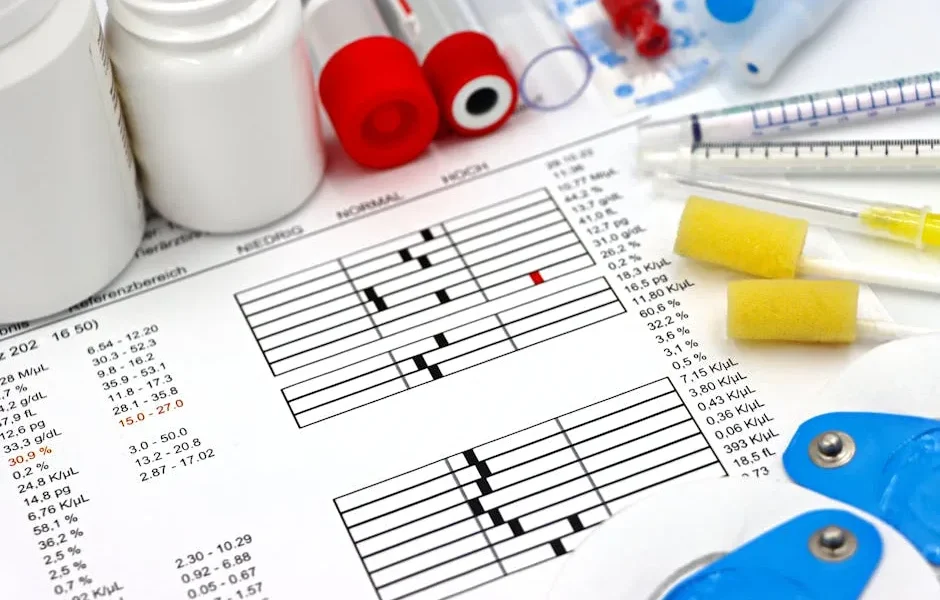
- Blood work can find kidney disease, hyperthyroidism, diabetes, and other serious conditions 1-2 years before your cat shows any symptoms
- Standard annual tests include CBC and chemistry panels. Newer markers like SDMA and NT-proBNP catch disease even earlier
- Start blood work at age 7-8 (or even 5). This creates baselines that make future changes easier to spot. It can save thousands in emergency costs
I’ll never forget the day Mrs. Henderson brought Smokey in for his routine senior wellness exam. “He’s doing great,” she told me, beaming. “Eating well, playing with his toys, same old Smokey.”
And honestly? He looked fantastic. Shiny coat, bright eyes, healthy weight.
But when his blood work came back, it told a completely different story. His kidney values were creeping up. We were catching chronic kidney disease at the very beginning stages.
That’s the thing about What Your Cat’s Annual Blood Work Really Reveals: Early Detection Tests Every Owner Should Know. It gives us a window into your cat’s body. No physical exam can match it.
Smokey wasn’t showing symptoms yet. That’s because cats are absolutely brilliant at hiding illness. It’s a survival instinct hardwired into them. In the wild, looking sick makes you prey. So they mask discomfort and disease until things get really bad.
Mrs. Henderson’s face went pale when I explained what we’d found. But here’s the good part: we caught it early. We could make dietary changes and start supportive care. This would give Smokey years of quality life.
If we’d waited until he was visibly sick—vomiting, losing weight, lethargic—we’d have been managing a crisis instead of preventing one.
The Hidden Window Into Your Cat’s Health
Blood work reveals what’s happening at the cellular and organ level. It often shows problems one to two years before clinical signs appear.
Think of it like checking the engine oil in your car. You don’t wait until smoke is pouring from under the hood. You check regularly so you can catch problems early.
A standard wellness panel typically includes two main parts. There’s a Complete Blood Count (CBC) and a chemistry panel.
The CBC looks at your cat’s blood cells. Red blood cells carry oxygen. White blood cells fight infection. Platelets help with clotting.
Abnormalities here can signal anemia, infections, or immune system issues. They can even show early-stage cancers that haven’t formed detectable tumors yet.
The chemistry panel shows how organs are functioning. It checks kidney values, liver enzymes, blood sugar, electrolytes, and proteins. Each number tells part of the story.
Elevated liver enzymes might indicate anything from a mild reaction to medication to early liver disease. High blood glucose could be stress-related. Or it could be the first sign of diabetes.
What Makes Modern Blood Work Different
Here’s something that’s changed dramatically in the past decade. We now have tests that catch disease earlier than ever before.
Traditional kidney markers like creatinine don’t elevate until about 75% of kidney function is already lost. That’s like not noticing a leak until three-quarters of your water tank is empty.
SDMA testing has become standard in most veterinary practices since 2015. It detects kidney disease when only 40% of function is lost.
That’s a game-changer for cats. Chronic kidney disease affects 30-40% of cats over age 10. With earlier detection, we can implement dietary changes, fluid therapy, and medications. These genuinely extend both lifespan and quality of life.
Similarly, NT-proBNP testing for heart disease has become more widely available. Hypertrophic cardiomyopathy affects about 15% of cats. But it often shows zero symptoms until a cat is in heart failure or throws a blood clot.
This test can identify heart stress before structural changes are visible on imaging.
The Silent Diseases Blood Work Catches
You know what keeps me up at night? The preventable emergencies.
The cats rushed in because they suddenly stopped eating. We discover diabetes that’s been brewing for months.
The fourteen-year-old with a heart murmur we never detected because the owner skipped wellness exams. Now in congestive heart failure.
Hyperthyroidism is another sneaky one. It affects one in ten senior cats. But early on, the signs look like… well, like a cat being a cat.
Maybe they’re a bit more vocal. A little hungrier. Slightly more active. Owners often attribute this to “acting young again.”
A simple T4 blood test catches it before the disease causes heart damage, hypertension, and dramatic weight loss. That’s what finally brings cats to our clinic.
Diabetes prevalence has increased to 0.5-2% of the feline population. Rates are higher in obese cats.
Early detection through routine blood glucose and fructosamine testing means we can sometimes manage it with diet alone. This is before insulin becomes necessary.
Fructosamine shows average glucose levels over two to three weeks. It gives us a more complete picture than a single blood glucose reading. That reading might be elevated just from the stress of the vet visit.
Cancer’s Early Whispers
Blood work won’t diagnose cancer directly in most cases. But it can wave red flags.
Abnormal protein levels, unexplained anemia, elevated white blood cell counts, or changes in calcium levels can prompt us to look deeper.
We might do imaging or other diagnostics. These might catch cancer at a treatable stage rather than when it’s already spread throughout the body.
I had a seven-year-old cat named Oliver. His routine blood work showed mild anemia and elevated globulins. His owner almost canceled the appointment because he “seemed fine.”
Those results led us to do an ultrasound. It revealed an early intestinal lymphoma. Because we caught it when we did, Oliver responded beautifully to treatment. He is still doing well three years later.
When Should Testing Start?
This is probably the question I hear most often. “My cat is only five and healthy—do we really need blood work?”
Here’s my honest answer. Starting at age five or six establishes a baseline when your cat is presumably healthy.
Then when we run tests at age eight or ten and see changes, we can compare them. We look at what’s normal for your cat, not just what’s normal for cats in general. Every cat is a little different.
The standard preventive care recommendation is annual blood work starting at age seven to eight. That’s when cats enter their senior years.
Some progressive practices recommend starting at five for pre-senior screening. This is especially true for purebred cats or cats with known genetic predispositions to certain diseases.
For younger cats, blood work before anesthesia has become standard practice. This includes dental procedures, spay/neuter, or other surgeries.
Updated anesthesia protocols reflect this. We’ve discovered that even young cats occasionally have congenital conditions we would have missed otherwise. Those conditions can make anesthesia risky.
Understanding the Cost-Benefit Reality
Let’s talk money. I know it matters to you and it matters to us.
A standard wellness blood panel typically runs $150-300. This depends on your location and which specific tests are included. That can feel like a lot, especially if your cat seems perfectly healthy.
But here’s the math that I’ve seen play out dozens of times.
Catching kidney disease early and managing it with a prescription diet and periodic monitoring might cost $500-800 per year.
Treating a kidney crisis when a cat goes into acute failure? That’s easily $2,000-4,000 for hospitalization, IV fluids, and multiple days of intensive care. And the outcome is often much worse.
Diagnosing hyperthyroidism early and treating with daily medication costs roughly $300-500 annually.
Treating the heart disease and hypertension that develop from untreated hyperthyroidism? We’re talking thousands, plus a much sicker cat with a shortened lifespan.
Pet insurance usually covers blood work as part of wellness care if you have that rider. That’s worth considering.
You can learn more about choosing the right pet insurance coverage for your situation.
Making Testing Less Stressful
I get it. Some cats would rather face down a pack of wolves than get in a carrier.
The stress of a vet visit can seem like it outweighs the benefits. This is especially true for anxious cats.
Good news: veterinary medicine has embraced fear-free techniques in recent years.
Many clinics now offer quiet exam rooms, feline pheromone diffusers, and gentle handling techniques. These dramatically reduce stress. Some practices schedule cat-only hours when dogs aren’t in the building.
Blood draws themselves have gotten less invasive. Most cats tolerate a quick poke from the jugular or leg vein remarkably well. This is especially true when handled by experienced technicians who work quickly and calmly.
The actual needle stick takes seconds.
If your cat is genuinely terrified of vet visits, talk to your veterinarian. Ask about pre-visit anxiety medications or even house-call services where blood can be drawn at home. Some mobile veterinary services specialize in this.
Increasingly, in-clinic point-of-care testing means we get results in 15-20 minutes. We don’t wait 24-48 hours for an external lab. This can reduce the number of visits needed.
Reading Your Cat’s Results
When you get your cat’s blood work results, they’ll probably look like alphabet soup. BUN, creatinine, ALT, ALP, WBC, RBC—it’s a lot.
Your vet should walk you through what matters. But here’s a quick guide to understanding what you’re looking at.
Kidney values (BUN, creatinine, SDMA) tell us how well the kidneys are filtering waste.
Liver enzymes (ALT, ALP, GGT) indicate liver cell health and bile flow.
Blood glucose shows if diabetes or hypoglycemia is a concern.
T4 reveals thyroid function.
White blood cell counts signal infection or inflammation.
Red blood cells and hemoglobin tell us about anemia or dehydration.
What’s tricky is that many values exist on a spectrum. Slightly elevated kidney values in a well-hydrated thirteen-year-old cat might be normal aging. Or they might be the beginning of kidney disease.
That’s where the conversation with your vet becomes crucial. That’s why understanding veterinary terminology helps you ask the right questions.
Some abnormalities need immediate action. Dangerously high calcium, severely low blood sugar, or critical anemia require quick response.
Others are “let’s recheck in three months and monitor” situations.
Your vet considers the numbers in context. They look at your cat’s age, symptoms (or lack thereof), physical exam findings, and previous results.
When to Ask for More Tests
Sometimes initial blood work raises questions rather than answering them.
If kidney values are borderline, we might recommend a urinalysis. This shows how well the kidneys are concentrating urine.
If liver enzymes are high, we might suggest bile acids testing or imaging.
Unexplained weight loss despite normal blood work might prompt testing for inflammatory bowel disease or early cancer.
This is where having a good relationship with your veterinarian matters. Don’t be afraid to ask questions.
“What are we looking for? What happens if we don’t do this test? What’s the worst-case scenario, and what’s the best-case scenario?”
A good vet appreciates informed owners who ask questions.
The Pre-Anesthetic Must-Do
Even if you skip annual blood work (which I don’t recommend, but I understand budget constraints), please don’t skip it before anesthesia.
Dental cleanings, growth removals, any surgical procedure—these all require anesthesia. Hidden health issues can make anesthesia dangerous.
I’ve caught undiagnosed kidney disease, liver problems, clotting disorders, and heart issues on pre-anesthetic blood work.
In some cases, we adjusted the anesthetic protocol. In others, we postponed surgery to address the underlying problem first. In a few cases, we discovered issues serious enough that anesthesia would have been life-threatening.
One cat owner told me she was upset about the “extra cost” of pre-dental blood work. Then we found severely elevated kidney values.
“If we’d put her under without knowing that,” I explained, “the anesthesia could have pushed her into kidney failure.”
She later thanked me with tears in her eyes. She understood that the $180 blood panel might have saved her cat’s life.
What’s on the Horizon
Veterinary diagnostics keep improving.
Research is underway on blood biomarkers for feline cognitive dysfunction. That’s basically dementia in cats. It affects many senior and geriatric cats but has been difficult to diagnose definitively.
We’re getting better at identifying inflammatory conditions and autoimmune diseases earlier.
Point-of-care testing continues to advance. It gives us laboratory-quality results right in the exam room. This is especially helpful for sick cats who need immediate answers. But it’s also making routine wellness testing faster and more convenient.
I’m particularly excited about the growing emphasis on early disease detection and prevention in veterinary medicine.
We’re moving from reactive care (treating sick animals) to proactive care (keeping animals healthy longer). Blood work is a huge part of that shift.
Final Thoughts
Smokey, the cat I mentioned at the beginning? He’s now twelve years old and doing remarkably well.
His kidney disease has progressed slightly, as it does. But the early intervention bought him years of good quality life.
Mrs. Henderson tells everyone about the importance of blood work now. She’s become an evangelist for it, actually. That makes me smile.
Annual blood work isn’t just a checkbox on a wellness exam form. It’s a tool that lets us see inside your cat’s body. It catches problems when they’re whispers instead of screams.
Yes, it costs money. Yes, it requires a vet visit that neither you nor your cat particularly enjoys.
But the cats we lose too early are often the ones whose diseases went undetected until treatment options were limited.
Don’t let your cat be one of those statistics.
Schedule that wellness exam. Say yes to the blood work. Give your cat the advantage of early detection.
Your thirteen-year-old self—and your cat—will thank you.
Sources & Further Reading
- Cornell Feline Health Center — Comprehensive feline health information and research on early disease detection
- American Association of Feline Practitioners — Senior care guidelines and preventive medicine recommendations for cats
- IDEXX Reference Laboratories — Information on SDMA testing and advanced diagnostic tools for early kidney disease detection
- American Veterinary Medical Association — Pet wellness exam guidelines and preventive care recommendations
- ASPCA — Overview of common cat diseases including hyperthyroidism, diabetes, and chronic kidney disease
