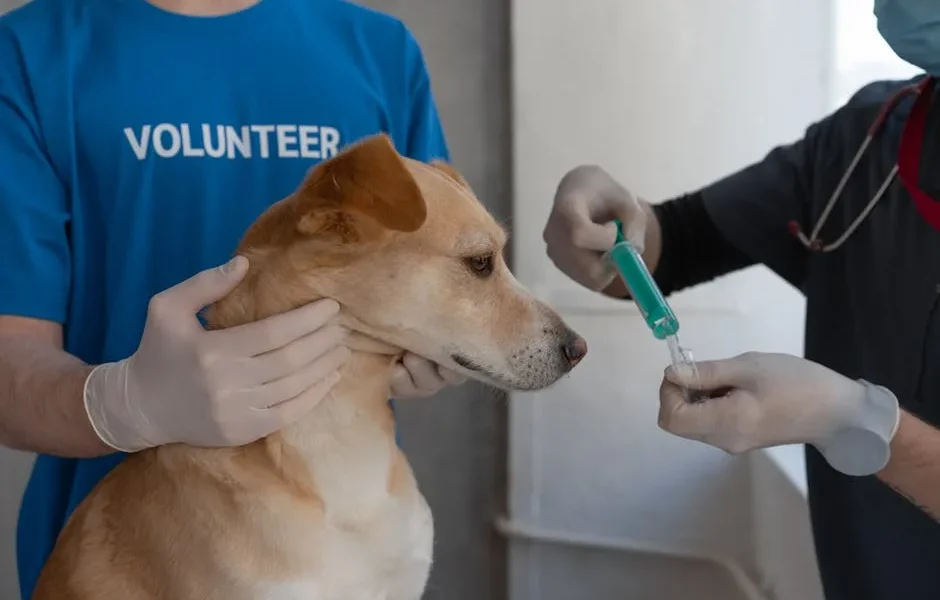
- Not all pets need every vaccine. Core vaccines are essential for all animals. Non-core vaccines depend on lifestyle, location, and real risk factors.
- The “annual vaccine” model is outdated. Many core vaccines work for 3+ years. Titer testing is a good alternative to unnecessary boosters.
- Puppies and kittens need multiple vaccine doses in their first months. Maternal antibodies interfere with immunity. Missing this window leaves them at risk for deadly diseases.
Here’s my honest take on pet vaccinations. We’ve been doing this wrong for years. It’s time to have a real conversation about it.
I’ve spent 15 years in emergency medicine. I’ve watched puppies die from parvo because they weren’t vaccinated. I’ve also treated countless dogs who got vaccines they didn’t need. Both extremes are problems.
The vaccination debate has become unnecessarily polarized. On one side, you have the “vaccinate for everything annually” crowd. On the other, there’s a growing vaccine-hesitant movement. It’s spilled over from human medicine into veterinary care.
The truth? It’s complicated. It’s nuanced. We need to think about each pet individually.
What I Believe About Pet Vaccinations (And Why)
Let me be clear from the start: vaccines save lives. Period.
In my career, I’ve intubated too many unvaccinated puppies gasping for air from distemper. I’ve held owners while they said goodbye to cats dying from panleukopenia. That’s a disease that’s completely preventable.
But here’s where I break from the traditional model. Not every pet needs every vaccine. Annual boosters for everything aren’t supported by current science.
The American Animal Hospital Association and World Small Animal Veterinary Association have given us a framework. It makes sense. They use core versus non-core vaccines.
Core vaccines protect against serious diseases. These diseases are widespread or transmissible to humans. Non-core vaccines depend on your specific situation.
Core Vaccines: The Non-Negotiables
For dogs, core vaccines include rabies, canine distemper virus, parvovirus, and adenovirus-2.
For cats: rabies, feline herpesvirus-1, calicivirus, and panleukopenia.
These aren’t suggestions. They’re the foundation of responsible pet ownership.
Rabies deserves special mention. It’s not just a medical recommendation. It’s the law in all 50 states. And for good reason.
Rabies is 100% fatal once clinical signs appear. It kills approximately 59,000 people globally each year.
When I hear owners say their indoor cat doesn’t need rabies vaccination, I remind them that bats get inside houses. I’ve seen it happen.
Non-Core Vaccines: Where It Gets Personal
This is where veterinary medicine has gotten smarter.
Bordetella, Lyme disease, leptospirosis, canine influenza, feline leukemia virus—these vaccines matter for some pets. They don’t matter at all for others.
Does your dog go to daycare, boarding facilities, or dog parks? Bordetella and canine influenza make sense.
Do you live in the Northeast and hike through wooded areas? Lyme disease is a legitimate concern.
Urban dog who never leaves the apartment building? You probably don’t need Lyme vaccine.
For cats, the FeLV question comes up constantly. Outdoor cats or those living with FeLV-positive cats? Absolutely vaccinate.
A truly indoor-only cat in a single-cat household? The risk-benefit calculation shifts.
The Over-Vaccination Problem Nobody Talks About
Here’s where I’ll probably irritate some of my colleagues.
We’ve been over-vaccinating pets for decades. The evidence has been staring us in the face.
A 2020 study in the Journal of Small Animal Practice found something important. Antibody titers for core vaccines often persist well beyond manufacturer recommendations. Frequently 3, 5, or even 7+ years.
Yet we’ve traditionally revaccinated annually. Why? Because that’s what we’ve always done.
The veterinary community is slowly shifting. Many practices now offer triennial (every three years) protocols. This applies for core vaccines after the initial puppy or kitten series and one-year booster.
Some practices are embracing titer testing. This measures actual antibody levels to determine if revaccination is needed.
The Case for Titer Testing
Titer testing costs more upfront. Typically $80-$200 compared to $20-$50 for a booster vaccine.
But here’s what it offers: data. Real information about your pet’s immune status. No more blindly revaccinating on a calendar schedule.
I’m not suggesting titers replace all vaccines. Rabies is legally mandated, so titers don’t help there. Though some states accept them for interstate travel.
And titers can’t predict future immunity. They only show current antibody levels.
But for distemper, parvo, and adenovirus in dogs? Or panleukopenia in cats? Titers give us options.
If your dog shows protective antibody levels at year four or five, why expose them to unnecessary vaccine reactions?
The Puppy and Kitten Exception
Everything I just said about spacing out vaccines? It doesn’t apply to puppies and kittens.
These guys need their full initial series. And timing matters enormously.
Here’s why: maternal antibodies.
Puppies and kittens receive protective antibodies from their mother’s colostrum. That’s the first milk. These maternal antibodies protect them initially. But they also interfere with vaccination.
The antibodies gradually decline. This creates a vulnerable window. They’re no longer protected by mom. But they can’t yet respond fully to vaccines.
The standard protocol exists because we don’t know exactly when that window closes. Vaccines every 3-4 weeks starting at 6-8 weeks. Continue until 16-20 weeks of age. We’re covering our bases.
Missing doses or spacing them too far apart is genuinely dangerous.
I see parvo cases every summer. They’re almost always unvaccinated or incompletely vaccinated puppies.
It’s devastating. It’s expensive. Hospitalization often exceeds $2,000-$5,000. Mortality rates can reach 20-30% even with aggressive treatment.
This is also addressed in routine veterinary care. We emphasize the importance of that initial veterinary relationship.
Addressing the Counterarguments
I need to acknowledge the vaccine-hesitant perspective. It’s not going away.
Some concerns are valid. Others are based on misinformation.
Valid Concerns
Vaccine reactions do occur.
Approximately 1 in 10,000-15,000 vaccinations result in serious adverse events. Small breed dogs (under 10 pounds) and young animals face slightly higher risk.
Mild reactions happen more frequently. Lethargy, decreased appetite, mild fever. They affect maybe 1-2% of vaccinated pets within 24-48 hours.
For pets with previous vaccine reactions, we have options. We can often premedicate with antihistamines. Or we can space out vaccines rather than giving multiple simultaneously.
These are legitimate medical considerations.
Unfounded Fears
Let’s be direct: there’s no credible evidence linking vaccines to autism in pets. Or humans.
The original human study claiming this link has been thoroughly debunked and retracted. The concept doesn’t even apply to veterinary medicine in any meaningful way.
“Natural immunity” sounds appealing. But remember that acquiring it means surviving the disease. Many puppies and kittens don’t survive.
Parvo has a mortality rate of 60-90% in untreated puppies. That’s not a gamble I’d recommend.
Creating Your Pet’s Personalized Vaccine Protocol
So how do you figure out what your specific pet needs?
Start with an honest risk assessment conversation with your veterinarian. Do this during your initial visit or annual checkup.
Ask these questions:
- Which vaccines are legally required in our state?
- Based on my pet’s lifestyle, which non-core vaccines do you recommend? Consider indoor/outdoor, social exposure, and travel plans.
- What’s the evidence for the booster interval you’re recommending?
- Is titer testing an option for any of these vaccines?
- What would you do for your own pet in similar circumstances?
That last question often gets you honest answers.
I vaccinate my own dogs for rabies (obviously). I do distemper/parvo/adenovirus on a three-year schedule with titers in between. I give leptospirosis annually. We have confirmed cases in Pennsylvania and my dogs hike. I do Bordetella before boarding.
I don’t vaccinate them for Lyme or canine influenza. Their risk profile doesn’t warrant it.
Geographic Considerations Matter
Lyme disease is endemic in the Northeast, upper Midwest, and parts of California. It’s virtually nonexistent in the Southwest.
Valley Fever vaccines (still experimental) matter in Arizona and parts of California. But nowhere else.
Leptospirosis risk correlates with wildlife exposure and standing water. It’s higher in rural areas. Lower in urban high-rises.
If you’re moving, your vaccine needs might change. That’s worth discussing when you’re establishing care with a new veterinarian.
Cost and Access Issues
Let’s talk about money. It affects decisions.
Annual vaccination costs range from $75-$200 for dogs. For cats, $50-$150. For families on tight budgets, that’s significant.
Low-cost vaccination clinics can reduce costs by 50-70%. Yes, you’re getting vaccines without a full examination. That’s not ideal. But it’s infinitely better than no vaccines at all.
Many animal shelters and humane societies offer these services.
Some practices offer wellness plans. They spread costs over monthly payments. Pet insurance typically doesn’t cover routine vaccines. But some plans offer wellness riders that do.
If cost is genuinely prohibitive, have that conversation with your vet. We’d rather work with you to create a prioritized vaccine schedule. Core vaccines first. Non-core if budget allows. That’s better than skipping everything.
When Things Go Wrong
Most vaccine reactions are mild. They resolve within 24-48 hours.
But you should know what to watch for. And when to call us.
Mild reactions include soreness at injection site, mild lethargy, and decreased appetite. These don’t require treatment beyond monitoring.
Call your vet immediately if you see: facial swelling, hives, vomiting, diarrhea, difficulty breathing, or collapse.
These suggest an allergic reaction requiring treatment. This is the kind of situation where having prepared an emergency action plan helps you respond quickly.
Severe reactions typically occur within minutes to a few hours after vaccination.
If you’re worried about your pet’s reaction history, ask your vet about monitoring at the clinic. Stay for 20-30 minutes post-vaccination.
The Future of Pet Vaccines
Veterinary vaccine technology is evolving.
Research into mRNA vaccines shows promise. These are similar to COVID-19 vaccines. They’re being studied for canine influenza and Lyme disease. They potentially offer faster development and fewer side effects.
Several states are considering 5-year rabies protocols. These are based on duration of immunity studies.
The bigger trend is toward personalized medicine. We’re moving away from one-size-fits-all protocols. Moving toward individualized risk assessment.
This requires more conversation. More thought. More partnership between veterinarians and pet owners. That’s a good thing.
Final Thoughts
Vaccines represent one of veterinary medicine’s greatest success stories.
Diseases that routinely killed puppies and kittens decades ago are now rare in vaccinated populations.
But we’ve also learned that more isn’t always better. Cookie-cutter annual protocols don’t serve every pet optimally.
My recommendation? Vaccinate your puppies and kittens completely and on schedule. Don’t skip core vaccines in adult pets.
Have an honest conversation with your veterinarian about which non-core vaccines your pet actually needs. Base this on real risk factors, not theoretical ones.
Consider titer testing for adult pets who’ve been previously vaccinated.
And if you have concerns about vaccine reactions or frequency, voice them. Your vet should be willing to discuss the evidence. Create a plan that makes sense for your specific situation.
This all fits into the broader picture of preventive care that keeps your pet healthy throughout their life.
Sources & Further Reading
- AAHA Canine Vaccination Guidelines — Evidence-based recommendations for core and non-core vaccines in dogs
- AAHA Feline Vaccination Guidelines — Comprehensive vaccination protocols for cats based on lifestyle risk assessment
- World Small Animal Veterinary Association Global Vaccination Guidelines — International consensus on vaccine protocols and duration of immunity
- American Veterinary Medical Association: Pet Vaccinations — Overview of vaccine types, timing, and common questions
- CDC Animal Rabies Prevention — Information on rabies epidemiology and prevention requirements