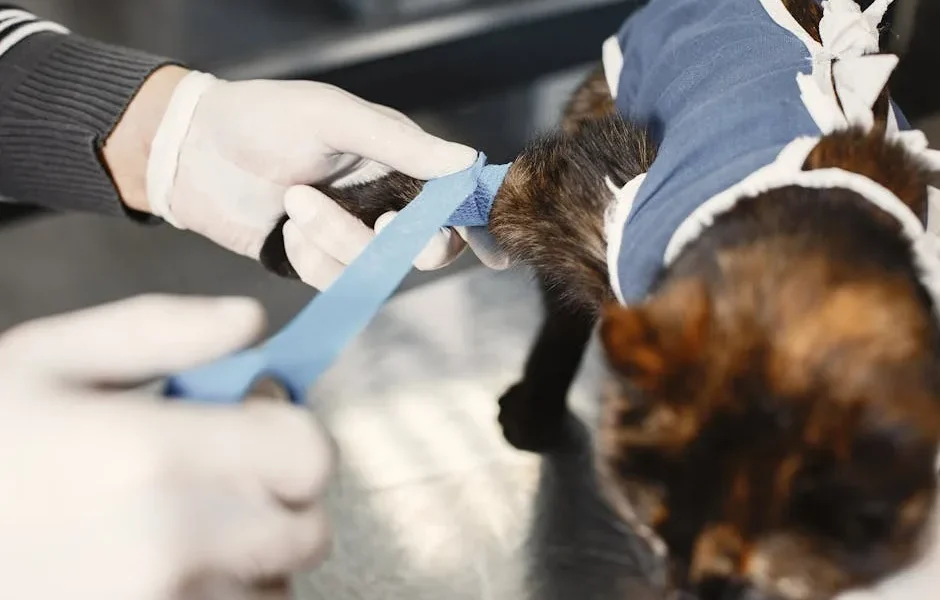
- Research emergency vet clinics before a crisis hits. 67% of pet owners wait until it’s too late. This limits their options during high-stress moments.
- Look for quality signs. These include VECCS or AAHA accreditation. Also check for 24/7 in-house tools like digital X-rays, ultrasound, and labs. Make sure they have enough staff.
- Create a written emergency plan. Include contact details and directions. Add financial preparation strategies. Do this for at least two nearby emergency facilities.
I’ll never forget the panicked phone call from a close friend at 2 a.m. Her Golden Retriever was bloating. His abdomen was swelling rapidly. He was trying to vomit but nothing came out. These were classic GDV signs.
She asked which emergency clinic to go to. I realized she had no idea where the nearest quality facility was. We lost precious minutes Googling options. Her dog’s condition got worse.
That case ended well, thankfully. But it taught me something important. How to Assess Emergency Vet Clinic Quality Before You Need One: A Pet Owner’s Pre-Crisis Checklist isn’t just helpful advice. It’s potentially life-saving preparation that every pet owner should prioritize.
Here’s the uncomfortable truth: when your pet faces a true emergency, you don’t have time to comparison shop. Response time matters enormously.
For conditions like bloat, trauma, or toxicity, survival rates improve by 40-60% when treatment begins within the first hour. Yet approximately 67% of pet owners have never researched emergency vet clinics before needing one.
That’s like waiting until your house is on fire to figure out where the nearest fire station is.
Let me walk you through exactly how to evaluate emergency vet clinics now. Do this while you’re calm and thinking clearly.
Why Pre-Emergency Assessment Really Matters
Emergency vet visits typically cost between $800-$1,500. That’s just for the initial examination and treatment.
Overnight stays? You’re looking at $3,000-$5,000 or more. Most facilities require 50-100% payment upfront. They need a significant deposit before treating your pet.
Beyond the financial shock, there’s the quality issue. Not all emergency clinics are created equal.
Some are full-service 24/7 hospitals. They have board-certified emergency specialists. They have in-house labs and advanced imaging.
Others are essentially urgent care facilities. They have limited overnight capabilities. They have no specialists on staff.
Knowing these differences beforehand is crucial. Identify which facilities meet your standards. This means you’ll make better decisions when stress is highest and time is shortest.
Step 1: Understand the Different Types of After-Hours Care
The terminology confuses people constantly. Let me clarify what you’re actually looking at:
True Emergency Veterinary Hospitals
These operate 24/7/365. They handle life-threatening conditions.
They have emergency vets on site at all times. Sometimes these vets are board-certified in emergency and critical care. They also have credentialed veterinary technicians.
They can manage critical cases. These include GDV, toxicities, severe trauma, and respiratory distress. They handle other conditions requiring immediate intervention.
Urgent Care Facilities
These handle non-life-threatening issues outside regular business hours. Things like minor wounds, mild vomiting, or ear infections.
They typically have limited hours. Perhaps evenings and weekends. They may not have full emergency capabilities. They may not offer overnight monitoring.
24-Hour General Practice Hospitals
Some general practice clinics offer extended or 24-hour service. But they may not have emergency-trained staff. They may not have advanced equipment.
They’re better than nothing. But they’re not ideal for critical emergencies.
For your pre-crisis planning, you want to identify at least one true emergency hospital. Ideally two. They should be within reasonable driving distance.
Step 2: Check Accreditation and Credentials
This is where quality becomes measurable.
Only about 15% of emergency and specialty vet hospitals hold VECCS certification. That’s the Veterinary Emergency and Critical Care Society. This certification indicates advanced training standards and equipment requirements.
Look for these credentials:
- VECCS membership or certification for the facility itself
- AAHA accreditation (American Animal Hospital Association). This indicates rigorous quality standards across over 900 evaluation points.
- Board-certified emergency vets (DACVECC designation—Diplomate, American College of Veterinary Emergency and Critical Care)
- Credentialed veterinary technicians (CVT, RVT, LVT depending on your state)
You can verify these credentials directly on the VECCS and AAHA websites before making your decision.
Step 3: Evaluate In-House Capabilities
When minutes matter, you can’t afford to have your pet transported elsewhere for diagnostics or treatment.
Quality emergency clinics should have these capabilities on-site, available 24/7:
- Digital radiography (X-rays with immediate results)
- Ultrasound (for internal bleeding, organ assessment, guided procedures)
- In-house laboratory (bloodwork results in 15-30 minutes, not hours)
- Oxygen therapy and mechanical ventilation
- Surgical suite with emergency surgery capability
- Blood bank access or on-site blood products
- ICU with continuous monitoring
Don’t assume every facility has these things.
I’ve seen clinics call themselves “emergency hospitals” when they’re really just extended-hours practices. They have limited equipment.
During your research call, ask specific questions. What diagnostic and treatment capabilities do they have in-house? What requires patient transfer?
The right equipment can make all the difference in emergency outcomes.
Step 4: Assess Staffing Standards
Equipment means nothing without skilled people to use it.
Quality emergency clinics maintain minimum staffing ratios. Typically one vet per 8-10 patients. One credentialed technician per 3-4 critical patients during peak hours.
Ask these questions during your research call:
- “How many vets are on duty overnight?”
- “Are any of your emergency vets board-certified in emergency and critical care?”
- “What’s your technician-to-patient ratio during busy periods?”
- “Are your technicians credentialed (CVT/RVT/LVT) or trained on the job?”
The answers tell you whether they’re adequately staffed or stretched dangerously thin.
A single vet trying to manage 15+ emergency cases simultaneously can’t provide quality care. Period.
Step 5: Schedule a Non-Emergency Visit
This might sound excessive. But it’s genuinely valuable.
Call ahead. Ask if you can briefly visit during a non-peak time. Weekday mid-morning is usually less chaotic.
You’re not bringing your pet. You’re just doing reconnaissance.
What to observe:
Facility Cleanliness
Emergency vet facilities deal with bodily fluids, infectious diseases, and trauma cases. They should still be clean.
Look for:
- No overwhelming odors
- Clean waiting area and visible treatment spaces
- Proper waste disposal
- Hand sanitizer stations
Staff Interactions
Watch how staff communicate with clients and each other.
Are they professional, empathetic, and organized? Or frazzled, dismissive, and chaotic?
Emergency medicine is stressful. But quality clinics manage that stress professionally.
Posted Information
Legitimate quality clinics display their credentials, accreditations, and vet licenses.
Warning signs you shouldn’t ignore include refusal to show credentials. Also vague answers about qualifications.
Communication Systems
Ask how they keep clients updated during treatment.
Do they have private consultation rooms? How often do they provide updates during lengthy procedures?
Quality facilities have structured communication protocols.
Step 6: Understand Financial Policies Before Crisis Hits
Let’s talk money. Financial stress compounds medical stress during emergencies.
Emergency vet care is expensive. Period. But surprises make it worse.
Research these financial aspects ahead of time:
- Deposit requirements: What percentage do they require upfront?
- Payment methods accepted: Credit cards, CareCredit, payment plans?
- Estimate provision: Will they provide written treatment estimates before proceeding?
- Update frequency: How often do they update estimates if treatment costs change?
Quality clinics are transparent about costs. They should provide itemized estimates. They should update you if additional procedures become necessary.
Red flag: facilities that refuse to discuss costs. Or they won’t provide estimates until after treatment.
This is also the time to explore financial preparation strategies.
Budget planning now can prevent impossible decisions later.
Consider:
- Building a dedicated pet emergency fund ($2,000-$5,000 minimum)
- Pet insurance with emergency coverage (research before issues arise—most policies don’t cover pre-existing conditions)
- CareCredit approval ahead of time
Step 7: Evaluate Their Relationship with Primary Care Vets
Here’s something pet owners don’t consider enough.
About 78% of emergency cases require follow-up with primary care vets. The quality of communication between your emergency clinic and your regular vet significantly impacts outcomes.
Ask potential emergency clinics:
- “How do you communicate with primary care vets after emergency visits?”
- “Will my regular vet receive detailed medical records and treatment summaries?”
- “What’s your typical timeline for sending records?”
Quality emergency facilities understand they’re part of a continuum of care.
They should send comprehensive medical records to your primary vet within 24-48 hours. This includes diagnostics, treatments administered, medications prescribed, and follow-up recommendations.
Continuity of care matters especially for ongoing conditions that might require emergency intervention.
Step 8: Research Online Reviews (But Read Them Correctly)
Online reviews for emergency vets are… complicated.
Emotions run understandably high. People write reviews after losing beloved pets. Or after receiving unexpected bills. Or experiencing long wait times during chaotic situations.
Here’s how to evaluate reviews effectively:
Look for Patterns, Not Individual Stories
One bad review could be an outlier. It could be an emotionally charged response to a tragic outcome.
Ten reviews all mentioning the same issue indicate a systemic problem. Things like rude staff, unexplained delays, or poor communication.
Consider the Reviewer’s Expectations
Some negative reviews stem from unrealistic expectations.
Example: “They made me wait 45 minutes even though my dog had an ear infection!” That’s triage working correctly. Critical cases go first.
Other negative reviews highlight legitimate quality concerns. Example: “They started surgery without providing an estimate or getting financial consent.”
Weigh Recent vs. Old Reviews
Clinics change ownership, staff, and management.
Reviews from three years ago may not reflect current reality. Focus on patterns in recent reviews. Look at the past 6-12 months.
Look for Specific Details
Reviews mentioning specific vets are more reliable. So are reviews describing concrete procedures. Or explaining detailed interactions.
These are more reliable than vague complaints or praise.
Step 9: Identify Backup Options
Your first-choice emergency clinic might be at capacity. It could be closed for rare circumstances. Or too far away depending on where the emergency occurs.
You need backup options.
Identify at least two quality emergency facilities:
- One closest to your home
- One in a different direction (in case you’re traveling or traffic blocks your primary route)
- For rural pet owners: the nearest true emergency hospital even if it’s 60+ minutes away. Plus the closest urgent care facility for less critical situations.
Research both with the same thoroughness you applied to your first choice.
Step 10: Create Your Written Emergency Action Plan
All this research is useless if you can’t access it during a crisis.
Create a written emergency action plan. Keep copies in multiple locations:
- On your refrigerator
- In your car’s glove compartment
- Saved on your phone
- Shared with pet sitters, dog walkers, and family members who care for your pet
Your plan should include:
- Clinic names, addresses, and phone numbers (for primary and backup emergency facilities)
- Directions or GPS coordinates from your home
- Estimated drive times (so you know which is truly “nearest” during rush hour)
- Hours of operation (if your backup isn’t 24/7)
- Your primary vet’s after-hours contact information (some provide emergency phone triage)
- Pet poison control numbers (ASPCA Animal Poison Control: 888-426-4435)
- Your pet’s medical information (current medications, known allergies, previous conditions)
- Financial preparation details (credit cards designated for pet emergencies, CareCredit account number)
During a 2 a.m. emergency, you won’t remember details. You need them written down. Accessible and ready to grab.
Common Mistakes Pet Owners Make (And How to Avoid Them)
After 15 years in emergency vet medicine, I’ve seen these mistakes repeatedly:
Mistake #1: Assuming the Closest Clinic Is the Best Option
Proximity matters. But quality matters more.
A facility 15 minutes farther away with board-certified emergency vets is worth it. One with full diagnostic capabilities and 24/7 surgery availability is worth the extra drive time for serious emergencies.
Mistake #2: Confusing “24-Hour” with “Emergency Hospital”
Some clinics advertise 24-hour service. But they lack emergency training, equipment, or specialists.
They’re technically open. But they’re not equipped for critical emergencies.
Verify capabilities, not just hours.
Mistake #3: Not Calling Ahead
During a true emergency, call while en route to the hospital.
This lets staff prepare for your arrival. They can gather necessary equipment. They can provide potentially life-saving first aid instructions.
Never delay transport to make the call. But have a passenger call if possible.
Mistake #4: Choosing Based Solely on Cost
Emergency vet care is expensive everywhere.
Choosing the cheapest option often means compromising. You compromise on equipment, expertise, or care quality.
Focus on value. That’s quality care that justifies the cost. Not the lowest price.
Mistake #5: Ignoring Red Flags During Research
If a facility refuses to answer questions about credentials, that’s a red flag. If they become defensive about accreditation, that’s a problem. If they won’t discuss financial policies, be concerned.
If you see other concerning behaviors during your research phase, trust your instincts. Those red flags won’t disappear during an emergency.
Mistake #6: Forgetting About Geographic Considerations
Where you live dramatically affects your options.
Urban pet owners might have five emergency hospitals within 20 minutes. Rural pet owners might face 90-minute drives to the nearest true emergency facility.
Your planning must account for your specific geographic reality.
If you’re rural, consider these questions: Could you stabilize your pet for a long drive? Should you keep emergency supplies on hand? Is there a local general practice vet who handles urgent after-hours calls?
Geographic planning applies to specialty care too. Think through logistics now.
Pro Tips From the ER
A few additional insights from someone who’s worked thousands of emergency cases:
Build a Relationship Before You Need One
Some emergency hospitals allow you to pre-register your pet’s information. You create a file before an emergency occurs.
This saves precious minutes during check-in. Ask if this option exists.
Understand Triage Systems
Quality emergency hospitals use medical triage. The most critical patients go first, regardless of arrival order.
If you’re waiting while someone who arrived after you goes back immediately, that’s appropriate emergency medicine. The staff isn’t being rude. They’re prioritizing life-threatening conditions.
Keep Medical Records Accessible
Store digital copies of your pet’s complete