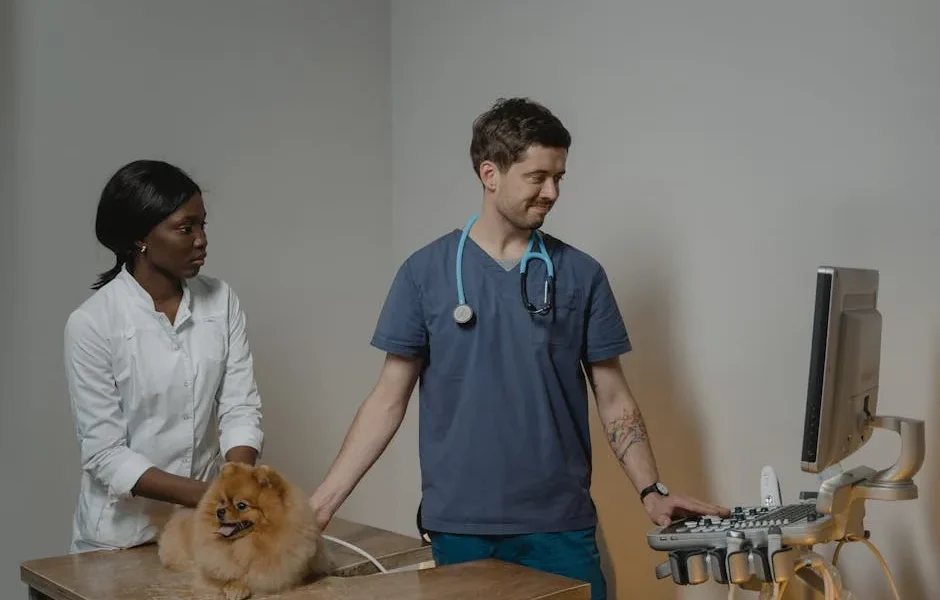
- Only 12-15% of North American veterinary practices have AAHA accreditation. This accreditation requires meeting over 900 standards. These cover pain management, emergency protocols, and more.
- AAHA-accredited hospitals usually charge 10-20% more than non-accredited clinics. They must pass an external review every three years to keep their status.
- Non-accredited clinics can still provide excellent care. Not having AAHA certification doesn’t mean lower quality. This is especially true in rural areas where accredited options may not exist.
- When choosing between accredited and non-accredited hospitals, think about your pet’s specific needs. Consider your budget. Look at other quality signs like cleanliness, communication, and equipment standards.
When I first started working in veterinary care, I didn’t understand what AAHA accreditation meant. I just knew some clinics had that official certificate on the wall. Others didn’t.
Over the years, I’ve learned a lot. The Veterinary Hospital Accreditation: AAHA vs Non-Accredited Clinics 2025 Comparison reveals some important differences. Pet owners should understand these differences.
But it’s not as simple as “accredited good, non-accredited bad.” The reality is more complex. Let’s break down what actually matters when choosing where to take your pet.
1. What AAHA Accreditation Actually Evaluates (And What It Doesn’t)
AAHA stands for the American Animal Hospital Association. They put veterinary practices through a tough evaluation. This evaluation covers more than 900 standards.
These standards include anesthesia monitoring and pain management procedures. They cover surgical safety checklists and infection control measures. They include pharmacy management and medical record-keeping.
Think of it like a restaurant. Some restaurants just pass health inspections. Others voluntarily try to earn a Michelin star.
But here’s what surprises most people: AAHA accreditation doesn’t evaluate individual veterinarians’ skills. It doesn’t measure their experience.
A brilliant veterinarian with decades of experience might work at a non-accredited clinic. A new graduate might work at an accredited one. The accreditation focuses on systems and protocols. It focuses on facility standards, not personal expertise.
Every three years, accredited hospitals undergo a comprehensive review. An AAHA consultant spends hours reviewing written protocols. They inspect equipment. They check medication storage. They observe how the team handles patients.
Non-accredited clinics only need to meet their state’s basic licensing requirements. These typically focus on minimum legal standards. They don’t focus on best practices.
If you’re concerned about baseline standards, recognizing warning signs at any clinic becomes essential.
2. The Real Cost Difference (And What You’re Actually Paying For)
Let’s talk money, because it matters.
AAHA accreditation costs veterinary practices $500-$2,500 initially. They also pay $400-$1,200 annually to maintain it. That investment typically means higher service fees.
AAHA-accredited hospitals usually charge 10-20% more than comparable non-accredited clinics. For a routine wellness exam, you might pay $65-75 at an accredited hospital. At a non-accredited one, you might pay $50-60.
What are you getting for that premium? You get documented proof that the clinic maintains specific equipment standards. This includes dedicated surgical monitors and emergency crash carts.
You know they follow written protocols for everything from anesthesia to pain management. You know they require continuing education for the entire veterinary team.
You’re also paying for the administrative time and resources. The practice devotes these to maintaining standards and preparing for evaluations.
But here’s something important: non-accredited clinics might do all these things too. They just haven’t paid for external verification.
Some excellent veterinarians choose not to pursue accreditation. They might practice in areas where clients can’t afford the higher fees. They might disagree with specific AAHA requirements that don’t align with their practice model.
When budgeting for pet care, understanding these cost differences helps you plan realistically.
3. Emergency Preparedness and After-Hours Care Standards
This is where AAHA accreditation creates some meaningful differences.
Accredited hospitals must maintain specific emergency equipment. This includes crash carts with emergency drugs. It includes oxygen delivery systems. It includes monitoring equipment that meets defined standards.
They also need documented protocols for emergency situations. They either provide 24-hour coverage or have formal referral relationships with emergency facilities.
Non-accredited clinics vary widely in their emergency preparedness. Some maintain equipment and protocols that rival or exceed AAHA standards. Others might have basic emergency supplies but no formal systems.
The key difference? You can call an AAHA-accredited hospital and know with certainty they’ve been externally verified. You know they have specific emergency capabilities.
With non-accredited clinics, you need to ask directly. Ask about their emergency protocols and equipment.
Worth noting: many non-accredited clinics in urban areas have excellent emergency referral networks. They have clear after-hours protocols.
In rural areas, both accredited and non-accredited clinics may face the same challenges. Providing 24-hour coverage is difficult anywhere.
Geography matters more than accreditation status in some emergency scenarios. Knowing how to respond during emergencies matters regardless of where you seek care. This includes situations like pet electrocution.
4. Pain Management and Anesthesia Monitoring Protocols
Here’s where AAHA standards have genuinely pushed the veterinary industry forward.
Accredited hospitals must have written pain management protocols. They must use pain scoring systems for every patient.
They’re required to have someone dedicated to monitoring anesthesia throughout surgical procedures. This can’t just be the surgeon multitasking. They must document vital signs at specified intervals. They must have specific monitoring equipment.
Many non-accredited practices have adopted these same standards. That’s because they’re simply good medicine.
But some haven’t. This is particularly true in older practices. Veterinarians in those practices were trained in an era when pain management in animals wasn’t prioritized the way it is now.
The 2024 AAHA standards have even stronger emphasis on multimodal pain management. They emphasize Fear Free handling techniques.
When you’re evaluating any clinic, ask specific questions. Ask: “How do you assess and manage pain after surgery?” Ask: “Who monitors anesthesia during procedures?” Ask: “What equipment do you use for monitoring?”
The answers matter more than the certificate on the wall. Though the certificate guarantees certain answers.
5. Continuing Education Requirements for the Veterinary Team
AAHA-accredited hospitals must ensure their veterinarians and veterinary technicians complete ongoing continuing education.
This isn’t just about maintaining individual licenses. That has separate requirements. It’s about the practice demonstrating commitment to keeping the entire team current. Current on best practices, new treatments, and emerging standards.
Non-accredited practices set their own continuing education policies. Some are incredibly progressive. They send staff to multiple conferences annually. They provide regular in-house training.
Others do the bare minimum required for license renewal.
This is especially relevant for specialized care areas like nutrition. Staying current on nutritional science significantly impacts patient outcomes. This includes knowing if your pet’s nutrition is working.
The 2024 AAHA standards now include requirements for mental health support. They require wellness programs for veterinary staff.
Why does this matter to you? Because burnout and compassion fatigue directly impact the quality of care your pet receives. A practice that prioritizes team wellbeing typically provides better patient care. AAHA now mandates this focus.
6. Medical Records, Pharmacy Standards, and Quality Control
AAHA accreditation requires detailed medical record-keeping. It requires specific documentation standards.
Every patient visit must include thorough notes. Notes about examination findings, diagnostics, treatments, and follow-up plans.
Pharmacy management is tightly controlled. Medications must be stored properly. They must be labeled correctly. They must be dispensed with clear instructions.
The 2024 standards added enhanced cybersecurity requirements. They added data protection requirements for digital records.
Are non-accredited clinics sloppy with records? Not necessarily. State veterinary licensing boards have medical record requirements too. Though they’re typically less comprehensive than AAHA standards.
However, the external audit process at accredited hospitals ensures consistent compliance. It doesn’t rely on individual veterinarians’ recordkeeping habits.
This becomes particularly important if you need to transfer care between veterinarians. Comprehensive records make transitioning to a new veterinarian much smoother.
Well-documented medical histories are crucial for managing chronic conditions. They’re also crucial when your pet needs specialized medications. This includes anti-nausea treatments.
7. Geographic Reality: When Accredited Clinics Aren’t an Option
Here’s something the AAHA marketing materials don’t emphasize: accredited clinics are heavily concentrated in urban and suburban areas.
If you live in a rural community, you might not have an AAHA-accredited option within reasonable driving distance. Only 12-15% of North American veterinary practices hold accreditation. They’re not evenly distributed.
Does this mean rural pet owners are getting substandard care? Absolutely not.
Many non-accredited rural veterinarians provide outstanding, compassionate care. They have deep community connections. They often have extensive large-animal experience.
They know their clients personally. They often provide after-hours care from their own homes. They adapt flexibly to their communities’ needs. These things don’t show up on accreditation evaluations.
The question becomes: how do you evaluate quality without the AAHA seal of approval?
Look for clean facilities. Look for modern equipment. Look for willingness to answer questions. Look for clear communication about treatment options and costs.
Look for transparent handling of complications. Look for strong client reviews. Ask about their protocols for anesthesia, pain management, and emergencies. Trust your instincts about whether the team genuinely cares about your pet.
8. Specialized Services and Advanced Capabilities
AAHA accreditation requires certain baseline capabilities. But it doesn’t guarantee advanced services.
An accredited general practice might refer complex cases to specialists. Meanwhile, some non-accredited clinics have veterinarians with advanced training. They might specialize in areas like orthopedic surgery or cardiology.
When your pet has specialized needs, the individual veterinarian’s expertise matters most. Equipment matters most. This is true for needs like allergy testing and treatment.
It’s also true for specialized nutrition plans for working dogs.
Some specialized veterinary practices intentionally remain non-accredited. They focus resources on advanced equipment and training. They don’t meet comprehensive general practice standards because that’s not their focus.
Ask potential veterinary hospitals about their specific capabilities for your pet’s needs. Can they perform advanced imaging like ultrasound or digital radiography?
Do they have in-house laboratory equipment or send samples out? What’s their referral network for specialized care?
These practical questions reveal more about whether they can meet your pet’s specific needs. They reveal more than accreditation status alone.
Final Thoughts
After years in veterinary care, I’ve learned that AAHA accreditation provides valuable assurance. It provides assurance about systems, protocols, and facility standards.
But it’s not the only indicator of quality care.
The best AAHA-accredited hospitals combine excellent protocols with compassionate, skilled veterinarians. These veterinarians communicate clearly. They prioritize your pet’s wellbeing.
The best non-accredited clinics often do exactly the same things. They just haven’t sought external certification. Sometimes for valid reasons related to cost, geography, or practice philosophy.
So what should you do?
Start by identifying AAHA-accredited options in your area. But don’t stop there.
Visit potential clinics. Ask questions about their protocols and equipment. Observe how staff interact with animals. Read reviews from other clients. Trust your judgment.
The right veterinary hospital for your pet combines several things. Accessible location. Appropriate services for your pet’s needs. Clear communication. Reasonable costs for your budget.
And most importantly, a team that genuinely cares about your animal’s health and comfort.
Whether that clinic has an AAHA certificate on the wall is just one factor among many that matter.
Sources & Further Reading
- AAHA Accreditation Standards — Official information on accreditation requirements, evaluation process, and standards updates including 2024 revisions
- AAHA Clinical Practice Guidelines — Comprehensive veterinary care guidelines covering pain management, anesthesia protocols, preventive care, and specialty services
- American Veterinary Medical Association Practice Resources — Industry standards, practice management insights, and veterinary care quality benchmarks
- Veterinary Practice News — Current industry trends, practice management research, and professional development resources for veterinary teams
