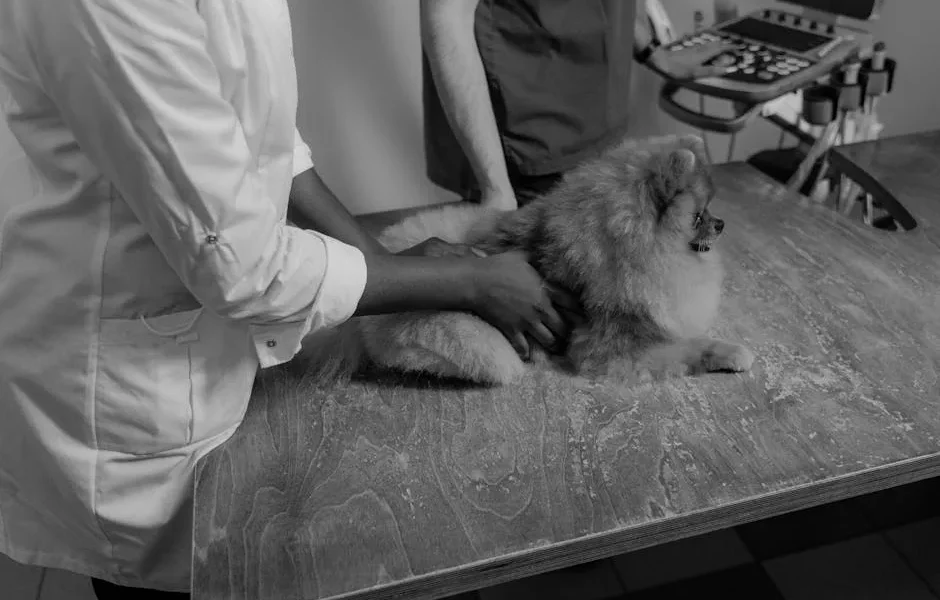
- Digital X-ray, in-house lab equipment, and ultrasound are basic essentials for complex diagnoses. If your vet doesn’t have these, you may want to look at other options.
- Not every clinic needs advanced imaging like CT or MRI. But they should have connections with specialty centers that do.
- AAHA accreditation provides good equipment standards. But non-accredited clinics can still offer excellent care if they have modern diagnostic tools.
I’ll be honest. I’ve seen too many dogs suffer longer than they should. Their vets were skilled and caring. But they didn’t have the right tools.
Making a complex diagnosis without proper equipment is hard. It’s like solving a puzzle with half the pieces missing.
Knowing if your vet has the right equipment isn’t being demanding. It’s being an informed advocate for your pet.
Here’s my take: Every dog owner should understand the difference. Basic wellness equipment is different from diagnostic tools needed for complex problems.
Your regular vet doesn’t need a CT scanner. But they should have certain baseline technologies. These make the difference between a same-day diagnosis and weeks of guesswork.
The Non-Negotiable Equipment Every Modern Clinic Should Have
Let’s start with the baseline. These aren’t luxuries. They’re necessities for 2025 and beyond.
Digital Radiography Is No Longer Optional
If your vet still uses film X-rays, that’s a red flag.
Digital radiography produces images in minutes, not hours. The quality is much better for detecting fractures, tumors, bladder stones, and foreign objects.
The technology has been standard for years. Clinics still using analog systems are falling behind.
When dealing with a potential obstruction or injury, waiting hours is dangerous. It’s not just inconvenient.
Digital systems also allow for image adjustment. You can change contrast and brightness. This can reveal details invisible on traditional film.
In-House Laboratory Equipment Saves Critical Time
This one’s huge.
A clinic with CBC (complete blood count) and chemistry analyzers can deliver results in 15-30 minutes. Without them? You’re waiting 24-48 hours for outside labs.
For kidney failure, diabetes, acute infections, or toxin exposure, that time difference can be life-or-death.
I’ve watched dogs deteriorate while waiting for external lab results. Those results could’ve been available the same day.
Modern in-house analyzers from companies like IDEXX aren’t perfect for every test. But they handle the critical basics that guide immediate treatment decisions.
Ultrasound Capabilities Matter More Than You Think
About 60-70% of complex diagnoses need ultrasound imaging. This includes abdominal organs, heart conditions, and internal masses.
X-rays show bones and air beautifully. But they’re terrible at evaluating soft tissues. Things like the liver, spleen, kidneys, or heart valves need ultrasound.
Not every vet needs to be an ultrasound expert. But the clinic should have basic ultrasound equipment. Or they should have a visiting specialist who comes regularly.
The portable ultrasound revolution has made this more accessible. Tablet-based units now cost $5,000-10,000 instead of $30,000+.
The “Nice to Have” Equipment That Separates Good Clinics from Great Ones
Beyond the essentials, certain tools show a clinic’s commitment to comprehensive care.
Cardiovascular Monitoring Equipment
Heart disease affects roughly 10% of all dogs. It affects up to 75% of senior dogs.
ECG/EKG machines and blood pressure monitors aren’t exotic. They’re standard in clinics serious about geriatric care.
If your clinic mainly treats older dogs but lacks these tools, that’s concerning.
Tonometry equipment measures eye pressure. It’s another example. Glaucoma can cause irreversible blindness within 24-48 hours if untreated.
Yet the tonometer needed to detect it costs only $1,500-3,000. There’s no excuse for a full-service clinic not to have one.
Point-of-Care Testing for Specific Conditions
The diagnostic landscape has changed dramatically in recent years.
Tests for Addison’s disease, pancreatitis (cPLI), and thyroid disorders used to require outside laboratories. Now they can be run in-clinic within 10-15 minutes.
Not every clinic can afford every point-of-care test. But having at least a few shows they’re keeping up with advances.
Ask what specific tests they can run immediately. Ask what needs to be sent out.
Endoscopy Equipment
Only about 30% of multi-veterinarian practices have endoscopy capabilities.
Endoscopy allows visualization of the gastrointestinal tract, respiratory system, and bladder. And it doesn’t require surgery.
It’s not essential for every clinic. But knowing whether your vet has access is valuable. This matters when your dog develops chronic vomiting or difficulty breathing.
What About Advanced Imaging?
Here’s where expectations need adjustment.
Only 15-20% of general practice veterinary clinics have CT or MRI equipment. These machines cost hundreds of thousands of dollars. They require specialized training to operate and interpret.
Does that mean your regular vet is inadequate? Absolutely not.
What matters is whether they have established referral relationships. They should know specialty hospitals that offer advanced imaging.
For neurological conditions, complex orthopedic cases, and cancer staging, your vet should know exactly where to send you. They should facilitate that referral smoothly.
The rise of telemedicine integration has been a game-changer. Many practitioners can now share diagnostic images in real-time with specialists. This extends their diagnostic capabilities without massive equipment investments.
Questions to Ask During Your Next Visit
You don’t need to interrogate your veterinarian. But these conversations are perfectly reasonable:
- “What diagnostic imaging equipment do you have in-house?”
- “For bloodwork, what tests can you run here versus sending out to a lab?”
- “If my dog needed an ultrasound, would that be done here or referred elsewhere?”
- “Do you have relationships with specialty centers for advanced imaging or complex cases?”
- “Is your X-ray system digital, and can you share images electronically if I need a second opinion?”
A confident veterinarian won’t be defensive about these questions.
They’ll appreciate your engagement. They’ll provide straightforward answers about their capabilities and limitations.
The AAHA Accreditation Factor
American Animal Hospital Association accreditation provides a reliable framework for equipment standards.
The difference between AAHA and non-accredited clinics includes specific requirements for diagnostic capabilities.
AAHA’s 2024 updated standards include recommendations for digital imaging. They also include in-house laboratory capabilities as part of quality care benchmarks.
That doesn’t mean non-accredited clinics are automatically inferior. Many excellent practices choose not to pursue accreditation for various reasons.
But it does provide an objective standard to evaluate against.
Red Flags That Should Concern You
Watch for these warning signs:
- The clinic always refers out for basic diagnostics like X-rays or bloodwork
- They’re still using film-based radiography
- They lack any emergency monitoring equipment
- The vet seems uncertain about what equipment they have or how to use it
- Equipment looks visibly outdated or poorly maintained
- There’s no clear protocol for referrals when complex cases arise
I’ll acknowledge the counterargument. Some rural or mobile veterinary practices operate successfully with minimal equipment. They maintain strong referral networks. That’s a legitimate practice model.
But they should be transparent about their limitations. They should have clear pathways for accessing diagnostic services when needed.
Cost Transparency and What You’re Actually Paying For
Let’s talk money for a second.
Diagnostic equipment represents massive investments. A good digital X-ray system costs $50,000. Ultrasound costs $20,000-80,000. In-house lab equipment costs $100,000+.
These costs get factored into service pricing.
When you’re comparing veterinary costs, understand this. Clinics with more advanced equipment will likely charge more for diagnostics.
That’s not price gouging. It’s cost recovery.
The question is whether you’re getting value. Faster results, more accurate diagnoses, and fewer referrals mean you pay multiple facility fees less often.
Sometimes paying $300 for an in-house ultrasound is cheaper. The alternative is paying $150 for a basic exam, then another $400 at a specialty center for the ultrasound you needed in the first place.
When Complex Conditions Require Specialist Equipment
Certain situations absolutely demand specialist-level equipment.
If your dog has persistent symptoms requiring extensive testing or complex cardiac issues, you need to know when to escalate.
Knowing when to move from your general practice vet to a specialty center is crucial.
Cardiologists have echocardiography machines that go far beyond basic ultrasound. Oncologists have access to CT and MRI for cancer staging. Neurologists need advanced imaging to diagnose spinal or brain conditions.
Your general practice vet should recognize when these referrals are necessary. They shouldn’t attempt diagnoses beyond their equipment capabilities.
The Bottom Line on Equipment Standards
Not every veterinary clinic needs to be a specialty hospital.
But in 2025, certain baseline technologies should be standard. Digital X-ray, in-house lab capabilities, and either ultrasound equipment or reliable access to it.
Beyond that, the best clinics know their limitations. They have established networks for accessing advanced diagnostics when needed.
They invest in keeping their equipment current. They train their staff on how to use it effectively.
Your job as a dog owner isn’t to become an equipment expert.
It’s to ask informed questions. Understand what your clinic can and can’t do. Recognize when warning signs suggest it might be time to find a practice better equipped for your dog’s needs.
For dogs with chronic conditions requiring ongoing monitoring, equipment access becomes even more important.
Regular diagnostics to track disease progression or treatment response shouldn’t require constant referrals to specialty centers.
Final Thoughts
The veterinary profession has made incredible advances in diagnostic technology over the past decade.
What was once available only at university hospitals is now accessible in many general practices.
But significant variation still exists between clinics. Not all of it is justified by location or practice model.
Your dog deserves a veterinary clinic that invests in the tools necessary for accurate, timely diagnoses.
That doesn’t mean the fanciest equipment or the most expensive services. It means appropriate technology, properly maintained and competently used. And honest communication about limitations.
Take the time during your next wellness visit to ask about diagnostic capabilities. Tour the facility if they’ll allow it.
And if you’re not confident your current clinic can handle complex situations, start researching alternatives now. Don’t wait for an emergency.
Your dog’s health may one day depend on equipment you didn’t even know to ask about.
Sources & Further Reading
- American Animal Hospital Association (AAHA) — Accreditation standards and equipment guidelines for veterinary practices, including 2024 updated diagnostic equipment recommendations
- American Veterinary Medical Association (AVMA) — Practice statistics, care standards, and data on cardiovascular disease prevalence in dogs
- American College of Veterinary Radiology (ACVR) — Professional standards for diagnostic imaging equipment and advanced imaging availability statistics
- IDEXX Laboratories — Industry leader in veterinary diagnostic equipment, in-house laboratory systems, and point-of-care testing development
- Veterinary Information Network (VIN) — Professional resources, equipment reviews, and telemedicine integration information for veterinary practitioners
