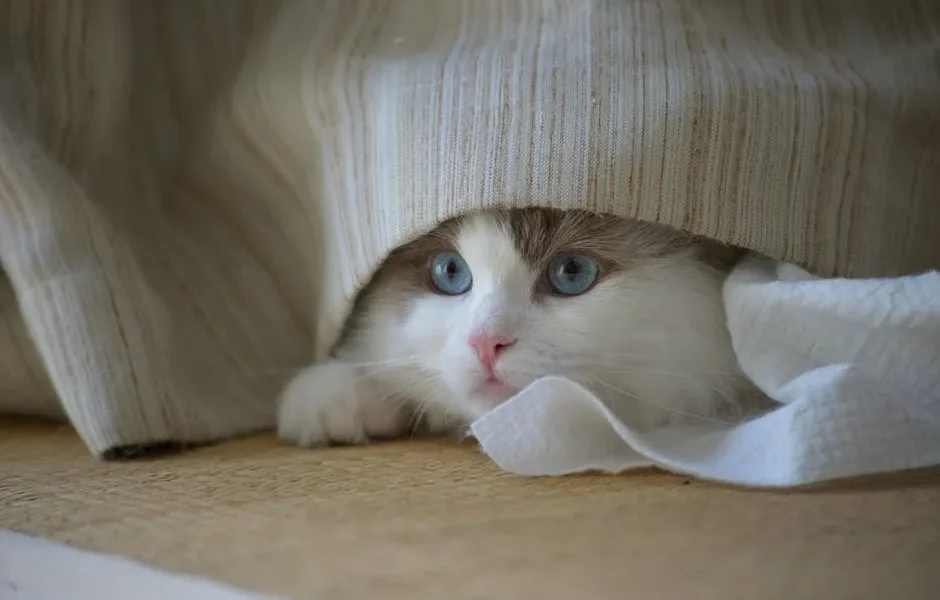
- Hiding is normal for cats. But if your cat suddenly hides more, it often means a medical problem, pain, or stress. You should see a vet.
- Medical problems cause hiding about 60% of the time. These include urinary tract infections, dental disease, arthritis, and kidney problems. Cats hide their illness until it gets bad.
- Normal hiding after a move should get better within 3 weeks. If hiding gets worse or lasts longer, see a vet within 24-48 hours. This is especially true if your cat stops eating, changes litter box habits, or seems tired.
I’ve been a vet for over ten years. Many worried owners ask me, “Why is my cat hiding more than usual?” This behavior change is very common. But many people don’t understand what it means.
Last week, a client almost ignored her cat’s hiding. She thought her cat was “just being moody.” But we found a painful tooth abscess. Here’s what every cat owner needs to know.
Is It Normal for Cats to Hide Sometimes, or Should I Always Be Concerned?
Good news first: yes, some hiding is normal. Cats are both hunters and prey in the wild. They are hardwired to find safe, enclosed spaces. They use these spots to rest and watch.
Is your cat under the bed for a few hours after a thunderstorm? That’s normal. Does your cat hide in a closet when loud visitors come? Also normal.
Three things tell you if hiding is normal or concerning: how long it lasts, how often it happens, and what’s going on around your cat.
Normal hiding is temporary. It happens in certain situations. Your cat comes out for meals. They use the litter box normally. They return to their usual routine once the stressor goes away. They might hide for a few hours or even a full day during big disruptions. But they don’t completely disappear.
Concerning hiding is different. It lasts a long time. It’s increasing. Or it comes with other changes. Has your friendly cat been missing for 48+ hours? Does your cat refuse meals? Has your cat stopped grooming? Does your cat only come out at night? These are red flags.
Studies show something important. About 60% of cats brought to vets for hiding have medical problems. It’s not just anxiety or moodiness.
What Medical Problems Cause Cats to Hide More?
This is serious. I always tell cat owners to think “medical first” when hiding increases suddenly.
Cats are masters at hiding pain and illness. It’s a survival mechanism. In the wild, showing weakness makes you prey. So by the time your cat hides more, they may have been suffering for days or weeks.
Here are the most common medical problems I see:
Urinary tract infections or blockages are very painful. They can cause life-threatening problems within 24-48 hours in male cats. A cat with UTI pain often hides in cool, quiet places. These include bathtubs or tile floors.
Dental disease affects over 70% of cats by age three. Painful teeth or gum infections make eating uncomfortable. Cats hide rather than show weakness when in pain. Does your cat drop food? Is there drooling? Does your cat paw at their face? These signs point to dental disease.
Arthritis is often missed in cats. Research shows about 90% of cats over 12 years have arthritis. But cats don’t limp like dogs. So owners miss it. Arthritic cats hide because jumping hurts. They feel vulnerable when they can’t move easily.
Gastrointestinal issues cause a lot of discomfort. These include inflammatory bowel disease, pancreatitis, or constipation. Cats with tummy trouble hide in unusual spots. They may also vomit, have diarrhea, or change their litter box habits.
Kidney disease, hyperthyroidism, and diabetes are common in middle-aged and senior cats. These conditions develop slowly. So hiding increases slowly over time rather than suddenly.
Does your cat’s hiding come with any of these symptoms? Don’t wait for an emergency. Call your vet for an appointment within 24 hours.
How Do I Know If My Cat Is Hiding Because of Stress Rather Than Illness?
Great question. Honestly? Sometimes you can’t tell without a vet exam. That’s why we recommend a physical exam and bloodwork for any big behavior change. This is true even if you think it’s stress.
That said, stress-related hiding usually has clear triggers. The research is revealing. New pets trigger stress-hiding in 78% of cases. Moving homes triggers it in 65%. New family members (including babies) trigger it in 58%. Construction noise triggers it in 43%.
Think back two weeks. Did anything change in your home? New furniture? Different work schedule? A stray cat outside the window? A new cleaning product with a strong smell? Cats are very sensitive to changes that seem minor to us.
Stress-related hiding follows patterns. Your cat might hide during specific times. Maybe when the kids get home from school. Or in response to certain triggers. The doorbell. The vacuum cleaner. They usually keep normal appetite and litter box habits. They just only come out when the house is quiet.
Medical hiding is different. It’s more constant. It gets progressively worse. The cat doesn’t come out even during usual “safe” times. You’ll usually notice other symptoms. These include less appetite, tiredness, changes in meowing, or less grooming.
When in doubt, schedule that wellness exam. Your vet can rule out medical causes. They can help you develop a behavioral plan if stress is the problem.
My Cat Only Hides When Visitors Come—Is This a Problem I Need to Fix?
Short answer? Not necessarily. Some cats are just introverts. And that’s perfectly fine.
Cats have individual personalities just like people. Some are social butterflies. They greet every visitor at the door. Others are homebodies. They prefer their trusted humans. They vanish when strangers appear. Neither is wrong.
The key question is: does your cat seem distressed? Or are they simply being cautious? A cat who hides under the bed when visitors arrive but stays relaxed is fine. Normal breathing. No dilated pupils. Eventually falls asleep. This cat is managing their comfort level appropriately. You’ve given them a safe retreat. They’re using it exactly as intended.
But what if your cat shows signs of panic? Flattened ears. Hissing. Refusing to eat for hours after visitors leave. Staying hidden for long periods. That’s chronic stress. It could benefit from help.
For moderately shy cats, gradual desensitization can help. Have visitors ignore the cat completely at first. Leave treats near (but not too near) the hiding spot. Use feline pheromone diffusers before expected visitors. But don’t force interactions. That makes things worse.
Honestly? I tell most clients it’s okay to let their cats be wallflowers. Not every cat needs to be the life of the party. Provide a safe, quiet room during gatherings. Include food, water, litter box, and familiar bedding. Your cat will thank you.
How Long Should I Wait Before Calling the Vet About Increased Hiding?
This is the important question. Here’s my professional recommendation: when in doubt, call sooner rather than later.
Is the hiding sudden and dramatic? Has your social cat not come out in 24+ hours? Call your vet the same day. Is hiding increasing gradually over several days or weeks? Schedule an appointment within a week.
Use this decision tree:
Call immediately (within hours) if hiding comes with:
– Straining to urinate or not urinating
– Labored breathing or open-mouth breathing
– Severe tiredness or unresponsiveness
– Seizures, collapse, or inability to walk
– Continuous meowing or signs of severe pain
Call within 24 hours if you notice:
– Complete loss of appetite for 24+ hours
– Vomiting or diarrhea along with hiding
– Sudden hiding in a previously social cat
– Hiding with visible injury or limping
– Dramatic personality change
Schedule an appointment within a week for:
– Gradually increasing hiding over 2+ weeks
– Hiding with subtle changes (sleeping more, less playful, less grooming)
– Senior cats showing new hiding patterns
– Hiding after a known stressor but not improving after 3 weeks
Remember this: cats showing illness have usually been sick longer than you realize. Cornell Feline Health Center research confirms this. Cats hide symptoms until conditions become severe. Early intervention dramatically improves outcomes. It often reduces treatment costs too.
What Can I Do at Home to Help a Hiding Cat?
First, don’t drag your cat out of hiding spots. Don’t restrict access to them. Forcing interaction increases stress. It damages trust. Your cat is hiding because they need to feel safe. Respect that need while addressing the underlying cause.
Start with an environmental audit. Walk through your home. Identify potential stressors:
Multi-cat households: Is there resource competition or bullying? Each cat needs their own food bowl, water source, and litter box. Plus one extra. Place resources in different locations. This way one cat can’t guard them all. Watch for subtle aggression. Blocking doorways. Staring. Following another cat. These all count.
Litter box issues: Cats won’t use boxes that feel exposed or threatening. The rule is one box per cat plus one extra. Clean them daily. Place them in quiet locations with escape routes. Covered boxes can trap cats if another pet blocks the exit.
Lack of vertical space: Cats feel safer when they can observe from high perches. Add cat trees, wall shelves, or clear window perches. Vertical territory reduces stress in multi-pet homes.
Safe rooms: Create sanctuary spaces with everything your cat needs. Food, water, litter, scratching post, cozy bed, and toys. This is especially important during transitions. Like moving or introducing new pets.
Feline pheromone diffusers (like Feliway) help. They show 60-70% improvement in stress-related hiding. This works when combined with environmental changes. Plug them in areas where your cat hides. Or along pathways they use.
Some cats benefit from supplements containing L-theanine or alpha-casozepine. These have calming properties without sedation. Always consult your vet before starting supplements.
Are Senior Cats More Likely to Hide, and What Does That Mean?
Yes. Increased hiding in cats over 10 years old should always prompt a vet exam. Age-related conditions cause pain and discomfort. This drives hiding behavior.
The statistics are sobering. About 90% of cats over 12 years have arthritis. But it often goes undiagnosed. Cats don’t limp obviously. Instead, they simply do less. Less jumping. Less playing. More sleeping. More hiding in easily accessible spots.
Senior cats are also prone to other problems. Kidney disease. Hyperthyroidism. Diabetes. Dental disease. Cancer. These conditions develop gradually. So you might think hiding is “just getting older.” But it’s actually treatable illness causing discomfort.
Cognitive dysfunction (cat dementia) can also cause hiding. Affected cats seem confused. They meow more (especially at night). They hide in unusual places. They may forget where resources are. Or seem disoriented in familiar spaces.
The good news? Many age-related conditions are manageable. With proper diagnosis and treatment. Therapeutic diets, pain medication, and environmental changes dramatically improve quality of life for senior cats.
I recommend wellness exams every 6 months for cats over 10 years. Include bloodwork and urinalysis. This catches problems early. Cats age roughly 4 human years for each calendar year at this life stage. A lot can change in 6 months.
Final Thoughts
Here’s the most important thing I want you to remember. Trust your instincts. You know your cat better than anyone.
Does their hiding behavior feel different? More frequent? Concerning? That’s enough reason to call your vet. I’ve never been annoyed by a client who brought their cat in “just to be sure.” I’d much rather catch problems early. It’s better than seeing easily treatable conditions get worse because someone waited.
Start by scheduling that vet exam. Rule out medical causes. Once your vet gives your cat a clean bill of health, you can focus on environmental changes and stress reduction with confidence.
Remember, some hiding is normal. Especially during the “3-3-3” adjustment period after major changes. That’s 3 days to decompress. 3 weeks to learn routine. 3 months to feel completely comfortable.
But if your gut says something’s wrong, reach out to your veterinary team. We’re here to help both you and your cat feel safe, comfortable, and healthy.
Sources & Further Reading
- Cornell Feline Health Center — Comprehensive resource on feline hiding behavior and when it signals health concerns
- American Association of Feline Practitioners (AAFP) — Evidence-based guidelines on feline stress recognition and management
- International Cat Care — Research-backed information on identifying and reducing stress in domestic cats
- American Veterinary Medical Association (AVMA) — Trusted guidance on understanding normal versus concerning cat behavior
- Journal of Feline Medicine and Surgery — Peer-reviewed research on feline behavioral and medical conditions