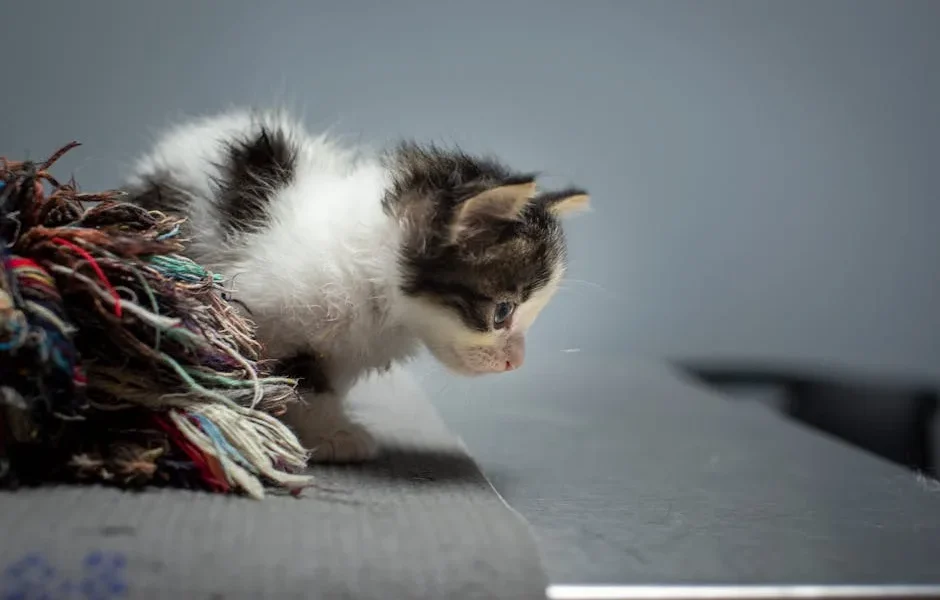
- Knocking objects off tables is a natural hunting behavior. Your cat is testing whether items are prey. They are not being spiteful.
- Cats use their sensitive paw pads to explore objects. Your attention reinforces the behavior.
- Give your cat 20-30 minutes of daily play. This can greatly reduce destructive behavior.
I see this all the time in my clinic. An owner shows me a video on their phone. Their cat is pushing a water glass off the nightstand. The cat stares right at them while doing it.
“Why does my cat knock things off tables?” This is one of the most common questions I hear. It’s one of my favorites to answer. The science behind it is fascinating.
Your cat isn’t being mean. They’re not plotting revenge for that late dinner. What looks like pure mischief is actually something else. It’s a mix of hunting instinct and sensory exploration. And yes, sometimes it’s an attention-seeking strategy. One that works really well.
Why This Behaviour Matters (And What It Reveals About Your Cat)
First, let’s understand why cats do this. This helps us address it effectively.
This isn’t just annoying behavior. It’s a window into your cat’s mental and physical needs.
When cats knock things off surfaces, they’re showing several important behaviors:
Hunting instinct activation. In the wild, cats use their paws to test potential prey. That pen on your desk? Your cat’s brain wants to investigate. They want to see if it might move or run away. They’re asking: “Is this thing alive?”
The tactile feedback matters a lot. Cats have very sensitive paw pads. These pads are packed with nerve receptors. When they tap an object, they’re gathering information. They learn about texture, weight, and movement. It’s not random chaos. It’s careful investigation.
Attention reinforcement loop. Here’s where it gets interesting. Your cat knocks something over. You immediately react, even if you’re scolding them. They’ve learned something valuable: this action gets human attention.
Studies show that cats are brilliant at this. They identify which behaviors get immediate responses from their owners.
Indoor cats need 20-30 minutes of active play daily. This comes from American Association of Feline Practitioners guidelines. Without enough stimulation, they create their own entertainment.
Knocking your phone off the counter at 3am? That’s definitely entertaining.
Step 1: Identify Why YOUR Cat Is Doing This
Not all object-knocking is the same. Figure out the root cause first.
The Boredom Knocker
Does your cat knock things over when you’re away? Or when they haven’t had playtime? This is under-stimulation.
These cats often knock objects at predictable times. Early morning. When they’re alone. During quiet periods in the household.
The Attention Seeker
Does your cat make direct eye contact? Do they slowly push your glass toward the edge? Do they only do this when you’re present?
Congratulations, you’ve been trained. Your cat has learned that this behavior guarantees your immediate attention.
The eye contact thing isn’t coincidental. Cats are sophisticated communicators. They understand that looking at you while doing something creates a stronger response.
The Natural Explorer
Some cats are genuinely investigating. They knock things in different contexts. They seem curious rather than deliberate. They don’t necessarily wait for your reaction.
This is pure sensory exploration and hunting drive.
Step 2: Provide Appropriate Outlets for Hunting Behaviour
You can’t eliminate hunting instinct. It’s hardwired. But you can redirect it.
Interactive play sessions. Schedule two 15-minute play sessions daily. Use wand toys that mimic prey movement.
The key is ending each session with a “catch.” Let your cat successfully capture the toy. Then follow with a small treat or meal. This completes the hunt-catch-eat sequence their brain craves.
Puzzle feeders transform mealtime into hunting time. Instead of a bowl, use food-dispensing toys. These require manipulation. Your cat gets to use those paws purposefully. They test and push objects to achieve a goal. This is exactly what they’re doing with your stuff, but productively.
Vertical territory. Cats naturally seek elevated vantage points. Provide cat trees, wall shelves, and window perches.
When cats have appropriate high spaces to patrol, tables become less interesting. This addresses the territorial aspect. They’re not just knocking things off. They’re also claiming that elevated space.
Step 3: Modify the Environment to Reduce Opportunities
Sometimes the simplest solution is removing temptation entirely.
Secure valuable items. Use museum putty, double-sided tape, or non-slip mats under objects you can’t move.
Cats dislike sticky textures on their paws. If an object won’t budge when tested, it quickly becomes boring.
Clear nightstands and desks before bed. I know this sounds like letting the cat win. But think of it as cat-proofing. It’s similar to baby-proofing. You’re creating a safer environment while you work on the underlying behavior.
Create designated “yes” zones. Place cat-safe objects your cat CAN knock around in specific areas. Lightweight balls, crinkle toys, or small stuffed mice on a cat tree work well.
These give them appropriate items to manipulate. Some of my clients have “cat tables.” These have items specifically for pushing around.
Step 4: Break the Attention-Seeking Cycle
If your cat is knocking things for attention, you need to change your response pattern.
Ignore the behavior completely when it happens. This is harder than it sounds. Don’t make eye contact. Don’t say “no.” Don’t react at all.
Any response reinforces the behavior. Positive or negative doesn’t matter.
Instead, provide attention proactively. Before your cat typically starts knocking things, initiate play or interaction.
If they usually wake you at 5am by clearing your nightstand, set an alarm for 4:45am. Engage them first. You’re teaching them they don’t need destructive behavior to get your attention.
Reward alternative behaviours. When your cat sits near objects without touching them, offer treats or praise. When they use appropriate toys, celebrate it.
You’re building new associations. Good things happen when I leave stuff alone.
Understanding what your pet’s behavior says about their health applies to cats too. Sometimes behavior changes signal underlying issues worth discussing with your vet.
Step 5: Rule Out Medical or Stress-Related Causes
Occasionally, increased object manipulation signals something else entirely.
Sudden changes in behavior warrant a vet visit. If your previously calm cat suddenly becomes destructively active, something might be wrong. If the knocking behavior intensifies significantly, there might be underlying medical issues.
Hyperthyroidism can cause this. Cognitive dysfunction in senior cats can too. Pain can all manifest as behavior changes.
Stress and anxiety can also increase this behavior. Major household changes can prompt cats to engage in more attention-seeking. New pets, moving, construction, schedule changes—all of these matter. The knocking becomes a coping mechanism.
During your regular checkups with a veterinarian who understands feline behavior, mention any behavior patterns that concern you. We can assess whether there’s a medical component requiring attention.
Step 6: Use Environmental Deterrents Strategically
Some cats need extra environmental feedback to understand boundaries.
Motion-activated deterrents. Devices that emit a harmless air puff or sound when a cat approaches certain surfaces can be effective.
The key is that the deterrent comes from the environment, not from you. Your cat learns “that table startles me” rather than “my human gets mad.”
Double-sided tape or aluminum foil on surfaces works for some cats. They dislike the texture and will avoid the area. Gradually, you can remove these as the habit breaks.
However, deterrents alone won’t solve the problem. They only work alongside providing appropriate outlets and enrichment.
You’re not just saying “no.” You’re offering a better “yes.”
Common Mistakes to Avoid
Well-meaning owners often inadvertently reinforce the exact behavior they’re trying to stop.
Punishing after the fact. Cats don’t connect punishment with actions that happened even minutes ago.
Scolding your cat after discovering a knocked-over vase doesn’t teach them anything. They just learn that you’re sometimes randomly angry. It damages your relationship without addressing behavior.
Inconsistent responses. If sometimes you laugh when they knock things over, sometimes you ignore it, and sometimes you scold—your cat receives mixed messages.
Consistency is everything in behavior modification. Everyone in the household needs the same approach.
Not addressing boredom. You can’t simply punish away natural hunting and exploration drives.
If you don’t provide appropriate outlets, your cat will continue finding their own. Usually ones you don’t appreciate. The behavior is serving a need. Your job is to help them meet that need appropriately.
Expecting overnight changes. Behavior modification takes time. If your cat has been knocking things over for years, it won’t stop in a week.
Be patient. Stay consistent. Celebrate small improvements.
Reacting immediately every time. This is the trap most owners fall into. That immediate reaction—even yelling “no!”—is exactly what attention-seeking cats want.
They’ve learned they control your behavior with theirs. Breaking this cycle requires discipline on your part.
Tips for Success
Based on years of working with cat owners on this issue, here’s what actually works:
Start with play. I can’t emphasize this enough. Adequate daily play solves or significantly reduces this behavior in about 70% of cases I see.
Tired, mentally stimulated cats don’t need to create their own entertainment.
Rotate toys weekly to maintain novelty. Cats get bored with the same toys. Keep some hidden and rotate them in and out. What was boring last week becomes exciting again after a break.
Feed smaller, more frequent meals. This mimics natural hunting patterns. Multiple small catches throughout the day rather than one or two large meals.
Use puzzle feeders for at least one meal daily. Your cat’s brain stays engaged with food acquisition rather than item destruction.
Document the behavior. Keep a simple log of when knocking happens. Note what triggers it. Note what your cat was doing before.
Patterns emerge that help you address root causes. Maybe it always happens when you’re cooking dinner. Your cat has learned this gets your attention away from the stove.
Consider a second cat carefully. Sometimes a compatible companion provides the interaction and play that reduces object-focused behavior.
However, this only works if both cats are social and compatible. A poor match increases stress for everyone.
Clicker training. Some cats respond beautifully to clicker training for alternate behaviors. Train “sit,” “come,” or “high five.” Practice these regularly.
When you notice your cat eyeing an object, cue a trained behavior instead. Reward them. You’re giving them a better way to get treats and attention.
Create a morning routine that includes interaction before you start your day. Many cats knock things over at dawn because they’re hungry and bored.
Feeding them and having a quick 5-minute play session can eliminate early morning destruction.
When Professional Help Makes Sense
Most object-knocking behavior can be managed with the strategies above. But sometimes you need additional support.
Consider consulting a veterinary behaviorist if the behavior is severe. Or if it’s causing significant household stress. Or if it’s accompanied by other concerning behaviors like aggression or inappropriate elimination.
These specialists can develop comprehensive behavior modification plans tailored to your specific situation.
If you’re managing a cat with chronic health conditions, behavior changes might relate to their medical status. Always loop in your primary care vet when behavior shifts occur.
Sometimes what looks like pure mischief is actually a cat telling you something’s wrong. Changes in behavior can signal pain. Or sensory decline. Or cognitive changes in senior cats. Or environmental stressors you haven’t identified.
Your vet can help distinguish between normal behavior needing management and concerning changes requiring intervention.
Final Thoughts
Here’s what I want you to remember: your cat isn’t being bad. They’re being a cat.
Those hunting instincts that make them such fascinating companions are the same ones driving them to test every object on your counter.
Understanding this completely changed how I counsel owners. We’re not correcting misbehavior. We’re redirecting natural drives toward appropriate outlets.
The solution isn’t making your cat stop being curious or playful. It’s providing enough appropriate stimulation that your belongings become less interesting than the enrichment you’ve intentionally provided.
Start with consistent daily play sessions. Secure what you can’t lose. Be patient with yourself and your cat as you both learn new patterns.
If you’re struggling, don’t hesitate to reach out to your veterinarian. Behavior is health. We’re here to help your cat thrive in your home, not just survive.
Sources & Further Reading
- American Association of Feline Practitioners — Evidence-based feline behavior guidelines and environmental enrichment recommendations
- International Cat Care — Comprehensive resources on cat behavior, welfare, and enrichment strategies
- Cornell Feline Health Center — Research-backed information on feline health and behavior from Cornell University’s veterinary program
- American Association of Feline Practitioners Public Resources — Cat owner education materials on behavior and wellness
- ASPCA Cat Behavior Resources — Practical guidance on common feline behavior challenges
