
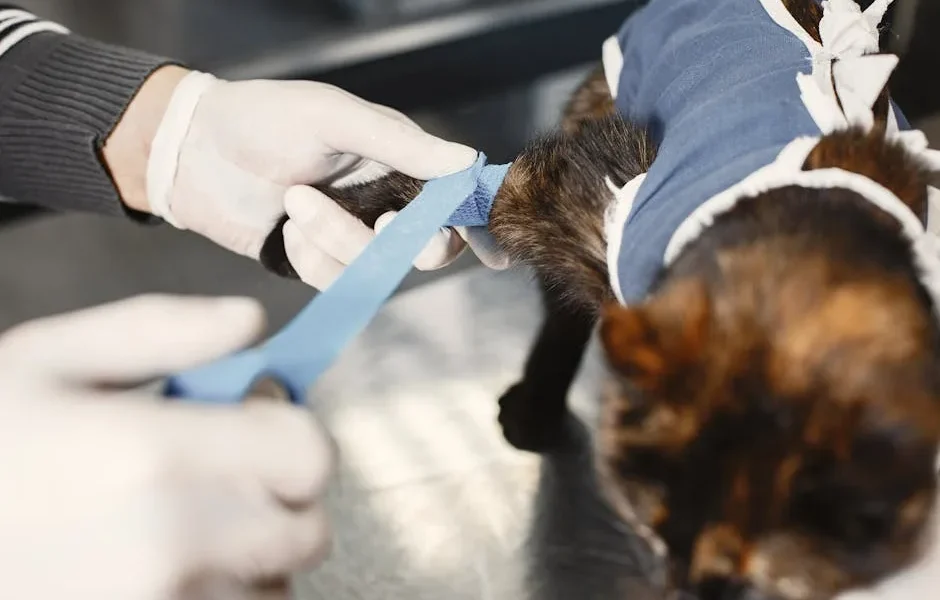
- About 0.5-2% of cats get diabetes. Obesity increases this risk nearly four times. If caught early and treated within the first 6 months, 30-80% of cats can go into remission
- Watch for these signs together: increased drinking, urinating, and appetite paired with weight loss. If you see these symptoms, call your vet right away
- Treatment includes insulin shots, high-protein low-carb diets, and checking glucose at home. New technology like flash glucose monitors makes this easier than ever
Mrs. Henderson brought her 11-year-old tabby, Oliver, to our clinic last month. She was confused.
“He’s eating like a horse but getting skinnier by the day,” she told me.
After running bloodwork, we confirmed what I suspected. Oliver had diabetes.
Understanding Feline Diabetes: Symptoms, Treatment, and Long-Term Care Management is now more important than ever. We’re seeing more cats diagnosed with this condition. The good news? Early treatment can completely change the outcome.
Let me walk you through what every cat owner should know.
What Exactly Is Feline Diabetes, and Why Is It Becoming More Common?
Feline diabetes mellitus means your cat’s body can’t regulate blood sugar properly.
In 80-95% of cases, cats develop Type 2 diabetes. This is similar to what many humans get. The cat’s cells become resistant to insulin. Or the pancreas doesn’t make enough insulin.
This disease is becoming more common in cats. We’re pretty sure we know why.
Obesity rates in cats have gone up a lot. So have diabetes rates. Studies show that overweight cats are 3.9 times more likely to develop diabetes than lean cats.
Many commercial cat foods are packed with carbohydrates. Cats are obligate carnivores. They really don’t need carbs. This combination creates a perfect storm.
Male cats face slightly higher risk. They’re about 1.5 times more likely than females to get diabetes.
Most cats are diagnosed between ages 10 and 13. But I’ve diagnosed cats as young as five and as old as 18.
It doesn’t favor any particular breed. But Burmese cats seem more prone in some populations.
What Are the Warning Signs I Should Watch For?
Veterinarians call them “the four Ps.” Once you know them, they’re hard to miss.
In plain English:
- Increased drinking: Your cat suddenly drains the water bowl multiple times daily
- Increased urination: Litter boxes need scooping constantly. Or you find wet spots outside the box
- Ravenous appetite: Your cat acts starving despite eating normally or more
- Weight loss: Despite eating more, your cat gets thinner. You’ll notice muscle loss along the spine and hind legs
The classic presentation? An owner tells me this:
“Doctor, my cat is acting like a kitten at the food bowl. He’s drinking constantly and peeing everywhere. But he looks terrible.”
That combination is diabetes until proven otherwise.
Some cats also develop a plantigrade stance. This means walking on their hocks instead of their toes. It’s due to diabetic neuropathy. Their back legs look oddly positioned when they walk.
Their coat might become dull or unkempt. This happens because they’re not grooming properly.
Can Stress Cause False Positive Results?
Yes! This is crucial.
Cats are notorious for “stress hyperglycemia.” Their blood sugar spikes at the vet simply because they’re terrified.
A single high glucose reading doesn’t confirm diabetes.
That’s why we use fructosamine testing. Fructosamine measures average glucose levels over the past 2-3 weeks. It’s not affected by momentary stress.
If the fructosamine is elevated along with clinical signs, we’ve got our diagnosis.
Sometimes we’ll ask owners to collect urine at home. We check it for glucose spillage.
Will My Cat Need Insulin Forever, or Can Diabetes Be Reversed?
This is the question I get asked most. Honestly, it’s where the good news lives.
Unlike dogs, cats have a remarkable capacity for remission. Dogs almost always need lifelong insulin.
Between 30-80% of diabetic cats can go into remission. This happens if we catch it early and manage it aggressively.
Remission means they no longer need insulin injections. Their pancreas recovers enough function to maintain normal blood sugar on its own.
The magic window is the first 6 months after diagnosis. Cats treated intensively during this period have the highest remission rates.
What does “intensive” mean?
Tight glucose control with appropriate insulin doses. Strict dietary management with high-protein low-carbohydrate food. Weight loss if needed. Frequent monitoring to prevent glucose levels from staying too high or dipping too low.
I’ve seen cats maintain remission for years. Some stay off insulin permanently.
Others relapse months or years later. They need to restart treatment. But even temporary remission is worth pursuing.
It gives your cat a break from injections. It shows that their pancreas still has some fight left.
The cats that achieve remission fastest? Usually those who weren’t diabetic very long before diagnosis. They maintain ideal body weight. Their owners are meticulous about diet and monitoring.
How Do I Actually Give Insulin Shots, and What Does Daily Management Look Like?
Let me be honest. When I tell owners their cat needs insulin injections, I see panic.
“I can’t give shots!” they say.
But within a week or two, most owners are pros.
The needles are tiny. Much smaller than what humans use. Most cats barely notice them.
We inject under the skin. This is called subcutaneous. Typically in the scruff area or along the sides.
The whole process takes about 5 seconds once you’re comfortable with it.
Here’s what daily management typically involves:
Twice-daily insulin injections: Most cats need insulin every 12 hours. Usually given with or right after meals.
Common insulins we use include glargine (Lantus), ProZinc, or PZI. Each has different duration and peak times. We select based on your cat’s response.
Consistent feeding schedule: Diabetic cats should eat the same amount at the same times daily.
We recommend high-protein, low-carbohydrate diets. Typically wet food with less than 10% carbohydrates on a dry matter basis.
This might mean prescription diabetic formulas. Or certain grain-free canned foods.
Glucose monitoring: This is where management has gotten much better recently.
Traditional monitoring involves pricking the ear margin for a tiny blood drop. You use a glucometer. You’ll do this periodically to generate “glucose curves.” This means checking levels every 2 hours for 12 hours to see how the insulin is working.
Newer flash glucose monitoring systems attach to the skin. Like the FreeStyle Libre adapted for cats. They continuously track glucose for up to two weeks.
This is a game changer. No more stressful blood collection. We get incredibly detailed data.
Weight tracking: Diabetic cats should be weighed regularly.
Weight gain in an overweight cat is great news. Unexpected weight loss might signal poor glucose control.
What About Hypoglycemia—Can Blood Sugar Go Too Low?
Absolutely. This is the most dangerous short-term complication.
If your cat gets too much insulin or doesn’t eat before a dose, blood sugar can crash dangerously low.
Signs of hypoglycemia include weakness, wobbliness, disorientation, seizures, or collapse.
This is an emergency.
Keep Karo syrup or honey on hand. Rub it on your cat’s gums immediately. Call us or your emergency vet.
Never give insulin if your cat hasn’t eaten or seems “off.”
How Much Does Feline Diabetes Management Cost?
Let’s talk numbers. This matters for planning.
Annual costs typically range from $1,200 to $2,500. This varies based on your cat’s insulin needs and monitoring approach.
Breaking it down:
- Insulin: $40-150 per vial, lasting 1-2 months depending on dose
- Syringes: $15-25 monthly for insulin syringes
- Glucose testing supplies: $50-100 monthly for test strips and lancets. Flash monitors cost $60-100 per 14-day sensor
- Prescription diet: $60-120 monthly for high-quality diabetic food
- Veterinary visits: Recheck exams every 3-6 months at $75-200 each, plus periodic bloodwork
Initial diagnosis and stabilization costs more. Expect $500-1,000 for that first month.
This includes multiple vet visits, diagnostic testing, and getting the insulin dose right.
Pet insurance sometimes covers diabetes management. But only if purchased before diagnosis.
If costs are prohibitive, talk with your vet. We can often find more affordable alternatives.
Human insulin analogs. Bulk syringes. Less frequent monitoring once stabilized.
Taking care of your pet’s health is important. We explore this in our guide on essential preventive care steps.
What Happens If Diabetes Goes Untreated or Poorly Managed?
I wish I could sugarcoat this. But you need to know the stakes.
Untreated diabetes is eventually fatal. Though it might take months.
Chronically high blood sugar causes progressive damage.
Cats develop worsening muscle wasting. Severe dehydration. Electrolyte imbalances.
Eventually diabetic ketoacidosis (DKA). This is a life-threatening emergency. The body starts breaking down fat for energy and produces toxic ketones.
DKA occurs in 5-15% of diabetic cats. It requires immediate hospitalization.
Treatment includes aggressive IV fluids, insulin, and electrolyte management.
Even with treatment, mortality rates are 30-40%.
Signs include vomiting, complete loss of appetite, lethargy progressing to collapse. The breath may have a sweet or acetone smell.
Long-term complications of poorly controlled diabetes include:
- Diabetic neuropathy causing rear leg weakness
- Increased susceptibility to urinary tract infections
- Cataracts (less common in cats than dogs, but it happens)
- Kidney disease progression
- Pancreatitis episodes
The good news? Properly managed diabetic cats can live for years with excellent quality of life.
I have diabetic patients who’ve made it to 18, 19, even 20 years old.
Can Diet Changes Alone Control Feline Diabetes Without Insulin?
Sometimes. But it’s rare.
It depends entirely on timing and severity.
If we catch diabetes incredibly early, diet alone occasionally achieves remission. Like during a routine senior wellness exam before major symptoms appear. And the cat is significantly overweight.
But here’s my clinical reality:
By the time most cats show symptoms strong enough for owners to notice, they need insulin. Their pancreas is too exhausted to manage glucose without pharmaceutical help.
That said, diet is absolutely critical for successful management.
High-protein, low-carbohydrate diets improve glycemic control. They often reduce insulin requirements by 30-50%. They dramatically increase remission rates.
Think about it. Cats are carnivores. They’re designed to eat prey—meat and organs. Not grains and starches.
Prescription diabetic diets work well. Like Hill’s m/d, Royal Canin Diabetic, or Purina DM. They’re formulated specifically for this purpose.
Many grain-free canned foods also fit the bill. If they’re truly low-carb. Check the guaranteed analysis.
Wet food is generally better than dry for diabetic cats. It’s inherently lower in carbohydrates.
We see this principle applied broadly in our nutrition guide for young pets. Proper diet from the start helps prevent these issues.
What About Managing Diabetes in Senior Cats With Other Health Problems?
This is where things get complex.
Diabetic cats often have concurrent diseases. Chronic kidney disease, hyperthyroidism, and diabetes love to cluster together in older cats.
Managing diabetes alongside kidney disease requires careful balancing.
Diabetic diets are high-protein. But advanced kidney disease often requires protein restriction.
We have to prioritize which disease poses the more immediate threat. We adjust accordingly. Usually focusing on glucose control first while monitoring kidney parameters closely.
Hyperthyroidism actually masks diabetes sometimes.
The overactive thyroid increases metabolism. This prevents weight gain despite high blood sugar.
Once we treat the thyroid condition, diabetes often becomes apparent. Or it worsens.
We frequently need to adjust insulin doses after starting thyroid medication.
Managing multiple conditions isn’t impossible. But it requires more frequent monitoring and dose adjustments.
This is when working with a veterinary specialist in internal medicine can be incredibly valuable.
Final Thoughts
I’m not going to pretend that managing feline diabetes is effortless.
It requires commitment, consistency, and some lifestyle adjustments.
But I’ve watched hundreds of cat owners become experts at this. Their cats thrive.
The key is catching it early. Those four warning signs are your signal to call us immediately.
Be willing to put in the work during those crucial first six months. That’s when remission is most likely.
If you’re reading this because your cat was just diagnosed, take a breath.
Yes, it feels overwhelming right now.
But within a few weeks, giving injections will feel routine. You’ll learn your cat’s patterns. You’ll likely see your companion return to their former self.
Healthy weight. Normal energy. Back to their usual personality.
If your cat is showing symptoms, don’t wait. Call us today for an evaluation.
And if you’re managing a diabetic cat, know that we’re here to support you every step of the way. From that initial diagnosis through achieving remission or maintaining long-term stability.
Your cat is counting on you. Together, we’ve got this.
For additional support in your pet care journey, check out our comprehensive preventive care guide.
Sources & Further Reading
- Cornell Feline Health Center — Comprehensive, research-based information on feline diabetes diagnosis, treatment protocols, and long-term management strategies
- American Association of Feline Practitioners — Clinical practice guidelines for feline diabetes mellitus, including consensus statements on treatment approaches
- American College of Veterinary Internal Medicine — Specialist consensus statements on endocrine disorders in cats and evidence-based treatment recommendations
- Feline Diabetes Support Community — Owner resource compilation with current research, monitoring techniques, and peer support for managing diabetic cats