
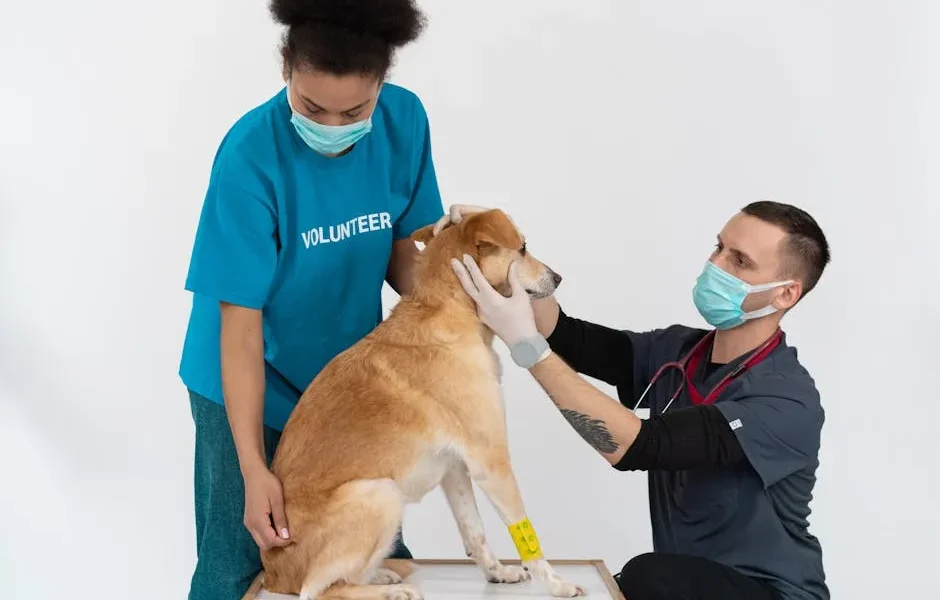
- Only 10-15% of veterinarians are board-certified specialists. Checking credentials makes sure your pet gets the right care for serious health problems.
- State veterinary board websites let you check vet licenses for free. You can see if a license is active and look at any complaints.
- AAHA accreditation is only held by 12-15% of clinics. It shows high standards, but it’s not always needed for basic care.
- Learning how to verify a vet clinic’s credentials before you book can save you thousands of dollars. It also protects your pet from poor care.
I’ll be honest with you. Early in my career, I saw a case that still bothers me.
A dog came into our emergency department. It had a botched knee surgery. The owners picked their previous vet based only on a Yelp rating and how close it was to their house.
Turns out? The vet who did the complex knee surgery had zero specialty training in orthopedics. Just a general DVM who was overconfident.
That dog needed three more surgeries. They had to correct what should’ve been done right the first time.
Here’s my point: Knowing how to verify a vet clinic’s credentials before booking isn’t just smart. It’s essential for pet owners.
But 60-70% of pet owners skip this step entirely. They trust Google reviews and convenient locations over actual qualifications.
Veterinary specialty practices have increased by 25-30% over the past decade. Knowing how to separate truly qualified vets from well-marketed general vets has never been more important.
Why Credentials Actually Matter (More Than You Think)
Look, not every vet visit requires a board-certified specialist.
Your dog’s annual exam? Routine vaccinations? A general practitioner with a solid DVM is absolutely fine.
But here’s where it gets tricky.
The letters “DVM” or “VMD” mean your veterinarian completed four years of veterinary school. They also passed the North American Veterinary Licensing Examination.
That’s the baseline. The bare minimum to practice. It’s like a general physician in human medicine.
Would you see a general physician for brain surgery? Probably not.
Board certification is the veterinary version of medical specialization. We’re talking an additional 3-5 years of intensive training after that DVM. Then they take rigorous examinations through the American Board of Veterinary Specialties.
Only 10-15% of veterinarians pursue this path.
When your cat needs cardiology work or your dog requires emergency critical care (my world), that distinction matters enormously.
The financial impact is real too. Research shows pet owners may pay 40-60% more in corrective treatments. This happens when initial care comes from vets without the right specialization.
That knee surgery I mentioned? The family spent nearly $12,000 fixing it. Done right the first time, it should’ve cost $3,500.
The Step-by-Step Verification Process
Here’s how I tell friends and family to vet their vets (sorry, couldn’t resist).
Start With State Licensing Boards
Every state maintains a veterinary medical board with public records.
California, Texas, and Florida recently launched mobile-friendly portals. They make this absurdly easy.
Type in the vet’s name, and you’ll see:
- Current license status (active, expired, suspended?)
- Original licensure date (experience matters)
- Any disciplinary actions or complaints
- Continuing education compliance
Here’s the catch. Unlike human medicine, there’s no centralized national database for veterinary malpractice.
You need to check each state individually. If your vet practiced in multiple states, check them all.
The American Association of Veterinary State Boards website links to every state board. This makes it less painful than it sounds.
Verify Specialty Board Certification
If you need a specialist—and this is critical—don’t take their word for it.
The American Board of Veterinary Specialties maintains a searchable directory. It lists every board-certified specialist in the country.
You’re looking for acronyms like DACVECC (that’s me—Emergency & Critical Care), DACVS (surgery), DACVIM (internal medicine), or one of 22+ recognized specialties.
Some clinics use misleading language.
“Special interest in cardiology” is not the same as board certification. “Advanced training in dermatology” might mean a weekend seminar.
The directory doesn’t lie. Either they’re listed as board-certified or they’re not.
Check AAHA Accreditation (But Understand What It Means)
The American Animal Hospital Association accredits only 12-15% of veterinary hospitals.
These facilities undergo rigorous evaluation against 900+ standards. This covers everything from anesthesia protocols to medical record keeping to facility cleanliness.
Inspectors show up every three years unannounced.
Is AAHA accreditation essential? For routine care, honestly, no.
I know excellent general practice vets who choose not to pursue accreditation. The costs and administrative burden can be high.
But for surgical procedures, emergency care, or complex diagnostics? AAHA accreditation tells you the facility takes protocols seriously.
What to Ask During Your Initial Consultation
Credentials on paper are one thing. Here’s what I’d ask face-to-face:
“How many cases like my pet’s have you treated in the past year?”
Experience with specific conditions matters. A vet who’s performed 200 dental procedures will deliver better outcomes than one who does five annually. This is true even if both have the same degree.
“What’s your approach to cases outside your comfort zone?”
The best vets know their limitations. You want someone who says, “I’d refer you to a specialist for that” rather than “I can handle anything.”
“Can you provide your license number and state of licensure?”
Any hesitation here is a massive red flag. Legitimate practitioners hand this over without blinking.
If you’re evaluating a clinic for a specific concern, like nutritional counseling, you might also want to read about how to find a vet who specializes in pet nutrition and what questions to ask during that consultation.
Special Considerations for Emergency Care
Emergency situations complicate credential verification.
You don’t have time to research when your dog’s been hit by a car. But you can prepare now.
Identify your nearest Level 1 emergency facility before crisis strikes.
Look for:
- 24/7 staffing with board-certified emergency specialists on-site (not just “on-call”)
- In-house diagnostic capabilities (ultrasound, endoscopy, advanced imaging)
- Critical care units with dedicated monitoring
For more guidance on recognizing true emergencies, check out what qualifies as a true pet emergency in our 2025 triage guide.
And if your pet shows signs of shock, our article on recognizing pet shock symptoms and stabilization techniques could be lifesaving.
Save that information in your phone now. Program the number. Know the route.
When seconds count, you need this decision made already.
The Telemedicine Credential Challenge
Since COVID, 35-40% of vet clinics offer telehealth.
Convenient? Absolutely. But licensing requirements vary wildly by state. Many providers don’t clearly display credentials online.
For telemedicine, verify:
- The vet holds an active license in YOUR state (not just theirs)
- The platform complies with state veterinary practice acts
- There’s a clear process for establishing a veterinarian-client-patient relationship (VCPR)
Some states require an in-person exam before telemedicine consultations. Others allow virtual-only relationships for certain services.
Don’t assume the app or website has done this homework for you.
When General Practice is Perfectly Fine
Let me acknowledge the counterargument here. Not everything requires intensive credential scrutiny.
For wellness exams, vaccinations, basic sick visits, and minor procedures, a well-qualified general practitioner is appropriate. It’s also cost-effective.
Board-certified specialists typically charge 2-3x more than general practice vets. For routine care, you’re paying for expertise you don’t need.
The key is understanding when you’ve crossed from routine to complex.
A persistent cough that doesn’t respond to basic antibiotics? Might be time for an internal medicine specialist.
Limping that continues after rest and anti-inflammatories? Could need orthopedic evaluation.
If you’re trying to evaluate whether your current vet offers truly specialized care for your dog, we’ve got a detailed guide on that too.
Your general practice vet should be your partner in making these decisions. If they’re not suggesting referrals when appropriate, that’s itself a red flag.
Red Flags That Demand Attention
Walk away if you encounter:
- Vague answers about credentials or training
- Refusal to provide license numbers
- Claims of expertise in multiple specialties (genuine specialists focus narrowly)
- Pressure to proceed with complex procedures without discussion of alternatives
- No clear emergency protocol or after-hours coverage
- Defensive responses to questions about qualifications
I’ve also seen sketchy practices around credentials in mobile and house-call services.
These vets face the same licensing requirements as brick-and-mortar clinics. But verification can be trickier.
Always ask for license information upfront. Check state boards before allowing anyone to treat your pet in your home.
The Corporate Consolidation Factor
Here’s something that concerns me professionally. Corporate consolidation of veterinary practices accelerated dramatically in 2023-2024.
Large investment groups now own thousands of clinics.
This isn’t inherently bad. Some corporate groups maintain excellent standards.
But it does complicate credential verification. Staff turnover increases. You might see different vets each visit.
The vet whose credentials you verified last year might not work there anymore.
For corporate-owned clinics, ask:
- Do I see the same primary vet consistently?
- What’s the staff turnover rate?
- Are credentials for all practitioners publicly posted?
New transparency legislation in several states (rolled out 2024-2025) now requires clinics to prominently display practitioner credentials. This includes both on websites and in physical locations.
This helps, but compliance varies.
Balancing Cost and Credentials
I won’t pretend credentials don’t correlate with cost. They do.
Board-certified specialists charge premium rates. They’ve invested years and hundreds of thousands of dollars in additional training.
But here’s the math that matters. Appropriate initial treatment almost always costs less than fixing mistakes.
That corrective surgery I mentioned earlier? The family would’ve saved $8,500 by going to a board-certified orthopedic surgeon initially.
If cost is a genuine barrier, be upfront with specialists. Many offer payment plans. Some work with veterinary financing companies.
Teaching hospitals affiliated with veterinary schools often provide specialist care at reduced rates. This is because residents (supervised by board-certified faculty) perform procedures.
For budgeting considerations, you might find our comparison of pet health savings accounts versus pet insurance helpful in planning for both routine and specialized care costs.
Building Your Veterinary Care Team
Think of your pet’s healthcare like you’d think of your own.
You probably have a primary care physician for routine stuff. And specialists for specific concerns.
Your pet deserves the same structure.
An ideal veterinary team includes:
- A trusted general practitioner for wellness care and common illnesses
- A known emergency facility for after-hours crises
- Specialist referral relationships for complex conditions as needed
Your general practice vet should be willing—even eager—to refer when cases exceed their expertise.
That willingness is itself a credential worth valuing.
Final Thoughts
Verifying credentials isn’t about being difficult or distrusting. It’s about being informed.
Your vet shouldn’t be offended by these questions. I certainly never am.
Legitimate practitioners respect owners who do their homework. It means you’ll be more engaged in your pet’s care. You’ll ask better questions. You’ll follow treatment plans more carefully.
That makes my job easier, not harder.
Start building this verification habit now, before you need it urgently.
Bookmark your state veterinary board website. Familiarize yourself with the ABVS specialist directory. Tour your local emergency clinic during their open house (most offer them).
These steps take maybe two hours total. But they could save your pet’s life and your bank account.
The dog with the botched knee surgery? His owners were wonderful, dedicated people. They just didn’t know what questions to ask.
Now you do.
Sources & Further Reading
- American Veterinary Medical Association (AVMA) — Comprehensive resource for veterinary licensing requirements, credential verification, and finding licensed veterinarians
- American Board of Veterinary Specialties (ABVS) — Official directory to verify board-certified veterinary specialists across all recognized specialties
- American Animal Hospital Association (AAHA) — Information on hospital accreditation standards and searchable database of accredited facilities
- American Association of Veterinary State Boards (AAVSB) — Links to all state veterinary licensing boards for credential and disciplinary record verification