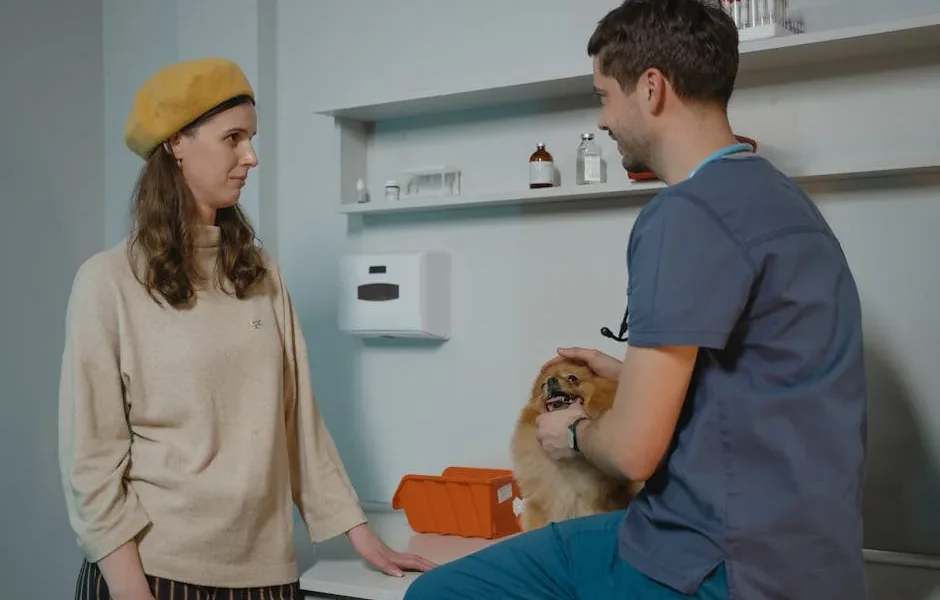
- Pet owners miss pain signs in 50-80% of cases where vets find pain. Cats are especially good at hiding when they hurt.
- Behavior changes often show up weeks before obvious signs like limping. Watch for withdrawal, sleep changes, and grooming problems.
- Learning to spot 8 subtle behavior changes can help you get treatment sooner. This will improve your pet’s quality of life.
Last Tuesday, a client brought in her golden retriever, Max. She thought he was just “slowing down with age.” He was only seven.
As I watched him walk into the exam room, I noticed something. He paused before jumping up to greet me. Goldens almost never do that.
His tail wagged. But it was lower than usual. His owner mentioned he’d been sleeping downstairs instead of in the bedroom lately. I knew we weren’t looking at normal aging. We were looking at pain.
Twenty minutes later, we’d found the problem. Max had significant hip discomfort. He’d been suffering quietly for weeks, maybe months.
His owner felt terrible. “I just thought he was getting older,” she said. “He never cried or limped badly.”
Here’s what I wish every pet owner knew: animals are masters at hiding pain. It’s hardwired into them. In the wild, showing weakness makes you vulnerable. You become prey or lose status in your pack.
This evolutionary trait means our pets keep masking pain even when they’re safe at home.
And we’re not great at catching it. Studies show pet owners miss pain signals in 50-80% of cases where vets detect pain. For cats, it’s even worse. Feline pain goes undetected three to four times more often than dog pain.
Why We Miss the Signs
The problem isn’t that pet owners don’t care. You’re reading this article. That already puts you ahead.
The issue is that pain rarely shows up with obvious symptoms. Your dog doesn’t limp dramatically across the living room (usually). Your cat doesn’t meow pitifully while pointing at her sore joint.
Instead, pain whispers. It shows up as small shifts in routine. Minor changes in personality. Subtle changes in daily habits.
These are things you might notice but dismiss as quirks or aging. After all, about 20% of dogs over age one have chronic pain. Up to 90% of cats over age twelve have chronic pain. Most of this is from arthritis.
We’ve normalized discomfort as just part of getting older.
But here’s what I’ve learned in fifteen years: behavior changes almost always come before physical symptoms. The withdrawal happens before the limp becomes obvious. The irritability surfaces before the yelp when touched.
If you know what to watch for, you can catch pain early. Sometimes weeks before it becomes undeniable.
The Eight Behavioral Changes That Matter
1. Social Withdrawal and Hiding
This is the big one, especially in cats. When animals hurt, they seek isolation.
Your normally social cat suddenly spends hours under the bed. Your dog who used to greet you at the door now stays in his crate. Your lap cat stops jumping up to cuddle.
We often mistake this for mood changes or independence. “Oh, she’s just being aloof today.”
But in veterinary medicine, we call this the “hiding phenomenon.” It’s one of the earliest signs that something’s wrong. Pets in pain often decrease social interaction. They seek out unusual hiding spots. They make themselves scarce during family activities they once enjoyed.
I’ve seen cats hide in closets they’d never entered before. Dogs who suddenly prefer the basement to the family room.
It’s not about wanting space. It’s about finding a safe place to hurt in private.
2. Changes in Sleep Patterns and Positions
Pay attention to where and how your pet sleeps.
A dog who always slept curled up but now stretches out completely might be avoiding positions that hurt. A cat who struggles to settle might be trying to find comfort that doesn’t exist. She constantly shifts positions.
Sleep disruption is among the earliest pain signs in both dogs and cats.
You might notice your pet getting up frequently during the night. Sleeping in different locations (often on cooler, harder surfaces). Taking longer to lie down. Circling more than usual. Lowering themselves carefully.
Max, the golden I mentioned earlier? He’d stopped climbing the stairs to the bedroom. Going up was uncomfortable. Coming down was worse.
His owner thought he just preferred the cooler downstairs air. The real reason? Every step hurt.
3. Appetite and Eating Behavior Changes
This one’s tricky. Appetite changes can signal dozens of conditions.
But specific eating patterns point toward pain. Reduced food intake occurs in 65-70% of pets with oral, neck, or abdominal pain.
Watch for pets who approach their food bowl with interest but then eat slowly. Or eat reluctantly. Notice if they drop kibble frequently. That might mean mouth pain.
Some pets start eating only soft food. They stop chewing bones they once loved. Others tilt their heads at odd angles while eating. They’re trying to compensate for dental discomfort or neck pain.
Cats with arthritis sometimes stop eating from floor-level bowls. Bending down hurts. Raising the bowl solves the “appetite problem” that was never really about appetite at all.
If you’re struggling with your cat’s eating habits, check out whether your cat needs specialized veterinary care.
4. Grooming Abnormalities
Cats are fastidious groomers—until pain makes grooming impossible.
I can often spot a painful cat the moment she walks in. Matted fur along the back. Unkempt tail. Greasier coat than usual.
When arthritis makes twisting uncomfortable or oral pain makes licking painful, grooming stops.
The flip side also signals pain: over-grooming. Some pets obsessively lick or bite at specific areas that hurt. You might see bald patches. Irritated skin. Excessive attention to joints, paws, or the abdomen.
Dogs don’t groom as much as cats. But you’ll still notice changes. A normally neat dog who stops cleaning himself. Or one who suddenly can’t stop licking his hips or shoulders. Both warrant investigation.
5. Mobility and Activity Changes
Okay, this one seems obvious. Limping equals pain, right?
But the subtle mobility changes happen long before limping becomes pronounced. Your dog hesitates before jumping into the car—just for a second. Your cat stops jumping to the counter. She starts using a chair as an intermediate step. Small stuff.
You might notice your pet standing more slowly after lying down. Taking stairs one at a time instead of bounding up. Sitting instead of standing during activities they used to do on all fours.
Some dogs develop a “bunny hop” gait with their rear legs. Cats might stop using the litter box simply because climbing in hurts. Then you think you have a behavior problem when it’s actually a pain problem.
Watch for decreased playfulness too. A dog who used to fetch for twenty minutes but now brings the ball back twice and lies down. A cat who watches the feather toy instead of chasing it.
We dismiss this as boredom or aging. But it’s often pain limiting their willingness to move.
6. Temperament and Personality Shifts
Pain makes everyone cranky. I get grumpy when my back hurts. Your pet does too.
A friendly dog who snaps when you pet his head might have neck or ear pain. A tolerant cat who suddenly scratches when picked up might have abdominal discomfort.
Pets who become less patient with children are often trying to protect painful areas. Same with those who are more reactive to other animals or generally more irritable.
Sometimes the shift goes the other direction. An energetic, confident pet becomes anxious or clingy. Pain creates anxiety because they don’t understand why they hurt. Or when it might happen again.
This is similar to how anxiety and pain often interconnect in veterinary treatment.
7. Vocalization Patterns
Here’s what surprises people: increased vocalization is actually one of the later signs of pain.
Most pets suffer silently for a long time before they start crying out.
But when vocalizations change, pay attention. Whimpering when lying down or standing up. Growling when touched in specific spots.
Cats who suddenly become more vocal—especially with low, mournful sounds. Dogs who sigh heavily and frequently.
Some pets also go silent. A normally talkative cat who stops chirping. A dog who quits barking at the mailman.
Sometimes silence is the loudest cry for help.
8. Facial Expressions and Body Language
This is where veterinary medicine has made huge strides recently.
The Feline Grimace Scale and Canine Facial Expression Pain Scale give us objective ways to assess pain through facial cues.
In cats, we look for: ears pulled back or flattened. Eyes partially closed or squeezed shut. Cheeks that appear tense or flattened. Whiskers that change position (pulled back or standing straight out). An overall tense muzzle.
In dogs: eyes that appear squinted or have a “worried” look. Ears held differently than normal. Furrowed brow. Tight or pulled-back lips. Tense jaw. A lowered or tucked head position.
Your pet’s resting facial expression should look relaxed. If they constantly appear tense, worried, or “concentrated,” even when resting—that’s worth investigating.
When Normal Aging Isn’t Normal
I probably hear “he’s just getting old” three times a day.
And sure, bodies do change with age. But pain isn’t a normal part of aging. It’s a symptom of underlying conditions that might be treatable.
That distinction matters enormously.
When we accept pain as inevitable, we miss opportunities to help. When we investigate behavioral changes, we often find manageable conditions. Arthritis that responds to medication. Dental disease that can be treated. Conditions like serious emergencies that need immediate intervention.
The question isn’t “Is my pet showing signs of aging?” It’s “Is my pet showing signs of pain that we could address?”
What to Do When You Notice These Changes
First, document what you’re seeing. Take videos if possible. Pets often act differently at the vet clinic than at home.
Note when the behaviors happen. How long they’ve been going on. What makes them better or worse.
Create a simple pain diary. Write down daily observations. Did they hesitate before jumping? How long did it take them to get up this morning? Did they eat normally?
This documentation is incredibly valuable during veterinary visits. Understanding whether you need a specialist or general vet can help you get the right care faster.
Don’t wait for multiple signs to appear. Even one significant behavioral change warrants a veterinary conversation.
We’ve moved beyond the “wait and see” approach for pain. Early intervention almost always leads to better outcomes.
And here’s something important: trust your instincts. You know your pet better than anyone. If something feels off, even if you can’t quite explain it, that’s worth investigating.
I’ve diagnosed countless conditions because an owner came in saying, “I can’t explain it, but she just isn’t herself.”
During your appointment, your vet might recommend diagnostic imaging to identify the pain source.
Yes, veterinary care costs money. Pain management isn’t always straightforward. But it’s worth having the conversation about costs and options rather than letting your pet suffer quietly.
The Cat Situation Deserves Special Mention
I need to emphasize something about cats. They’re spectacularly good at hiding pain.
If dogs are good at masking discomfort, cats are Olympic-level athletes at it.
Cats are both predators and prey animals. This makes them hyper-vigilant about showing any weakness. They’ve evolved to maintain a normal appearance even when they’re falling apart inside.
This is why feline pain goes undetected three to four times more often than canine pain.
For cats specifically, watch for: any change in jumping behavior. Alterations in litter box use (straining, going outside the box, choosing a box with lower sides). Decreased grooming. Changes in interaction with you or other pets. Shifts in normal routines.
Cats are creatures of habit. When habits change, something’s up.
In some cases, a feline-specialized veterinarian might be better equipped to catch subtle signs.
The Good News About Pain Management
Here’s why all of this matters: we can actually do something about pain now.
Veterinary pain management has advanced tremendously over the past decade.
We have multiple medication options. NSAIDs. Gabapentin. Newer drugs specifically designed for animal pain.
We have physical therapy. Acupuncture. Laser therapy. Weight management programs. Joint supplements. Prescription diets formulated to support joint health.
The earlier we catch pain, the more options we have. And the better the outcomes.
Max, that golden retriever from the beginning? He’s on a multimodal pain management plan now. Three months later, he’s back to sleeping upstairs. Greeting visitors enthusiastically. Acting like the goofy golden he’s supposed to be.
His owner tears up when she talks about how much happier he seems.
That’s what recognizing pain can do. It gives your pet their life back.
Final Thoughts
Pain doesn’t always announce itself with yelps and limping.
More often, it whispers through small behavioral changes. The cat who stops jumping. The dog who suddenly prefers to sleep alone. The pet who seems just a little less interested in life.
These subtle shifts are your pet’s way of telling you something’s wrong. You just need to learn their language.
The eight behavioral changes we’ve discussed are your roadmap. Social withdrawal. Sleep disruption. Appetite changes. Grooming abnormalities. Mobility shifts. Temperament changes. Vocalization patterns. Facial expressions.
If you notice even one of these changes for more than a day or two, schedule a veterinary appointment.
Document what you’re seeing. Trust your instincts. Advocate for your pet.
They can’t tell you where it hurts. But they’re showing you in a dozen small ways.
You just needed to know what to look for. Now you do.
Sources & Further Reading
- American Veterinary Medical Association — Comprehensive guidelines on pain recognition and management for dogs and cats
- American Animal Hospital Association Pain Management Guidelines — Evidence-based protocols for identifying and treating pain in companion animals
- Cornell University College of Veterinary Medicine — Research and resources on feline and canine pain behavior and health
- World Small Animal Veterinary Association Global Pain Guidelines — International standards for veterinary pain assessment and treatment
