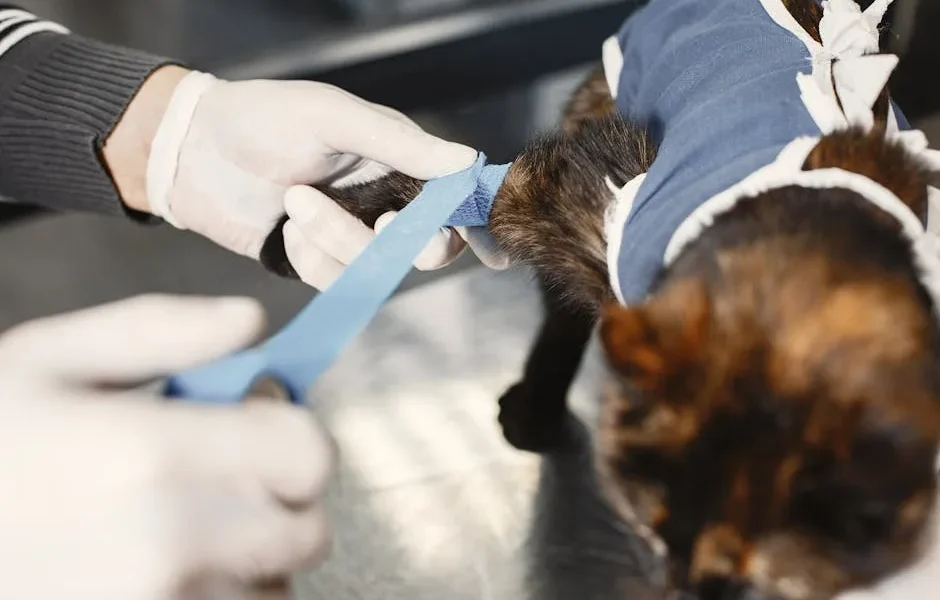
- True 24-hour emergency vet care needs real veterinarians on-site, not just technicians. Only 15% of clinics offer real round-the-clock doctor coverage.
- Board-certified emergency veterinarians (DACVECC) and AAHA accreditation mean higher standards. But fewer than 500 specialists exist nationwide to staff thousands of emergency clinics.
- Essential equipment includes on-site labs, digital imaging, oxygen therapy, and surgical capabilities. Facilities without these may stabilize pets but need transfers during critical moments.
- Clear pricing, good communication, and relationships with specialty hospitals show a reliable emergency facility. This means they care about patient outcomes over convenience.
I’ll never forget the panicked owner who drove past two closer emergency clinics to reach our Level 1 facility at 2 a.m.
Her Labrador had been hit by a car. She’d made frantic calls to three different “24-hour” clinics before finding us.
Two had no doctor on-site overnight. One couldn’t take radiographs until morning.
When you’re trying to figure out how to identify quality emergency vet care: what makes a 24-hour clinic reliable, that story matters. In emergency medicine, the gap between what a facility advertises and what it actually delivers can literally mean life or death.
The emergency veterinary landscape has changed dramatically over the past decade. Corporate consolidation, workforce shortages, and rising costs have created a confusing marketplace.
“Emergency care” now means vastly different things at different facilities. Let’s break down what actually matters when seconds count.
The Real Meaning of “24-Hour” Emergency Care
Here’s something most pet owners don’t realize: a clinic can legally advertise 24-hour emergency services without having a veterinarian physically present overnight.
Some facilities operate with veterinary technicians who call a doctor “on-call” at home. Others have a vet who arrives within 30-60 minutes of being summoned.
That’s not true emergency care. That’s urgent care with a wait time.
Genuinely reliable 24-hour clinics maintain at least one veterinarian on the premises at all times.
During my 15 years in emergency medicine, I’ve seen how those 20 or 30 minutes waiting for an on-call vet to arrive can determine whether a bloat case survives surgery. It can mean whether a toxicity patient gets timely treatment.
Conditions like GDV require immediate intervention—not whenever someone can get there.
Questions to Ask Before You Need Emergency Care
Call potential emergency clinics in your area now, before crisis strikes. Ask these specific questions:
- “Is a veterinarian physically present in the building 24 hours a day, or are they on-call?”
- “What are your capabilities for overnight diagnostics? Can you run blood work, take radiographs, and perform emergency surgery at 3 a.m.?”
- “Do you have board-certified emergency veterinarians on staff? Or are general practitioners covering emergency shifts?”
- “What happens if my pet needs specialized care you can’t provide? Do you have transfer agreements with specialty hospitals?”
The answers will tell you everything.
Hesitation, vague responses, or admissions that “we can stabilize until morning” are red flags.
Board Certification and Staffing Credentials That Actually Matter
Let’s talk about credentials.
DACVECC—Diplomate of the American College of Veterinary Emergency and Critical Care—represents the gold standard in emergency veterinary medicine.
These specialists complete a three-year residency after vet school. They pass rigorous examinations. They maintain continuing education requirements.
There are fewer than 500 of us in the entire United States.
Does that mean facilities without board-certified emergency vets can’t provide quality care? Not necessarily.
Many experienced general practitioners excel at emergency medicine. But the presence of DACVECC-certified doctors indicates a facility’s commitment to the highest level of emergency expertise.
These specialists have seen thousands of critical cases. They trained specifically in advanced life support, toxicology, trauma surgery, and critical care management.
Veterinary Technician Credentials
Don’t overlook the tech staff.
Credentialed veterinary technicians (CVT, LVT, or RVT depending on state) have completed formal training and passed certification exams.
In emergency settings, experienced, credentialed techs are worth their weight in gold. They’re the ones placing IV catheters in collapsed veins. They monitor anesthesia during midnight surgeries. They recognize subtle changes in patient status before disaster strikes.
Reliable emergency facilities maintain appropriate staffing ratios.
AAHA-accredited hospitals typically ensure one veterinarian for every 8-10 patients. They have one technician for every 3-4 critical patients during overnight shifts.
Anything less than that, and care quality suffers.
Essential Equipment and Diagnostic Capabilities
A reliable 24-hour emergency clinic isn’t just a regular vet office that stays open late. The equipment differences are substantial.
At minimum, quality emergency facilities should have:
- On-site laboratory equipment: In-house blood chemistry analyzers, complete blood count machines, and blood gas analyzers. Sending samples to outside labs means waiting hours or until the next business day for critical results.
- Digital radiography: Immediate imaging capabilities for suspected fractures, foreign body obstructions, or internal bleeding. Film radiography that requires 20-30 minutes of development time is obsolete in emergency settings.
- Ultrasound capabilities: For evaluating internal bleeding, cardiac emergencies, and abdominal crises. Advanced imaging can be expensive, but its availability matters in emergencies.
- Oxygen therapy and mechanical ventilation: Oxygen cages, flow-by oxygen, and ideally mechanical ventilators for patients in respiratory crisis.
- Surgical suite with anesthesia monitoring: Fully equipped for emergency procedures at any hour, with multiparameter monitoring and trained anesthesia staff.
- Blood bank access or on-site blood products: For trauma cases, toxicities causing bleeding disorders, or immune-mediated diseases requiring transfusions.
When I evaluate emergency facilities, I also look for endoscopy equipment (for foreign body retrieval), electrocardiography for cardiac emergencies, and central line placement capabilities for critically ill patients.
What Happens When Equipment Is Missing
I’ve consulted on cases where pets were “stabilized” at under-equipped facilities. Then they required transfer to our hospital for actual diagnostics and treatment.
That Golden Retriever with suspected bloat? They gave pain medication and IV fluids but couldn’t take radiographs until morning.
By the time the dog reached us at 6 a.m., the stomach had been twisted for eight hours. The survival rate plummets with every passing hour in GDV cases.
The chocolate Labrador with severe toxicity? They induced vomiting but had no ability to run bloodwork checking kidney function, liver enzymes, or electrolyte abnormalities.
Without that data, appropriate treatment is just guesswork.
Accreditation Standards and What They Signal
AAHA accreditation isn’t easy to achieve.
Only 12-15% of veterinary hospitals earn this designation. It requires meeting over 900 standards covering everything from pain management protocols to medical record keeping to equipment maintenance.
For emergency care specifically, AAHA accreditation ensures:
- Written emergency protocols and triage systems
- Appropriate staffing levels during all hours of operation
- Regular equipment maintenance and calibration
- Continuing education requirements for veterinarians and technicians
- Pain management standards and monitoring protocols
- Medical record documentation standards
VECCS (Veterinary Emergency and Critical Care Society) membership is another positive indicator.
While not an accrediting body, VECCS membership demonstrates a facility’s commitment to emergency medicine best practices and continuing education in this specialty.
Cost Transparency and Financial Policies
Emergency vet visits cost 2-3 times what regular appointments do.
Averages range from $800-$1,500 for typical emergencies. Critical care cases can cost $5,000+.
That’s a lot of money, often needed immediately.
Reliable facilities practice financial transparency. They should:
- Provide written estimates before beginning treatment (except in truly life-threatening situations requiring immediate intervention)
- Clearly explain deposit requirements upfront
- Accept multiple payment options including pet insurance, CareCredit, and payment plans
- Offer tiered treatment options when appropriate (optimal vs. budget-conscious approaches)
- Never hold animals “hostage” over payment disputes
Several states now require emergency veterinary facilities to display pricing information prominently.
California, Colorado, and New York have implemented such regulations effective 2024-2025. Even where not legally required, voluntary price transparency signals a client-focused practice.
Understanding emergency vet costs before crisis strikes helps you make better decisions under pressure.
Red Flags in Financial Practices
Be wary of facilities that won’t discuss costs until after treatment.
Watch out for those that require full payment upfront before any examination. Avoid those that pressure you into treatments without explaining alternatives.
Emergency medicine sometimes requires quick decisions. But ethical practitioners find ways to communicate options even in urgent situations.
Communication and Continuity of Care
What happens after the emergency?
Reliable facilities establish clear communication channels with your regular veterinarian. They should:
- Send detailed medical records to your primary vet within 24-48 hours
- Provide written discharge instructions you can actually understand
- Offer follow-up phone calls to check on patient progress
- Give specific guidance on when to see your regular vet for follow-up
- Be available for questions if complications arise after discharge
During my time heading an emergency department, we implemented same-day medical record transmission to referring vets.
That simple practice prevented countless medication errors, duplicate testing, and treatment delays.
When emergency clinics operate in isolation from the rest of a pet’s healthcare team, continuity suffers.
Location and Transfer Relationships
Sometimes emergency facilities can’t provide every specialized service.
A dog with a brain tumor needs neurosurgery. A cat in kidney failure might need dialysis. Exotic pets often require specialists with specific species expertise.
Quality emergency clinics acknowledge their limitations. They maintain established relationships with specialty hospitals. They should:
- Have formal transfer agreements with specialty centers
- Stabilize patients appropriately before transfer
- Send complete medical records with transferring patients
- Communicate directly with receiving specialists
- Provide clear directions and logistics for transfers
Geographic considerations matter too.
Is driving 30 minutes to a better-equipped facility worth it versus using a closer but less capable clinic? Often yes.
This is particularly true for conditions where that initial diagnostic and treatment window critically impacts outcomes.
Knowing when specialized care is necessary can guide these decisions.
The Veterinary Workforce Crisis Impact
Here’s the uncomfortable truth: emergency veterinary care availability is shrinking.
The 2024 AVMA workforce study confirms what those of us in the field have been experiencing. Staffing shortages are forcing emergency clinics to reduce hours or close entirely, particularly in rural areas.
Many emergency vets are burning out.
The work is physically and emotionally demanding. The hours are brutal. Compassion fatigue is real.
Corporate consolidation has sometimes prioritized efficiency metrics over clinician wellbeing. This has accelerated the exodus from emergency medicine.
What does this mean for pet owners?
The reliable 24-hour clinic that’s been your safety net for years might cut back to limited after-hours coverage. Or close altogether.
Planning for Limited Access
Given these realities, identify multiple emergency options in your area now.
Know which facilities have what capabilities. If you live rurally, understand whether your closest emergency clinic has reduced hours. Know what your backup plan involves.
Some areas now rely on telemedicine triage services. These are veterinarians available via video consultation 24/7 to help determine whether immediate emergency care is necessary or if a condition can wait for your regular vet.
These virtual triage services launched by major veterinary chains in 2023-2024. They aren’t substitutes for hands-on emergency care. But they can prevent unnecessary midnight drives for non-urgent concerns.
Technology and the Future of Emergency Vet Care
Some emergency clinics are piloting AI-assisted triage systems to improve patient prioritization and reduce wait times.
Early trials in 2024-2025 show promise. But the technology remains supplementary to experienced veterinary judgment—as it should be.
I’m cautiously optimistic about certain technological advances.
Better telemedicine platforms improve access to specialist consultations during critical cases. Enhanced monitoring equipment provides more data about hospitalized patients. Digital records facilitate seamless communication between emergency clinics and primary care vets.
But technology can’t replace the experienced emergency veterinarian’s clinical intuition. It can’t replace the skilled technician’s hands-on patient care.
The most reliable emergency facilities will always be those that invest in people first, technology second.
What About “Urgent Care” vs. Emergency Facilities?
A newer category has emerged—veterinary urgent care centers.
These facilities typically operate extended hours (but not true 24/7 coverage). They handle less critical cases: minor wounds, mild vomiting or diarrhea, lameness evaluation, prescription refills.
Urgent care centers serve a valuable niche between regular vet appointments and true emergencies.
They’re generally less expensive than emergency hospitals and less crowded. But understand their limitations.
They typically lack advanced critical care capabilities. They may not have surgery suites. They close overnight.
For genuine emergencies—severe trauma, difficulty breathing, suspected poisoning, collapse, seizures, bloat—you need a full emergency hospital, not urgent care.
Proactive Steps to Take Right Now
Don’t wait until 11 p.m. on a Sunday to research emergency options. Here’s what to do today:
- Identify 2-3 emergency facilities within reasonable driving distance. Call each one with those questions I mentioned earlier.
- Visit during daytime hours. Tour the facility if they allow it. Meet the staff. Get a sense of the environment.
- Save contact information. Program phone numbers into your phone. Keep addresses handy. Panic and GPS don’t always mix well at 2 a.m.
- Understand payment policies. Apply for CareCredit or other veterinary financing now, before you need it. Check whether your pet insurance covers emergency care and what documentation they require.
- Ask your regular veterinarian. Where do they recommend? Many primary care vets have professional relationships with specific emergency facilities and can guide you toward reliable options.
- Keep a pet first aid kit. Include your emergency clinic list, your pet’s medical history, and current medications.
Special Considerations for Specific Situations
Certain pets have unique emergency care needs.
Cats often benefit from feline-specific handling. Some emergency facilities maintain separate cat wards to reduce stress.
Large breed dogs prone to bloat need facilities skilled in emergency abdominal surgery.
Exotic pets—birds, reptiles, small mammals—require emergency vets with specialized training. Not all emergency clinics can appropriately treat these species.
If you have a pet with known chronic conditions—diabetes, heart disease, epilepsy—discuss emergency scenarios with your regular vet in advance.
What complications might arise? Which emergency facility is best equipped to handle your pet’s specific condition? What information should emergency staff know about your pet’s medical history?
Final Thoughts
Identifying quality emergency vet care before you desperately need it is one of the most important things you can do as a pet owner.
True 24-hour reliability means on-site veterinarians with appropriate credentials. It means comprehensive diagnostic equipment. It means transparent financial practices and established communication protocols.
AAHA accreditation, DACVECC specialists on staff, and VECCS membership all signal higher standards.
But even facilities without these credentials can provide excellent emergency care. They need to maintain appropriate staffing, equipment, and ethical practices.
The emergency veterinary landscape is changing. Workforce shortages are real. Costs are rising. Access is becoming more limited in some areas.
That makes your advance research even more critical.
Call potential emergency clinics now. Ask the tough questions. Understand their capabilities and limitations.
Save their information where you can find it during a crisis.
And remember, when seconds count during a genuine emergency, the closest facility isn’t always the best facility.
Driving a bit farther to reach comprehensive emergency care often makes the difference between a good outcome and a tragic one.
Your pet’s life might someday depend on the homework you do today.
Sources & Further Reading
- American Veterinary Medical Association — Emergency care guidelines and resources for pet owners, including how to recognize true emergencies and what to expect from emergency veterinary visits
- Veterinary Emergency and Critical Care Society — Professional organization setting standards for emergency veterinary medicine and providing resources for emergency clinics and specialists
- <a href="https://
Medical disclaimer: This article is for educational purposes only and does not substitute professional veterinary advice, diagnosis, or treatment. Always consult a licensed veterinarian about your pet's health.