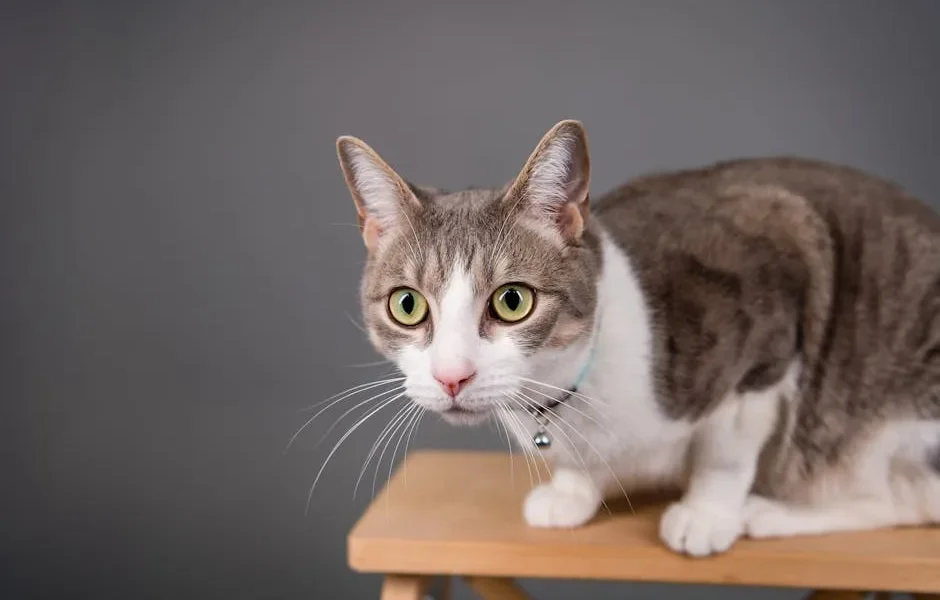
- Nighttime cat zoomies are called Frenetic Random Activity Periods (FRAPs). They are completely normal. They happen because of your cat’s natural hunting instincts.
- Most zoomies last 1-5 minutes. They happen because indoor cats don’t use their hunting energy during the day. They’re practicing hunting skills.
- You can reduce nighttime zoomies by 70%. Play with your cat in the evening. Feed them a bigger evening meal. Give them toys that feel like hunting.
It’s 3:17 AM. I wake up to loud sounds in my hallway. It sounds like elephants running. But it’s not elephants. It’s my 3-year-old tabby cat, Luna. She’s doing her “midnight NASCAR circuit.” She runs from the bedroom. She bounces off the living room couch. She climbs the cat tree fast. Then she suddenly stops. She sits down. She licks her paw. She acts like nothing happened.
Are you reading this late at night? Did your cat just do the same thing? You’re not alone. Why does my cat zoom around the house at night? A vet explains feline zoomies. I’ve been a vet for fifteen years. Many people ask me about this. This behavior has a science name. It has evolutionary roots. And it has some good solutions.
What’s Actually Happening During the Midnight Races
The science term is Frenetic Random Activity Periods. We call them FRAPs. Vet behaviorists actually named it that. These are sudden bursts of energy. They last from 30 seconds to 5 minutes. Your cat sprints, jumps, and pounces at invisible prey. They act like they’ve been possessed.
Here’s what I find interesting: this isn’t random chaos. Watch closely during a zoomie episode. Your cat is performing a hunting sequence. They’re stalking, chasing, pouncing, and “killing” prey that doesn’t exist. Their pupils get bigger. Their ears move around. Every movement copies hunting behaviors. These are the same behaviors their wild ancestors used to survive.
This happens at night for a reason. It happens especially around 3-4 AM. It comes down to biology. Cats are crepuscular animals. This means they’re most active at dawn and dusk. In the wild, this is prime hunting time. Their prey (small rodents and birds) is most active then. Your house cat still has this programming. Even though the only thing they’re hunting is that one spot on the carpet.
The Indoor Cat Energy Problem
Wild cats hunt 30-50 times daily. That’s a lot of stalking, chasing, and pouncing. Your indoor cat? They might bat at a toy mouse twice before noon. That’s it. All that unused hunting energy has to go somewhere. It usually explodes out around 3 AM. Your cat does parkour off your furniture.
Research from the American Association of Feline Practitioners shows something important. Indoor cats who lack stimulation show much higher rates of nighttime activity. They’re not trying to annoy you. Though that’s definitely a side effect. They’re just bored. Really, really bored.
The Post-Bathroom Sprint: Nature’s Weirdest Quirk
Let’s talk about the post-litter box zoom. This deserves its own explanation.
About 60% of cats zoom right after using the litter box. This is one of the most common questions I get. “Dr. Morrison, why does my cat act crazy after pooping?” The honest answer? We’re not entirely sure. But we have some good theories.
The leading theory involves the vagus nerve. This nerve runs from the brain through the digestive system. Bowel movements can stimulate this nerve. This creates a feeling of euphoria or relief. It’s kind of like a runner’s high, but for pooping. Other behaviorists have a different idea. They suggest it’s an instinct response to vulnerability. In the wild, cats are exposed while eliminating. So a quick getaway makes sense.
My personal theory? I’ve observed hundreds of cats. It’s probably a combination of relief, instinct, and just feeling really good. Have you ever felt energized after similar activities? Same concept.
When Zoomies Stop Being Normal
Most zoomies are completely harmless. They’re just expressions of feline energy. But there are times when you need to pay closer attention. As a vet, I need to tell you when this behavior becomes medical.
Red flags include:
- Zoomies that last longer than 10 minutes. Or your cat seems like they can’t stop.
- Episodes with yowling, distress sounds, or signs of pain.
- Sudden onset in senior cats (10+ years). These cats never did this before.
- Running that seems disoriented. Or involves bumping into walls repeatedly.
- Multiple episodes daily in adult cats. Plus other symptoms like weight loss or increased thirst.
Hyperthyroidism is sneaky in older cats. It can look like increased nighttime activity. It looks like zoomies. But it’s actually restlessness from a metabolic disorder. Neurological issues can cause this too. Certain parasites can cause it. Even pain can cause erratic running. It mimics normal FRAPs but has an underlying medical cause.
If you’re concerned, check out our guide on spotting early warning signs of common feline diseases. Many conditions show up as behavior changes first.
The Age Factor: Kittens vs. Couch Potatoes
Kittens are zoomie champions. I’ve seen 12-week-old kittens zoom 2-3 times daily. Sometimes more if they’re particularly energetic. This is completely normal. They’re learning to control their bodies. They’re practicing hunting skills. They have energy levels that would make a toddler on sugar look calm.
As cats mature, zoomie frequency goes down. By age 5-7, most cats have occasional episodes. Maybe once every few days. Senior cats (10+) rarely zoom at all. Cornell Feline Health Center research shows this. This behavior drops dramatically in older cats. This makes sense. They have decreased energy levels and arthritis.
So if your 2-year-old is zooming nightly? That’s normal. If your 12-year-old suddenly starts? That warrants a vet visit.
How to Reclaim Your Sleep (Without Breaking Your Cat)
The good news: you can reduce nighttime zoomies significantly. Recent studies show this. They used smart collar tracking and automated toy systems. Structured evening routines can reduce late-night activity by up to 70%.
Here’s what actually works in my experience:
The Hunt-Feed-Groom-Sleep Cycle
About an hour before your bedtime, play with your cat. Engage them in vigorous interactive play. I mean really play. Get them panting. Use a wand toy. Mimic prey movements: darting, hiding, stalking. Ten to fifteen minutes of this burns serious energy.
Right after play, offer their largest meal of the day. This mimics the natural hunt-eat-sleep cycle. Cats would follow this in the wild. After a big meal, cats naturally want to groom and then sleep. Feed them around 10 PM if you go to bed at 11. You might actually sleep through the night.
Environmental Enrichment That Actually Works
Your cat needs to “hunt” during the day. Hide kibble around the house in puzzle feeders. Install cat shelves at different heights. Rotate toys weekly so they stay novel. The more your cat expends energy during daylight hours, the less they’ll have at 3 AM.
I’ve started recommending timed feeders. These dispense small amounts of food throughout the day. This turns eating into a series of mini-hunts. Cats who graze this way show notably calmer nighttime behavior.
The Zoomie-Friendly Space
Sometimes you can’t stop the zoomies. Sometimes you just can’t with young cats. At least direct them. Create a “zoom zone” away from your bedroom. A carpeted hallway works. A long living room works. Even a cat-proofed spare room can become their designated racetrack. Close your bedroom door. Use a white noise machine. Problem partially solved.
The Social Media Effect: Why Everyone’s Talking About Zoomies Now
Something interesting happened around 2024. Cat zoomies went viral. The hashtag hit over 2 billion views on TikTok. Suddenly everyone realized their cat wasn’t uniquely insane. We all shared this experience.
As a vet, I’ve seen this awareness surge benefit cats. More owners now understand this is normal behavior. It’s not something requiring punishment or concern. They’re asking better questions during wellness visits. They’re seeking enrichment solutions. They’re not viewing their cats as problems to fix.
That said, the internet also amplifies outliers. Not every cat zooms dramatically. Some cats release energy through other behaviors. Excessive grooming, vocalization, or climbing. If your cat doesn’t do the midnight 500, that’s also perfectly normal.
Breed Tendencies and Individual Personalities
In my practice, I’ve noticed something. Certain breeds seem to zoom harder and longer. Bengals are legendary zoomers. They have wild Asian leopard cat ancestry. They have energy to match. Abyssinians, Siamese, and Oriental Shorthairs also tend toward high-energy nighttime antics.
Meanwhile, Persians and Ragdolls? They’re more likely to look at you like you’re insane. Why would you expect them to run? Breed tendencies exist. But individual personality always trumps genetics. I’ve met couch potato Bengals and rocket-fueled Persians.
Multi-Cat Households: Contagious Chaos
Here’s something fascinating: zoomies spread. In households with multiple cats, one cat’s episode often triggers others. They join in. It becomes group play. This is actually healthy social behavior. If your cats are zooming together, let them. If they’re chasing each other, let them. If nobody’s hiding or showing stress signals, they’re fine. They’re bonding.
Just maybe invest in that white noise machine.
Final Thoughts
I’ve explained feline zoomies to exhausted cat owners for years. I’ve come to appreciate these episodes for what they are. They’re proof that your cat is healthy, energetic, and still connected to their wild instincts. Sure, the timing is terrible for your sleep schedule. But it’s actually a sign your cat is doing well. When cats stop playing, stop zooming, stop expressing these natural behaviors? That’s when I worry.
The solution isn’t eliminating zoomies entirely. Good luck with that. It’s channeling that energy appropriately. Start tonight. Play hard with your cat before bed. Feed them their biggest meal after play. Create an environment where they can safely express their inner predator during the day. Your sleep schedule will thank you.
If you need more guidance on overall feline wellness and behavior, consider reading our article. It’s about what questions to ask your vet about your cat’s specific needs. Understanding your cat’s natural behaviors is just as important as their physical health. They’re two sides of the same coin.
Sources & Further Reading
- Cornell University College of Veterinary Medicine – Feline Health Center — Comprehensive research on feline behavior patterns, age-related activity changes, and normal vs. abnormal cat behaviors
- American Association of Feline Practitioners (AAFP) — Evidence-based guidelines on feline environmental enrichment, activity requirements, and behavioral health
- UC Davis School of Veterinary Medicine — Research on crepuscular behavior patterns in domestic cats and their evolutionary significance
- International Cat Care — Practical resources on understanding and managing feline behavior, including play requirements and energy management
- ASPCA Professional — Animal behavior research on indoor cat enrichment and relationship between stimulation and nighttime activity levels
