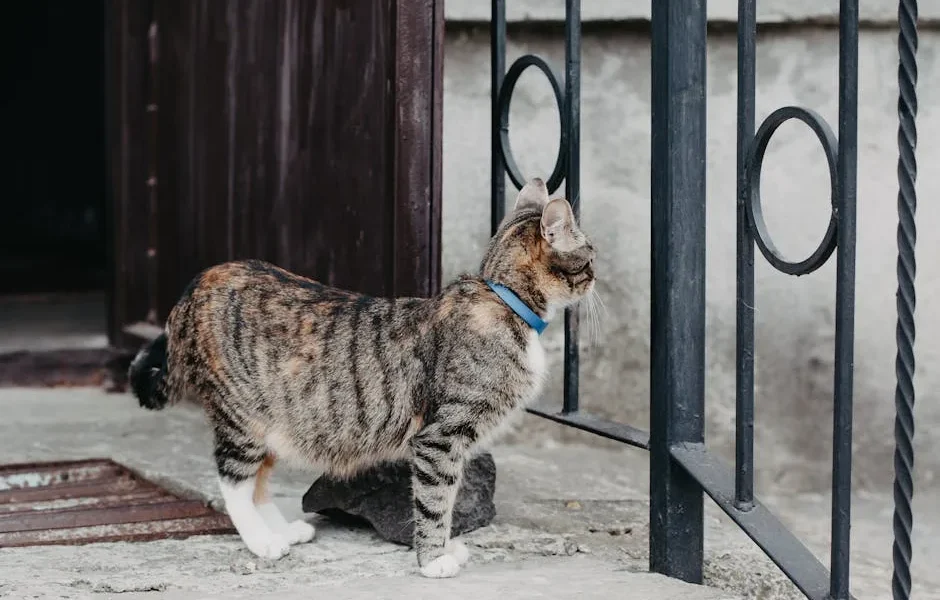
- Hissing is a warning signal. It’s not aggression. It helps cats avoid fights. It means “I need space right now.”
- A friendly cat that suddenly hisses may be in pain or sick. It’s not a personality change. Take your cat to the vet.
- Never punish a hissing cat. Don’t force them to interact. Give them space. Find out what’s wrong. Fix medical or environmental problems.
I’ll never forget the first time my cat hissed at me. We had seven years of snuggles and purrs. Then she suddenly became a spitting, wide-eyed stranger. This happened when I tried to pick her up.
My feelings were hurt. Then I found out she had a painful tooth abscess. That moment taught me something important. I now share this with worried pet owners every week.
Why Does My Cat Hiss at Me? A Vet Explains Fear and Defensive Behaviour. Here’s the most important truth: it’s almost never personal. It’s always communication.
Let’s decode what your cat is really telling you. More importantly, let’s talk about what you should do.
Why is my cat suddenly hissing at me when they’ve always been friendly?
This question brings most worried cat owners to our doors. Honestly? It’s one of the most important behavior changes to take seriously.
When a cat’s behavior changes dramatically, think medical issues first. This is especially true when they go from affectionate to defensive.
We see about 70% of cat aggression cases that involve fear-based responses. Pain is a massive trigger. Cats are masters at hiding discomfort. They hide it until it becomes unbearable.
That hiss might mean “Please don’t touch me there. It hurts.”
Common medical causes include:
- Arthritis (especially in cats over 10 years old)
- Dental disease and mouth pain
- Urinary tract infections or blockages
- Skin problems or wounds hidden under their fur
- Mental confusion in senior cats
- Digestive issues causing belly pain
But medical issues aren’t the only reason. Environmental stress can flip a confident cat into defensive mode too.
Has anything changed recently? New furniture? Different laundry soap? Construction noise? A new person in the home?
Cats rely heavily on predictable routines. Disruptions trigger stress responses.
Here’s what I tell clients: If your friendly cat suddenly starts hissing, schedule a vet exam within a few days. Go sooner if you notice other changes. These include appetite loss, tiredness, or litter box problems.
Recognizing subtle pain signals early can prevent small issues from becoming serious problems.
What does it mean when my cat hisses but doesn’t scratch or bite?
Good news! Your cat is showing remarkable restraint. They’re communicating clearly.
Hissing has a specific spot on what experts call the “aggression ladder.” Think of it as your cat setting a boundary. They do this before things get worse.
They’re essentially saying, “I’m uncomfortable. I’m giving you fair warning. Please respect my space.”
It’s actually a sign of a cat who wants to avoid conflict. They’re not trying to cause it.
The hissing sound itself is fascinating. It mimics a snake’s hiss. This taps into a primal fear response. Many predators fear venomous snakes. Your 8-pound tabby is using some ancient survival wisdom here.
When a cat hisses without using claws or teeth, they’re still in the warning phase. They haven’t moved to true defensive aggression yet.
This is your window to calm things down effectively.
Watch for body language that tells the full story:
- Flattened ears pinned back against the head
- Dilated pupils (even in bright light)
- Fur standing on end (like a Halloween cat)
- Tail tucked or thrashing
- Crouched body or backing away
- Whiskers pulled back flat against the face
All these signals together show a frightened or threatened cat. They’re desperately hoping you’ll listen to their warning.
How should I react when my cat hisses at me?
Your reaction in this moment matters tremendously.
Do the wrong thing and you can damage trust for months. Do the right thing and you’re respecting your cat’s communication.
First, what you should do:
Stop whatever you’re doing immediately. Freeze your movement. Don’t advance. Don’t try to comfort them. Don’t reach out.
If you were approaching, take a step back. If you were holding them, put them down gently. Only do this if you can do it safely.
Give them an escape route. Never corner or trap a hissing cat. Make sure they can see a clear path to leave. Cats feel much less threatened when they know they aren’t trapped.
Stay calm and quiet. Your energy affects theirs. Take a breath. Speak softly if you need to speak at all. Sudden movements or loud reactions can make their fear worse.
Leave them alone for a while. Give them space to decompress. This might be 20 minutes. It might be several hours. It depends on the cat and the situation.
Now, what you absolutely should NOT do:
Never punish a hissing cat. They’re communicating fear or pain. They’re not being “bad.”
Punishment teaches them that communication doesn’t work. They may skip the warning next time. They might go straight to biting.
Don’t force interaction. Don’t pick up a hissing cat. Don’t corner them for medication. Don’t push through their boundaries.
This will make the situation worse. You could potentially get injured.
Don’t stare directly at them. In cat language, prolonged eye contact is threatening. Use soft eyes. Look away periodically.
Avoid sudden movements. Even if you’re trying to back away, do it slowly. Do it deliberately.
I’ve seen too many bite wounds from well-meaning owners. They thought they could “comfort” their hissing cat with affection.
Respect the hiss. It’s there for a reason.
Could something be medically wrong if my cat is hissing more often?
Absolutely, yes. This is where my vet radar goes up immediately.
Pain changes everything about how cats interact with their world.
When touching hurts, what used to be pleasant becomes threatening. Petting, picking up, and playing all become scary.
Cats experiencing chronic pain often become increasingly defensive. They’re constantly bracing for discomfort.
Senior cats are particularly prone to hissing related to medical issues. These are cats over 10 years old. Research shows they’re much more likely to develop arthritis, dental disease, and mental confusion.
I’ve diagnosed countless cases where an “attitude change” was actually untreated arthritis. It made it painful for the cat to jump, be picked up, or even shift position.
Red flags that mean “veterinary visit needed now”:
- Hissing when you touch specific body areas (shows localized pain)
- New hissing paired with appetite changes
- Increased hiding or withdrawal
- Litter box avoidance or accidents
- Changes in grooming habits
- Vocalizing (yowling) in addition to hissing
- Weight loss or gain
- Any sudden personality shift in cats over 7 years old
During your exam, we’ll do a thorough physical assessment. We’ll check for dental issues, joint pain, belly tenderness, and neurological function.
Depending on what we find, we might recommend bloodwork, urinalysis, or imaging.
If you’re wondering about pain management options, we have safe, effective medications. These can dramatically improve quality of life for cats dealing with chronic pain.
Don’t wait weeks hoping behavioral changes will resolve on their own.
Cats deteriorate quickly when underlying medical issues go untreated. Early intervention almost always leads to better outcomes.
Why does my cat hiss at me after I’ve been to the vet or around other animals?
Ah, the infamous “non-recognition aggression.”
This one confuses and upsets so many cat owners. But the explanation makes perfect sense once you understand feline sensory perception.
Cats live in a scent-based world. It’s far richer than our visual one. They have approximately 200 million scent receptors. We have only 5 million.
When you return home smelling like a veterinary clinic, another cat, a dog, or just different environments, you’re essentially a familiar shape wrapped in unfamiliar scents. Those scents can seem threatening.
Your cat’s brain registers: “That looks like my person, but doesn’t smell like my person. Threat assessment unclear. Proceeding with caution.”
Hence the hissing.
This same thing happens between cats in multi-cat households. One cat returns from a vet visit. The stay-at-home cats may hiss at and even attack their returning housemate. Why? Because they smell wrong.
It’s not that they’ve forgotten each other. They’re reacting to the scent contamination.
What helps:
Before you interact, change your clothes if you’ve been around other animals. Wash your hands and arms.
If you’ve been to the vet clinic with your cat, give them time to groom themselves. This helps them re-establish their normal scent.
Reintroduce slowly. Let them approach you rather than rushing to greet them. Offer treats from a distance.
Use a soft cloth to pet them. Then rub that cloth on yourself to blend scents again.
For multi-cat households, separate returning cats in a quiet room for several hours. Give them their own litter box, food, and water.
Gradually reintroduce them to other household cats after they’ve groomed themselves.
You can also rub all cats with the same towel. This makes all their scents similar before face-to-face meetings.
The good news? This type of hissing typically resolves quickly. Usually within hours to a couple days once familiar scents are re-established.
It’s temporary. It doesn’t indicate a permanent relationship change.
Can I train my cat to stop hissing, or should I just accept this behavior?
Here’s the thing. You shouldn’t try to eliminate hissing entirely. Why? Because it’s actually a healthy, non-violent communication tool.
What you want to do is address the underlying reasons your cat feels they need to hiss in the first place.
Think of it this way: If someone is screaming “fire!” you don’t train them to stop screaming. You put out the fire.
Hissing is your cat’s alarm system. Removing the alarm doesn’t remove the threat. It just leaves them without a voice.
What you CAN and should do:
Identify and minimize triggers. Keep a journal of when hissing occurs.
Is it during specific activities? Nail trims? Medication time? In certain locations? Around particular people?
Patterns reveal solutions.
Build positive associations. If your cat hisses during necessary activities like carrier training or grooming, work on gradual desensitization.
Use high-value treats and short, positive sessions. Never overwhelm them with too much exposure all at once.
Improve environmental enrichment. Recent research from 2024 shows something important. There’s a direct link between chronic stress in indoor-only cats and defensive behaviors like hissing.
Cats need vertical space, hiding spots, and mental stimulation. They need appropriate outlets for natural behaviors. This includes scratching, hunting, and climbing.
Consider pheromone products. Synthetic feline facial pheromone diffusers can reduce background anxiety in many cats. This makes them less reactive overall.
Address multi-cat tension. In homes with multiple cats, territorial stress is a common hissing trigger.
Make sure you have enough resources. One litter box per cat plus one extra. Multiple feeding stations. Plenty of high perches.
When hissing is frequent, intense, or paired with actual aggression, it’s time to consult a veterinary behaviorist.
These specialists can assess whether anxiety medication might help. They develop structured behavior modification plans. They rule out medical causes we might miss in a standard exam.
Some cats genuinely benefit from anti-anxiety medications. These reduce their overall fear response. This makes them more receptive to environmental and behavioral interventions.
Just like people, some cats are naturally more anxious or reactive than others. That’s not a training failure. It’s individual temperament.
Our goal is management and quality of life. Not creating a robot cat with no boundaries.
What’s the difference between normal hissing and a serious aggression problem?
Not all hissing is created equal.
Knowing when you’ve crossed from typical cat communication into problematic aggression matters. It matters for both your safety and your cat’s wellbeing.
Normal, appropriate hissing looks like this:
- Occurs in response to specific, identifiable triggers
- Cat calms down within minutes to hours once trigger is removed
- Hissing acts as a warning that works—you back off, cat relaxes
- No unprovoked attacks or aggression out of nowhere
- Cat has normal, friendly behavior most of the time
- Other body language shows fear or discomfort, not predatory stalking
Concerning aggression patterns include:
- Hissing that escalates immediately to biting or scratching without warning
- Unprovoked aggression when the cat appears calm and relaxed
- Stalking and attacking household members
- Aggression that’s getting worse or more frequent over time
- Cat remains agitated for extended periods (hours or days)
- Multiple family members are afraid of the cat
- Redirected aggression that’s severe or frequent (cat attacks you after seeing outdoor cats, for example)
I’ve worked with some genuinely dangerous cats in my career. Thankfully they’re rare, but they exist.
These are animals who’ve usually experienced significant trauma. They may have serious underlying medical issues. Or they may have severe anxiety disorders.
They need professional behavioral intervention. They may need medication. Sometimes they need rehoming to specialized sanctuaries if they can’t safely live in a home environment.
But here’s the reassuring part: The vast majority of hissing cats aren’t aggressive. They’re scared, in pain, or overwhelmed.
They’re using the tools they have to communicate distress.
Once we address what’s actually bothering them, most become friendly, comfortable companions again.
If you’re unsure whether your cat’s behavior crosses into dangerous territory, video the incidents. Show your veterinarian.
We can assess body language, intensity, and patterns far better with visual evidence than with descriptions alone.
Telemedicine consultations have made this so much easier. You can capture the behavior in the moment and share it with us remotely.
Final Thoughts
After two decades of veterinary practice, I can tell you this with certainty:
Cats don’t hiss to be mean or spiteful. They hiss because they’re frightened, hurting, overwhelmed, or trying desperately to avoid conflict.
That hiss is actually a gift. It’s clear communication from a species that often suffers in silence.
When we listen to what they’re telling us instead of taking it personally, we can address the real problem. We can strengthen our bond with them.
If your cat has started hissing at you, take it seriously.
Schedule a veterinary exam to rule out medical causes. This is especially important if the behavior is new or worsening.
Look at their environment through their eyes. What’s changed? What’s stressful? What’s triggering fear?
And most importantly, give them space. Respect their boundaries. Never punish them for communicating discomfort.
With patience, proper veterinary care, and environmental adjustments, most cats return to their affectionate selves.
Your cat is talking to you. Make sure you’re listening.
If you need help deciding whether to seek immediate care or can wait for a regular appointment, trust your instincts. You know your cat best.
Sources & Further Reading
- American Association of Feline Practitioners — Evidence-based guidelines for understanding and managing feline behavior, including defensive responses
- Cornell Feline Health Center — Comprehensive research-backed information on cat aggression and its various causes
- International Cat Care — Evidence-based feline welfare organization providing practical guidance on understanding defensive cat behavior
- Applied Animal Behaviour Science — Peer-reviewed research journal covering feline behavior, scent-based communication, and fear responses
