
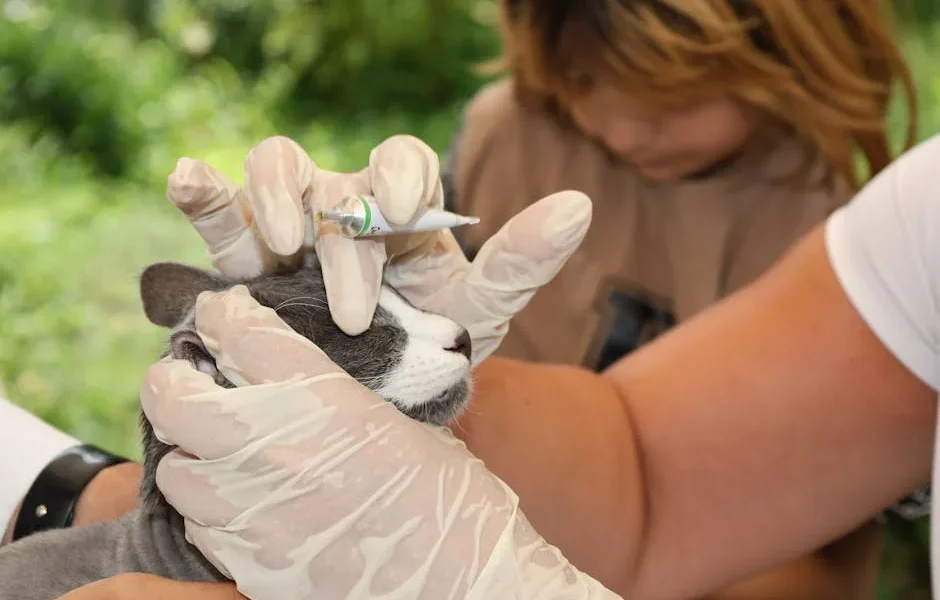
- Microchips help lost pets get home. Dogs with chips return 52.2% of the time. Cats return 38.5% of the time. Without chips, less than 22% make it home.
- The procedure takes less than 10 seconds. It costs $25-$50. Your pet doesn’t need anesthesia. The chip lasts 25+ years and needs no battery.
- You must register the chip. 58% of chips fail because owners never entered their contact info or didn’t update it.
I’ll never forget a call we got last year. A client’s golden retriever named Bailey had been missing for three years. Three years. The family had given up hope. They even adopted another dog.
Then one Tuesday, a shelter two states away scanned a stray dog. They found Bailey’s microchip. Within 48 hours, that dog was back home. A little grayer, but tail wagging.
That’s the power of this tiny piece of technology.
Here’s something that keeps me up at night: about 10 million pets go missing in the United States every year. One in three pets will become lost at some point in their life.
But here’s the thing. We have a solution that works. And it’s sitting right here in our clinic.
What Exactly Is a Pet Microchip?
Let’s start with what a microchip actually is. There’s a lot of confusion out there.
A pet microchip is about the size of a grain of rice. It’s 12mm long. It contains a unique ID number. This number is 9-15 digits. The number links to your contact information in a database.
That’s it. No GPS. No tracking. No government surveillance. (Yes, people actually ask us this.)
The chip has no battery. No power source. No moving parts. It sits quietly until a scanner activates it with radio waves. Then it transmits its ID number.
Think of it like a barcode that lives under your pet’s skin. The chip lasts 25+ years. That’s your pet’s entire lifetime.
How the Technology Actually Works
When someone finds your pet, they take it to a shelter or vet clinic. A staff member waves a scanner over your pet. The scanner sends out radio waves.
If a microchip is there, those waves give it just enough energy. The chip transmits its unique number back to the scanner.
The person scanning looks up that number in a database. They find your contact information.
Simple in theory. But here’s where it gets complicated.
There are three main microchip frequencies used worldwide. Most modern U.S. shelters now have universal scanners. These read all frequencies. But some older facilities might miss certain chip types.
The Microchipping Procedure: What Actually Happens
I’ve microchipped thousands of pets over my career. I still get the same worried looks from owners. Let me walk you through exactly what happens.
The entire procedure takes less than 10 seconds. Seriously.
We use a needle that’s slightly larger than a vaccination needle. It needs to be big enough to deliver the rice-sized chip. We implant it between the shoulder blades. It goes in the tissue just under the skin.
Does It Hurt?
Here’s the honest answer. It’s like a vaccination. Your pet feels a pinch.
Some pets barely react. Some yelp briefly. Within seconds, they’ve usually forgotten about it. They’re sniffing around the exam room or begging for treats.
No anesthesia is required. We often do microchipping during puppy and kitten wellness visits. Sometimes we do it during spay/neuter surgery when the pet is already asleep.
Side effects are extremely rare. The chip might move from its original location. This happens in less than 1% of cases. Even when it happens, the chip usually only moves a few inches. It still works perfectly.
Serious problems like infection are very rare. They happen less than 1% of the time.
The Cost Factor
Most clinics charge between $25 and $50 for microchipping. This includes the chip itself and the initial registration.
Some adoption shelters include it in their adoption fee.
Compare that to the costs of losing a pet. Reward money. Advertising. Time off work searching. It’s one of the best investments you’ll make.
The Numbers Don’t Lie: Why Microchips Save Lives
Let me hit you with the statistics.
A major study looked at microchipped versus non-microchipped pets. Microchipped dogs were returned to their owners 52.2% of the time. Non-microchipped dogs? Just 21.9% of the time.
That’s more than double the reunion rate.
For cats, the difference is even more dramatic. Microchipped cats were returned home 38.5% of the time. Cats without microchips? A heartbreaking 1.8%.
Think about that. Without a microchip, a lost cat has less than a 2% chance of making it home.
The Critical Failure Point Nobody Talks About
But here’s where we need a reality check.
Research shows that 58% of microchips in shelter animals were either never registered or had outdated contact information.
Let that sink in. More than half of microchipped pets sitting in shelters couldn’t be reunited with their families. The chip was essentially useless. The technology worked perfectly. The human follow-through failed.
Getting your pet microchipped is only half the battle.
You must register the chip with the manufacturer’s database. You must update your information when you move. When you change phone numbers. When you transfer ownership.
This is not optional if you want the chip to actually work.
Registration and Maintenance: The Make-or-Break Details
When you have your pet microchipped, you’ll receive paperwork. It has the chip number and registration instructions.
Some clinics handle the initial registration for you. Others give you the forms to complete.
Do not lose this paperwork. Do not procrastinate on registration.
How to Register and Update
Each microchip manufacturer has its own database. HomeAgain. PetLink. AKC Reunite. And others.
You’ll need to create an account online or by phone. Enter your pet’s chip number. Provide your current contact information.
Most companies offer free basic registration. Some sell premium services with additional features.
Keep multiple forms of contact updated. Home phone. Cell phone. Work phone. Email. An emergency contact who isn’t you.
If you move, update immediately. Changed your number? Update that day. Gave your pet to a family member? Transfer the registration.
Don’t know your pet’s chip number? The American Animal Hospital Association has a Universal Pet Microchip Lookup Tool. It searches across multiple databases.
Recent initiatives in 2024-2025 have expanded this tool. It’s now easier for shelters to identify which company to contact.
Common Misconceptions and Legitimate Concerns
Let’s address the questions that come up repeatedly in our exam rooms.
Can It Track My Pet’s Location?
No. Full stop.
The microchip is not a GPS device. It doesn’t track location. It doesn’t transmit signals. It doesn’t communicate with satellites.
It only responds when directly scanned at close range. Usually within a few inches.
If you want real-time location tracking, you need a GPS collar. Those require batteries, cellular service, and subscription fees.
The microchip’s job is simple. Prove identity when your lost pet is found by someone who takes them to be scanned.
Can It Cause Cancer?
This concern comes from a handful of case reports. A few tumors were found at microchip sites.
However, these are extraordinarily rare. So rare that we can’t even prove the chip caused them. Millions of pets have been microchipped. Tumor development at injection sites remains statistically insignificant.
The British Small Animal Veterinary Association reviewed all available evidence. Their conclusion? The benefits of microchipping vastly outweigh any theoretical tumor risk.
Does It Interfere with MRI Scans?
Short answer: rarely an issue.
Most microchips are MRI-compatible. They may create a small artifact on the image near the implant site. If your pet needs an MRI, inform the imaging facility that your pet has a microchip. They can account for it.
What About Security and Privacy?
Your personal information isn’t stored on the microchip itself. Only the ID number is on the chip.
Your contact details live in the manufacturer’s database. Reputable microchip companies maintain strict privacy policies. They won’t share your information except to reunite you with your lost pet.
Legal Requirements and International Standards
Microchipping regulations vary dramatically depending on where you live.
In the United States, several states now require that all animals adopted from shelters be microchipped before going home. The specific states and requirements continue to expand. Additional legislation was introduced in 2024-2025.
If you’re planning international travel with your pet, microchipping becomes even more important. Most countries require microchips for pets entering from abroad. Many specifically require ISO-compliant chips. That’s the 134.2 kHz frequency.
The European Union mandates microchipping for all dogs, cats, and ferrets traveling between member countries.
Countries like the United Kingdom, Spain, and Portugal legally require microchipping for all dogs. Period. Failure to comply can result in fines.
Beyond Basic Identification: The Future of Microchip Technology
The pet microchip industry isn’t standing still. Recent developments are expanding what these tiny devices can do.
Smartphone Scanning Capability
Some newer microchip models from 2024 can be scanned using smartphones. You need an NFC-enabled phone with a specific app. No specialized scanner required.
This technology is still in limited rollout. It’s not yet standard. But imagine a world where any person who finds your lost pet can immediately access your contact information using their phone.
Temperature-Sensing Chips
Next-generation chips are currently in veterinary trials. Broader release is expected in 2025-2026. These chips can monitor your pet’s body temperature.
Abnormal temperature readings could provide early disease detection. They could alert owners to illness before clinical signs appear.
We’re watching this development closely. It could revolutionize preventive veterinary care. Similar to how health monitoring has evolved with devices like those used for senior pet care protocols.
Universal Database Initiatives
The fragmented nature of microchip databases has always been problematic.
If your pet has a HomeAgain chip but a shelter only checks PetLink, they might miss the registration.
New initiatives launched in 2024-2025 aim to create truly universal searchable databases. These work across all microchip manufacturers. This standardization should significantly reduce reunification failures.
Microchips vs. Other Identification Methods
Let’s be clear. Microchips shouldn’t replace traditional ID tags. They should supplement them.
ID Tags and Collars
Pros: immediately visible. No scanner required. Instant contact information.
Cons: collars can slip off, break, or be removed. Tags become illegible over time. Only works if someone actually reads the tag.
We see lost pets regularly who show up without collars. Maybe it caught on something. Maybe it was intentionally removed. Maybe your indoor cat who “never goes outside” darted out the door during chaos. And they weren’t wearing their collar because… well, they never go outside.
GPS Collars
Pros: real-time location tracking. Geofencing alerts. Activity monitoring.
Cons: expensive. Often $100+ plus monthly subscription fees. Requires charging. Can malfunction. Still requires a collar that can be lost.
GPS collars are fantastic supplementary tools. Especially for escape artists or pets in rural areas. But they’re not replacements for microchips. They’re different tools serving different purposes.
Tattoos
Some breeders and organizations use identification tattoos. Usually on the inner thigh or ear.
While permanent, tattoos can fade. They become illegible. Or get misinterpreted. They also require the animal to be restrained for close examination.
Microchips can be scanned quickly without stressing the animal.
Real Stories from Our Clinic
Beyond statistics, I want to share a couple of cases that illustrate why this matters.
We had a client whose cat disappeared during a cross-country move. The family assumed the cat had run off permanently. They were devastated but trying to move forward.
Eighteen months later, they received a call. Their cat had been found over 400 miles away. Thin and scraggly but alive. The microchip made that reunion possible.
Another case involved a dog stolen from a yard. The thief took the dog to a different state. Removed the collar. Tried to sell it.
The buyer, thankfully, took the dog to a vet for a check-up. We scanned. Found the chip. Discovered it was reported stolen. Law enforcement got involved. The dog went home. Charges were filed.
These aren’t rare, feel-good anomalies. These scenarios play out in veterinary clinics and shelters every single day across the country.
What Happens When Your Pet Is Found
Understanding the reunion process helps explain why microchips are so effective.
When someone finds a stray animal, they typically take it to a local shelter. Or veterinary clinic. Or animal control facility.
These organizations routinely scan every incoming animal for microchips. It’s standard protocol.
If a chip is detected, the staff member records the number. They contact the chip manufacturer or search the national database. The manufacturer then reaches out to the registered owner. They use all available contact information.
This usually happens within 24-48 hours of the pet arriving at the facility.
Compare that to the weeks or months it might take to match a found pet through “lost pet” posters or social media posts. Assuming that ever happens at all.
Special Considerations for Different Pets
Puppies and Kittens
How young is too young?
Generally, we can safely microchip puppies and kittens as young as 4-6 weeks. Though many veterinarians prefer to wait until they’re a bit older. Around 8-12 weeks.
The size of the animal and the injection site matter more than age alone.
Young animals grow, but the chip doesn’t move with growth. It stays encapsulated in the tissue where it was placed.
Exotic Pets and Pocket Pets
Microchipping isn’t just for dogs and cats.
We’ve chipped birds, ferrets, rabbits, reptiles, and even some horses. The procedure is similar. Though the implant location may vary depending on the species.
If your exotic pet has any potential to escape or be stolen, microchipping is worth discussing with your veterinarian.
Senior Pets
It’s never too late to microchip your pet.
Senior animals tolerate the procedure just fine. They’re just as likely to get lost as younger pets. Perhaps more likely if they develop cognitive dysfunction similar to dementia.
Given the challenges senior pets might face surviving on their own, ensuring they can be quickly reunited with you becomes even more critical.
Speaking of senior pet care, maintaining proper nutrition adjustments for older animals is equally important for their wellbeing.
When Microchips Fail: Understanding the Limitations
No technology is 100% perfect. Let’s be honest about when and why microchips might not work.
Scanner incompatibility: While rare now with universal scanners, older facilities might miss certain chip frequencies. Always ensure your pet is scanned thoroughly. Some techs don’t check everywhere chips might migrate to.
Human error: Scanners need to be waved slowly over the entire body. Not just the shoulder area. Impatient or undertrained staff might miss a chip.
Chip failure: Extremely rare, but chips can occasionally fail electronically. If you’re concerned, ask your vet to scan your pet during annual exams. This confirms the chip still reads properly.
Registration failure: Cannot emphasize this enough. If you didn’t register or update your information, the chip is worthless for reunification.
The Economics of Lost Pets
Let’s talk money for a moment. Prevention is always cheaper than crisis.
The one-time cost of microchipping is $25-$50. Compare that to the expenses of losing a pet.
Reward money. Advertising. Time off work for searching. Potential replacement costs if you get another pet. Not to mention the emotional cost of never knowing what happened to your beloved companion.
Some shelters spend thousands of dollars annually housing lost pets. Many could have been reunited within days if only they’d been microchipped with updated registration.
Taking Action: What You Should Do Today
If your pet isn’t microchipped yet, schedule an appointment. It takes five minutes during any regular visit.
If your pet is already microchipped but you’re not sure about registration status, check right now. Look through old veterinary records for the chip number. Or call your vet clinic. They can scan your pet and give you the number.
Then verify that your information in the database is current.
Set a calendar reminder to review your microchip registration annually. Just like you’d review other important records.
Did you move this year? Update the chip. New phone number? Update the chip.
Make sure everyone in your household knows your pet is microchipped. Make sure they know where to find the registration paperwork.
If your pet is lost, you can contact the chip company to flag them as missing. This can trigger additional alerts to shelters and vets in your area.
Consider adding a tag to your pet’s collar that says “I’m microchipped!” along with your contact info. This tells a finder that even if they can’t reach you directly, the pet has permanent identification.