
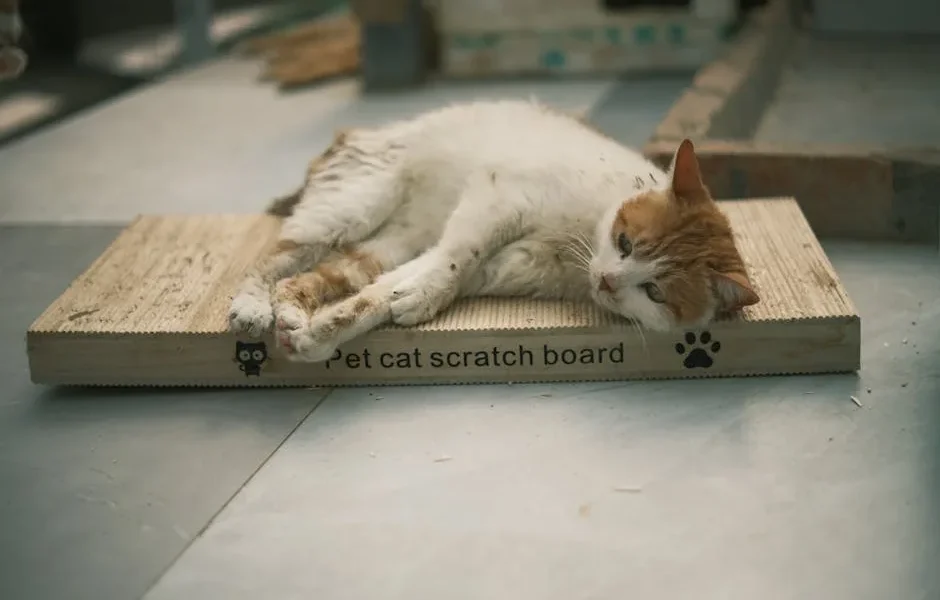
- Scratching is natural for cats. You can’t stop it. Your goal is to redirect it to the right places. Use good post placement and rewards.
- Learn what your cat likes. Watch for their favorite textures, heights, and locations. Provide multiple scratching options. Have at least one per cat, plus one extra.
- Use attractive scratching posts and furniture deterrents together. This works 80% of the time. You can retrain even older cats with patience.
I’ll be honest. My cat once shredded my favorite reading chair. My first reaction wasn’t calm. But I learned something important. Fighting a cat’s natural instincts doesn’t work. The real solution? Work with their biology, not against it.
Learning how to stop your cat from scratching furniture: veterinary-approved behavior solutions starts here. Understand that scratching isn’t bad behavior. It’s essential for cats. With the right approach, you can protect your furniture. You can also keep your cat healthy.
This issue affects 60-70% of cat owners. It’s one of the top reasons people seek help. Declawing is now banned in many states as of 2024. Behavioral solutions aren’t just preferred. They’re essential. Let’s look at how to redirect this natural behavior.
Why Cats Scratch (And Why You Can’t Just Make Them Stop)
First, you need to understand what’s happening. When your cat scratches your sofa, there’s a reason. Scratching serves many purposes. It’s hardwired into cat DNA.
First, there’s physical maintenance. Scratching removes the dead outer layer of claws. This keeps them sharp and healthy. Think of it like filing your nails.
Second, cats have scent glands in their paws. Every scratch leaves pheromones. These mark territory. Your cat is saying “I live here.”
Third, scratching provides a full-body stretch. It flexes muscles from toes to shoulders. Watch your cat scratch sometime. Notice the yoga-like extension.
Finally, scratching relieves stress. It helps with emotional regulation. It’s like how some people fidget when anxious.
Understanding these purposes changes everything. You’re not stopping a bad habit. You’re redirecting a biological need.
Step 1: Assess Your Cat’s Scratching Preferences
Not all cats are the same. Some love vertical surfaces. Others prefer horizontal. Some want sisal rope. Others like cardboard. Your first job is to figure out what your cat likes.
Watch where your cat currently scratches. Is it the vertical corner of the couch? They probably prefer upright posts. Is it the flat carpet? They might like horizontal scratchers.
What texture are they choosing? Tight weave fabric? Loose carpet? Smooth wood?
Location matters too. Cats often scratch near sleeping areas. They scratch after morning stretches. They also scratch in high-traffic zones for territorial marking. Note these patterns. You’ll use this information later.
Texture Testing
Try multiple textures at first. Sisal rope is very popular. That rough, rope-wrapped surface is like tree bark. Corrugated cardboard offers resistance. It makes a satisfying sound.
Some cats prefer carpet remnants. Others like bare wood. You might need to try 2-3 different options. Then you’ll find your cat’s favorite.
Step 2: Choose and Position the Right Scratching Posts
Here’s where most people go wrong. They buy one small scratching post. They stick it in a corner. Then they wonder why their cat ignores it. Let’s fix that.
Your scratching post needs to be:
- Tall enough: At least 31-32 inches for vertical posts. Cats need to fully stretch. Short posts are useless.
- Stable: It cannot wobble. A tippy post scares cats away forever. Use a heavy base or wall-mounted options.
- Right texture: Based on what you observed in Step 1.
- Enough posts: At least one per cat, plus one extra. Two cats mean three posts minimum.
Now, placement. This is critical. Most people fail here. Don’t hide the post in the basement. Place posts:
- Near where your cat currently scratches. Put it right in front of damaged furniture at first.
- Close to sleeping areas where cats wake up and stretch.
- In main living areas where they spend time.
- Near windows or entry points where marking feels important.
Yes, this means having a scratching post in your living room. I know it’s not ideal. But we’re prioritizing function first. Once your cat uses appropriate surfaces consistently, you can move posts. Move them slowly. A few inches at a time to better locations.
Step 3: Make the Post Irresistible
Just providing a post isn’t enough. You need to encourage its use. Use positive reinforcement.
Start by making the post attractive. Sprinkle catnip on it. Or try silvervine. That works on cats who don’t respond to catnip. Dangle a toy near it. Get your cat’s paws on the surface.
When they scratch the post, reward them immediately. Even if it’s by accident at first. Give treats and enthusiastic praise right away.
You can also use clicker training. Click the instant their claws touch the right surface. Then give a treat. Cats learn fast when rewards are immediate and consistent.
Gently place your cat near the post several times daily. Do this especially after naps. Don’t force their paws into scratching motions. That usually backfires. Just position them nearby. Let curiosity take over.
Patience Pays Off
Some cats take to new posts within hours. Others need weeks. Keep encouraging without frustration.
Veterinary studies show 80%+ success rates. But those require consistent effort over time. Not overnight miracles.
Step 4: Make Furniture Temporarily Unappealing
Make appropriate surfaces attractive. At the same time, make furniture less appealing. Think of this as the “carrot and stick” approach. But we’re using gentle deterrents, not punishment.
Effective furniture deterrents include:
- Double-sided tape: Cats hate sticky paws. Products like Sticky Paws work on 50-70% of cats.
- Aluminum foil: The texture and sound deter many cats. Temporary but effective.
- Plastic carpet runners: Place nubby-side-up over scratched areas.
- Motion-activated air sprays: Startles cats away from furniture. Works when you’re not home.
- Furniture covers: Physical barriers like throws or specialized covers.
Never yell at or punish your cat for scratching. This creates anxiety. That often increases stress-related scratching. Plus, punishment only works if you catch them in the act. You can’t supervise 24/7. Environmental management works better.
Step 5: Maintain Your Cat’s Nails
Regular nail maintenance reduces furniture damage. Shorter nails do less harm. This helps even when cats scratch wrong surfaces during retraining.
Trim your cat’s nails every 2-3 weeks. Remove just the sharp tip. If you’re uncomfortable doing this, your vet or groomer can help. They can teach you the technique. Proper trimming doesn’t hurt cats.
Nail caps are another option. These are brands like Soft Paws. These vinyl covers glue over trimmed claws. They last 4-6 weeks. They’re safe and humane. Your cat can still scratch. They’ll go through all the motions. But the caps prevent damage.
Some cats tolerate them beautifully. Others seem bothered at first but adapt. Application takes practice. Consider having your vet apply the first set. They can show you the technique.
Does your cat suddenly scratch more than usual? Are they favoring certain scratching positions? Consult your veterinarian. Sometimes increased scratching indicates medical issues. Things like arthritis. Or anxiety disorders. Or nail overgrowth problems. These need professional attention. These concerns might warrant a visit. Similar to when you’d seek help for other sudden behavior changes.
Step 6: Address Underlying Stress
Sometimes excessive furniture scratching signals emotional distress. It’s not just about redirection failure. Cats increase scratching when anxious. Or territorial. Or experiencing household changes.
Think about whether anything’s changed recently. New pets? New people? Schedule changes? Construction noise? Rearranged furniture? These stressors can increase scratching behavior.
Synthetic pheromone products like Feliway can help. Studies show moderate effectiveness. About 40-60% improvement for stress-related scratching. These plug-in diffusers release calming pheromones. They help some cats feel more secure. They work best combined with other strategies. Not as standalone solutions.
Make sure your cat has adequate environmental enrichment. Vertical spaces. Hiding spots. Play sessions. Mental stimulation. A bored, stressed cat scratches furniture more. A content, enriched cat scratches less.
Create a comprehensive wellness plan. This is similar to developing preventive care strategies for overall health. Address scratching as part of whole-cat wellbeing.
Special Considerations for Multi-Cat Households
Multiple cats complicate things. Scratching becomes more territorial. Each cat needs their own resources. This prevents competition and marking escalation.
The formula: number of cats plus one. For each resource type. Three cats mean four scratching posts minimum. Put them in different locations. Cats may guard favorite posts. Having extras prevents conflict.
Watch for territorial scratching patterns. Cats marking boundaries. Cats scratching near another cat’s preferred areas. This signals you need more resources. Spread them throughout your home. Not just clustered in one room.
Common Mistakes That Sabotage Success
Let’s talk about what doesn’t work. Avoiding these pitfalls saves time and frustration.
Mistake #1: The tiny, wobbly post in the basement. I mentioned this already. But it’s worth repeating. Short, unstable posts hidden away fail. Invest in quality posts. Place them prominently.
Mistake #2: Giving up too soon. Behavior modification takes time. Some cats need 4-6 weeks of consistent training. Don’t abandon the plan after three days.
Mistake #3: Punishment-based approaches. Squirt bottles. Yelling. Physical discipline. These create fear and anxiety. That increases problematic scratching. Stick with positive reinforcement only.
Mistake #4: Assuming declawing is the solution. It’s increasingly illegal. It’s considered inhumane by veterinary organizations. Declawing often creates new behavioral problems. Things like litter box avoidance and increased biting. It’s never the answer.
Mistake #5: Only providing one type of scratching surface. Cats have preferences. But they also appreciate variety. Offer both vertical and horizontal options. Use different textures.
Mistake #6: Neglecting nail trims. Even with perfect scratching post use, long nails cause more damage. Regular maintenance matters.
Pro Tips for Faster Success
Want to speed up the process? Try these veterinary-recommended strategies:
- Use higher-value treats: Reserve your cat’s absolute favorite treats. Use them only for scratching post rewards. Make it worth their while.
- Create scratching routines: Lead your cat to the post after every nap or meal. Consistency builds habits.
- Try different scent attractants: Beyond catnip, try silvervine, honeysuckle, or valerian. Different cats respond to different scents.
- Rotate textures occasionally: Once habits form, provide texture variety. This maintains interest. It prevents boredom-driven furniture scratching.
- Document progress: Take photos of furniture damage weekly. Visible improvement motivates you. This helps when the process feels slow.
When to Consult a Professional
Most scratching issues resolve with these strategies. But sometimes professional help is needed.
Consider consulting your veterinarian or a veterinary behaviorist if:
- Scratching suddenly increases dramatically. And there’s no obvious cause.
- Your cat seems distressed or compulsive about scratching.
- You’ve consistently applied these techniques for 6-8 weeks. But there’s no improvement.
- Scratching comes with other behavioral changes. Things like litter box issues, aggression, or hiding.
- Multiple cats are having escalating territorial conflicts.
Veterinary behaviorists can assess for underlying anxiety disorders. Or medical conditions affecting behavior. Or complex household dynamics. These require specialized intervention. Telemedicine options have expanded. These consultations are more accessible than ever.
Just like you’d seek professional help for complex medical issues, don’t hesitate. Get expert support for persistent behavior challenges. Sometimes an outside perspective identifies solutions you haven’t considered.
Can You Retrain Older Cats?
Absolutely. One common question: Can senior cats learn new habits? Can long-established scratchers change? The answer is yes. Though it may take longer than training a kitten.
Older cats have more ingrained habits. But they’re still capable of learning. The key is extra patience. And potentially higher-value rewards. Some senior cats actually respond better to training. They’re calmer and less impulsive than younger cats.
One advantage with older cats: Their scratching patterns are very predictable. This makes redirection easier. Once you’ve identified their exact preferences, use that consistency. Place perfect-match alternatives in their favorite spots.
The Role of Nutrition and Overall Health
This might seem unrelated. But a cat’s overall health impacts behavior. This includes scratching patterns. Cats getting optimal nutrition tend to handle stress better. They have better emotional regulation. Proper essential nutrients help.
Undiagnosed medical conditions can increase scratching. Arthritis might make certain scratching angles more comfortable. This leads cats to favor furniture at specific heights. Skin conditions can cause increased scratching motions. Cognitive dysfunction in senior cats sometimes changes scratching patterns.
A holistic approach considers scratching within complete feline wellness. This is another reason veterinary consultation matters for persistent issues.
Final Thoughts
Stopping your cat from scratching furniture isn’t about eliminating natural behavior. It’s about channeling it appropriately.
Use the right combination. Attractive scratching alternatives. Strategic placement. Positive reinforcement. Gentle furniture deterrents. Most cats successfully transition to appropriate surfaces.
Remember that this process takes time. It requires consistency. And understanding of your individual cat’s preferences. The investment pays off. You get preserved furniture. You get a happier, healthier cat. One who can express their natural instincts safely.
Start today. Observe your cat’s current scratching habits. Get at least one high-quality scratching post. Position it exactly where they already like to scratch. Add positive reinforcement every time they use it. Put gentle deterrents on furniture. Maintain patience through the training process.
Are you not seeing improvement after several weeks? Don’t hesitate to consult with your veterinarian. Or see a veterinary behaviorist. Sometimes professional guidance makes all the difference. Your furniture and your cat will thank you.
Sources & Further Reading
- Cornell Feline Health Center — Comprehensive research on feline scratching behavior, including biological purposes and behavior modification strategies
- American Association of Feline Practitioners — Evidence-based environmental guidelines addressing scratching as part of feline wellness protocols
- American Veterinary Medical Association — Veterinary perspective on cat scratching behavior and approved management techniques
- International Cat Care — Detailed guidance on understanding and redirecting scratching behavior in domestic cats
- American Animal Hospital Association — Client education resources on managing furniture scratching with positive reinforcement methods