
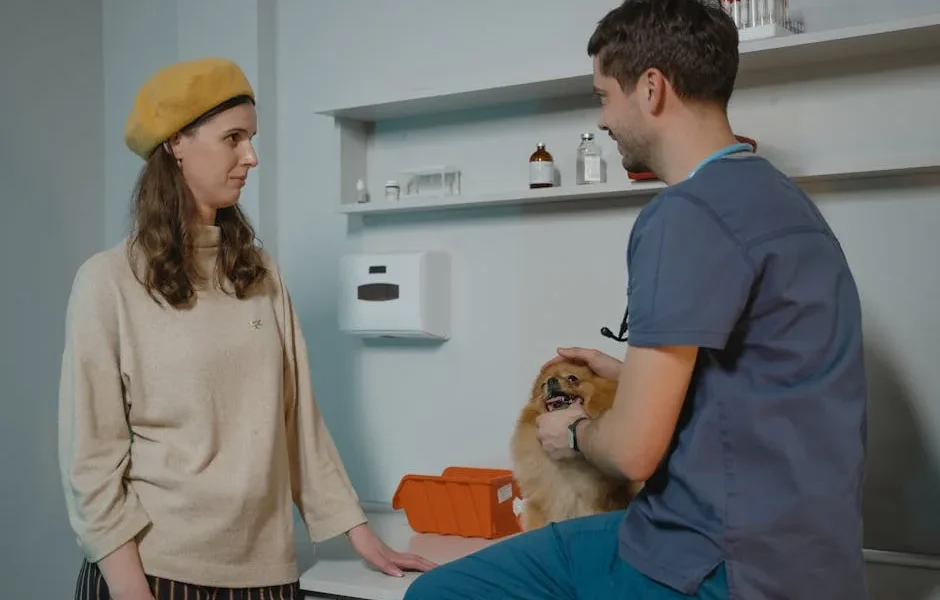
- Dog reactivity is when dogs bark, lunge, or growl at other dogs. It comes from fear, frustration, or protective instincts. It’s not always aggression.
- About 75% of dog owners deal with some leash reactivity. It’s one of the most common behavior problems we see at the vet.
- You need to understand your dog’s specific triggers. You also need to keep a safe “threshold distance.” These are the foundations of fixing the behavior.
- Most reactive dogs can improve a lot with consistent training. But a complete “cure” isn’t always realistic. And that’s okay.
You’re probably reading this article because something happened. You were walking peacefully with your dog. Then another dog appeared. Your sweet companion transformed into a barking, lunging whirlwind.
Your face got hot. Other dog owners gave you *that look*. You wondered what you did wrong.
Here’s what I tell worried pet parents at least twice a week: you’re not alone. This doesn’t mean your dog is aggressive or a “bad dog.”
Dog reactivity is incredibly common. It’s often misunderstood. And fortunately, it’s manageable with the right approach.
After years of working with reactive dogs, I’ve learned something important. Understanding *why* your dog barks at other dogs is the first step. Then you can help them feel more comfortable.
Why Understanding Dog Reactivity Actually Matters
Let’s talk about why this matters beyond embarrassing walks.
Research shows that reactive dogs have high stress levels. They have elevated cortisol levels. They recover slowly after seeing other dogs.
What does this mean? Your dog is living with chronic stress. This affects their overall health and quality of life.
Plus, there’s you. The constant vigilance takes a toll. You scan every corner for approaching dogs. You cross streets. You time walks for empty hours.
One client told me she stopped walking her dog entirely for six months. That’s not sustainable for anyone.
Understanding what’s driving your dog’s behavior helps you respond appropriately. It helps you avoid making things worse.
And yeah, we’ve all made it worse at some point. I’ve yanked my own dog’s leash in panic. Spoiler alert: that made everything more intense.
What Exactly Is Dog Reactivity? (And Is It the Same as Aggression?)
Here’s the question I hear most: “Is my dog aggressive?”
Usually? No.
Reactivity and aggression aren’t the same thing. Though they can look similar from the outside.
Reactivity is an overreaction to a stimulus. In this case, other dogs. Your dog barks, lunges, or acts out because they’re overwhelmed. They can’t regulate their emotions. Think of it like a panic attack or explosive frustration.
Aggression involves intent to cause harm. Truly aggressive dogs display purposeful, controlled behavior. They’re designed to injure another animal.
Most reactive dogs are scared, frustrated, or overstimulated. They’re not mean.
Studies show approximately 40% of dog reactivity comes from fear or anxiety. About 30% comes from frustration or excitement. And 30% comes from territorial or protective behavior.
That’s important. The training approach differs depending on the underlying emotion.
The Three Main Types of Reactivity
Fear-based reactivity: “I’m scared, so I’m making myself look big and scary to make you go away.”
These dogs often didn’t get enough socialization. Or they had negative experiences with other dogs. Or they have a genetic predisposition toward anxiety.
Frustration-based reactivity: “I want to play with you SO BADLY but this leash won’t let me!”
These are often the dogs who are perfectly friendly at dog parks. But they lose their minds on leash. It’s called barrier frustration.
Dogs on-leash are three times more likely to display reactive barking than off-leash dogs.
Territorial/protective reactivity: “This is my person/space/street and you need to leave.”
These dogs are guarding resources they value.
Step 1: Identify Your Dog’s Specific Triggers and Warning Signs
You can’t address what you don’t understand. Start by becoming a detective.
Keep a simple log for a week. Note:
- Distance from the other dog when your dog reacted
- Size, color, or type of dog that triggered the reaction
- Environment (busy street, quiet park, narrow sidewalk)
- Your dog’s state beforehand (tired, energetic, hungry)
- Time of day
Patterns will emerge. Maybe your dog only reacts to large dogs. Or perhaps it’s worse when they’re tired.
One of my patients was only reactive to dogs wearing harnesses. We never figured out why. But once we knew, we could prepare.
Reading the Early Warning Signs
Most dogs don’t go from zero to barking. They give subtle signals first:
- Stiffening or freezing
- Hard stare at the other dog
- Whale eye (showing the whites of their eyes)
- Lip licking or yawning when not tired
- Trying to move away or hide behind you
- Ears pinned back or rotated
If you can spot these early signals, you can intervene before the explosion.
Check out our article on spotting subtle behavioral changes in pets for more on reading body language.
Step 2: Understand Your Dog’s Threshold Distance
This concept changed everything for one of my clients with a reactive German Shepherd.
Every reactive dog has a threshold distance. This is the point where they notice another dog but can still think. They can still learn. They can still take treats.
Cross that invisible line, and they’re “over threshold.” They’re in full reactive mode. They can’t respond to you.
Your job is to find that magic distance and work within it.
For some dogs, it’s 100 feet. For others, it’s 20 feet. There’s no shame in needing more space.
Test this during a calm moment. Have a friend with a dog stand far away. Slowly decrease distance while watching your dog’s body language.
The moment you see those warning signs? That’s your threshold. Stay well outside it during training.
Step 3: Implement Management Strategies Immediately
Training takes time. While you’re working on it, you need management strategies. These keep everyone safe. They prevent your dog from repeatedly practicing reactive behavior.
Walk during off-peak hours. Early morning or late evening walks often have fewer dogs.
Choose your routes carefully. Wide streets give you space to create distance. Narrow sidewalks are setup for failure.
Use a “watch me” cue. Train your dog to make eye contact with you for treats. This gives you a tool to redirect attention before they fixate on another dog.
Consider a GPS tracker. If your dog slips their collar during a reactive episode, you’ll want backup.
Our guide to GPS pet trackers can help you choose the right option.
Use proper equipment. A front-clip harness gives you more control than a collar. Avoid retractable leashes. They provide zero control when you need it most.
And here’s an important one: manage your own stress.
Dogs read our tension through the leash. Literally. They feel it through leash pressure. They also read our body language.
When you tense up upon seeing another dog, your dog thinks, “Mom’s scared too! This must be dangerous!”
Step 4: Begin Desensitization and Counter-Conditioning
This is the gold standard for treating reactivity. It’s not quick, but it works.
Desensitization means gradually exposing your dog to their trigger. You do it at a low enough intensity that they don’t react.
Counter-conditioning means changing your dog’s emotional response. You change it from negative to positive. You pair the sight of other dogs with amazing things.
Here’s the basic protocol:
Start at a distance where your dog notices other dogs but doesn’t react. Yes, this might be across a football field. That’s fine.
The moment your dog sees another dog, start feeding high-value treats continuously. I’m talking cheese, hot dogs, freeze-dried liver. Whatever makes your dog lose their mind. Feed, feed, feed.
When the other dog disappears, treats stop. You’re teaching: other dogs = amazing treat party.
Gradually decrease distance over weeks or months. Don’t rush. If your dog reacts, you moved too fast. Increase distance again.
Keep sessions short. Five minutes is plenty. End on a good note.
The key word here is *gradually*. We’re talking weeks of consistent work. Not a weekend project.
For comprehensive guidance on the training process, check out our detailed article on leash training reactive dogs.
Understanding Trigger Stacking
Ever notice your dog is worse on some days? That’s trigger stacking. It’s when multiple stressors compound.
Example: Your dog is tired from a late night. You skipped breakfast, so they’re hungry. There’s construction noise outside. That’s stressful. Then they see another dog.
Any one of those things alone might be manageable. But stacked together? Explosion.
Pay attention to your dog’s overall stress level before walks. If they’re already elevated, maybe today isn’t the day for training.
Step 5: Know When to Seek Professional Help
Some situations require more than DIY training.
Consider consulting a veterinary behaviorist or certified dog behavior consultant if:
- Your dog’s reactivity is escalating despite your efforts
- Your dog has redirected aggression onto you or family members
- There’s any bite history, even minor
- Your dog shows reactivity in multiple contexts (dogs, people, vehicles, etc.)
- You’re feeling overwhelmed or unsafe
- Your dog shows signs of severe anxiety beyond walks
There’s no shame in getting help.
I’d rather see you early when the problem is manageable. That’s better than after months of unsuccessful attempts that have frustrated everyone.
The American College of Veterinary Behaviorists maintains a directory of board-certified specialists.
What About Behavioral Medication?
Let’s address the elephant in the room. Some clients look at me like I suggested we give up when I mention medication.
Here’s the truth: for dogs with significant anxiety, behavioral medication can be a game-changer.
Not because it magically fixes the problem. But because it reduces anxiety enough that your dog can actually *learn* during training.
Think of it this way: if you were terrified of spiders, would you learn better while having a panic attack? Or after taking something to ease your anxiety?
Recent advances include targeted medications like Sileo. These are for situational anxiety during training sessions.
These aren’t about sedating your dog. They’re about giving them the emotional capacity to learn new, better responses.
Medication should always be paired with behavior modification. Never used alone.
For more on proper medication handling, see our Complete Pet Medication Guide.
Step 6: Address Contributing Factors
Sometimes reactivity isn’t purely behavioral.
Rule out medical issues during your annual wellness exam.
Pain makes dogs grumpy. It makes them more likely to react defensively.
I’ve seen “behavioral” issues resolve after treating arthritis or dental disease. If your dog is middle-aged or older, definitely discuss this possibility.
Our guide on spotting pain in pets can help identify subtle signs.
The Role of Exercise and Mental Stimulation
A tired dog is often a calmer dog. But there’s a catch: you can’t exercise away reactivity.
However, appropriate exercise and mental enrichment can lower baseline arousal levels.
Focus on activities that don’t involve other dogs. Try sniff walks, puzzle toys, nosework, or training sessions.
Avoid dog parks. They’re typically terrible for reactive dogs. They often make things worse.
Breed Considerations
Genetics matter.
Research shows herding breeds show higher rates of dog-directed reactivity. This includes Australian Shepherds and Border Collies. Many terrier breeds do too.
These dogs were bred to react quickly to movement and stimuli.
This doesn’t mean they can’t improve. They absolutely can. But you’re working with their genetic wiring, not against it.
Understand your breed’s traits and work with them.
Common Mistakes to Avoid
Punishment-based methods. Yelling, leash corrections, or shock collars might suppress the barking temporarily. But they don’t change the underlying emotion.
Worse, they often increase anxiety. They can create new problems. If your dog is scared, punishing them for expressing fear makes them more scared.
Flooding. This means forcing your dog into situations where they’re overwhelmed. You hope they’ll “get used to it.” For some dogs, this backfires spectacularly. It makes reactivity worse.
Moving too fast. I get it. You want results. But rushing the process creates setbacks. Slow progress is still progress.
Inconsistency. Letting your dog practice reactive behavior most days won’t work. Then training occasionally doesn’t help. Every rehearsal of the reactive behavior strengthens it.
Ignoring your dog’s warnings. If your dog is communicating discomfort and you force interaction anyway, you’re teaching them something. You’re teaching them that polite signals don’t work. Eventually, they might skip straight to aggression.
Comparing to other dogs. “But my friend’s dog loves all dogs!” Great for them. Your dog is an individual. They have their own history, genetics, and temperament.
Pro Tips From the Trenches
Create a “retreat” cue. Teach your dog that “let’s go” means we’re turning around and leaving. And it’s always followed by treats. This gives you an exit strategy.
Use “check-ins.” Reward your dog every time they voluntarily look at you during walks. This builds engagement. It gives you a history of reinforcement to draw from during stressful moments.
Practice relaxation at home. Train a “settle” or “place” behavior. Your dog learns to be calm on a mat. This skill transfers to stressful situations.
Video yourself. You’ll see things you miss in the moment. Your own body language. Your dog’s early signals. Patterns you hadn’t noticed.
Join online support groups. Reactive dog owners have fantastic communities. You can share wins, vent frustrations, and get advice from people who truly understand.
Celebrate small victories. Your dog stayed under threshold at 30 feet instead of 40? That’s huge. Acknowledged another dog’s presence without reacting? Amazing. Progress isn’t linear, but it’s real.
The Nighttime Factor
Some owners notice reactivity worsens during evening walks.
Reduced visibility means your dog might startle more easily. Other dogs appear suddenly. Low light also makes reading other dogs’ body language harder. This increases uncertainty.
If nighttime reactivity is an issue, consider using a headlamp. This illuminates approaching dogs earlier.
And if your dog shows increased anxiety specifically at night, read our article on nighttime barking. Sometimes multiple factors overlap.
What Success Actually Looks Like
Let me be honest with you. Complete “cure” where your dog is thrilled to greet every dog they see? That might not happen.
And that’s okay.
Success might look like:
- Your dog notices another dog but looks to you for treats instead of barking
- Being able to pass dogs at 10 feet instead of needing 50 feet
- Quick recovery after a reactive episode instead of staying worked up
- Peaceful walks most days, with only occasional challenges
- You feeling confident and relaxed instead of constantly anxious
My own dog will never be a dog-park social butterfly. But she can walk past other dogs politely. And we both enjoy our walks now.
That’s success in my book.
Recent Advances in Understanding Canine Reactivity
The veterinary behavior field is evolving rapidly.
Recent 2024 genetic research identified specific markers associated with canine impulsivity and reactivity. Particularly in the DRD4 and HTR2A genes.
This suggests some dogs have biological predispositions. These make reactivity more likely. It’s not all about training mistakes.
We’re also seeing stress-detection wearables. These monitor heart rate variability. They detect rising stress before visible reactive behavior appears.
These tools help owners intervene earlier. They potentially prevent episodes.
And AI-powered training apps launched in 2024-2025. These can help owners document triggers and patterns. This makes it easier to track progress and identify what’s working.
Final Thoughts
Living with a reactive