
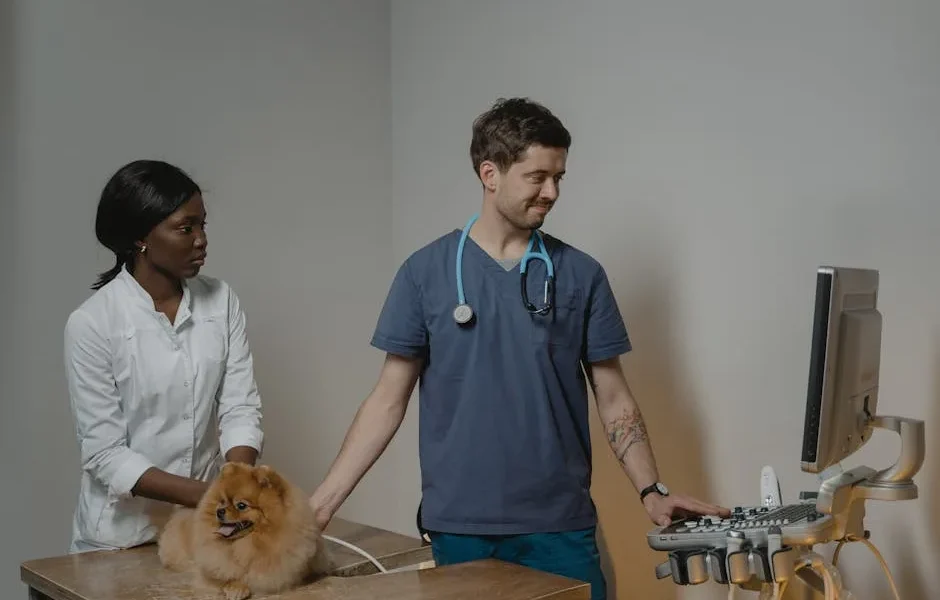
- Referral centers cost 50-200% more than regular vet clinics. But they have specialists with advanced training and special equipment for hard cases.
- Your regular vet can handle 85-90% of pet health problems. Referrals are for special tests, complex surgeries, or critical care.
- Most referral centers now take walk-ins for emergencies. But scheduled visits work better when your regular vet sends your pet’s medical records.
Last month, my neighbor Sarah rushed her Lab mix to our clinic at 2 a.m. A car had hit him.
We stabilized him. We stopped the bleeding. We managed his pain.
But our X-rays showed a shattered pelvis. He probably had internal injuries too. This was beyond what we could do.
I had to make a hard call: “He needs a referral center. Tonight.”
The look on her face said it all. Fear. Confusion. Worry about cost.
I see that look a lot. Understanding the difference between referral centers and regular vet clinics isn’t just about money. It’s about knowing when your pet needs special care. It’s about knowing what you’ll pay. It’s about navigating a confusing system when you’re already scared.
Sarah’s dog had emergency surgery. A board-certified surgeon did it at a 24-hour referral center.
Total cost? Nearly $8,000.
Could we have done it at our clinic? No.
Would he have survived without that specialist? Probably not.
The Real Difference Between Your Regular Vet and a Referral Center
Here’s what most pet owners don’t know. Your regular vet is like a family doctor for animals.
We handle wellness exams. Vaccinations. Routine surgeries. Dental care. Most illnesses your pet will face.
We spent four years in veterinary school. We learned medicine for all types of animals and health problems.
Board-certified specialists are different. They did all that training too. Then they did 3-7 more years of intensive training in one specific area.
A veterinary cardiologist spent thousands of hours on hearts only. A veterinary oncologist focuses on nothing but cancer treatment.
That deep expertise comes with much better diagnostic tools and treatment options.
The equipment difference is huge. Most regular practices have digital X-rays. In-house labs. Ultrasound machines. Surgical suites for routine procedures.
We’ve invested maybe $150,000-$300,000 in diagnostic equipment.
Referral centers? They spend $500,000 on a single CT scanner. Another million on an MRI machine.
They have fluoroscopy systems. Advanced endoscopy. Specialized anesthesia monitoring that costs more than my first car.
Regular practices can’t afford this equipment. We might only use it once a month. The economics don’t work.
When Your Pet Actually Needs a Specialist
I refer patients regularly. There’s usually a clear reason.
Your dog has a persistent limp. Despite our X-rays and treatment, nothing improves. Time for an orthopedic surgeon to look.
Your cat’s heart murmur is getting worse. I need a cardiologist’s echocardiogram to decide if medication is needed.
Your senior pet has a mass. We need an oncologist to stage the cancer and discuss treatment options.
Sometimes it’s about 24/7 critical care. When a pet needs constant monitoring, that requires staff around the clock.
Only about 15-20% of regular practices offer after-hours care. Even fewer have intensive care capabilities.
The statistics show this: roughly 85-90% of pet health issues never need a specialist.
Annual wellness exams. Vaccinations. Ear infections. Skin allergies. Routine dental cleanings. Basic surgeries. These are what we do best.
It’s that other 10-15% where specialized training makes the real difference.
Let’s Talk About Money (Because Of Course We Have To)
Nobody wants to discuss costs when their pet is sick. But money matters.
A routine exam at our regular practice runs $50-$150. It depends on how complex it is.
That same first visit at a referral center? Plan on $200-$500 just to walk in the door.
The cost difference extends to procedures.
An ACL repair by a regular practice surgeon might cost $1,500-$2,500.
That same TPLO surgery by a board-certified orthopedic surgeon at a referral center? Expect $3,500-$6,000.
Is it worth the difference? For complex bone procedures, studies show 15-30% better results with specialists. Fewer complications. Faster recovery. Better long-term function.
Emergency visits show the gap even more.
Our urgent care visit might cost $150-$300 for after-hours help.
A middle-of-the-night referral center emergency visit starts at $300-$500. That’s before any tests or treatment.
But if your pet needs a critical care specialist, there’s no alternative. Advanced imaging at 3 a.m.? Emergency surgery by a board-certified surgeon? You need the referral center.
What Pet Insurance Actually Covers
Here’s where it gets interesting.
According to 2024 data, about 67% of specialist care claims get approved. That compares to 89% for regular vet visits.
But here’s the important part. Those specialist claims that do get approved pay out 3-4 times more money.
Most comprehensive pet insurance plans cover 70-90% of specialist care after your deductible.
But watch for annual caps. And pre-authorization requirements.
Some policies require your regular vet’s referral documentation first. Before they’ll approve specialist coverage.
I always tell clients to call their insurance company before scheduling specialist appointments. Not after.
Being proactive with your pet’s health records helps. Maybe even using a digital health record system can make this process easier.
The Changing Landscape of Veterinary Specialty Care
The veterinary world has changed a lot in just the past few years.
We’re facing a workforce shortage. It’s hitting specialists particularly hard.
The U.S. is short about 15,000 veterinarians overall. Specialist shortages are even worse in many areas.
Wait times for non-emergency specialist appointments have increased 30-50% in many places since 2020.
In cities, you might wait 1-4 weeks for a scheduled specialist visit.
Rural pet owners face bigger challenges. Sometimes the nearest referral center is hours away.
This affects treatment decisions daily. Some of my rural colleagues are learning more advanced procedures themselves. Their clients simply can’t easily access specialists.
But innovation is happening too.
Telemedicine has exploded in veterinary specialty care. Major referral centers now offer virtual specialist consultations for $75-$150.
I can present a case to a board-certified specialist. They review tests and advise on treatment. The pet doesn’t have to travel.
It’s not right for every situation. But for complex medical cases needing expert input, it’s been transformative.
Similar to how virtual care platforms have expanded regular practice access.
Corporate Consolidation and What It Means for You
Something I’m watching carefully: private equity-backed veterinary groups now own 35-40% of specialty and referral centers.
This consolidation has led to more standardized pricing and protocols. That can be good. Consistency matters in medicine.
But there are real concerns about profit motives potentially affecting care decisions.
Ask questions when selecting a referral center.
Are the specialists owners? Or employees of a large corporation?
How do they handle cases where the best medical option is also the most expensive?
These aren’t comfortable conversations. But they matter.
Making the Referral Decision With Your Vet
When I recommend a referral, it’s collaborative. Not a command.
We discuss what the specialist can offer that I can’t. Realistic outcome expectations. Cost ranges. Whether pursuing advanced care aligns with your goals for your pet.
Not every referral is life-or-death.
Sometimes it’s about quality of life. Managing chronic pain with an orthopedic specialist. Or maximizing comfort during cancer treatment with an oncologist’s guidance.
You can ask for a second opinion or specialist consultation even when your regular vet hasn’t suggested one.
Most referral centers accept walk-ins for emergencies. Many take scheduled appointments without formal referrals.
But having your regular vet’s medical records makes everything more efficient.
Just like understanding your pet’s diagnosis requires clear communication, so does navigating specialist care.
Some new models are bridging the gap.
Mobile specialists now travel to regular practices for on-site procedures. This reduces costs by 20-30% compared to referral center fees.
We’ve had a board-certified surgeon come to our clinic quarterly for complex bone cases. My client gets specialist expertise without emergency center overhead.
Practical Steps When Facing a Referral
If your vet recommends specialist care, start by asking specific questions.
What can the specialist diagnose or treat that you can’t?
What’s the expected cost range?
Is this urgent or can we schedule?
Are there less expensive alternatives we haven’t explored?
Call the referral center before your appointment.
Ask about payment policies. About 60% now partner with CareCredit, Scratchpay, or similar financing services.
Request a cost estimate in writing. For the initial consultation and likely tests.
This won’t be exact. Medicine is unpredictable. But it gives you parameters.
Gather your pet’s medical records.
Most referral centers need vaccination history. Previous tests. Current medications. Your regular vet’s referral notes.
Having everything organized makes the transition smoother. Perhaps in a comprehensive pet health system including microchip information.
What About Quality and Credentials?
Not all regular practices and referral centers are created equal.
For regular practices, look for AAHA accreditation. Only about 15% of practices meet these voluntary standards.
They cover everything from medical protocols to facility safety.
It’s not the only marker of quality. But it’s meaningful.
For specialists, verify board certification. Check organizations like the American College of Veterinary Surgeons or American College of Veterinary Internal Medicine.
These credentials require rigorous training. Examinations. Ongoing continuing education.
A veterinarian calling themselves a “specialist” without board certification might have interest and experience in an area. But they haven’t completed formal specialty training.
Trust matters too.
Ask your regular vet which specialists they trust with their own pets.
We refer to specific individuals, not just facilities. We’ve seen their outcomes. We know their communication style. We understand who’s collaborative versus dismissive.
Final Thoughts
Sarah’s Lab made a full recovery after that emergency referral center surgery.
Was it expensive? Absolutely.
Could it have happened without specialist care? No way.
But here’s the thing. Her dog’s routine care before and after that crisis happened at our regular practice.
His follow-up exams. Rehabilitation support. The arthritis management he’ll need as he ages. We’re handling that together. With the specialist’s recommendations guiding our approach.
That’s the reality of veterinary referral centers versus general practice clinics in 2025.
They’re not competing systems. They’re complementary.
Your regular practice vet should be your pet’s primary care provider. The professional who knows your animal’s history and coordinates care.
Referral centers and specialists are there when expertise and equipment beyond regular practice capabilities become necessary.
Understanding when each is appropriate helps you make informed decisions. Understanding what you’ll pay helps. Understanding how they work together helps.
Talk with your regular veterinarian about their referral philosophy. Ask questions before emergencies happen. Consider your financial preparation options now rather than during a crisis.
Your pet’s health will benefit from both levels of care working in concert.
Sources & Further Reading
- American Veterinary Medical Association — Comprehensive veterinary workforce data, practice ownership statistics, and specialist credential requirements
- American Animal Hospital Association — Evidence-based practice standards, accreditation guidelines, and current trends in veterinary care delivery
- North American Pet Health Insurance Association — Industry statistics on insurance coverage rates, claim approvals, and reimbursement data for specialist versus general practice care
- Veterinary Economics — Cost analyses, practice management data, and financial trends affecting veterinary specialty and general practice
- American College of Veterinary Surgeons — Specialist credential verification, board certification requirements, and surgeon locator resources