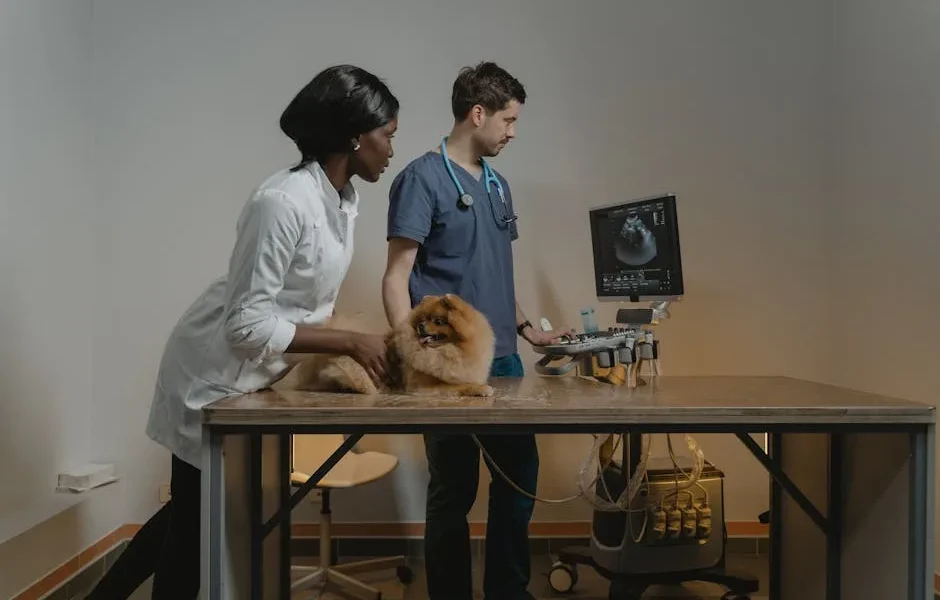
- Most vet practices accept third-party financing like CareCredit. You can get 6-24 months with no interest if you qualify.
- Payment plans directly with your vet often need 25-50% down. They usually don’t charge interest. You may need to be an established client.
- After promotional periods end, vet credit cards can charge over 26.99% APR. Pay off balances before interest starts.
My neighbor’s golden retriever needed emergency surgery last spring. The bill was $4,200. She had only $800 saved. Sound familiar? You’re not alone.
Veterinary Payment Plans Explained: Financing Options for Major Pet Procedures is one of the most searched topics by pet owners. Understanding your options before an emergency can save your pet’s life.
Most of us don’t have thousands of dollars for emergency vet care. Emergency visits cost $800-$1,500 just for tests. Complex surgeries can cost $7,000 or more.
About 63% of pet owners would struggle with a $1,000 vet bill. Only 3-4% have pet insurance. The rest of us need a plan.
Why Understanding Payment Options Before You Need Them Matters
I’ve seen this too many times. A pet owner discovers their dog is in pain. They bring them in for emergency care. Only then do they learn about financing options while their pet waits.
The stress is overwhelming. Some people delay treatment. Others make quick financial decisions they’ll regret.
When you know your options beforehand, you can:
- Make faster treatment decisions in emergencies
- Choose the best financing method for your situation
- Avoid bad lending terms and high-interest debt
- Negotiate better terms with your vet
- Have backup plans if your first option doesn’t work
Think of it like knowing where the nearest emergency room is. You hope you’ll never need it. But if you do, you’ll be glad you prepared.
Major pet procedures are common. ACL repairs, dental work, cancer treatments, and surgeries happen to thousands of pets every day.
Step 1: Explore Third-Party Veterinary Financing Services
Third-party financing services are probably your easiest option. These companies specialize in medical financing. They’re accepted at thousands of vet practices nationwide.
CareCredit: The Industry Standard
CareCredit dominates vet financing. It’s accepted at over 25,000 practices. It works like a credit card for medical expenses.
The main benefit? Promotional no-interest periods. These range from 6-24 months. It depends on the purchase amount.
Here’s what you need to know. Say you have a $3,000 surgery. You get approved for 18 months with no interest. You’ll pay about $167 monthly with zero interest charges.
But only if you pay it off completely within those 18 months. Miss that deadline by even a day? You’ll owe all the deferred interest from day one. That could be at rates near 29.99% APR.
You usually need a credit score around 620-640 to get approved. Your credit limit depends on your score and income.
Scratchpay and VetBilling: The Buy Now, Pay Later Options
Newer companies like Scratchpay and VetBilling are more flexible. They use “soft” credit checks. These don’t hurt your credit score for initial approval.
This makes them good for pet owners with fair or poor credit. Scores as low as 580-600 may qualify.
These services typically offer 4-12 month payment plans. You get fixed monthly payments. Interest rates vary. Some plans are interest-free. Others charge 5-30% APR depending on your credit.
The approval rate is around 70-85%. That’s much higher than traditional credit cards.
The catch? They’re not as widely accepted as CareCredit. Call your vet first to confirm which services they work with.
Wells Fargo Health Advantage
Wells Fargo’s Health Advantage card is similar to CareCredit. It offers promotional financing for medical and vet expenses.
They provide 6-18 month no-interest periods on purchases over certain amounts. Usually $250 or more.
Credit requirements are slightly stricter than CareCredit. But if you’re already a Wells Fargo customer, approval may be easier.
The same warning applies. Pay off the balance before the promotional period ends. Or you’ll face retroactive interest charges.
Step 2: Ask About In-House Payment Plans
About 40-50% of vet practices offer in-house payment arrangements. These work very differently from third-party financing.
In-house plans typically require:
- 25-50% down payment at time of service
- Monthly payments over 3-6 months (sometimes longer)
- Established client relationship (you’ve been going there a while)
- Sometimes a signed payment agreement or postdated checks
The major advantage? Most in-house plans don’t charge interest. You’re simply spreading out the cost over several months.
However, policies vary a lot between practices. Some only offer payment plans for amounts over $1,000. Others limit them to specific procedures or emergencies.
Many vets have been burned by clients who stopped paying. So don’t be offended if your vet seems cautious.
Being upfront helps. Having a good payment history helps. Offering a reasonable down payment goes a long way.
I’ve seen practices waive down payment requirements for longtime clients with excellent payment records.
How to Negotiate With Your Veterinarian
Here’s a script that works:
“I want to move forward with the recommended treatment for [pet’s name]. I can put down [specific amount] today. Would you be willing to work out a payment plan for the remaining balance over [timeframe]? I’m committed to making regular monthly payments.”
Being specific shows you’re serious. Saying “I can’t afford this” without offering solutions puts your vet in an awkward position.
They want to help your pet. But they’re also running a business with bills to pay.
Step 3: Consider Personal Loans and Credit Cards
Traditional financial products can work for vet expenses. But they’re not always the best choice.
Personal Loans
Personal loans through banks or online lenders typically offer fixed interest rates. These range from 6-36% APR depending on credit.
You get predictable monthly payments over 2-5 years. For very large expenses—say, a $10,000 cancer treatment—a personal loan might offer lower rates.
The downsides? Approval takes days, not minutes. Application processes are more involved. And if your credit isn’t great, the rates may not beat vet financing options.
Regular Credit Cards
Using a credit card you already have is the fastest option in emergencies. If you have a card with rewards points or cashback, you might earn benefits.
Some cards offer 0% introductory APR periods for new purchases. If you just opened the account, this could work.
However, most credit cards charge 18-25% APR after any promotional period. Minimum payments barely make a dent in what you owe.
Only use this option if you can pay off the balance quickly. Or if you have no other choice.
Step 4: Research Non-Profit Assistance and Grants
Don’t overlook charitable organizations. They help pet owners with vet costs. They won’t cover entire procedures. But every bit helps.
Organizations worth researching:
- RedRover Relief – Provides grants for emergency vet care, typically $200-$500
- The Pet Fund – Assists with non-emergency treatments for chronic conditions
- Brown Dog Foundation – Focuses on senior pets needing medical care
- Breed-specific rescues – Many offer financial help to owners of their particular breeds
- Local animal welfare organizations – Check your city or county for regional assistance programs
These organizations distributed over $3.5 million in 2023. But demand far exceeds available funds.
Application processes can take time. Approval isn’t guaranteed. Apply as early as possible and have backup plans.
Step 5: Evaluate Pet Insurance as a Long-Term Solution
Payment plans help when you’re already facing a big bill. But what about preventing the financial crisis?
Pet insurance doesn’t work like human health insurance. You typically pay the vet bill upfront. Then you submit a claim for reimbursement.
You usually get 70-90% of covered costs back after your deductible. But for pet owners who’ve repeatedly needed financing, insurance might be cheaper over your pet’s lifetime.
Here’s the math. Say you’re financing $3,000-$5,000 in vet care every few years. You’re paying interest on those balances. You might spend $80-$120 monthly on payments.
Many comprehensive pet insurance plans cost $50-$80 monthly. And they cover multiple incidents per year.
The key is starting when your pet is young and healthy. Pre-existing conditions won’t be covered. So insurance becomes less valuable as pets age and develop chronic problems.
For more on keeping your pet healthy and catching problems early, check out our guide to annual wellness exams.
Common Mistakes to Avoid With Veterinary Financing
Let’s talk about what not to do. These mistakes can turn manageable debt into financial nightmares.
Ignoring Promotional Period End Dates
This is the big one. That 18-month no-interest period feels generous. But then month 17 rolls around. You’ve still got $1,200 remaining.
Set calendar reminders. Calculate what you need to pay monthly to actually eliminate the balance.
If you can’t meet that payment, the promotional period isn’t really helping you. You’re just delaying inevitable interest charges.
Not Reading the Fine Print on Interest Rates
Deferred interest isn’t the same as no interest. With true 0% APR financing, you’d only pay interest on the remaining balance. That’s if you don’t pay everything off.
With deferred interest, you owe interest on the entire original amount if you miss the deadline. The difference can be hundreds or thousands of dollars.
Taking the First Option Without Comparing
I watched a client take a 29% APR payment plan for a $2,500 procedure. Her credit union offered personal loans at 8% APR. She didn’t know to ask.
Always compare at least three options. Check your vet’s in-house plan. Look at least two third-party financing services. Consider traditional loans or credit cards you might qualify for.
Financing Non-Essential Procedures
Payment plans make sense for emergencies and necessary treatments. Going into debt for purely cosmetic procedures? That’s questionable.
If a treatment can wait, save up for it instead. Your future self will thank you.
Not Having an Emergency Fund Backup Plan
Even small amounts help. Save $50 monthly in a separate account. Label it “pet emergency fund.” You’ll have $600 after a year.
That could be the difference between a manageable payment plan and a completely unaffordable situation. It’s not sexy advice. But it works.
Pro Tips for Maximizing Your Financing Options
Want to set yourself up for success? Here are strategies that give you an edge.
Pre-Apply Before Emergencies Hit
Apply for CareCredit or similar services when your pet is healthy. You’ll know your credit limit. You won’t waste precious time during an emergency.
The card simply sits in your wallet until needed. Some services let you check pre-qualification without hurting your credit.
Build a Relationship With Your Veterinarian
Bring your pet in for regular wellness visits. Pay your bills on time, even small ones. Communicate openly.
When you need flexibility on a big bill, established clients get priority. Trust matters in these relationships.
Ask About Multimodal Payment
Who says you must use just one financing method? Put $500 on a credit card. Apply for $1,500 through Scratchpay. Arrange a $1,000 in-house payment plan with your vet.
Splitting the cost across multiple sources can make each piece more manageable. Just don’t lose track of multiple payment due dates.
Request an Itemized Estimate
Before committing to financing, ask for a detailed breakdown. Sometimes costs include optional components. You could delay these.
That $200 pre-surgical blood panel? It might be standard protocol. But if your pet just had bloodwork done recently, maybe it’s negotiable. You won’t know unless you ask.
Investigate Veterinary Schools and Low-Cost Clinics
Teaching hospitals and non-profit clinics often charge 30-50% less than private practices. Treatment quality is typically excellent. Procedures are supervised by experienced vets.
If you have time and transportation, this could dramatically reduce the amount you need to finance.
Red Flags and Predatory Lending Warning Signs
Not all financing options have your best interests at heart. Watch for these warning signs:
- Pressure to sign immediately – Legitimate financing can wait 24 hours while you review terms
- Refusal to provide written terms – Everything should be documented in writing
- Interest rates above 35-40% – This enters predatory territory for most borrowers
- Excessive fees – Application fees, monthly service fees, and early payoff penalties add up
- Vague payment schedules – You should know exactly when payments are due and for how much
- No credit check claims paired with astronomical rates – “No credit check” often means “we’re charging everyone terrible rates”
If something feels wrong, trust your gut. A reputable vet won’t pressure you into sketchy financing.
If your vet is pushing a specific financing option that seems questionable, that might be a red flag worth noting.
Real-World Example: Comparing Total Costs
Let’s make this concrete. Your dog needs a $3,500 TPLO surgery for a torn ACL. Here’s what different financing options actually cost:
Scenario 1: CareCredit with 18-month promotional period, paid off in time
Monthly payment: $195
Total interest paid: $0
Final cost: $3,500
Scenario 2: CareCredit with 18-month promotional period, NOT paid off in time (4 months remaining at 27.99% APR)
Remaining balance after 18 months: $780
Deferred interest charged: $1,837
Final cost: $5,337
Scenario 3: Personal loan at 12% APR over 24 months
Monthly payment: $165
Total interest paid: $460
Final cost: $3,960
Scenario 4: In-house payment plan with vet (50% down, 6-month plan, no interest)
Down payment: $1,750
Monthly payment: $292
Total interest paid: $0
Final cost: $3,500
The difference between best and worst case? Nearly $2,000. That’s worth thirty minutes of research and phone calls.
When to Say No to Treatment (The Hard Conversation)
I’ll be honest about something most articles won’t touch. Sometimes the financially responsible decision is declining treatment. Even when it breaks your heart.
If financing a procedure means:
- You can’t afford your own medications or housing
- You’re putting your family’s financial security at serious risk
- The debt will take 5+ years to repay at high interest rates
- Your pet’s quality of life post-treatment will be poor
Then it’s okay to explore palliative care or humane euthanasia instead. This doesn’t make you a bad pet owner. It makes you a realistic one.
Our pets depend on us to make difficult decisions on their behalf. This includes when treatment might prolong suffering—theirs or ours.
If your pet is showing signs of pain, discuss all options honestly with your vet.
Veterinarians understand. They’ve had these conversations hundreds of times. A good vet won’t judge you for financial limitations. They’ll help you make the most compassionate choice within your means.
Final Thoughts
Facing a major vet bill is stressful. Figuring out how to pay for it adds more stress.
The good news? You have more options than you probably realized.
Third-party financing like CareCredit or Scratchpay works for many pet owners. Especially if you can pay off balances during promotional periods.
In-house payment plans with your vet often offer interest-free flexibility. This works if you’re an established client.
And for long-term protection, pet insurance might actually cost less than repeatedly financing emergency care.
The most important step is researching these options now. Don’t wait until you’re sitting in an emergency clinic at midnight. Don’t try to figure out payment while your pet needs immediate surgery.
Pre-qualify for financing services. Have an honest conversation with your regular vet about their payment policies. Start building that emergency fund. Even if it’s just $25 per paycheck.
Your future self—and your pet—will be grateful you prepared.
Remember, the right financing choice depends entirely on your situation. It depends on your