
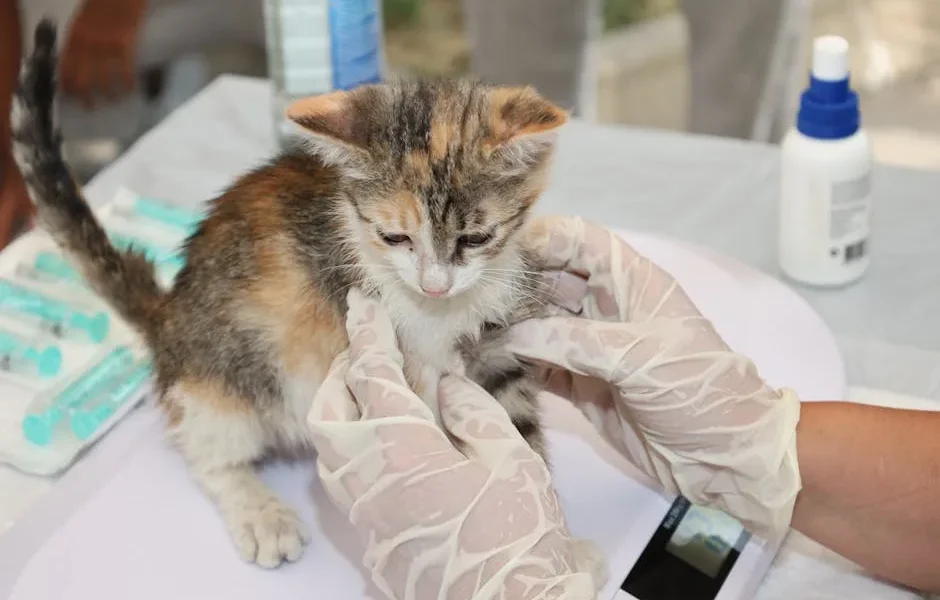
- Kidney disease affects 30-40% of cats over 10. It affects up to 81% of cats over 15. Cats can lose 75% of kidney function before showing clear signs.
- Drinking more water and urinating more are often the first signs. Gradual weight loss is also common. It’s easy to miss without regular checks.
- Modern SDMA blood testing can find kidney problems 17 months earlier than old tests. Routine screening is essential for senior cats.
- Annual or twice-yearly wellness exams are critical for cats over 7 years old. Early treatment can make the biggest difference.
I’ve been a veterinarian for over fifteen years. If there’s one thing I wish I could tell every cat owner, it’s about kidney disease.
I don’t want to scare you. But knowing how to spot early warning signs of kidney disease in cats can add years to your cat’s life.
Here’s the thing: cats are masters at hiding illness. By the time most owners notice something’s wrong, the disease is often advanced.
But it doesn’t have to be that way.
Your cat’s kidneys are incredible organs. They work hard to filter waste. They regulate hydration. They maintain chemical balance.
When they start to fail, the signs are there. You just need to know what to look for.
Why Is Kidney Disease So Common in Cats, and When Should I Start Worrying?
Let’s start with the facts. Chronic kidney disease (CKD) is very common in cats.
We’re talking about 30-40% of cats over age 10. That number jumps to 81% for cats over 15.
If your cat reaches senior status, kidney disease isn’t just possible. It’s likely.
But here’s what really worries me: cats can lose up to 75% of their kidney function before they show signs. Their bodies are just that good at hiding problems.
It’s both impressive and scary.
So when should you start worrying? Honestly, around age 7.
That’s when I tell all cat owners to become more watchful. Persian, Abyssinian, Siamese, and Russian Blue breeds have higher risk. They might need even earlier attention.
The good news? We’ve gotten much better at early detection.
SDMA testing is a newer test. It can find kidney problems an average of 17 months earlier than old tests. That’s not just months on a calendar. That’s months of quality life we can save with early help.
What Are the Earliest Signs I Can Actually Observe at Home?
So what should you watch for? The earliest signs are subtle. That’s exactly why they’re so often missed.
Increased drinking and urination top the list.
Are you suddenly filling the water bowl twice as often? Does your cat hang out by the faucet more than usual? Pay attention.
Cats with early kidney disease might drink 2-3 times their normal water. You might also notice larger clumps in the litter box. Or more frequent trips to use it.
Here’s a practical tip: take a photo of your cat’s normal water bowl level in the morning. Check it again at night for a week. If the amount they drink changes a lot, visit your vet.
Gradual weight loss is another sneaky early sign. It affects 30-50% of cats with early-stage CKD.
When you see your cat every day, a few ounces here and there just disappear. This is why I tell owners to weigh their cats regularly. Do it monthly for seniors.
Get a baby scale or use your bathroom scale. Weigh yourself. Then weigh yourself holding the cat. Subtract the difference.
Some cats also develop a slightly unkempt coat. They’re still grooming, but maybe not as well. The fur might look a bit dull. It might feel different to the touch.
Again, subtle.
What you might not see early on: vomiting, bad breath, mouth ulcers, lethargy. Those show up once we’re already at 65-70% kidney function loss.
We want to catch things way before that point.
How Can My Vet Detect Kidney Disease Before I Notice Symptoms?
This is where regular wellness exams become critical. I can’t stress this enough.
Your annual checkup isn’t just about vaccines. For cats over 7, I recommend bloodwork and urinalysis at least once a year. Twice yearly for cats over 10 or those with risk factors.
Here’s what we’re looking at:
Blood tests measure several kidney markers.
Creatinine and BUN (blood urea nitrogen) are traditional markers. But they don’t rise until about 75% of kidney function is gone.
SDMA is the game-changer. It goes up much earlier. This gives us a crucial head start.
Urinalysis is equally important.
Cats are designed to produce highly concentrated urine. They evolved from desert animals, after all.
A urine specific gravity below 1.035 can mean the kidneys aren’t concentrating urine properly. This can happen even when blood work still looks decent.
This is why I always want both tests. They tell different parts of the story.
Blood pressure monitoring rounds out the screening.
High blood pressure both causes and results from kidney disease. It creates a bad cycle. Catching and treating high blood pressure early protects whatever kidney function remains.
The International Renal Interest Society (IRIS) stages kidney disease from 1 to 4. Stage 1 is the earliest. It’s often without symptoms.
Catching disease at Stage 1 or 2 means we can make changes. We use diet changes, medications, and monitoring. These really extend both length and quality of life.
If you’re interested in understanding what happens during these checkups, our guide on what to expect during pet wellness exams explains the process.
Is Increased Thirst Normal for Older Cats, or Should I Always Be Concerned?
Great question. I hear this constantly.
“Dr., my 12-year-old cat is drinking more water. Is that just… aging?”
Short answer: No. Increased thirst is never “just aging.” It always needs checking.
Longer answer: Several conditions cause increased drinking in cats.
Kidney disease is high on that list. But so are diabetes and hyperthyroidism. Both are also common in senior cats.
Less commonly, we see it with liver disease or certain cancers.
Here’s the thing: all of these conditions do better with early diagnosis. So even if it’s not kidney disease, you still want to know what’s going on.
Hyperthyroidism, for instance, is highly treatable. But it can actually cause kidney damage if left unchecked.
Diabetes requires management. But cats can live well with it when properly treated.
Don’t talk yourself out of the vet visit. Don’t think, “Well, she’s eating fine and seems happy, so it’s probably nothing.”
Cats are programmed to hide weakness. In the wild, showing weakness meant becoming prey. That instinct doesn’t disappear just because they live in your house.
If you notice increased drinking, schedule an exam within a week or two. Especially if paired with increased urination, weight changes, or decreased appetite.
Don’t wait months.
What’s the Difference Between Acute and Chronic Kidney Disease in Cats?
This distinction matters. The warning signs, treatments, and outcomes are completely different.
Acute kidney injury (AKI) happens suddenly. We’re talking hours to days.
Common causes include toxin ingestion. Lilies are the classic feline kidney toxin. But antifreeze, certain medications, and other plants also cause it.
Severe infections, urinary blockages, or sudden blood pressure drops can also cause it.
Signs of AKI are dramatic: sudden complete loss of appetite, vomiting, lethargy. Sometimes no urine production at all or very small amounts.
This is an emergency. It requires immediate hospitalization.
The good news? If we catch it fast and treat hard, some cats recover full or partial kidney function.
For more on recognizing pet emergencies, check out our guide to pet poisoning emergencies.
Chronic kidney disease (CKD) develops over months to years.
The damage is progressive. It can’t be reversed. But the timeline is slow.
This is what we’ve been discussing throughout this article. The gradual decline that sneaks up on you with subtle signs.
Treatment for CKD focuses on slowing it down. We manage symptoms. We maintain quality of life.
We use prescription renal diets. We use phosphate binders. We use medications to control blood pressure and nausea. We use fluids (sometimes given at home). We do regular monitoring.
Cats can live months to years after diagnosis. Especially when caught early.
One important note: acute kidney injury can turn into chronic kidney disease. This happens if the damage is severe enough.
This is another reason why lily ingestions and other toxin exposures are so serious. Even if we save the cat initially, they might end up with permanent kidney damage.
How Can I Monitor My Cat’s Kidney Health at Home Between Vet Visits?
I love when owners take an active role in health monitoring.
You see your cat every single day. You’re the early warning system.
Track water consumption.
Measure how much water you put in the bowl. Check how much remains 24 hours later. Do this once a month or so to establish a baseline.
Cats typically drink about 3.5-4.5 ounces per 5 pounds of body weight daily. But there’s individual variation.
What matters more than the absolute number is big changes from your cat’s personal normal.
Monitor litter box habits.
You’re scooping anyway, right? Notice the size and number of urine clumps.
Bigger, more frequent clumps mean more urination.
Some owners now use smart litter boxes that automatically track these patterns. The data can be incredibly helpful.
Weigh your cat monthly.
Write it down. A 10-pound cat losing even half a pound represents 5% body weight loss. That’s significant.
Early weight loss from kidney disease is typically gradual muscle wasting. It’s not sudden drops.
Observe appetite and eating behavior.
Are they less enthusiastic about meals? Leaving food they’d normally finish? Taking longer to eat?
These subtle changes can indicate nausea. Nausea sometimes comes with early kidney disease.
Check for bad breath.
Advanced kidney disease causes uremic breath. It’s a distinctive ammonia-like odor.
If your cat’s breath suddenly smells notably worse, that’s worth investigating. Especially if they don’t have existing dental disease.
Watch for behavior changes.
Is your typically social cat hiding more? Less interested in play? Being more vocal than usual?
Pain and discomfort show up differently in cats. Knowing how to recognize subtle pain signals helps you catch problems early.
New home monitoring systems can help track some of these things automatically. Smart water bowls and app-connected litter boxes are available as of 2024.
They’re not replacements for veterinary care. But they can help you spot trends earlier.
What Should I Do If I Suspect My Cat Has Kidney Disease?
First, don’t panic.
Early detection is actually good news. It means you’ve caught something when we can still make a real difference.
Schedule a veterinary appointment soon. Ideally within a week or two. Unless signs are severe. In that case, go immediately.
Don’t wait for the next annual exam if that’s months away.
Before your appointment, write down what you’ve noticed. When did the changes start? How pronounced are they? Are there any other symptoms even if they seem unrelated?
Bring a fresh urine sample if you can. Your vet will probably want one anyway. Having it ready speeds up diagnosis.
Pro tip: use non-absorbent litter like aquarium gravel. Or get a urine collection kit from your vet.
Be prepared for blood work and urinalysis. These aren’t optional if kidney disease is suspected. They’re essential for diagnosis and staging.
If your cat is diagnosed with kidney disease, don’t immediately assume the worst.
Stage 1 or 2 CKD is manageable. You’ll likely discuss dietary changes. Prescription renal diets are proven to extend lifespan in CKD cats.
You might discuss medications. And a monitoring schedule.
Many cats live comfortably for years after diagnosis.
Ask questions. Understand the stage and what it means. Discuss prognosis honestly.
But remember that statistics are populations. They’re not predictions for your specific cat.
I’ve seen Stage 2 cats live five more happy years with good management.
Finally, consider getting a second opinion if you’re uncertain. Kidney disease management has some nuance.
It’s reasonable to want confirmation. Especially for early-stage disease where treatment decisions matter most.
Our article on veterinarian red flags can help you evaluate whether you’re getting quality care.
Final Thoughts
Kidney disease in cats is common. It’s progressive. It’s serious.
But it’s not a death sentence. Especially when caught early.
The difference between diagnosis at Stage 1 versus Stage 3 can literally mean years of quality life with your cat. That’s why understanding these early warning signs matters so much.
Watch for increased drinking and urination. Monitor weight monthly. Commit to regular senior wellness exams with bloodwork.
Don’t dismiss subtle changes as “just aging.” Trust your instincts when something seems off.
And remember: your cat is counting on you to notice what they’re trying so hard to hide.
Schedule that wellness exam if you haven’t already. Especially if your cat is over 7.
The kidneys you save might give you several more years of head bonks, purrs, and 3 AM zoomies.
Worth it? Absolutely.
Sources & Further Reading
- International Renal Interest Society (IRIS) — Official guidelines for staging and managing chronic kidney disease in cats
- Cornell University College of Veterinary Medicine Feline Health Center — Comprehensive feline kidney disease resources and research
- American Association of Feline Practitioners — Evidence-based client education on chronic kidney disease
- Journal of Feline Medicine and Surgery — Peer-reviewed research on feline nephrology and kidney disease detection
- American Veterinary Medical Association — Overview of chronic kidney disease diagnosis and management