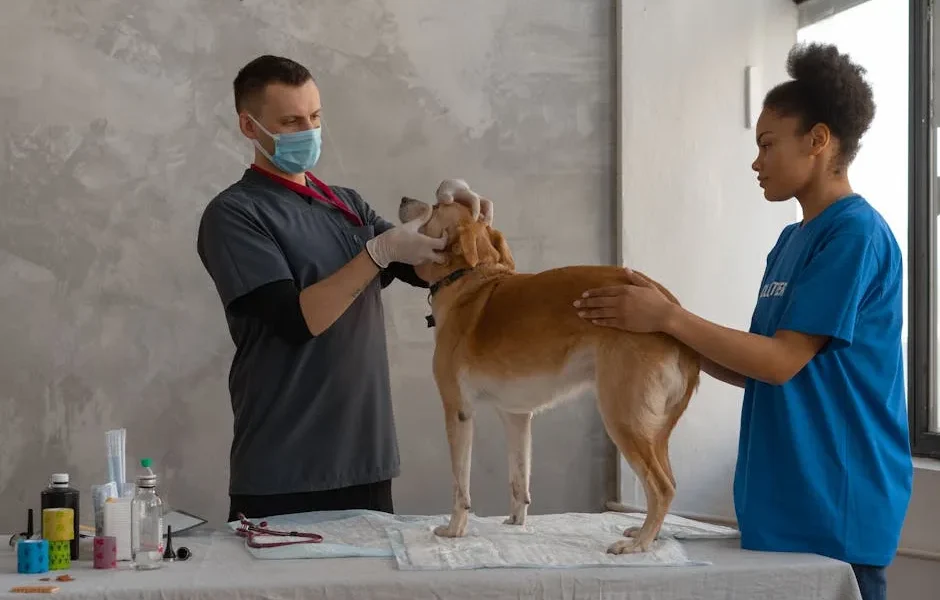
- Breathing problems, bloat, seizures over 5 minutes, poisoning, and not being able to stand need emergency care right away. Minutes can save your pet’s life.
- Don’t wait until morning if you see these signs. Waiting makes things worse. With bloat, every hour counts.
- Save your emergency vet’s phone number now. Know where they are. Write down your pet’s symptoms before you call. Being ready helps when you’re scared.
It was 2 AM when the Hendersons called. They were shaking. Their Great Dane, Murphy, was pacing. He was trying to vomit but nothing came out. His belly looked swollen.
“Should we wait until morning?” they asked. I could hear Murphy panting hard in the background.
“Get in the car now,” I told them. “Drive while we talk.”
They arrived twenty minutes later. Murphy’s gums were pale. His heart was racing. We had maybe an hour to save him.
That’s when most people learn the hard way about the 5 Critical Signs Your Pet Needs Emergency Care Right Now.
Murphy had GDV. That’s gastric dilatation and volvulus. Most people call it bloat. His stomach had twisted. It cut off blood supply.
If the Hendersons had waited until morning? Murphy wouldn’t have made it.
That’s the hard truth about emergency vet care. Some health problems give you days or weeks. Others give you minutes.
When Breathing Becomes a Battle
I’ll be direct. If your pet is struggling to breathe, you have maybe two hours. Often less.
Here’s what it looks like.
Your dog or cat is breathing with their mouth open. This is very bad in cats. They almost never pant normally. You see their belly moving hard with each breath. Their gums might be turning blue or pale.
They might stretch their neck forward. They’re trying to open their airway. Some pets sit with their chest down and rear up. This is called a “praying position.” They’re trying to expand their lungs.
I’ve seen Bulldogs, Pugs, and French Bulldogs go from “seems warm” to full breathing crisis in under an hour. This happens a lot in hot weather. Their airways are already small. They just give up.
But breathing emergencies hit all breeds. Heart failure can cause it. So can pneumonia. Allergic reactions. A stuck ball or stick. Even some cancers.
The math is simple and scary. No oxygen means organ failure. Brains don’t recover from that.
If you’re wondering “is this bad enough?” and you see real effort to breathe, get moving. Not just fast breathing after exercise. Real struggle.
Call ahead while you drive. We can have oxygen ready.
Don’t Confuse This With Normal Panting
Dogs pant. It’s normal after play. When they’re excited. When it’s hot.
That’s not what I’m talking about.
Emergency breathing looks different. It looks desperate. You’ll feel it in your stomach when you see it. Trust that feeling.
The Bloat That Kills in Hours
Back to Murphy’s story.
GDV affects about 6% of large, deep-chested dogs. German Shepherds. Great Danes. Standard Poodles. Weimaraners.
Even with treatment, 10-30% don’t make it. Without treatment? Nearly 100% die.
Your dog will show you signs.
They try to vomit but nothing comes up. Their belly swells. Sometimes a lot. Sometimes just a little. It depends on how much the stomach has twisted.
They’re restless. They won’t lie down. They keep pacing. They might drool a lot.
As things get worse, they become weak. Their gums turn pale. They might collapse.
You have about six hours from when it starts. After that, survival rates drop fast. From around 90% to under 50%.
The twisted stomach cuts off blood supply. To itself and the spleen. Tissue dies. Toxins build up. The heart rhythm goes wrong. It’s a cascade. It speeds up fast.
Owners tell me, “I thought it was just gas” or “He seemed uncomfortable. I figured it would pass.”
I get it. You don’t want to overreact.
But with bloat, overreacting saves lives. Underreacting ends them.
If you have a large-breed dog showing these signs? Especially within a few hours of eating or drinking a lot? Don’t think too much. Move.
When Seizures Won’t Stop
Single seizures are scary to watch. But they often aren’t emergencies by themselves.
They usually last 1-3 minutes. Then they stop. Your pet might be confused and wobbly after. But they recover.
That still needs a vet. But you can usually wait for regular hours.
The emergency is when they don’t stop.
Any seizure lasting longer than 5 minutes is status epilepticus. That’s a brain emergency. The brain is firing constantly. Long seizures cause permanent brain damage.
We need to stop it with medication. We need to do it fast.
Cluster seizures are also an emergency. That’s multiple seizures within 24 hours. The brain gets more excitable with each one. The next seizure becomes more likely. And often more severe. It’s like a snowball rolling downhill.
I remember Bailey. A Labrador. She had her first seizure at age 7. It lasted about two minutes. Then she was fine.
The owner called. We scheduled an appointment for the next day.
But then Bailey had another one three hours later. Then another. By evening, she’d had five.
That’s not something you can manage from home. That’s a brain in crisis.
What causes sudden seizures?
Sometimes it’s epilepsy starting for the first time. Sometimes it’s toxins. Cannabis and THC poisoning in pets has gone up 300% since 2020. Those can cause seizures.
Brain tumors can cause them. So can liver disease. Low blood sugar. Heatstroke.
The cause matters. But stopping the seizure matters more right now. For more information about recognizing toxin exposure early, check out our comprehensive guide to pet poisoning emergencies.
Toxins and the Race Against Absorption
Poisoning causes about 10-15% of all emergency visits I see.
The critical factor? Time.
Different toxins have different windows. But generally, if you know your pet ate something toxic, you’ve got maybe 1-2 hours. Before absorption becomes a major problem.
Xylitol is an artificial sweetener. It’s in sugar-free gum. Some peanut butters. Baked goods. It can cause life-threatening low blood sugar in dogs. Within 30 minutes.
Antifreeze tastes sweet. Pets love it. It causes kidney failure that can’t be fixed. Within hours.
Rat poison affects blood clotting. You might not see signs for 2-3 days. By then, internal bleeding is happening.
Here’s what most people get wrong. You can’t always “wait and see” with toxins.
By the time symptoms appear, the poison is often already doing damage.
If you saw your dog eat dark chocolate, a bottle of ibuprofen, or anything with xylitol, call right away. Don’t wait for symptoms.
The ASPCA Animal Poison Control Center is great. The number is 888-426-4435. There’s a consultation fee.
One important thing. Don’t make your pet vomit without asking a vet first.
Some substances cause more damage coming back up. Petroleum products. Caustic chemicals.
Some pets shouldn’t vomit. Those who are seizing. Unconscious. Having breathing trouble. They can breathe vomit into their lungs.
Call first. Get instructions for your specific situation.
The Most Common Culprits
Chocolate. Xylitol. Grapes and raisins for dogs. Lilies are very toxic to cats. Rodenticides. Human medications, especially NSAIDs like ibuprofen. Marijuana edibles.
Keep the packaging if you can. We need to know exactly what they ate. And how much.
When Your Pet Can’t Stand or Walk
Sudden inability to use the legs is a brain or spine emergency. Especially the rear legs.
I’m not talking about old dogs getting stiff. Or arthritis.
I mean your pet was fine. Now they literally cannot support their weight. Or they’re dragging their back end.
In dogs, this often means a slipped disc. Especially in Dachshunds, Corgis, and Beagles. The disc presses on the spinal cord.
You have roughly 12-24 hours for successful surgery. After that, paralysis is often permanent.
I’ve had owners wait a weekend. They thought their Dachshund just “overdid it” playing. By Monday, we couldn’t fix it.
In cats, sudden paralysis of the rear legs often means a blood clot. It lodges where the big artery splits to supply the back legs. It’s called a saddle thrombus.
It’s incredibly painful. Usually there’s heart disease underneath. These cats are in agony. The outlook isn’t great. But they need immediate pain help and treatment.
Weakness and collapse can also mean internal bleeding. Especially in older large-breed dogs.
A ruptured spleen tumor can make a dog bleed into their belly. They might seem okay. Then suddenly weak and pale.
This is the “golden hour” trauma scenario. We need to stabilize them. Often they need surgery fast.
What to Do Right Now (Before You Need It)
I’ve walked you through the nightmare scenarios. Now let’s talk about being ready.
About 60% of pet emergencies happen outside regular vet hours. Evenings. Weekends. Holidays.
Save your nearest 24-hour emergency vet’s number in your phone right now. Not tomorrow. Now.
Know where they’re located. Know how to get there. Some GPS systems are terrible with emergency clinic addresses at 3 AM when you’re panicked.
Keep a basic pet first aid kit.
You need: gauze, vet wrap, a muzzle (even sweet pets can bite when in pain), a thick towel or blanket for transport, hydrogen peroxide 3% (only use for vomiting if a vet tells you to), and a slip lead or extra leash.
Include a written list. Your pet’s medications. Doses. Any known allergies.
Consider pet insurance before you need it.
Emergency visits average $800-$1,500 just to start. Complex cases like Murphy’s bloat surgery? $2,000-$5,000 or more.
About 67% of pet owners aren’t ready financially for emergency care. I hate talking about cost when minutes matter. If you’re looking for ways to track your pet’s location during an emergency, our GPS tracker comparison guide might be helpful.
The Call Before the Visit
When you call an emergency clinic, have this ready.
Your pet’s weight. Approximate is fine. When did symptoms start? Any medications they’re on. Any possible toxin exposure.
This helps us prepare. Sometimes it tells us if you need to come right away. Or if you can safely wait a few hours.
Telemedicine has gotten big since 2023. Many emergency hospitals now offer video calls 24/7.
These don’t replace in-person care for true emergencies. But they can help you figure out if this is a “drive immediately” situation. Or something that can wait until morning.
The Gray Areas
Look, not everything is black and white.
There are situations in that gray zone. The ones that make you anxious.
Vomiting once? Probably not an emergency. Vomiting repeatedly for hours with weakness? Can’t keep water down? That’s moving toward emergency territory.
Diarrhea once? Monitor it. Diarrhea with blood? Profound weakness? In a young puppy who can dehydrate fast? Different story.
My general rule: if you’re asking yourself “Is this an emergency?” at 1 AM, call the emergency clinic.
Let us help you decide.
We’d rather answer questions and give you reassurance than have you wait too long with something serious.
There’s no shame in the “false alarm” visit. I’ve brought my own pets in for things that turned out to be nothing.
Better to be cautious than to wonder “what if” later.
Some pets hide illness really well. Especially cats. By the time you see obvious signs, they’ve often been sick for a while.
That’s why regular wellness exams matter. They catch things before they become emergencies. Our wellness exam guide explains what your vet is looking for during those checkups.
Final Thoughts
Fifteen years in emergency medicine has taught me something. Pet owners usually know when something’s seriously wrong. They just second-guess themselves.
That gut feeling when you look at your pet and think “this isn’t right”? Trust it.
The critical signs I’ve outlined are: breathing difficulty, bloat symptoms, prolonged seizures, toxin ingestion, and inability to stand.
These don’t wait for business hours. They don’t improve on their own.
I’ve seen enough miraculous saves when owners acted quickly. And enough heartbreaking losses when they waited. Those early hours make all the difference.
Print out your emergency vet’s contact information. Stick it on your refrigerator tonight.
Talk with your family about what’s an emergency. So everyone knows the plan.
And if you’re ever watching your pet show any of these critical signs, remember Murphy and the Hendersons.
Getting in the car immediately gave us the chance to save him. That’s what I want for your pet too.
Don’t wait. Don’t hope it passes. Don’t feel embarrassed about “overreacting.”
Just get help. Every second really does count.
Sources & Further Reading
- Veterinary Emergency and Critical Care Society — Professional organization providing clinical guidelines, standards of care, and continuing education for emergency veterinary medicine
- ASPCA Animal Poison Control Center — Comprehensive database of toxin information, emergency protocols, and 24/7 hotline for poisoning emergencies (888-426-4435)
- American College of Veterinary Emergency and Critical Care — Board certification organization with evidence-based resources on emergency recognition and critical care management
- American Veterinary Medical Association – Emergency Care Resources — Pet owner education materials on recognizing emergencies and finding emergency veterinary services
- Texas A&M College of Veterinary Medicine Pet Talk — Evidence-based articles covering emergency conditions, preventive care, and pet health topics from veterinary specialists