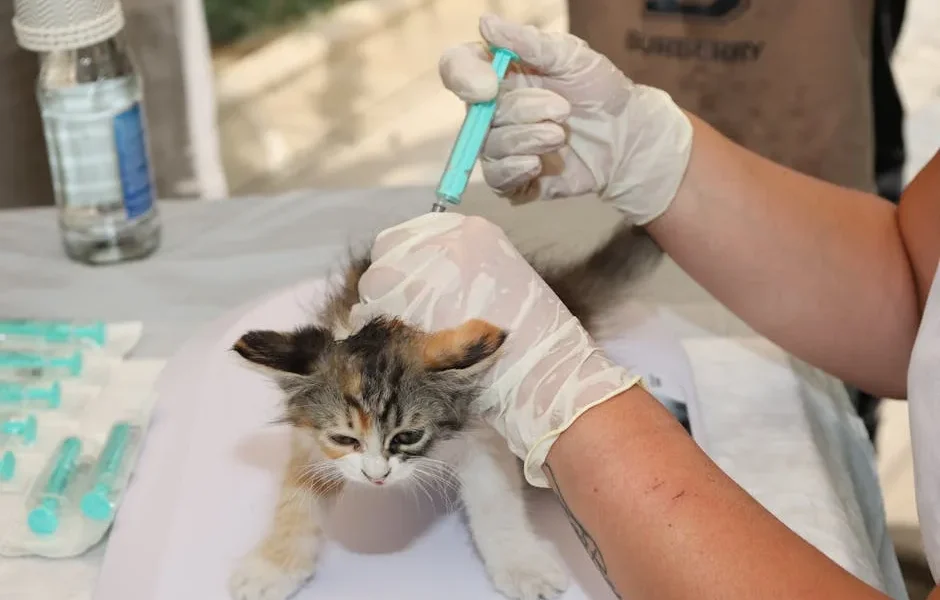
Vaccine Schedule for Dogs and Cats: What Every Pet Owner Must Know
I’ll never forget the panic I felt when my neighbor’s unvaccinated puppy contracted parvovirus. Three days of intensive care, thousands in vet bills, and a heartbreaking outcome that could’ve been prevented with a $20 vaccine. That experience changed how I talk to pet owners about vaccination schedules—because honestly? The confusion around what vaccines your pet needs and when they need them can literally be life or death.
Let’s cut through the veterinary jargon and get real about protecting your furry family members.
When should I start vaccinating my puppy or kitten?
Start early. Really early.
Puppies and kittens should receive their first vaccines at 6-8 weeks of age. I know that seems young—they’re still so tiny and wobbly at that point. But there’s solid science behind this timing.
Here’s what happens: newborns get temporary immunity from their mother’s milk (those maternal antibodies we hear about). Sounds great, right? Except these same antibodies actually interfere with vaccines working properly. The tricky part? We don’t know exactly when those maternal antibodies fade for each individual pet. For some it’s 8 weeks, others it’s 16 weeks or even longer.
That’s why puppies and kittens need a series of vaccines given every 3-4 weeks until they’re 16-20 weeks old. We’re essentially creating multiple opportunities for the vaccine to “take” once those maternal antibodies drop off. Miss this window, and you’re leaving your pet vulnerable during their most fragile months.
The typical puppy series includes distemper, parvovirus, and adenovirus (often combined in one shot). Kittens get feline herpesvirus-1, calicivirus, and panleukopenia. Both species should receive their first rabies vaccine between 12-16 weeks, depending on state law.
And before you ask—no, you really shouldn’t take your unvaccinated puppy to the dog park or pet store. I’ve seen too many “just one quick trip” decisions end badly. Your pet’s health routine starts with protecting them during these vulnerable weeks.
Do indoor-only cats really need vaccines?
Short answer? Yes. But let me explain why, because I get pushback on this one constantly.
Even the most dedicated indoor cat can escape. I’ve lost count of how many “my cat never goes outside” stories end with “…until the screen door broke” or “until the contractor left the door open.” It happens to the best of us.
More importantly, some diseases don’t require direct contact with other animals. Rabies can enter your home through a bat (yes, bats get inside houses more often than you’d think). Feline panleukopenia is incredibly hardy—you can literally track the virus inside on your shoes after walking through an area where an infected cat had been.
That said, indoor cats do have different vaccine needs than outdoor adventurers. The American Association of Feline Practitioners recommends all cats receive core vaccines: rabies, feline herpesvirus-1, calicivirus, and panleukopenia. But vaccines like feline leukemia (FeLV) become optional for adult cats who truly never go outside and don’t live with FeLV-positive cats.
Here’s the nuanced part that makes me appreciate modern veterinary medicine: we now vaccinate cats less frequently than we used to. Research showed that cats are particularly susceptible to vaccine-associated sarcomas—rare tumors that develop at injection sites in roughly 1 in 10,000 to 1 in 30,000 vaccinated cats. This led to the “as little as necessary, as much as required” approach. Your vet might recommend three-year intervals for some vaccines after the initial series, especially for low-risk indoor cats.
Does my adult dog really need vaccines every single year?
Finally, someone’s asking the right question.
The answer is: probably not for everything, but it depends.
Modern research has completely changed how we think about vaccine duration of immunity. Studies show that core vaccines for distemper, parvovirus, and adenovirus provide protection for at least 7 years in most dogs—some evidence suggests even longer. This is why the American Animal Hospital Association updated their guidelines to support less frequent vaccination for adult dogs.
But here’s where it gets complicated (doesn’t it always?).
Rabies vaccines remain legally mandated regardless of what science says about immunity. First rabies shot, then a booster one year later, then every three years after that in most states. Some states still require annual rabies boosters. You don’t get to skip this one even if you really, really want to.
Then there are the lifestyle vaccines—the ones that genuinely do need annual or even more frequent boosters. Bordetella (kennel cough) provides immunity for only 6-12 months. If your dog goes to daycare, boarding, grooming, or dog parks, you’ll need this one annually or even every six months. Same with canine influenza, which most boarding facilities started requiring in 2023-2024 after several outbreaks.
Leptospirosis is another annual vaccine, and honestly? It’s becoming more important. Lepto cases have surged in urban areas over the past few years. Climate change means expanded rodent populations (gross, I know), and dogs contract lepto through contaminated water or soil. What used to be a “country dog” concern is now hitting city dogs hard.
Want to know if your dog really needs a booster? Ask your vet about titer testing. It’s a blood test that measures antibody levels to determine if your pet still has immunity. Costs around $100-200, which might seem steep compared to a $25 vaccine, but it gives you real data instead of guessing. Just remember—titers don’t get you out of legal rabies requirements.
What are the actual risks and side effects of pet vaccines?
Let’s talk about this honestly, because social media has everyone terrified.
Most pets experience zero side effects. Maybe some sleepiness for a day, soreness at the injection site, or mild fever. This is actually your pet’s immune system doing exactly what it should—recognizing the vaccine and building protection.
Serious reactions? They happen, but they’re rare. We’re talking about allergic reactions (anaphylaxis) occurring in roughly 1 in 10,000 to 1 in 15,000 vaccinations. Small breed dogs under 20 pounds have slightly higher risk, and certain breeds like Dachshunds, Pugs, and Boston Terriers seem more prone to reactions.
Warning signs that need immediate attention: facial swelling, hives, difficulty breathing, repeated vomiting, or collapse. These symptoms typically appear within minutes to a few hours after vaccination. This is why good vets often ask you to wait 15-20 minutes after vaccines before leaving the clinic.
I always tell pet owners to plan vaccines for morning appointments when possible. If something goes wrong, you’ve got the full business day to reach your vet rather than facing an emergency clinic at midnight. And keep your pet calm for the rest of vaccination day—skip the dog park, delay the grooming appointment. Just chill at home.
Here’s my honest take: the risk of vaccine reactions is real but tiny. The risk of your unvaccinated pet contracting a preventable disease? Significantly higher, and the outcome is often devastating. I’ve watched dogs die from parvovirus and cats suffer through panleukopenia. Those are hard deaths. Vaccine reactions, when they occur, are usually treatable if caught quickly. For more guidance on recognizing health emergencies, check out our guide on warning signs your pet needs emergency care.
How much do pet vaccines cost, and are there affordable options?
Money talk. Let’s do this.
Standard vaccine costs at a traditional vet clinic typically run:
- Core puppy/kitten series (3-4 visits): $75-150 per visit
- Rabies vaccine: $15-30
- Bordetella: $20-30
- Canine influenza: $25-45 (requires two doses initially)
- Leptospirosis: $20-30
- Feline leukemia: $25-40
A complete first-year puppy vaccine series often totals $250-400. Kittens run slightly less, around $200-350.
That seems like a lot upfront. And yeah, it can be tough if you’re not expecting it.
But here’s the thing—these costs are preventive. Treating parvovirus? That’s $1,500-3,000 in hospitalization if your dog survives. Feline panleukopenia treatment runs similar numbers. I’m not trying to scare you; I’m just being real about the math. Vaccines are genuinely the bargain option.
Affordable alternatives do exist. Low-cost vaccination clinics run by animal shelters or humane societies offer vaccines at significantly reduced prices—sometimes as low as $10-15 per vaccine. Mobile vaccine clinics at pet stores (like the ones at Petco or Tractor Supply on weekends) provide middle-ground pricing around $20-25 per vaccine.
The tradeoff? You’re getting vaccines without the full exam, without the relationship with a regular vet, and without someone reviewing your pet’s complete health history. For healthy young pets, this can work fine. For pets with health issues or those entering their senior years, that comprehensive exam during vaccine visits actually provides significant value. Speaking of senior pets, their health needs change significantly as they age.
What vaccines does my pet need for boarding or doggy daycare?
This is where vaccine requirements get very real, very fast.
Most boarding facilities, doggy daycares, and even grooming salons now require proof of current vaccines before they’ll accept your pet. They’re not being difficult—they’re protecting all the animals in their care from disease outbreaks.
Standard requirements for dogs include:
- Rabies (legally mandated anyway)
- Distemper/Parvovirus/Adenovirus combo
- Bordetella (kennel cough)
- Canine influenza (increasingly required as of 2023-2024)
For cats boarding at facilities, expect requirements for:
- Rabies
- FVRCP (feline distemper combo)
Here’s a pro tip that’ll save you stress: check facility requirements at least 3-4 weeks before you need boarding. Some vaccines require multiple doses or need time to become effective. Bordetella takes about 72 hours for the intranasal version (the nose drops) to provide protection, but two weeks for the injectable version. Canine influenza requires two doses, 2-4 weeks apart, for initial immunization.
Nothing’s worse than finding out two days before your vacation that your dog needs a vaccine that won’t be effective in time. Ask me how I know.
Keep a file (physical or digital) with your pet’s vaccine records. I use a photo album on my phone with pictures of all vaccine certificates. Makes check-in at boarding so much easier when you can just pull up the documentation immediately.
Can I create a custom vaccine schedule based on my pet’s lifestyle?
Absolutely. And honestly? This is where veterinary medicine is heading.
The days of every single pet getting identical vaccines on identical schedules are over. Modern vets should be having conversations with you about your pet’s actual risk factors and customizing accordingly.
Let’s break down lifestyle categories:
The Homebody
Indoor-only pets with no exposure to other animals need core vaccines (rabies and distemper combos) but can likely skip most non-core vaccines. Intervals might extend to every three years after the initial series for some vaccines.
The Social Butterfly
Dogs hitting daycare, dog parks, boarding, or training classes need the full lineup: all core vaccines plus Bordetella, canine influenza, and potentially leptospirosis depending on your region. These pets need more frequent boosters—some as often as every 6 months for Bordetella.
The Outdoor Adventurer
Hiking, camping, and rural property dogs need protection against regionally specific diseases. Lyme disease vaccine for dogs in the Northeast and upper Midwest. Rattlesnake vaccine in the Southwest. Leptospirosis almost everywhere now given its resurgence.
The Senior Pet
Older pets present a dilemma. They’re more vulnerable to disease complications, but their immune systems also respond less vigorously to vaccines and they’re more susceptible to adverse reactions. Many vets recommend titer testing for seniors to determine actual immunity levels before automatically revaccinating. Your senior pet’s overall nutrition and health management should be individualized too.
Talk to your vet about your pet’s actual life. Where do you live? Does your pet interact with other animals? Do you travel? Are there specific disease concerns in your area? A good vet will listen to this information and tailor recommendations accordingly, not just rubber-stamp the same protocol for every patient.
Geographic factors matter more than most people realize. Valley Fever concerns in the Southwest. Lyme disease in the Northeast. Heartworm prevalence varies dramatically by region, which affects preventive medication recommendations though that’s technically not a vaccine.
The goal isn’t to over-vaccinate or under-vaccinate. It’s to protect your specific pet based on their specific risks. That takes conversation, not just a predetermined schedule printed on a reminder card.
How do I keep track of my pet’s vaccine records?
Real talk? Most people are terrible at this until they need the records and can’t find them.
Your vet keeps records, yes. But you should maintain your own copies for several reasons: emergency vet visits, boarding facilities, traveling, or if you move and change vets. I learned this lesson when I needed proof of rabies vaccination for a last-minute trip and my vet’s office was closed for the weekend. Not fun.
Here’s what works:
Create a dedicated folder (physical or cloud-based) for each pet. Include vaccine certificates, medical records, microchip information, and any relevant health documentation. Some people use apps like PetDesk or Pawprint that store vaccine records digitally and send reminders. Others just photograph every certificate with their phone and create an album.
Whatever system you choose, make sure someone else knows how to access it. If you’re traveling without your pet or there’s an emergency, your pet sitter or family member needs to find this information quickly.
Also, understand what that vaccine certificate actually says. It should list the specific vaccine given, manufacturer, serial number, expiration date, and date administered. For rabies, you’ll see a one-year or three-year designation. That matters legally—using an expired rabies certificate can cause major problems if your pet bites someone or you’re crossing state lines.
Set calendar reminders a month before vaccines are due. This gives you time to schedule appointments without the stress of “oh no, we’re overdue and boarding requires current vaccines next week.”
One more thing: keep records even for pets who’ve passed away. I know it seems morbid, but those records can provide valuable information if you get another pet of the same breed, especially regarding any vaccine reactions or health patterns. Plus, there’s something meaningful about having that documentation of your pet’s life and the care you provided. For insights on maintaining quality of life through all life stages, our guide on keeping senior pets healthy offers practical advice.
Look, vaccine schedules can feel overwhelming when you’re just trying to be a good pet owner. But here’s what I’ve learned after years of working with pets: you don’t need to be perfect. You just need to be intentional. Ask questions. Have honest conversations with your vet about what your pet actually needs versus what’s just protocol. Keep decent records. And remember that those tiny shots are genuinely protecting your pet from diseases that used to routinely kill puppies and kittens.
Your pet depends on you for these decisions. You’ve got this.

Medically reviewed by: Dr. Sarah Chen, DVM, DACVIM