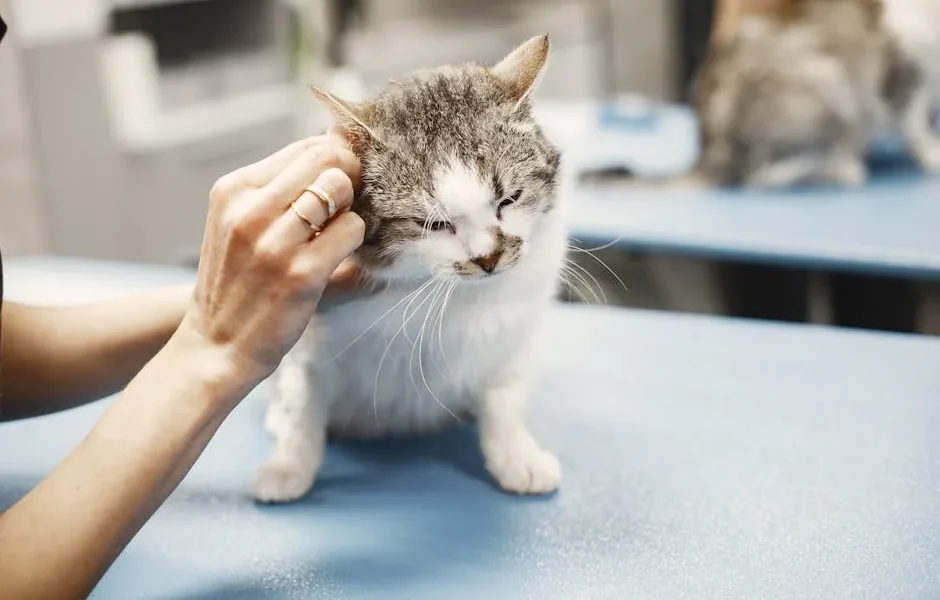
Pet Obesity Crisis: 5 Veterinarian-Approved Ways to Help Your Dog or Cat Lose Weight Safely
I’ll be honest with you—the first time a vet told me one of my patients was “clinically obese,” the owner looked at me like I’d just insulted their child. “But she’s just fluffy!” they protested. I get it. Nobody wants to hear their beloved pet is overweight. But here’s the thing: nearly 60% of dogs and cats in the U.S. are carrying extra pounds, and it’s quietly stealing years from their lives.
The research is pretty sobering. Obese pets face a 2-3 year reduced lifespan compared to their healthy-weight counterparts. They’re three times more likely to develop diabetes, and they’re at significantly higher risk for arthritis, respiratory problems, kidney disease, and certain cancers. And yet most pet owners can’t accurately assess whether their pet is actually overweight.
So let’s fix that. Here are five veterinarian-approved strategies that actually work—no gimmicks, no trendy diets, just evidence-based approaches that’ll help your furry friend shed pounds safely.
1. Get an Honest Body Condition Assessment (And Learn What “Ideal” Actually Looks Like)
Before you can fix the problem, you need to know if there even is one. And “fluffy” doesn’t cut it as a medical assessment.
Here’s the reality check: you should be able to feel your pet’s ribs easily without pressing hard. When you look at them from above, they should have a visible waist—that indentation behind the ribs. From the side, you should see an abdominal tuck, where the belly slopes upward toward the hind legs. If you’re seeing a straight line or, worse, a sagging belly? Houston, we have a problem.
Most pet owners struggle with this because we see our pets every day. The weight creeps on gradually, and we don’t notice. That’s why your vet uses a Body Condition Score—a standardized system that takes the guesswork out. Schedule a wellness exam and ask for an honest assessment. Your vet might also want to rule out medical issues like hypothyroidism or Cushing’s disease that can cause weight gain. Once you know your pet’s actual condition and target weight, you can make a real plan.
2. Measure Everything—Because Your Eyeball is a Terrible Measuring Cup
You know what I hear constantly? “I’m only feeding what the bag says!” But when we actually measure what they’re pouring into the bowl, it’s often 30-50% more than they think.
Here’s a wake-up call: a 10-pound cat needs only about 200 calories per day. That’s roughly half a cup of dry food. One cup of many popular cat foods? That’s already 300-400 calories. See the problem? Most pet owners are accidentally overfeeding by hundreds of calories daily, and those add up fast.
Get an actual measuring cup—not the scoop that came with the food, not a random container, an actual standardized measuring cup. Better yet, get a small kitchen scale and weigh the food in grams. The feeding guidelines on pet food bags are just starting points, and they’re often calculated for active, unspayed/unneutered pets. Your couch potato who got fixed years ago? Needs less. Work with your vet to calculate the exact amount your pet needs based on their target weight, not their current weight. And here’s the kicker—that’s total daily calories, including treats.
3. Treat Your Treat Budget Like It Matters (Because It Really, Really Does)
One pig ear treat can contain over 200 calories. That’s an entire day’s worth of food for some cats. Let that sink in.
Treats and table scraps can easily account for 25-50% of your pet’s daily caloric intake without you even realizing it. That piece of cheese here, that bite of chicken there, the training treats, the dental chews—it all adds up. And if you’ve got kids or multiple family members sneaking treats? Forget about it.
The solution isn’t eliminating treats entirely (we’re not monsters), but being strategic. Switch to low-calorie options like small pieces of carrot, green beans, or plain air-popped popcorn for dogs. For cats, try tiny pieces of cooked chicken breast. Use their regular kibble as training treats—take it from their daily portion so you’re not adding extra calories. And crucially, get everyone in the household on board. One person undermining the diet plan can completely derail progress. Have a family meeting. Make it non-negotiable. Your pet’s health is worth a few uncomfortable conversations about Grandma’s constant treat-giving.
4. Start a Safe Exercise Program (But Don’t Expect It to Do All the Heavy Lifting)
Here’s something that surprises people: exercise typically only accounts for about 20% of weight loss. Diet is 80%. But that doesn’t mean exercise isn’t important—it absolutely is.
For overweight dogs, aim for 30-60 minutes of daily exercise minimum. But—and this is crucial—if your dog is obese or has arthritis, you can’t just suddenly take them on a five-mile hike. Start slow. Short, frequent walks are better than one long slog. Swimming and water therapy are fantastic low-impact options that don’t stress already-strained joints. Even walking in shallow water provides resistance without impact.
Cats are trickier because, well, they’re cats. You can’t exactly leash-walk most of them. But they need 10-15 minutes of active play 2-3 times daily. Laser pointers, feather wands, toy mice—whatever gets them moving. Food puzzles and hunting feeders make them work for their meals, which burns calories and provides mental stimulation. For the really lazy felines? Start with just five minutes and build up. Something is better than nothing.
If your pet has existing joint problems, talk to your vet about pain management before increasing activity. An arthritic dog won’t exercise if it hurts, and you might need anti-inflammatory medication to get them comfortable enough to move.
5. Consider Prescription Weight Loss Food (It’s Not Just Marketing Hype)
I know what you’re thinking—prescription diet food is just expensive marketing, right? Actually, no. The clinical data is pretty compelling.
Therapeutic weight loss foods are specifically formulated with higher protein to preserve lean muscle mass while losing fat, higher fiber to keep pets feeling full, and carefully calculated lower calories. Studies show these prescription diets result in 2-3 times better success rates compared to simply reducing portions of regular food. That’s because when you just cut portions of regular food, your pet is constantly hungry, you feel terrible, and everyone gives up after a few weeks.
The higher protein content is particularly important. When pets lose weight too quickly or don’t get enough protein, they lose muscle along with fat. That’s bad. We want to lose fat specifically. And for cats, rapid weight loss can trigger hepatic lipidosis—fatty liver disease—which can be fatal. That’s why safe weight loss for cats is only 0.5-1% of body weight per week, compared to 1-2% for dogs. It’s a marathon, not a sprint.
Work with your vet to choose the right prescription food and calculate exact portions. Most vets will want to see your pet every 2-4 weeks initially to monitor progress and adjust the plan. If weight loss plateaus, you might need to reduce portions further or increase exercise. If it’s happening too fast (especially in cats), you’ll need to slow down. This is why DIY weight loss can be risky—you need professional monitoring to do it safely.
The Bottom Line: Slow and Steady Wins the Race
Look, I won’t sugarcoat it—helping your pet lose weight requires commitment. You’ll need to measure food religiously, resist those pleading eyes, get the whole family on board, and stick with it for months. Not weeks. Months.
But here’s what keeps me motivated when I’m working with clients: every pound your pet loses reduces stress on their joints, decreases their risk of diabetes and cancer, and potentially adds years to their life. Years. That’s not hyperbole—that’s what the research shows.
Start with that honest body condition assessment. Get your vet involved from day one. Make a plan that’s sustainable, not some crash diet that’ll last three weeks before everyone gives up. And remember—you’re not depriving your pet by helping them lose weight. You’re giving them the gift of a longer, healthier, more comfortable life. Those extra treats might feel like love in the moment, but true love is making the hard choices that keep them around longer.
Your pet is counting on you to make the right call. You’ve got this.

Medically reviewed by: Dr. Marcus Webb, DVM, DACVECC