Heatstroke in Pets: Emergency Cooling Protocol & Warning Signs 2025
Last summer, I watched a Golden Retriever come into the ER with a body temperature of 108°F. The owner had only been hiking for 45 minutes. That dog survived, but it was close. Too close.
Here’s what keeps me up at night: heatstroke kills 36-50% of pets even when they get treatment. And with climate change pushing temperatures higher and earlier in the season, we’re seeing these emergencies more frequently than ever. Veterinary hospitals reported a 15-20% increase in heatstroke cases during 2024 compared to previous years.
This isn’t just about summer anymore. We’re seeing cases in May now instead of June.
Understanding Heatstroke: Why It’s So Deadly
Dogs and cats can’t sweat like we do. They rely almost entirely on panting to regulate body temperature, which becomes increasingly ineffective as temperatures and humidity climb.
Normal body temperature for dogs sits between 101-102.5°F. Heatstroke begins when that number hits 105-106°F. Once you reach 107-109°F? You’re looking at irreversible organ damage territory.
The scary part is how fast this happens. Multi-organ dysfunction syndrome can develop within 30-60 minutes of sustained hyperthermia. We’re talking kidney failure, disseminated intravascular coagulation (DIC), neurological damage. The works.
It’s Not Just About Temperature
Sure, 75% of heatstroke cases happen when it’s above 85°F outside. But I’ve treated pets suffering from heatstroke when it was only 70°F with high humidity. Humidity is the silent killer because it prevents effective cooling through panting.
And here’s something that surprises people: 74% of canine heatstroke cases involve exercise or exertion, not just a dog sitting in a hot yard. That morning jog when it’s “only” 78°F? If your dog is a Bulldog or a Chow Chow, you’re playing with fire.
High-Risk Categories You Need to Know
Not all pets face equal risk. Brachycephalic breeds—Bulldogs, Pugs, Persian cats, Shih Tzus—are 2-3 times more likely to suffer heatstroke. Their compressed airways simply can’t move enough air for effective cooling.
But it’s not just the flat-faced breeds. Chow Chows, Golden Retrievers, and double-coated breeds are also at elevated risk. Add in senior pets, those with heart or respiratory conditions, and obese animals, and you’ve got a much larger vulnerable population than most people realize.
Even certain medications increase risk. Antihistamines and diuretics can impair heat regulation. If your pet takes regular medications, ask your vet about heat sensitivity.
Warning Signs: Early vs. Critical Stages
This is where knowing the difference can save your pet’s life.
Early Warning Signs
Heavy panting that seems excessive for the situation. Increased drooling. Mild lethargy. Bright red gums and tongue. These are your yellow flags.
Your dog always pants after exercise. But does he normally pant this hard for this long after a short walk? That’s the question to ask.
Critical Emergency Signs
Now we’re in get-to-the-ER-immediately territory:
- Excessive drooling or thick, ropy saliva
- Dark red, purple, or blue gums
- Weakness, stumbling, or collapse
- Vomiting or diarrhea (sometimes bloody)
- Glazed eyes or lack of responsiveness
- Seizures
- Uncontrolled urination or defecation
If you see any of these signs, you’re past the prevention stage. You’re in crisis mode.
The Emergency Cooling Protocol (2024-2025 Guidelines)
Here’s where things get specific. And controversial.
What You Should Do Immediately
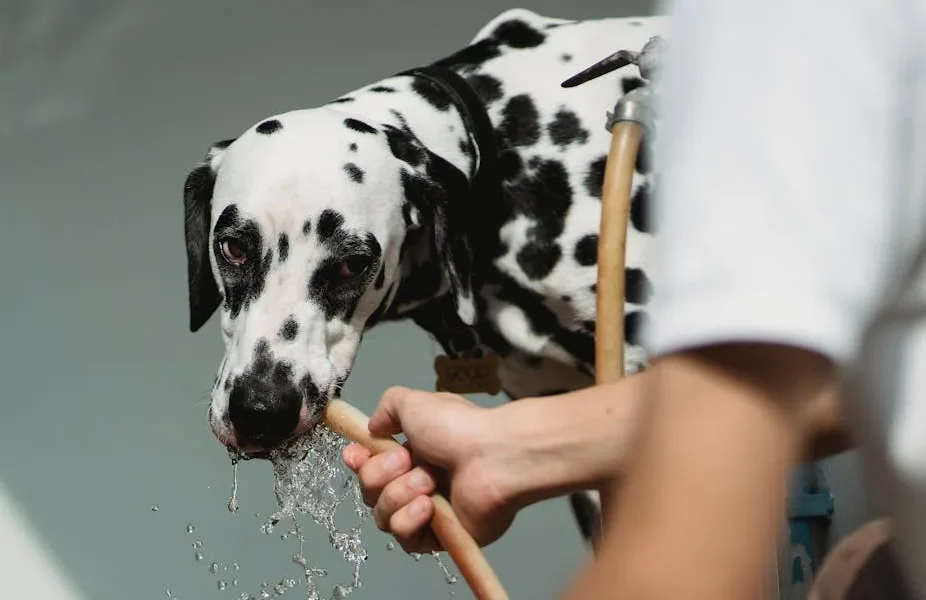
Move your pet to a cool area immediately—air-conditioned room, shade, anywhere out of heat. Then start cooling, but here’s the critical part: use cool or lukewarm water, NOT ice water.
I know this contradicts what you might think. Ice water seems like it would cool faster, right? Wrong. Ice water causes peripheral blood vessels to constrict, which actually traps heat in your pet’s core. It can cause shivering, which generates more heat. Current veterinary protocols from VECCS (Veterinary Emergency & Critical Care Society) are clear on this.
Here’s your step-by-step:
- Apply cool (not cold) water to your pet’s body, focusing on the neck, armpits, groin, and paw pads
- Use wet towels, but change them frequently—they heat up fast and can insulate rather than cool
- Place your pet in front of a fan to increase evaporative cooling
- Offer small amounts of cool water to drink (don’t force it)
- If you have a rectal thermometer, monitor temperature every 5 minutes
The Critical Temperature Target
Cool until your pet’s temperature reaches 103.5°F, then STOP active cooling. This is the 2024 update to protocols. We used to cool to normal temperature, but that led to hypothermia rebound.
Stop at 103.5°F and get to the emergency vet immediately. Yes, even if your pet seems better.
What NOT to Do
Don’t cover your pet completely in ice or ice water. Don’t use rubbing alcohol (it’s toxic if absorbed and doesn’t cool effectively). Don’t force water into your pet’s mouth if they’re unconscious or unresponsive—you risk aspiration pneumonia.
And don’t delay veterinary care thinking you can handle this at home. The golden hour applies here. Cooling initiated within 60-90 minutes of symptom onset significantly improves survival rates from about 50% to 70-80%.
The Hidden Danger: Late-Phase Complications
Your pet survived the initial crisis. Temperature is down. Everyone’s breathing easier. But the danger isn’t over.
20-30% of heatstroke survivors develop acute kidney injury 24-72 hours later. Even successfully cooled pets can experience delayed complications. This is why veterinary monitoring is non-negotiable, regardless of how good your pet looks after home cooling.
Your vet will likely run bloodwork, monitor kidney values, check for DIC, and assess for neurological damage. Hospitalization for severe cases typically costs $1,500-5,000+, but it’s the difference between survival and devastating loss. For more guidance on handling the critical first moments of any emergency, check out what to do in the first 60 seconds of a pet emergency.
Prevention: Your Best Strategy
Treatment is dramatic. Prevention is boring. But boring keeps your pet alive.
Time-of-Day Matters
Walk before 8 AM or after 8 PM during summer months. If the pavement is too hot for your bare hand (hold it there for 7 seconds), it’s too hot for paw pads.
The Car Rule (No Exceptions)
Cars reach 120°F within 20 minutes even with windows cracked. Even on a 70°F day, interior temps can hit 90°F in 10 minutes. Your quick errand isn’t quick enough. Never leave your pet in a parked car. Period.
Know Your Humidity
It’s not just about temperature. When humidity exceeds 70%, your dog’s panting becomes much less effective. A 75°F day with 90% humidity is more dangerous than an 85°F day with 40% humidity.
Protective Measures
Cooling vests work for some dogs. Always provide shade and fresh water. Consider a kiddie pool for backyard time. Limit exercise intensity during warm months—yes, even for your athletic dog.
And something new for 2025: FDA-cleared temperature-monitoring collars are hitting the market. These smart devices alert you when your pet’s core temperature rises above safe thresholds. Worth considering if you have a high-risk breed.
Special Considerations for Cats and Exotic Pets
Cats are slightly better at heat regulation than dogs, but they’re not immune. Indoor cats that escape during summer are particularly vulnerable because they’re not acclimated. Look for excessive grooming (they lick to cool down), open-mouth breathing (abnormal for cats), and lethargy.
Rabbits and birds? Extremely vulnerable. Rabbits can’t pant or sweat and rely entirely on ear blood vessel dilation. Birds show respiratory distress, wing extension, and open-mouth breathing. Both need immediate emergency care.
What Happens at the Emergency Vet
Expect aggressive treatment. IV fluids to support blood pressure and organs. Oxygen therapy. Continuous temperature monitoring. Bloodwork to check organ function. Anti-nausea medication. Sometimes plasma transfusions for DIC. Hospitalization for 24-72 hours in serious cases.
Your vet will watch for kidney values, liver enzymes, and clotting factors. They’ll assess neurological function. Some pets need weeks of follow-up care. Understanding which emergencies require immediate veterinary care can help you make quick decisions when every second counts.
The Bottom Line on Heatstroke
That Golden Retriever I mentioned at the start? Spent four days in our ICU. Developed acute kidney injury on day three. Recovered, but it took weeks and cost his owners nearly $6,000.
Heatstroke is preventable. It’s also unforgiving.
Know your pet’s risk factors. Recognize early warning signs. Understand the cooling protocol. And when in doubt, get to emergency care. The survival difference between 60 minutes and 90 minutes can be the difference between taking your pet home and saying goodbye.
We’re seeing these cases earlier and more frequently. 2025 isn’t going to be cooler than 2024. Your awareness and preparation might be what saves your pet’s life this summer.

Medically reviewed by: Dr. Marcus Webb, DVM, DACVECC