Compounded Medications for Pets: Custom Treatment Solutions Guide 2025
My friend Sarah spent three weeks trying to pill her cat, Winston. Three weeks of wrestling matches, hidden pills in treats that were surgically extracted, crushed tablets mixed into food that went completely untouched. She was ready to give up on treating his hyperthyroidism altogether when her vet mentioned something she’d never heard of: a compounded transdermal gel that could be rubbed on Winston’s ear instead.
Game changer.
This is what compounded medications do—they solve the real-world problems that come with treating our pets. Not every dog weighs exactly 50 pounds. Not every cat will swallow a pill. And sometimes, the medication your pet desperately needs doesn’t even exist in a commercial form anymore.
Let’s talk about what compounding actually is, when you might need it, and how to navigate this growing corner of veterinary medicine without getting overwhelmed.
What Compounding Really Means
Veterinary compounding is essentially custom medication preparation. A specialized pharmacy takes active pharmaceutical ingredients and creates a medication specifically tailored to your pet’s needs—different strength, different form, different flavor, or sometimes a combination of drugs in a single dose.
It’s not some sketchy workaround. When done properly by accredited facilities, it’s legitimate medicine regulated by the FDA under the Animal Medicinal Drug Use Clarification Act (AMDUCA). There are rules. Your veterinarian needs to have an established relationship with you and your pet (called a VCPR—veterinary-client-patient relationship). The pharmacy needs to follow strict guidelines about what they can and can’t compound.
But here’s the thing: compounding isn’t supposed to be your first choice. It fills gaps. When the commercially available version won’t work for your specific pet, that’s when compounding becomes not just useful but sometimes necessary.
When Your Pet Actually Needs Compounded Medication
There are some genuinely good reasons to go the compounding route.
The most common one? Size matters. Try giving a Chihuahua a pill formulated for a Labrador. Or finding the right dose of heart medication for a parrot. Commercial medications are made for average-sized dogs and cats, which leaves a lot of pets in the lurch. Exotic pets especially—rabbits, guinea pigs, reptiles, birds—almost always need compounded medications because pharmaceutical companies don’t mass-produce drugs for hedgehogs.
Then there’s the palatability problem. You know your pet. Some cats would rather starve than take a pill. Some dogs can detect medication hidden in an entire pound of peanut butter. Compounding pharmacies can create chicken-flavored suspensions, tuna-flavored gels, or beef-flavored chewable treats. Studies show medication compliance improves by 60-75% when appropriate flavoring is used. That’s not trivial—missed doses mean treatment failure.
Sometimes pets are allergic to inactive ingredients in commercial medications. Dyes, fillers, preservatives—these can trigger reactions in sensitive animals. A compounded version can eliminate those problematic ingredients while keeping the active drug your pet needs.
And occasionally, pharmaceutical companies discontinue medications that veterinarians still need. When that happens, compounding pharmacies step in. During the 2023-2024 shortage of pimobendan (a critical heart medication for dogs), compounding pharmacies literally kept dogs alive by filling the gap.
My veterinarian friend also uses compounded medications when multiple drugs can be combined into one dose. Imagine your senior dog needs three different pills twice a day. That’s six pill-giving sessions daily. A compounding pharmacy might be able to combine those three medications into a single flavored chew. That’s not just convenient—it’s sustainable long-term care.
The Forms That Make Life Easier
Compounding pharmacies can create medications in forms you probably didn’t know existed for pets.
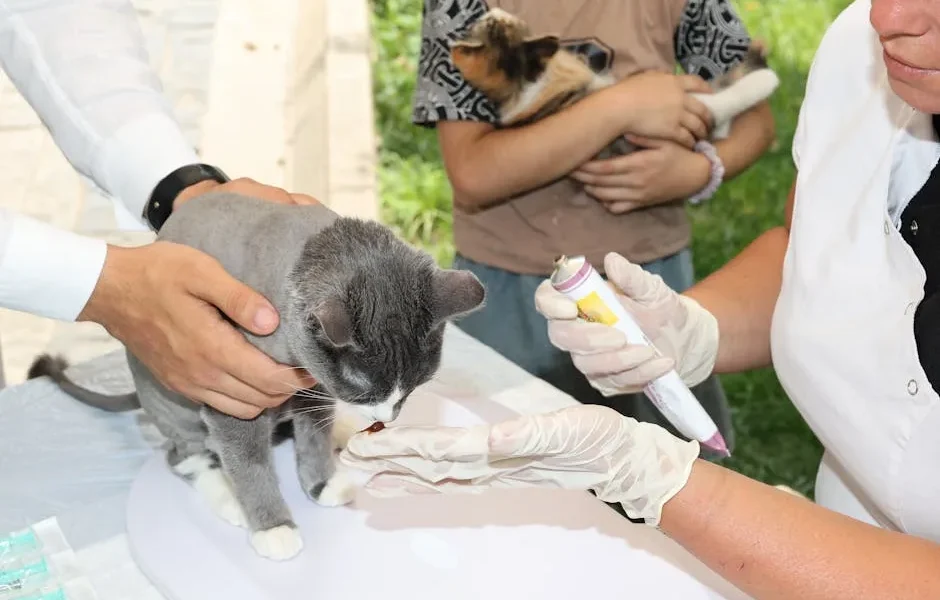
Transdermal gels have become incredibly popular, growing about 25-30% in use over the past few years. You rub a tiny amount on the hairless part of your cat’s inner ear, and the medication absorbs through the skin. This works brilliantly for cats with hyperthyroidism who won’t take pills. The methimazole gel Sarah used for Winston? Classic example. Similar to how thyroid medications need consistent dosing, the transdermal route ensures cats actually get their treatment.
Flavored oral suspensions are liquid medications that taste like actual food. We’re talking over 40 flavor options now—chicken, salmon, tuna, bacon, beef, even marshmallow for the weird pets who like sweet stuff. These work great for small dogs, cats, and any animal that’ll lick something tasty off a spoon.
Chewable treats are exactly what they sound like. The medication is baked into a soft, edible treat that your dog thinks is a reward. No fighting, no stress.
Some pets need injections, ophthalmic preparations for eye conditions, otic solutions for ear infections, or specialized topical creams. All of these can be compounded when the commercial version isn’t right.
Finding a Pharmacy You Can Trust
This part matters more than you might think. Because here’s something most pet owners don’t know: the FDA has been issuing more warning letters to veterinary compounding pharmacies lately, particularly around sterility issues and quality control problems.
Not all compounding pharmacies are created equal.
Look for PCAB accreditation—that’s the Pharmacy Compounding Accreditation Board. There are only about 100-150 PCAB-accredited veterinary compounding facilities in the entire United States. This accreditation means the pharmacy meets strict standards for sterility, testing, equipment, and procedures.
Ask your veterinarian which pharmacy they recommend. Most vets have established relationships with reputable compounders and won’t risk their license or their patients on sketchy operations.
When talking to a compounding pharmacy, don’t be shy about asking questions: Do they test their preparations? How do they ensure sterility for things like eye drops or injections? What’s their contamination prevention protocol? How do they source their ingredients? What’s the beyond-use date (basically the expiration) and how was it determined?
A good pharmacy will answer these questions confidently and thoroughly. A bad one will get defensive or vague.
The Money Question
Compounded medications typically cost anywhere from $25 to $150+ per prescription, depending on complexity. Sometimes that’s 15-40% cheaper than brand-name medications. Sometimes it’s more expensive than generic alternatives.
The math gets complicated fast. Custom work costs money. But if the alternative is your pet not taking medication at all, the investment makes sense.
Most pet insurance companies will cover compounded medications if they’re medically necessary—meaning there’s no suitable commercial alternative, or your pet has tried and failed commercial options. You’ll need documentation from your vet explaining why compounding is needed. Save your receipts and submit claims properly.
Just like with steroid medications or antibiotics, the actual cost of the medication is only part of the equation. Factor in the value of your time, your stress level, and your pet’s quality of life. Three weeks of wrestling Winston versus a simple ear gel application? Sarah would’ve paid double.
What Could Go Wrong
Compounded medications aren’t FDA-approved in the same way commercial drugs are. They don’t undergo the same rigorous testing for safety and efficacy. That’s just a fact.
The pharmacy is essentially creating a unique product each time. There’s more room for error—wrong concentration, contamination, instability issues, or medications that don’t actually absorb properly in the form they’ve been compounded into.
Storage matters more with compounded meds. Many need refrigeration. Some have shorter shelf lives than you’d expect. Follow storage instructions exactly, and note the beyond-use date carefully.
And never, ever order compounded medications from random online pharmacies offering deals that seem too good to be true. Stick with pharmacies your veterinarian knows and trusts. This isn’t the place to bargain hunt.
The Species-Specific Stuff
Cats get compounded medications more than any other species, mostly for hyperthyroidism and chronic kidney disease. Those transdermal gels I mentioned? Primarily a cat thing. Cats are notoriously difficult to medicate orally, so compounding has been a genuine breakthrough for feline medicine.
Dogs often need compounded medications for Cushing’s disease, heart conditions, and custom pain management. Size variation is huge in dogs—a medication dose for a Mastiff is wildly different from the dose for a Yorkie, and commercial options don’t always cover the range. Speaking of pain management, proper pain medication is crucial for recovery from injuries like broken bones.
Exotic pets—rabbits, guinea pigs, birds, reptiles, ferrets, and others—rely heavily on compounded medications because pharmaceutical companies simply don’t manufacture drugs specifically for these animals. Your rabbit’s vet is almost certainly using compounded medications for most treatments.
Horses have their own entire compounding industry, particularly for anti-inflammatories, joint supplements, and medications that need to be given in massive doses.
Where This Is All Heading
The veterinary compounding market is growing at about 7-9% annually and was valued around $2 billion in 2024. That’s not slowing down.
Technology is changing things. Major compounding pharmacies now have online portals where vets can submit prescriptions electronically and pet owners can track orders in real-time. Some are experimenting with 3D-printed medications that could create perfectly customized doses and shapes.
The regulatory landscape keeps evolving too. Several states updated their veterinary compounding regulations in 2024, particularly around telemedicine and VCPR requirements. The FDA continues tightening oversight, which is honestly a good thing—it pushes out the bad actors and raises standards across the board.
There’s also growing interest in genuinely personalized veterinary medicine. Pharmacogenomics—studying how an individual animal’s genes affect drug response—might one day guide compounding decisions. Your dog’s DNA could determine the exact formulation and dose they need.
But for now, we’re still in the era of practical problem-solving. Can’t get your cat to take a pill? There’s a gel for that. Need a specific dose for your tiny dog? They can make it. Pet has multiple medications causing pill fatigue? Combine them.
Actually Using Compounded Medications
If your vet recommends a compounded medication, ask why. Understanding the reasoning helps you make an informed decision. Is it because the commercial version doesn’t come in the right strength? Because your pet refused to take it in another form? Because the medication was discontinued?
Get clear instructions on administration and storage. Some transdermal gels need to be applied while wearing gloves so you don’t absorb the medication yourself. Some suspensions need shaking before each use. Details matter.
Monitor your pet’s response carefully, especially at first. Watch for side effects, but also watch for whether the medication is actually working. Just like with emergency situations such as bloat in dogs or pet seizures, being observant about your pet’s condition is crucial. If your cat’s hyperthyroidism isn’t improving on the compounded gel, tell your vet. Maybe the transdermal route isn’t absorbing well for your particular cat.
Keep your vet in the loop about medication compliance too. If the flavored suspension isn’t working any better than the pills were, speak up. There might be other options.
Winston’s doing great, by the way. The transdermal methimazole worked perfectly, his thyroid levels normalized, and Sarah’s relationship with her cat recovered from those three terrible weeks of pill battles. She now applies a tiny dab of gel to his ear twice daily, which he barely notices. He’s back to his normal grumpy self, which is exactly what Sarah wanted.
That’s what good compounding does—it makes treatment possible when it otherwise wouldn’t be. Not as a first resort, not as a way to cut corners, but as a legitimate medical solution when your pet’s individual needs don’t match what comes off the assembly line.
Similar to how we approach parasite prevention, the goal is finding what actually works for your specific pet in your specific situation. Sometimes that’s a commercial medication. Sometimes it’s a custom-compounded solution that a specialized pharmacy created just for your animal.
Work with your vet, use accredited pharmacies, ask questions, and don’t be afraid to advocate for what your pet needs. Because medication only works if you can actually get it into your pet.

Medically reviewed by: Dr. Marcus Webb, DVM, DACVECC