Cat Litter Box Options Compared 2025: Traditional vs Self-Cleaning vs Smart
I’ve been cleaning litter boxes for over fifteen years, and I’ll be honest—I resisted upgrading for way too long. The thought of spending $500+ on something my cat might completely reject? Seemed ridiculous. But after finally testing the various options available in 2025, I’ve learned that the “best” litter box really depends on your specific situation, budget, and what you’re willing to tolerate. Let me break down what I’ve discovered.
What Are the Main Differences Between Traditional, Self-Cleaning, and Smart Litter Boxes?
Traditional litter boxes are exactly what they sound like—plastic containers you fill with litter and scoop manually. They range from $10-40 and come in open-top, covered, and high-sided varieties. No moving parts, no electricity, no apps. Just you, a scoop, and daily commitment.
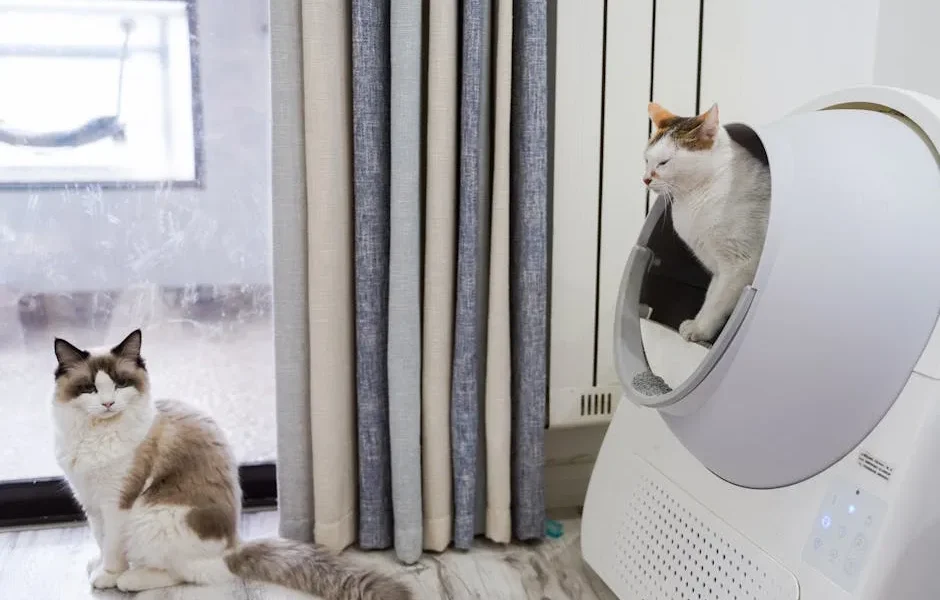
Self-cleaning litter boxes automate the scooping process using mechanical rakes or rotating mechanisms. After your cat does their business, sensors trigger a cleaning cycle (usually after a 3-15 minute delay). Waste gets deposited into a sealed drawer or bag. These typically cost $150-350 and don’t require WiFi or smartphone apps.
Smart litter boxes take self-cleaning further by adding app connectivity, health monitoring, and data tracking. They monitor your cat’s weight, bathroom frequency, elimination duration, and some even use AI to flag potential health issues like UTIs or kidney problems. Expect to pay $300-700 for premium models like the Litter-Robot 4 or PetKit Pura Max.
The global smart litter box market hit $2.1 billion in 2024 and is projected to reach $4.8 billion by 2030. But here’s the thing—traditional boxes still dominate over 70% of households. Sometimes simple really is better.
Are Self-Cleaning and Smart Litter Boxes Actually Worth the Money?
Depends entirely on your situation and what you value.
For single-cat households, the math gets trickier. A traditional litter box costs maybe $20 upfront plus $15-30 monthly for litter. That’s $200-380 per year. A self-cleaning unit costs $150-350 upfront, $20-35 monthly for litter and liners, plus $24-60 annually for electricity. First-year total? Around $400-600. You’re looking at 2-3 years before you break even on time savings alone.
But with multiple cats? The value proposition shifts. If you’ve got three cats and you’re scooping 3-4 times daily, that’s 15-20 hours per month of your life. Self-cleaning boxes designed for multi-cat households (with larger waste compartments) start making serious sense. You’ll empty the waste drawer weekly instead of scooping multiple times daily.
The smart features—health monitoring, app notifications, usage tracking—are honestly more valuable than I expected. When my 12-year-old cat started using the box more frequently, the app data gave me concrete information to share with my vet during our telehealth consultation. Early detection of kidney issues potentially saved thousands in emergency care.
That said, if you’re on a tight budget or already home most days anyway, there’s absolutely nothing wrong with traditional boxes. They work. Cats have been using them for decades.
Will My Cat Actually Use an Automatic Litter Box?
This is the million-dollar question, right?
Studies show 15-20% of cats initially reject automatic litter boxes, usually due to noise or unexpected movement. The transition period typically takes 3-7 days. Here’s what I’ve learned matters most:
Age and temperament: Kittens and young cats adapt faster. Senior cats or anxious cats need more patience. If your cat already freaks out at the vacuum cleaner, an automatic box might be a harder sell.
Noise levels: This was the primary rejection reason until recently. 2025 models from major brands now feature motors under 35 decibels—quieter than a whisper. Huge improvement over older models that sounded like garbage disposals.
Transition strategy: Don’t just swap boxes overnight. Place the new box next to the old one. Let your cat investigate it while it’s off. Gradually transition over 5-7 days. Most manufacturers include detailed transition guides, and honestly, following them matters.
The good news? Most reputable brands offer 30-90 day return policies specifically because they know this is a concern. Whisker (Litter-Robot) offers 90 days. PetKit offers 30. Check before buying.
Multi-cat households actually report higher success rates with larger automatic units, probably because the boxes are more spacious and there’s less territorial weirdness when everyone’s using the same facility.
What Are the Real Ongoing Costs Beyond the Purchase Price?
Let’s talk total cost of ownership because the sticker price is just the beginning.
Traditional boxes (3-year cost):
- Initial purchase: $20-40
- Litter: $540-1,080 (36 months at $15-30/month)
- Replacement boxes: $20-40 (most need replacing annually due to odor absorption)
- Total: $600-1,200
Self-cleaning boxes (3-year cost):
- Initial purchase: $150-350
- Litter/liners: $720-1,260 (36 months at $20-35/month)
- Electricity: $72-180
- Potential repairs/replacement parts after warranty: $50-150
- Total: $992-1,940
Smart boxes (3-year cost):
- Initial purchase: $300-700
- Litter/liners: $900-1,440 (36 months at $25-40/month)
- Electricity: $72-180
- App subscriptions (if required): $180-540
- Repairs/parts: $50-200
- Total: $1,502-3,060
Not gonna lie—seeing it broken down like this makes traditional boxes look pretty appealing financially. The question becomes: what’s your time worth? If you’re spending 10 hours monthly scooping (reasonable for a 2-3 cat household), that’s 360 hours over three years. At even $20/hour, that’s $7,200 in opportunity cost.
Also worth noting: some smart boxes claim 20-30% reduction in litter usage through optimized cleaning cycles. I haven’t personally verified these claims, but if accurate, it partially offsets the higher costs.
What About Maintenance and Things Breaking Down?
Here’s where automatic boxes get real.
Traditional boxes require daily scooping and weekly deep cleaning with soap and water. Annoying but straightforward. No motors to fail, no sensors to recalibrate.
Self-cleaning and smart boxes need weekly waste drawer emptying and monthly deep cleaning. But you’re also dealing with:
- Motor failures (typically after 2-4 years of heavy use)
- Sensor malfunctions (litter dust interferes with weight sensors)
- Gear grinding or rake jamming (especially if wrong litter type is used)
- WiFi connectivity issues with smart models
Warranty coverage matters enormously. Most offer 1-2 years, but some extend to 3 years. After warranty expires, motor replacement runs $80-150, sensor replacement $40-80. Labor if you can’t DIY? Add another $100-200.
The 2025 models are significantly more reliable than earlier generations, partially because supply chain issues that plagued smart devices in 2022-2023 have resolved. Prices actually dropped 10-15% for mid-tier models while quality improved.
One maintenance aspect nobody talks about: sensor calibration. Smart boxes need recalibration every 2-3 months to maintain weight-tracking accuracy. It’s a 5-minute process through the app, but if you forget, your health data becomes unreliable.
Which Type Works Best for Different Living Situations?
Studio apartments or small spaces: Compact self-cleaning models or covered traditional boxes. The PetKit Pura X has a surprisingly small footprint. Just be aware that any automatic box needs an electrical outlet nearby and shouldn’t be shoved in a tiny closet—they need ventilation.
Multi-cat households (3+ cats): Go big or go home. Large-capacity smart boxes like Litter-Robot 4 or multiple traditional boxes placed strategically. The rule is one box per cat plus one extra, but with automatic cleaning, you can sometimes get away with fewer units.
Senior cats: Low-entry traditional boxes or specific self-cleaning models with reduced entry height. Arthritis is real, and jumping into a high-sided box becomes difficult. Some cats also find the mechanical sounds more stressful as they age.
Renters or people who move frequently: Traditional boxes. They’re lightweight, no installation required, no WiFi setup. Self-cleaning boxes are heavy (20-30 pounds) and resetting them in new spaces is annoying.
Health-conscious cat parents: Smart boxes with monitoring features shine here. If you’re already investing in pet DNA testing or have pet insurance that rewards preventive care, the data from smart litter boxes provides genuine medical value.
What Are the Deal-Breakers or Red Flags to Watch For?
From my research and personal experience, here’s what to absolutely avoid:
Proprietary litter requirements: Some self-cleaning boxes only work with specific (expensive) litter brands. This locks you into ongoing costs with no alternatives. Look for boxes compatible with standard clumping litter.
Subscription-locked features: A few smart boxes put basic functionality behind monthly subscriptions. Health monitoring as a premium feature? Fine. But basic operation shouldn’t require ongoing fees.
Poor customer service reputation: When a $600 machine breaks at 2 AM and your cat is protesting loudly, responsive customer support matters. Check recent reviews specifically mentioning warranty claims and support experiences.
Incompatible with your litter type preferences: Going eco-friendly with biodegradable litters? Many automatic boxes historically required clay-based clumping litter. The 2025 models are better about this—brands like Whisker now explicitly support plant-based options—but verify before buying.
Non-replaceable parts: Some cheaper models are essentially disposable. When the motor dies, you’re buying a whole new unit. Premium brands sell replacement parts and provide repair guides.
Also consider data privacy with app-connected devices. Your cat’s bathroom habits are being uploaded to company servers. Most brands claim they don’t sell data, but read the privacy policy if this concerns you.
So What’s My Actual Recommendation?
After testing options across all three categories, here’s my honest take:
Start with a quality traditional box and see if the daily scooping actually bothers you as much as you think it will. Some people find it meditative. Seriously. If after 2-3 months you’re dreading it and you’ve got the budget, upgrade to self-cleaning.
If you’re managing chronic conditions in your cats or you’re the type who tracks everything (steps, sleep, calories, whatever), smart boxes provide data you’ll actually use. The health monitoring caught a UTI in my friend’s cat before visible symptoms appeared. That alone justified the cost for her.
For multi-cat households, automatic boxes quickly pay for themselves in time savings and sanity preservation. Just size up—don’t cheap out on capacity.
The market in 2025 is genuinely better than even two years ago. Quieter, more reliable, better app integration, and more sustainable options. But traditional boxes still work perfectly fine for millions of cats. There’s no shame in simplicity.
Whatever you choose, factor in your cat’s personality, your living space, and your actual daily routine. The best litter box is the one that gets used consistently—by both you and your cat.
This article is for educational purposes only and does not substitute for professional veterinary advice, diagnosis, or treatment. Always consult your veterinarian with questions about your pet's health.